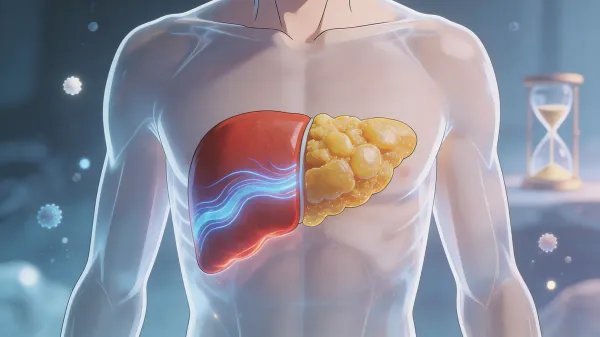
Mental health and biological aging: the mind-body connection
Discover how stress, depression, loneliness, and psychological wellbeing directly affect your biological age. Evidence-based mental health strategies for longevity.
Your psychological state is writing itself into your DNA. Chronic stress alters DNA methylation patterns measurably within months. Depression accelerates epigenetic aging by 2–5 years. Social isolation increases all-cause mortality by 26%. Purpose in life extends lifespan by 5–7 years in longitudinal studies.
The mind-body connection isn’t metaphorical — it’s molecular. Every emotion triggers hormonal cascades, inflammatory responses, and gene expression changes that either protect or damage your cells. This guide maps the specific pathways connecting mental health to biological aging and provides the evidence-based interventions that slow aging from the inside out. Many of these same pathways are also activated by environmental aging factors — air pollution, noise, and isolation — that act on the body through nearly identical biological routes.
What you’ll learn:
- How stress, depression, and loneliness accelerate biological aging at the cellular level
- The neurotransmitter changes that drive psychological aging
- Evidence-based interventions with measured effects on biological age
- How wearable metrics reflect psychological wellbeing
The stress-aging axis
Acute vs chronic stress
Acute stress (a workout, a deadline, a cold shower) is beneficial — it activates protective stress responses (hormesis). Chronic stress (ongoing work pressure, financial worry, relationship conflict, caregiving burden) is destructive — it maintains elevated cortisol that drives aging.
How chronic stress ages you
Telomere shortening: Elissa Blackburn’s Nobel Prize-winning research demonstrated that chronic psychological stress accelerates telomere shortening. Caregivers of chronically ill children had telomere ages 9–17 years older than controls.
Epigenetic aging: Chronic stress alters DNA methylation patterns at hundreds of CpG sites, accelerating epigenetic clocks by 2–4 years. These changes are partially reversible with stress reduction.
Inflammatory cascade: Chronic stress activates NF-κB, raising hs-CRP and pro-inflammatory cytokines. This inflammaging drives every hallmark of aging and accelerates vascular aging through elevated cortisol’s direct effects on endothelial function.
Cortisol awakening response dysregulation: Healthy cortisol rises 50–75% in the 30 minutes after waking, then declines throughout the day. Chronic stress flattens this curve — either blunting the morning rise (burnout) or elevating evening cortisol (hyperarousal).
Evidence-based stress interventions
| Intervention | Effect on Biological Aging | Evidence |
|---|---|---|
| Meditation/MBSR | Cortisol -23%, telomerase +43% | 8-week RCTs |
| Nature exposure | Cortisol -12–21% per 20-min session | Multiple RCTs |
| HRV biofeedback | Improved autonomic balance | Meta-analyses |
| Exercise | Cortisol regulation, BDNF increase | Hundreds of trials |
| Sleep optimization | Cortisol normalization | Extensive evidence |
| Gratitude practice | hs-CRP reduction, improved HRV | RCTs |
For a practical starting point that separates realistic benefits from overclaims, use our beginner meditation guide to choose an attention anchor, duration, and safety adjustment.
A gentle movement break can still be useful without carrying a large biological claim. Our review of stretching and mental health explains why short-term changes in mood or stress should not be confused with treatment of depression, anxiety, or cognitive decline.
Depression and accelerated aging
The biological link
Depression isn’t just a mood disorder — it’s a systemic inflammatory condition that accelerates biological aging by 2–5 years.
Mechanisms:
- Elevated inflammation: Depressed individuals have 30–50% higher hs-CRP and IL-6
- HPA axis dysregulation: Chronically elevated cortisol
- Reduced BDNF: Brain-derived neurotrophic factor drops 30–40% in depression → hippocampal shrinkage
- Impaired autophagy: Depression suppresses cellular cleanup processes
- Accelerated epigenetic aging: 2–5 years older on GrimAge/DunedinPACE clocks
- Serotonin decline: Reduces motivation, sleep quality, and pain tolerance
Bidirectional relationship
Depression accelerates aging, and aging increases depression risk. Breaking this cycle requires addressing both the psychological and biological dimensions simultaneously.
Neurotransmitter decline and psychological aging
Serotonin
Serotonin production declines ~15% per decade after 40. Effects: mood instability, impaired sleep onset, increased pain sensitivity, reduced stress resilience.
Support strategies: Tryptophan-rich foods (turkey, eggs, cheese), bright morning light, exercise, gut health (95% of serotonin made in the gut)
Dopamine
Dopamine receptor density declines ~10% per decade. Effects: reduced motivation, decreased reward sensitivity, apathy, executive function decline.
Support strategies: Novel experiences, exercise (especially HIIT), adequate protein (tyrosine precursor), limiting dopamine-depleting behaviors (social media scrolling, constant novelty-seeking)
GABA
GABA — the primary inhibitory neurotransmitter — declines with age, contributing to anxiety, insomnia, and sympathetic overdrive.
Support strategies: Magnesium (GABA receptor agonist), meditation, yoga, adequate sleep, fermented foods
Acetylcholine
Acetylcholine — critical for memory and attention — declines starting in the 40s. This decline is central to age-related cognitive decline.
Support strategies: Choline (eggs, liver, soy), exercise, intellectual challenge, adequate sleep
Purpose, gratitude, and positive psychology
Not every difficult emotion is a disorder or a direct aging signal. Anticipatory nostalgia, for example, can make you miss a meaningful moment before it ends; the practical issue is whether it supports connection or becomes anxiety-driven rumination that disrupts daily life.
The same distinction matters when someone worries they cannot fall in love: a romance-specific pattern is different from a broad loss of pleasure, energy, and connection.
Purpose (ikigai) and longevity
Purpose in life is one of the strongest predictors of longevity. A meta-analysis of 136,000 adults found that a strong sense of purpose was associated with:
- 17% lower all-cause mortality
- 23% lower cardiovascular mortality
- Slower biological aging across epigenetic clocks
The mechanism: purpose reduces cortisol, improves health behaviors, strengthens social connections, and provides the motivation to maintain lifestyle interventions. Related research on optimism and longevity shows that a positive outlook adds up to 7.5 years to life expectancy — operating through the same cortisol and inflammatory pathways as purpose.
Gratitude and inflammation
Gratitude practice — even 5 minutes daily — produces measurable biological effects:
- Reduced hs-CRP in cardiac patients
- Improved HRV (reflecting better autonomic balance)
- Better sleep quality
- Reduced cortisol
Social connection
Social connection provides direct biological protection through oxytocin release (anti-inflammatory), vagal tone improvement, and buffering of stress responses. The quality of relationships matters more than quantity. Social sports combine physical activity with regular human connection — addressing two independent longevity levers simultaneously.
How to track mental health effects
Wearable metrics that reflect psychological state
| Metric | What It Reflects | Pattern to Watch |
|---|---|---|
| HRV | Autonomic balance, stress recovery | Chronic stress → declining HRV trend |
| Resting heart rate | Sympathetic activation | Chronic stress → rising resting HR |
| Sleep quality | Cortisol, GABA, serotonin function | Depression/anxiety → poor deep sleep |
| Stress tracking | Real-time autonomic stress | Chronic elevation → intervention needed |
| Training readiness | Recovery capacity | Poor mental health → low readiness despite rest |
Blood biomarkers
- hs-CRP: Elevated in chronic stress and depression
- Cortisol (AM): Flattened or elevated curve indicates HPA dysfunction
- Homocysteine: Rises with stress-related B vitamin depletion
- DHEA-S: Drops with chronic stress (cortisol:DHEA-S ratio matters)
How SuperAge captures your mental health
Mental health is invisible — but its biological effects are measurable. SuperAge tracks the downstream metrics.
HRV as a stress barometer
HRV is the most sensitive real-time indicator of psychological wellbeing. Chronic stress, depression, and isolation all suppress HRV. SuperAge monitors this daily, revealing when mental health is affecting your biology before you might recognize it consciously.
Sleep as a mood indicator
Sleep architecture — particularly deep sleep percentage — reflects serotonin, GABA, and cortisol function. SuperAge tracks sleep quality, showing whether mental health interventions (meditation, gratitude, social connection) are improving your neurochemical balance.
Your biological age
Psychological stress accelerates biological aging by 2–5 years. SuperAge integrates over 30 parameters into a single biological age score — capturing the cumulative biological impact of your mental health status.
Frequently asked questions
Can meditation actually slow biological aging?
Yes. An 8-week MBSR program reduces cortisol by 23% and increases telomerase activity by 43% — directly protecting telomere length. Longer-term meditation practice is associated with younger epigenetic ages. The effect is dose-dependent: more practice → greater benefit.
Does therapy reduce biological age?
Effective therapy for depression and anxiety reduces inflammatory markers (hs-CRP, IL-6) and improves HRV — both associated with younger biological age. CBT and ACT have the strongest evidence for biological effects. The mechanism: reducing chronic stress activation reverses many of the molecular changes driving accelerated aging.
How important is purpose compared to exercise?
Both are critical, and they compound. Exercise without purpose often isn’t sustained long-term. Purpose without exercise misses the most potent physiological intervention. The combination — purposeful activity that involves physical movement — may be the optimal longevity strategy.
Key takeaways
- Your mind writes your biology: Chronic stress, depression, and isolation accelerate epigenetic aging by 2–5 years through measurable molecular pathways
- Neurotransmitters decline with age: Serotonin, dopamine, GABA, and acetylcholine all decrease, affecting mood, motivation, and cognition
- Purpose and connection are longevity interventions: Ikigai and strong social bonds reduce mortality as effectively as exercise and nutrition
- HRV is your real-time mental health metric: Track it daily to see when psychological stress is affecting your biology
- Interventions work: Meditation, nature exposure, gratitude practice, and therapy produce measurable biological improvements within weeks
Your mind is part of your longevity strategy
Mental health isn’t separate from physical health — it’s the foundation. Every thought pattern, every emotional habit, every social connection either accelerates or decelerates your biological aging.
Ready to see the connection? Download SuperAge and track how your mental wellbeing affects the metrics that determine your biological age.
References
- Epel, E.S. et al. (2004). “Accelerated telomere shortening in response to life stress.” PNAS, 101(49), 17312–17315.
- Holt-Lunstad, J. et al. (2015). “Loneliness and Social Isolation as Risk Factors for Mortality.” Perspectives on Psychological Science, 10(2), 227–237.
- Cohen, R. et al. (2023). “Purpose in life and all-cause mortality: a meta-analysis.” Journal of Psychosomatic Research, 168, 111218.
- Brewer, J.A. et al. (2011). “Meditation experience is associated with differences in default mode network activity and connectivity.” PNAS, 108(50), 20254–20259.
- Wolkowitz, O.M. et al. (2011). “Resting leukocyte telomerase activity is elevated in major depression.” Molecular Psychiatry, 17, 164–172.
- Bratman, G.N. et al. (2019). “Nature and mental health: An ecosystem service perspective.” Science Advances, 5(7), eaax0903.
Last updated: March 26, 2026. This article is regularly reviewed to ensure accuracy.
Related Articles

Stress and biological aging: How to monitor and reduce stress with Apple Watch
Discover how stress accelerates biological aging and how to monitor it with Apple Watch and SuperAge. Complete guide with science-based strategies to reduce stress.