Depression and accelerated aging: the biological link
Depression is linked with inflammation, cortisol disruption, telomere shortening, and faster biological aging. Learn what evidence shows and when to seek help.
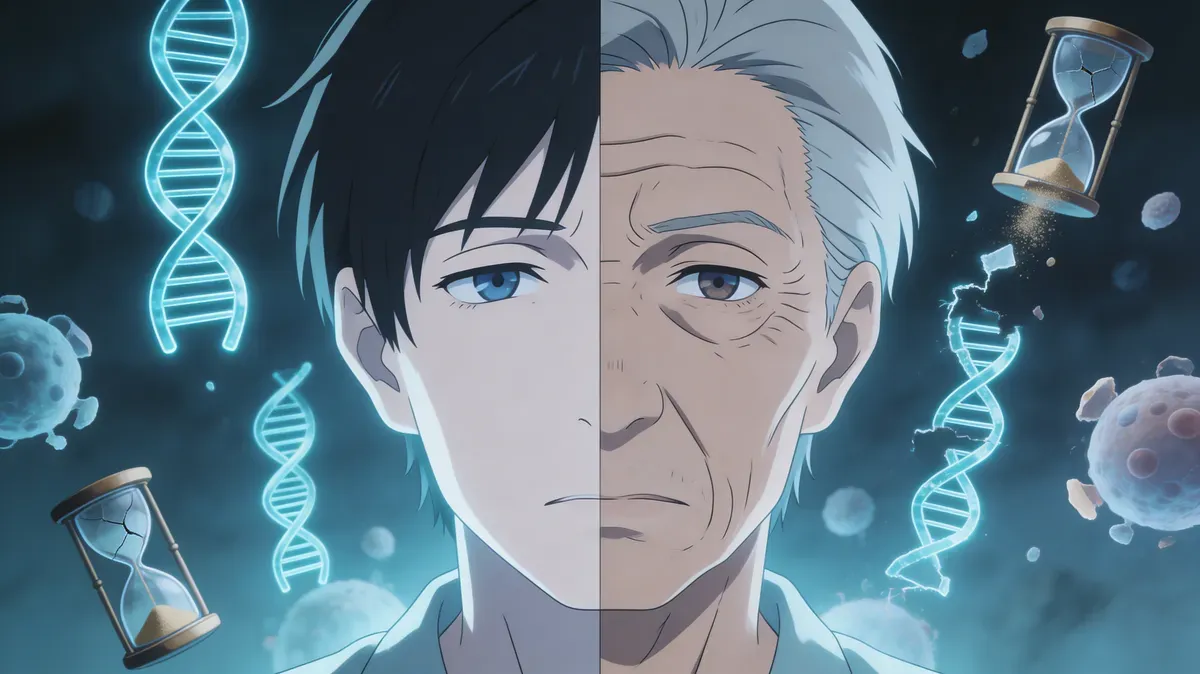
Depression is not just a mood problem. It is associated with measurable biological changes that overlap with aging pathways: inflammation, HPA-axis stress signaling, sleep disruption, lower activity, telomere biology, and cardiovascular risk.
A 2025 Scientific Reports meta-analysis found a significant association between depression and shorter telomere length, while cohort studies suggest the strongest cellular-aging signal appears in chronic or severe depression. That does not mean a telomere test can diagnose depression, or that the damage is permanent. It means depression deserves medical care and biological respect.
WHO’s 2025 fact sheet estimates that about 332 million people worldwide have depression. If depression includes thoughts of suicide or self-harm, treat it as urgent: in the United States, call or text 988; elsewhere, contact local emergency services or a crisis line immediately.
What you’ll learn:
- How depression accelerates biological aging through 4 distinct pathways
- The dose-response relationship between depression duration and cellular aging
- Why treatment is a longevity intervention, not just a mood intervention
- How to track depression’s impact on your biological age
Quick answer
Depression is linked with faster biological aging through inflammation, cortisol dysregulation, sleep disruption, reduced activity, and cellular-aging signals such as shorter telomeres. The evidence is strongest for association, especially in chronic or severe depression, not for a simple one-way cause.
The practical takeaway is not fear. Treating depression, restoring sleep, moving regularly, reducing inflammation, and rebuilding social connection can all shift the biology in a healthier direction.
If you have persistent low mood, loss of interest, fatigue, or thoughts of self-harm, seek professional help. In the United States, call or text 988 for urgent suicide or crisis support.
When the uncertainty feels specific to romance rather than pleasure across daily life, use the difficulty falling in love guide to compare scope, timeline, desire, and functional impact without self-diagnosing depression.
Key facts
- Depression -> aging pathways: inflammation, HPA-axis stress signaling, sleep disruption, and lower activity can all affect biological-age markers.
- Telomeres -> association: 2025 reviews report shorter telomeres in depression, but causality and individual prediction remain uncertain.
- Chronicity -> stronger signal: longer lifetime exposure to depression is more consistently linked with cellular-aging markers than a single mood score.
- Treatment -> biology: effective care can improve mood, sleep, activity, HRV, inflammatory markers, and relapse risk.
- Exercise -> adjunct: physical activity can reduce depression symptoms, but it should complement, not replace, urgent care or prescribed treatment when needed.
- Crisis signs -> urgent help: suicidal thoughts, self-harm urges, psychosis, or inability to eat/drink safely require immediate support.
What is the depression-aging connection?
The link between depression and aging goes far beyond the subjective feeling of “getting old.” Researchers have identified a measurable, dose-dependent relationship between depressive episodes and biological aging across multiple molecular systems.
Quick definition: Depression accelerates biological aging through chronic inflammation, HPA axis dysregulation, telomere shortening, and epigenetic changes — making depressed individuals biologically older than their chronological age.
The scale of the problem
| Aging marker | Effect of depression | Magnitude |
|---|---|---|
| Telomere length | Shortened | ~7 years equivalent (severe/chronic) |
| Epigenetic age | Accelerated | 2–5 years advanced |
| Inflammatory markers | Elevated | hs-CRP 30–50% higher |
| Brain volume | Reduced hippocampus | 5–10% volume loss |
| Cardiovascular risk | Increased | 1.5–2x heart disease risk |
Why this matters for everyone
Even single depressive episodes leave biological traces. And subclinical depression — the persistent low mood that does not meet diagnostic thresholds — also shows associations with accelerated aging. With depression rates rising globally, understanding this connection is essential for anyone serious about longevity.
The 4 biological pathways from depression to accelerated aging
Pathway 1: Chronic inflammation (inflammaging)
Depression and inflammation have a bidirectional relationship: inflammation can cause depression, and depression amplifies inflammation. Depressed individuals consistently show elevated levels of:
- hs-CRP — 30–50% higher than non-depressed controls
- IL-6 and TNF-α — pro-inflammatory cytokines that drive tissue damage
- NLR (neutrophil-to-lymphocyte ratio) — elevated, indicating chronic immune activation
This chronic low-grade inflammation — inflammaging — is the same process that drives atherosclerosis, neurodegeneration, insulin resistance, and virtually every age-related disease. Depression effectively puts the aging process on fast-forward by maintaining an inflammatory state that would normally be transient.
Pathway 2: HPA axis dysregulation
The hypothalamic-pituitary-adrenal (HPA) axis is the body’s central stress response system. In depression, it becomes chronically dysregulated:
- Elevated basal cortisol — many depressed individuals have cortisol levels 20–40% above normal
- Blunted cortisol awakening response — the morning cortisol spike that normally energizes waking is flattened
- Impaired feedback inhibition — the brain’s ability to shut off cortisol production is weakened
Since chronic cortisol directly modifies 85 of the 353 Horvath clock CpG sites, HPA dysregulation in depression is a direct driver of epigenetic aging. This is the same mechanism documented in chronic stress and trauma research: the cortisol-methylation pathway operates identically whether the trigger is depression, adversity, or prolonged psychological stress.
Pathway 3: Telomere shortening
The 2025 Scientific Reports meta-analysis strengthened the evidence for an association between depression and shorter telomere length, but the interpretation remains observational and heterogeneous:
- Depression severity correlates inversely with telomere length
- Lifetime depression exposure (total months/years depressed) is a stronger predictor than current depression status
- Individuals with above-median lifetime depression showed telomeres 281 base pairs shorter than controls — equivalent to ~7 years of additional aging
- The relationship is dose-dependent: more depression = shorter telomeres
The mechanisms driving telomere shortening in depression include:
- Oxidative stress from chronic inflammation
- Reduced telomerase activity (the enzyme that repairs telomeres)
- Direct cortisol effects on telomere maintenance
Pathway 4: Mitochondrial dysfunction
Depression is increasingly recognized as a state of impaired cellular energy production:
- Depressed individuals show reduced mitochondrial function in peripheral blood cells
- ATP production is decreased, contributing to fatigue — one of depression’s cardinal symptoms
- Mitochondrial DNA mutations accumulate faster under oxidative stress conditions
- Impaired mitochondrial function drives the fatigue, cognitive fog, and physical symptoms that often accompany depression
The dose-response relationship
One of the most important findings in depression-aging research is that the relationship is cumulative:
Duration matters more than severity
A 2011 PLOS ONE study found that telomere length was most strongly correlated with chronicity — the total lifetime duration of depression — rather than current severity. This has critical implications:
- A person with mild depression lasting 10 years may show more aging than someone with a severe 6-month episode
- Every month of untreated depression adds to the cumulative biological toll
- Remission periods allow partial biological recovery — but only if the remission is genuine and sustained
The “weathering” hypothesis
Repeated depressive episodes create a weathering effect on biological systems:
- First episode: inflammatory spike, cortisol elevation, partial recovery
- Subsequent episodes: higher baseline inflammation, slower cortisol recovery, less complete biological repair
- Chronic depression: sustained dysregulation across all four pathways, measurable acceleration of biological aging
This is why early treatment and relapse prevention are not just mental health interventions — they are longevity interventions.
Signs depression may be accelerating your aging
Beyond the well-known emotional symptoms, depression-accelerated aging manifests as:
Physical markers
- Persistent fatigue that does not resolve with rest (mitochondrial dysfunction)
- Increased frequency of infections or slow wound healing (immunosenescence)
- Unexplained physical pain, especially in joints and muscles (inflammatory)
- Weight changes — both gain (cortisol-driven visceral fat) and loss (catabolic state)
Cognitive markers
- “Brain fog” — difficulty concentrating, word-finding problems
- Memory impairment beyond normal age-related changes
- Slowed processing speed
- Early cognitive decline symptoms appearing prematurely
Sleep markers
- Disrupted deep sleep architecture
- Early morning awakening (3–5 AM — a classic cortisol-driven depression sign)
- Hypersomnia (excessive sleep without restoration)
- Reduced HRV during sleep
Wearable data markers
- Declining HRV trend over weeks or months
- Elevated resting heart rate (often 5–10 bpm above personal baseline)
- Reduced physical activity and movement regularity
- Disrupted sleep patterns visible on Apple Watch data
6 strategies to protect your biology from depression-driven aging
1. Treat depression as a medical condition — because it is
Why it works: Every month of untreated depression adds to cumulative biological aging. Effective antidepressant treatment has been shown to partially reverse inflammatory markers, improve HRV, and slow telomere attrition. Treatment is not just about feeling better — it is about stopping an active aging accelerator.
How to do it:
- Seek professional evaluation if you have experienced low mood, loss of interest, or persistent fatigue for 2+ weeks
- Evidence-based treatments include SSRIs/SNRIs, cognitive behavioral therapy (CBT), and behavioral activation
- Combination treatment (medication + therapy) shows the best outcomes for both mood and biological markers
- Monitor treatment response with objective markers, not just subjective mood
Expected results: inflammatory marker improvement within 4–8 weeks of effective treatment; telomere stabilization with sustained remission.
Experimental treatments need their own evidence threshold. Supported clinical trials of psilocybin are promising for selected adults, but psilocybin’s brain effects and safety limits do not justify self-treatment or replacing established depression care.
2. Exercise as a frontline antidepressant
Why it works: Exercise acts on several depression-aging pathways at once: inflammation, cortisol regulation, mitochondrial function, sleep pressure, and social engagement when movement is shared. Large reviews show meaningful symptom reduction, and a 2024 BMJ network meta-analysis found moderate effects compared with active controls, but exercise should complement professional treatment rather than replace medication, psychotherapy, or urgent care when those are needed.
How to do it:
- Start with any movement you can sustain — walking 20 minutes daily is a valid starting point
- Target 150+ minutes per week of moderate activity (3.1 mph / 5 km/h or faster)
- Strength training shows particular benefit for depression through BDNF upregulation
- Social exercise (walking with a friend, group classes) adds social connection benefits
- Exercise consistency matters more than intensity — show up regularly, even on bad days
Expected results: mood improvement within 2–4 weeks; inflammatory marker reduction within 6–8 weeks; measurable biological age benefits within 6 months.
3. Protect sleep architecture aggressively
Why it works: Depression disrupts sleep; disrupted sleep worsens depression and accelerates aging. Breaking this cycle is essential. Deep sleep is when BDNF production peaks, cortisol clears, and DNA repair mechanisms are most active.
How to do it:
- Maintain a rigid sleep-wake schedule (even on weekends)
- If you wake at 3–5 AM and cannot return to sleep, do not lie in bed ruminating — get up, do a quiet activity, and return when sleepy
- Address sleep apnea if present — it compounds depression’s biological impact
- Keep bedroom temperature at 65–68 °F (18–20 °C)
Expected results: sleep quality improvement within 1–2 weeks of consistent schedule; downstream cortisol and inflammatory benefits within 4 weeks.
4. Target inflammation directly through nutrition
Why it works: The anti-inflammatory diet pattern has been shown to both reduce depression symptoms and lower biological aging markers. A 2019 meta-analysis found that dietary interventions significantly improved depression outcomes — particularly Mediterranean-style diets rich in omega-3, polyphenols, and fiber.
How to do it:
- Increase omega-3 fatty acids: fatty fish 2–3x per week, or supplementation (2–3 g EPA/DHA daily)
- Fermented foods daily: yogurt, kimchi, sauerkraut (gut-brain axis support)
- Minimize ultra-processed foods, refined sugar, and industrial seed oils
- Ensure adequate magnesium (deficiency is common in depression and worsens HPA dysregulation)
Expected results: inflammatory marker reduction within 4–8 weeks; mood improvement with 12+ weeks of dietary change.
5. Build social connection intentionally
Why it works: Social isolation and depression form a reinforcing cycle — depression drives withdrawal, and isolation worsens depression. Breaking this cycle is both an antidepressant and an anti-aging intervention. Social engagement reduces cortisol, increases oxytocin, and improves immune function. When curated highlights amplify withdrawal, a practical loneliness and social comparison reset can turn the feeling into one manageable contact step.
How to do it:
- Schedule social contact as you would medication — it is a biological intervention
- Even brief, low-intensity connections count (a 10-minute phone call, a walk with a neighbor)
- Volunteer or contribute to others — a strong sense of purpose has a 46% mortality benefit and acts through anti-inflammatory and epigenetic pathways that directly counteract depression-driven aging; Harvard and Yale research on optimism and longer life shows a positive outlook produces similar protective effects, adding up to 7.5 years of lifespan
- Accept imperfect social interactions — you do not need to feel socially energized to benefit biologically
Expected results: reduced inflammatory markers and improved HRV within weeks of increased social engagement.
6. Monitor your biology — data creates agency
Why it works: Depression distorts self-perception — depressed individuals consistently underestimate their progress and overestimate their decline. Objective biological data bypasses this cognitive distortion. Seeing your HRV improve, your sleep stabilize, or your resting heart rate decrease provides evidence-based motivation that subjective feelings cannot match.
How to do it:
- Track HRV, resting heart rate, sleep quality, and activity levels daily
- Review trends weekly rather than daily values (reduces anxiety from normal fluctuations)
- Share data with your healthcare provider — it adds objective context to treatment decisions
- Use declining metrics as an early warning system, not a judgment
Expected results: improved treatment adherence and motivation; earlier detection of relapse through objective markers.
How to track and measure depression’s impact on aging
Key metrics to monitor
| Metric | Depression effect | Optimal target |
|---|---|---|
| HRV (RMSSD) | Decreased (sympathetic dominance) | Above age-adjusted median |
| Resting heart rate | Elevated 5–10 bpm above baseline | 55–65 bpm |
| Deep sleep % | Reduced | 15–25% of total sleep |
| Movement regularity | Disrupted patterns | Consistent daily activity |
| hs-CRP | Elevated 30–50% | Below 1.0 mg/L |
| Biological age | Accelerated | Below chronological age |
How SuperAge helps you see depression’s hidden impact
Depression tells you that nothing is changing, that nothing will get better. Your data tells you the truth. SuperAge provides the objective biological feedback that cuts through depression’s cognitive distortions.
HRV as a depression early warning system
SuperAge tracks your heart rate variability continuously. Declining HRV trends often precede depressive episodes by days to weeks — giving you and your healthcare provider an objective early warning signal before mood changes become overwhelming.
Sleep quality tracking
The app monitors your deep sleep percentage and sleep architecture. Since depression characteristically disrupts sleep patterns, tracking these metrics provides real-time feedback on whether your treatment is working — even when subjective assessment is clouded by depression itself.
Biological age as treatment validation
SuperAge’s biological age calculation integrates the markers most affected by depression: HRV, sleep, resting heart rate, exercise patterns, and stress recovery. Watching your biological age trend downward as treatment takes effect provides the most compelling evidence that recovery is real and measurable.
Stress and resilience monitoring
Your stress levels and resilience score reveal the autonomic balance that depression disrupts. As treatment works, these metrics improve — often before mood does — giving you early confirmation that your biology is responding.
Frequently asked questions
Does depression actually make you age faster, or do people who age faster get depressed?
Both are true — the relationship is bidirectional. Depression accelerates biological aging through inflammation, cortisol, and telomere shortening. Simultaneously, accelerated biological aging increases depression risk through inflammatory signaling, neurodegeneration, and hormonal changes. Breaking the cycle from either direction provides benefit.
Can treating depression reverse the biological aging it caused?
Partially. Effective treatment reduces inflammatory markers, normalizes cortisol, and can stabilize telomere attrition. Some studies show partial telomere length recovery after sustained remission. However, severe chronic depression may leave some permanent biological traces. The key message: earlier treatment preserves more biological youth.
Is exercise really as effective as antidepressants?
Exercise can be a powerful treatment support, especially for mild to moderate depression, and some analyses find effects comparable to established treatments in selected groups. It is not a universal replacement for antidepressants or psychotherapy. Severe depression, suicidal thoughts, psychosis, inability to function, or relapse despite self-care needs professional treatment and often combination care.
Do antidepressants slow biological aging?
SSRIs have shown some anti-inflammatory effects and may stabilize telomere attrition during treatment. However, the evidence is mixed, and antidepressants do not directly address all four aging pathways. Understanding why serotonin receptors decline with age helps explain why late-life depression is harder to treat — and why lifestyle interventions targeting the biological foundations of serotonin production become increasingly important after 40. The most effective anti-aging approach for depression combines pharmacological treatment with exercise, nutrition, sleep optimization, and social connection.
How can I tell if my depression is affecting my biological age?
Track your HRV, resting heart rate, sleep quality, and exercise patterns over 4–8 weeks. If you see declining HRV, elevated resting heart rate, disrupted sleep patterns, and reduced activity compared to your personal baselines, these are objective signals that depression is impacting your biology — regardless of how you subjectively assess your mood.
Key takeaways
- Chronic depression -> cellular-aging signal: severe or long-duration depression has been associated with shorter telomeres; one PLOS ONE study estimated a roughly 7-year cellular-aging equivalent in high-exposure participants.
- Four distinct pathways connect depression to aging: chronic inflammation, HPA axis dysregulation, telomere attrition, and mitochondrial dysfunction
- Treatment is a longevity intervention: every month of untreated depression adds to cumulative biological aging
- Exercise is the most comprehensive single intervention: it addresses all four pathways simultaneously
- Objective tracking cuts through cognitive distortions: HRV, sleep, and biological age data provide evidence-based feedback that depressive thinking cannot override
Your biology does not have to follow your mood
Depression tells a story of hopelessness. Your biology tells a different one — one where every walk, every night of decent sleep, every social connection, and every treated day rewrites the trajectory. The data shows that biological aging from depression is partially reversible. But only if you act.
Ready to see the truth your biology is telling? Download SuperAge and start tracking the HRV, sleep, stress, and aging markers that reveal whether depression is accelerating your clock — and whether treatment is turning it back.
References
- Ismail A, Jaalouk K, Koteish J, et al. Exploring the association between depression and telomere length: a systematic review and meta-analysis. Scientific Reports. 2025;15:22967. DOI
- Au Young SWS, Teo CH, Parhar IS, et al. Role of telomere length and telomerase activity in accelerated cellular aging and major depressive disorder: a systematic review. Molecular Psychiatry. 2025;30:5967-5978. DOI
- Wolkowitz OM, Mellon SH, Epel ES, et al. Leukocyte telomere length in major depression: correlations with chronicity, inflammation and oxidative stress. PLOS ONE. 2011;6(3):e17837. DOI
- Verhoeven JE, Révész D, Epel ES, et al. Major depressive disorder and accelerated cellular aging: results from a large psychiatric cohort study. Molecular Psychiatry. 2014;19:895-901. DOI
- Miller AH, Raison CL. The role of inflammation in depression: from evolutionary imperative to modern treatment target. Nature Reviews Immunology. 2016;16:22-34. DOI
- Noetel M, Sanders T, Gallardo-Gómez D, et al. Effect of exercise for depression: systematic review and network meta-analysis of randomised controlled trials. BMJ. 2024;384:e075847. DOI
- Singh B, Olds T, Curtis R, et al. Effectiveness of physical activity interventions for improving depression, anxiety and distress: an overview of systematic reviews. British Journal of Sports Medicine. 2023;57:1203-1209. DOI
- Jacka FN, O’Neil A, Opie R, et al. A randomised controlled trial of dietary improvement for adults with major depression (the SMILES trial). BMC Medicine. 2017;15:23. DOI
- World Health Organization. Depressive disorder (depression). WHO
- National Institute of Mental Health. Help for Mental Illnesses. NIMH
Last updated: June 2026. This article is regularly reviewed to ensure accuracy.
Related Articles

Gratitude practice and inflammation: how positive psychology affects biomarkers
Gratitude practice may support inflammation, HRV, sleep, and stress biomarkers. Learn what the evidence shows, what remains uncertain, and how to track it.