Mitochondrial dysfunction: When cellular energy declines with age
Learn how mitochondrial dysfunction contributes to aging — from declining ATP production to oxidative stress — and evidence-based ways to support mitochondrial health.
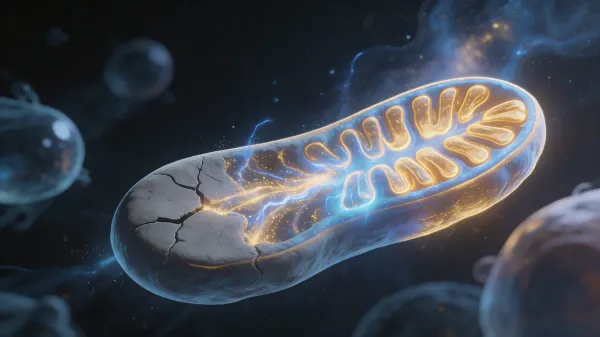
Every cell in your body contains hundreds to thousands of tiny power plants called mitochondria. They produce most ATP in oxygen-using tissues. When these power plants become less efficient with age, the effects can ripple through energy-demanding systems such as muscle, brain, heart, and immunity.
Mitochondrial dysfunction is one hallmark of aging and interacts with many other aging processes: from chronic inflammation and cellular senescence to metabolic decline and neurodegeneration. Understanding what goes wrong with your mitochondria — and what you can do about it — is a practical way to think about energy, resilience, and long-term health.
The encouraging news? Mitochondrial health is responsive to training, sleep, nutrition, and metabolic health. Exercise, fasting-style routines, sleep, and specific nutritional strategies can improve markers of mitochondrial function — even in later life.
What you’ll learn:
- How mitochondria produce energy and why this process degrades with age
- The vicious cycle of oxidative stress and mitochondrial DNA damage
- How mitochondrial dysfunction connects to other hallmarks of aging
- 7 evidence-based strategies to protect mitochondrial function
What are mitochondria?
Mitochondria are double-membraned organelles found in nearly every cell in your body. They evolved from ancient bacteria that were engulfed by early eukaryotic cells over 1.5 billion years ago — a symbiotic merger that made complex life possible.
Quick definition: Mitochondria are the primary energy-producing organelles in your cells. They convert nutrients from food into adenosine triphosphate (ATP) — the energy currency that supports many cellular processes, from muscle contraction to DNA repair.
Your heart, brain, liver, and skeletal muscles contain high mitochondrial concentrations because they have large energy demands.
Why mitochondrial health matters for aging
Beyond energy production, mitochondria regulate:
- Calcium signaling — essential for nerve and muscle function
- Apoptosis (programmed cell death) — removing damaged cells before they become harmful
- Reactive oxygen species (ROS) — signaling molecules that become destructive in excess
- Metabolic flexibility — the ability to switch between burning glucose and fats
- Immune signaling — mitochondria activate innate immune responses
When mitochondrial function declines, these processes can become less efficient or dysregulated. The result is a body that produces less energy, accumulates more damage, and recovers more slowly — the essential features of biological aging.
The science behind mitochondrial aging
How mitochondria produce energy
The electron transport chain (ETC), located on the inner mitochondrial membrane, is where ATP production happens. Through a series of four protein complexes (Complexes I–IV), electrons are passed along the chain, pumping protons across the membrane. This proton gradient drives ATP synthase (sometimes called Complex V) — a molecular turbine that can produce roughly 30-32 ATP molecules per glucose molecule under aerobic conditions.
This process is extraordinarily efficient, but it has a fundamental vulnerability: it generates reactive oxygen species (ROS) as a byproduct. Under normal conditions, ROS serve as important signaling molecules. But when mitochondria become damaged, ROS production increases dramatically — and this is where the trouble begins.
The vicious cycle of mitochondrial damage
Mitochondrial aging follows a devastating feedback loop:
-
ROS damage mitochondrial DNA (mtDNA): Unlike nuclear DNA, mtDNA has no protective histone proteins and limited repair mechanisms. It’s also located directly adjacent to the electron transport chain — the primary source of ROS. This helps explain why mtDNA is often described as especially vulnerable to oxidative stress.
-
Damaged mtDNA produces faulty proteins: Mitochondrial DNA encodes 13 essential proteins of the electron transport chain. Mutations in mtDNA produce defective ETC components that leak even more electrons, generating more ROS.
-
More ROS cause more damage: The increased ROS production damages more mtDNA, creating a self-amplifying cycle that progressively degrades mitochondrial function.
-
Damaged mitochondria resist removal: Normally, cells eliminate dysfunctional mitochondria through a process called mitophagy (mitochondria-specific autophagy). But aging impairs mitophagy efficiency, allowing damaged mitochondria to accumulate rather than being recycled. One of the most studied natural mitophagy activators is urolithin A — a gut-derived metabolite from pomegranates and berries that has shown improvements in some muscle-performance and mitochondrial-health markers in human trials.
What happens when mitochondria fail
The consequences of mitochondrial dysfunction ripple through the entire body:
| System | Effect of mitochondrial decline | Clinical manifestation |
|---|---|---|
| Muscles | Reduced ATP for contraction | Weakness, exercise intolerance, sarcopenia |
| Brain | Energy deficit in neurons | Brain fog, cognitive decline, neurodegeneration |
| Heart | Impaired cardiac output | Reduced exercise capacity, heart failure risk |
| Immune system | Dysregulated immune activation | Chronic inflammation, impaired pathogen response |
| Metabolism | Loss of metabolic flexibility | Insulin resistance, weight gain, fatigue |
Mitochondrial dysfunction and longevity: what the research says
Evidence links mitochondrial health to aging biology, functional capacity, and longevity-related outcomes:
- VO2 max is a standard measure of cardiorespiratory fitness and a useful proxy for integrated oxygen delivery and muscle oxidative capacity. Higher cardiorespiratory fitness is consistently associated with lower all-cause mortality, with the largest differences seen between the least-fit and highest-fit groups.
- Centenarian studies often report better-preserved mitochondrial markers compared to age-matched controls, including higher mtDNA copy numbers or more efficient electron transport in some tissues.
- Caloric restriction extends lifespan in many model organisms, partly by reducing ROS production, activating mitophagy, and stimulating mitochondrial biogenesis (the creation of new mitochondria).
- NAD+ biology is closely tied to mitochondrial maintenance. NAD+ is essential for redox reactions and sirtuin signaling, but human data on age-related NAD+ changes remain tissue-specific and incomplete.
How mitochondrial dysfunction connects to other hallmarks of aging
Mitochondrial dysfunction doesn’t operate in isolation — it’s deeply intertwined with other hallmarks of aging:
Deregulated nutrient sensing
The AMPK and mTOR pathways directly regulate mitochondrial biogenesis and mitophagy. When AMPK activation declines with age, new mitochondria production slows. When mTOR is chronically overactivated, mitophagy is suppressed, and damaged mitochondria accumulate.
Disabled macroautophagy
Autophagy — and specifically mitophagy — is the cell’s primary mechanism for removing dysfunctional mitochondria. Age-related autophagy decline means damaged power plants aren’t recycled, further amplifying oxidative stress and energy deficits.
Cellular senescence
Mitochondrial dysfunction is both a cause and consequence of cellular senescence. Senescent cells exhibit severely impaired mitochondrial function, and the senescence-associated secretory phenotype (SASP) they produce further damages mitochondria in neighboring cells.
Chronic inflammation (inflammaging)
Damaged mitochondria release mtDNA fragments and cardiolipin into the cytoplasm, which can activate the NLRP3 inflammasome and trigger inflammatory cascades. This mitochondria-driven signaling can contribute to the chronic, low-grade inflammation that characterizes aging.
Epigenetic alterations
Mitochondrial metabolism provides the substrates for epigenetic modifications — including acetyl-CoA for histone acetylation and SAM for DNA methylation. When mitochondrial function declines, the supply of these epigenetic substrates becomes erratic, contributing to epigenetic drift.
7 evidence-based ways to support mitochondrial health
Mitochondria remain adaptable across adulthood. The right interventions can improve mitochondrial biogenesis, oxidative capacity, and quality-control signaling, though the size of the response varies by age, baseline fitness, disease status, and consistency.
1. Exercise — the most potent mitochondrial stimulus
Why it works: Exercise is one of the strongest lifestyle stimuli for mitochondrial biogenesis. Aerobic and resistance training can improve mitochondrial content, enzyme activity, and oxidative capacity by activating AMPK and PGC-1α, the master regulator of mitochondrial biogenesis.
How to do it:
- Zone 2 training (60–70% max heart rate) for 150–180 minutes/week — a practical range for aerobic mitochondrial adaptation
- High-intensity intervals 1–2 times/week — strongly challenges oxidative capacity and mitochondrial turnover pathways
- Resistance training 2–3 sessions/week — preserves muscle mitochondrial density
Expected results: Measurable fitness and mitochondrial-enzyme improvements can appear within weeks when training is consistent.
2. Optimize NAD+ precursors through diet
Why it works: NAD+ is essential for mitochondrial energy production (as an electron carrier in the ETC) and for sirtuin-mediated mitochondrial maintenance. Supporting NAD+ synthesis through diet helps maintain mitochondrial function without relying on supplementation.
How to do it:
- Eat tryptophan-rich foods (turkey, chicken, fish, eggs) — precursors for de novo NAD+ synthesis
- Consume niacin-rich foods (poultry, tuna, mushrooms, green peas) — direct NAD+ precursor
- Include fermented foods — some gut bacteria contribute to NAD+ metabolism
- Minimize excessive alcohol — depletes NAD+ through its metabolism
Expected results: Improved dietary substrate availability can support NAD+ metabolism, but systemic benefits vary by baseline nutrition, health status, and training. For those considering supplemental NAD+ precursors (NMN or NR), see our NMN vs NR comparison for a breakdown of the clinical evidence behind each option.
3. Practice time-restricted eating or intermittent fasting
Why it works: Fasting activates AMPK, which triggers PGC-1α-mediated mitochondrial biogenesis. It simultaneously activates mitophagy through the PINK1/Parkin pathway, clearing damaged mitochondria. The metabolic switch from glucose to fatty acid oxidation during fasting also improves mitochondrial metabolic flexibility.
How to do it:
- Start with a 12-hour overnight fast and gradually extend to 14–16 hours if comfortable
- Ensure adequate nutrition during eating windows — fasting benefits disappear if nutrition is poor
- Avoid late-night eating — it disrupts circadian mitochondrial rhythms
- Consider longer fasting only with appropriate medical context, especially if you take glucose-lowering medication, are underweight, pregnant, or have a history of disordered eating
Expected results: Fasting can shift fuel use and activate nutrient-sensing pathways; mitochondrial effects depend on duration, frequency, and overall nutrition.
4. Prioritize deep sleep
Why it works: Sleep supports mitochondrial repair and quality-control processes. During deep sleep (N3 stage), cells appear to coordinate autophagy, oxidative-stress management, and metabolic repair. Sleep disruption is linked with oxidative stress, metabolic dysfunction, and impaired cellular repair.
How to do it:
- Target 7–9 hours total sleep with at least 1.5 hours of deep sleep
- Maintain consistent sleep-wake schedules (within 30 minutes daily)
- Keep bedroom cool: 65–68°F (18–20°C)
- Avoid caffeine after 2 PM — it disrupts adenosine signaling that drives deep sleep
Expected results: Better sleep can improve recovery and metabolic markers within weeks, though direct mitochondrial changes are harder to measure.
5. Use cold exposure strategically
Why it works: Cold exposure activates brown adipose tissue (BAT), which is packed with mitochondria. Regular cold exposure stimulates mitochondrial biogenesis in brown fat through UCP1 activation and increases PGC-1α expression. It also triggers a hormetic response that strengthens mitochondrial stress resistance.
How to do it:
- Cold showers: 1–3 minutes at the end of your shower, gradually lowering temperature
- Cold water immersion: 1–3 minutes at 50–59°F (10–15°C), 2–3 times per week
- Cool room sleeping: 60–65°F (16–18°C) supports BAT activation overnight
- Build tolerance gradually — extreme cold without adaptation is counterproductive
Expected results: Cold exposure can increase cold tolerance and may activate brown-fat thermogenesis, but mitochondrial changes vary widely.
6. Eat a mitochondria-supporting diet
Why it works: Mitochondria require specific nutrients as cofactors for the electron transport chain and antioxidant defense systems. Deficiencies in key nutrients directly impair energy production and increase oxidative damage.
Key nutrients for mitochondrial health:
| Nutrient | Role in mitochondria | Food sources |
|---|---|---|
| CoQ10 | Electron carrier in ETC | Organ meats, sardines, peanuts |
| Magnesium | ATP synthesis cofactor | Dark leafy greens, nuts, seeds |
| B vitamins | ETC complex components | Whole grains, eggs, legumes |
| Alpha-lipoic acid | Mitochondrial antioxidant | Spinach, broccoli, organ meats |
| Omega-3 fatty acids | Membrane integrity | Fatty fish, walnuts, flaxseed |
| Creatine | Energy buffer system | Red meat, fish |
| PQQ | Mitochondrial biogenesis (PGC-1α) | Natto, parsley, kiwi |
How to do it:
- Prioritize a nutrient-dense, whole-food diet rich in the sources above
- Eat colorful vegetables and fruits — polyphenols like resveratrol and quercetin activate mitochondrial biogenesis pathways
- Minimize ultra-processed foods — they increase oxidative stress and impair mitochondrial function
- Consider adaptogenic mushrooms: cordyceps activates AMPK and supports mitochondrial ATP production, with human trials showing aerobic capacity improvements in older adults over 3–12 weeks
Expected results: Energy and exercise tolerance may improve over weeks when nutrient gaps and training consistency improve.
7. Reduce environmental toxin exposure
Why it works: Many common environmental toxins can impair mitochondrial function. Pesticides such as rotenone and paraquat inhibit Complex I in experimental models. Heavy metals (mercury, lead, arsenic) can damage ETC proteins. Air pollutants increase mitochondrial ROS production. Reducing exposure lowers ongoing sources of mitochondrial stress.
How to do it:
- Choose organic produce when possible, especially for high-pesticide items
- Filter drinking water to remove heavy metals
- Improve indoor air quality with ventilation and air purifiers
- Minimize plastic food container use, especially when heating food
- Avoid smoking and secondhand smoke exposure
Expected results: Reduced exposure lowers ongoing stress; measurable biomarker changes depend on the toxin, baseline burden, and duration.
How to track mitochondrial health
Direct mitochondrial assessment requires muscle biopsies or specialized blood tests. However, several accessible proxy biomarkers correlate strongly with mitochondrial function:
| Metric | Connection to mitochondria | How to track |
|---|---|---|
| VO2 max | Useful proxy for integrated oxygen delivery and muscle oxidative capacity | Apple Watch / fitness test |
| Resting heart rate | Lower RHR often reflects better cardiovascular efficiency and recovery | Wearable / Apple Watch |
| LDH (lactate dehydrogenase) | Elevated LDH suggests mitochondrial energy pathway impairment | Blood test |
| Exercise recovery time | Faster recovery can indicate better training tolerance and energy-system resilience | Wearable tracking |
| Fasting glucose | Elevated glucose suggests impaired mitochondrial metabolic flexibility | Blood test |
| Body energy / HRV | Indirectly reflects autonomic balance, recovery, and energy availability | Apple Watch / SuperAge |
How SuperAge helps you monitor mitochondrial health
While you can’t directly measure mitochondrial function from your wrist, SuperAge tracks the lifestyle factors and biomarkers most closely tied to mitochondrial health.
VO2 max tracking
VO2 max is one accessible real-world proxy for integrated cardiorespiratory and mitochondrial capacity. SuperAge tracks your estimated VO2 max over time and shows how it compares to age-matched norms. Improving VO2 max often reflects better oxygen delivery, cardiac output, muscle oxidative capacity, and training adaptation.
Body energy monitoring
SuperAge’s body energy feature reflects your body’s overall energy balance throughout the day — a metric influenced by mitochondrial ATP production capacity, sleep quality, and recovery status. Consistently low body energy may reflect poor sleep, under-recovery, illness, stress, or other factors that can overlap with cellular-energy strain.
Exercise and recovery tracking
By monitoring training load, intensity distribution, and recovery metrics, SuperAge helps you optimize the exercise stimulus that drives mitochondrial biogenesis — without chronic overreaching, which can worsen recovery and oxidative stress.
Biological age estimation
Your biological age integrates multiple metrics that correlate with mitochondrial health — including VO2 max, resting heart rate, HRV, and activity levels. A lower biological-age estimate can be consistent with better-preserved fitness and metabolic health, but it is not a direct mitochondrial assay.
Frequently asked questions
Can you reverse mitochondrial dysfunction?
You can often improve mitochondrial function, but “reverse” is too broad. Structured exercise can improve oxidative capacity and mitochondrial content even in older adults, and fasting-style interventions can influence nutrient-sensing and quality-control pathways. Complete reversal of age-accumulated mtDNA mutations is not currently possible.
What are the early signs of mitochondrial dysfunction?
The earliest signs are often persistent fatigue that doesn’t improve with rest, exercise intolerance (difficulty maintaining previously comfortable intensities), brain fog or cognitive slowness, and prolonged recovery after physical activity. These symptoms reflect declining ATP production across energy-demanding tissues.
How does mitochondrial dysfunction relate to biological age?
Mitochondrial function is one contributor to biological-age patterns. People with better cardiorespiratory fitness, metabolic flexibility, and recovery patterns often show more favorable biological-age estimates. Conversely, poor fitness, metabolic dysfunction, inadequate recovery, and toxic exposure can push biological-age estimates in an unfavorable direction.
Does CoQ10 supplementation help with mitochondrial function?
CoQ10 (ubiquinone) is a critical electron carrier in the mitochondrial ETC, and its levels decline with age. While CoQ10 supplementation has shown benefits in specific conditions (heart failure, statin-related muscle issues), evidence for broad longevity benefits in healthy individuals is mixed. Dietary sources and exercise may be more effective at maintaining CoQ10 levels. Always consult a healthcare provider before supplementation.
What’s the connection between mitochondria and NAD+?
NAD+ is essential for mitochondrial energy production — it acts as an electron carrier in the ETC, shuttling electrons between complexes. NAD+ also activates sirtuins (SIRT1 and SIRT3), which regulate mitochondrial biogenesis and repair. NAD+ biology appears to change with age, but human tissue data are still limited; supplementation should be interpreted cautiously.
Key takeaways
- Mitochondria are your cells’ power plants: they produce most ATP in aerobic tissues, and declining function can affect energy-demanding organs
- Aging creates a vicious cycle: ROS damage mitochondrial DNA, producing faulty ETC components that generate more ROS — a self-amplifying loop
- Mitochondrial dysfunction connects to multiple hallmarks: it can promote inflammatory signaling, impair autophagy, disrupt epigenetic regulation, and contribute to cellular senescence
- Exercise is a core intervention: aerobic and resistance training can improve mitochondrial capacity and VO2 max across adulthood
- Track proxy biomarkers: VO2 max, resting heart rate, HRV, and body energy indirectly reflect systems tied to mitochondrial health and can be monitored through SuperAge
Protect your cellular power plants today
Your mitochondria influence how much energy you have, how well you recover, and how resilient your tissues are under stress. The repeated pattern of your training, sleep, and nutrition can nudge these critical organelles toward better or worse function over time.
Ready to take control? Download SuperAge and start tracking VO2 max, body energy, and biological age — metrics that capture the systems most closely tied to mitochondrial health.
References
- López-Otín, C., et al. (2023). “Hallmarks of aging: An expanding universe.” Cell, 186(2), 243–278 — Mitochondrial dysfunction as an antagonistic hallmark
- Chinnery, P.F. & Hudson, G. (2013). “Mitochondrial genetics.” British Medical Bulletin, 106(1), 135–159 — mtDNA vulnerability and mutation accumulation
- Hood, D.A., et al. (2019). “Maintenance of skeletal muscle mitochondria in health, exercise, and aging.” Annual Review of Physiology, 81, 19–41 — Exercise-induced mitochondrial biogenesis
- Yoshino, J., et al. (2018). “NAD+ intermediates: The biology and therapeutic potential of NMN and NR.” Cell Metabolism, 27(3), 513–528 — NAD+ decline and mitochondrial aging
- Sun, N., et al. (2016). “The mitochondrial basis of aging.” Molecular Cell, 61(5), 654–666 — ROS-mtDNA damage feedback loop
- Manczak, M., et al. (2022). “Mitochondrial dysfunction in aging and age-related disorders.” Frontiers in Physiology, 15 — Systemic effects of mitochondrial decline
- Memme, J.M., et al. (2021). “Exercise and mitochondrial health.” Journal of Physiology, 599(3), 803–817 — Exercise as mitochondrial medicine
Last updated: 2026-07-06. This article is regularly reviewed to ensure accuracy.
Related Articles
Proteostasis: How cellular quality control changes with age
Discover how loss of proteostasis contributes to aging — from misfolded proteins to neurodegenerative disease — and evidence-based ways to support protein quality control.