Sarcopenia: What it is, symptoms, and 7 strategies to prevent muscle loss
Discover what sarcopenia is, the symptoms of muscle mass loss, and science-backed strategies to prevent it. Complete guide with exercises and nutrition.
After age 50, inactive adults commonly lose about 1 to 2% of muscle mass per year, while strength can decline even faster. By age 80, total losses vary widely by activity level, nutrition, and disease burden. It’s not a pleasant prospect, but there’s good news: sarcopenia can be prevented and, in many cases, reversed.
For the perimenopause-specific muscle timeline, see Muscle loss in perimenopause: how early does it start?.
Sarcopenia prevention works best when you track muscle quality vs muscle size instead of watching muscle mass alone.
Age-related muscle loss isn’t just a cosmetic issue. Weaker muscles mean compromised balance and fall risk, loss of independence, and according to research, a significantly higher mortality risk.
But here’s the point: sarcopenia isn’t inevitable. With the right exercise and nutrition strategies, you can maintain and even rebuild your muscle mass at any age.
In this article you’ll learn:
- What exactly sarcopenia is and when it starts
- Warning signs you shouldn’t ignore
- 7 scientifically proven strategies to prevent it
- The most effective exercises for maintaining muscle mass
- How to track your strength and progress
What Is Sarcopenia?
Sarcopenia is a syndrome characterized by the progressive and generalized loss of skeletal muscle mass, strength, and function. The term comes from the Greek sarx (flesh) and penia (lack): literally “lack of flesh.”
Quick Definition: Sarcopenia is the age-related loss of muscle mass and strength that increases the risk of falls, disability, and mortality.
When Does Sarcopenia Start?
Muscle loss begins earlier than you think:
- From age 30: Muscle mass starts decreasing by 0.1-0.5% per year
- After 50: Loss accelerates to 1-2% per year
- After 60: Strength and power often decline faster than muscle size, sometimes approaching 2-3% per year
- By age 80: Cumulative muscle and strength losses can be substantial, especially without training — see how much muscle you lose per decade for a full breakdown by age group
Guideline Update (AWGS 2025)
The Asian Working Group for Sarcopenia published a significant 2025 consensus update in Nature Aging that may influence future guideline updates beyond Asia. Key changes:
- Sarcopenia diagnosis now requires only concurrent low muscle mass AND low muscle strength — physical performance measures (gait speed, chair stand) are reclassified as outcome indicators rather than diagnostic criteria
- Diagnosis extended to middle-aged adults (50–64 years), making AWGS 2025 the first global sarcopenia guideline to provide validated thresholds for this age group
- The framework shifts from a disease-centered view to a broader “muscle health” model, aligning with the WHO Integrated Care for Older People (ICOPE) framework
- Categories: at-risk → possible sarcopenia → confirmed sarcopenia
The Three Stages of Sarcopenia (EWGSOP2)
The European EWGSOP2 criteria (2019, still current) categorize progression as:
| Stage | Characteristics | Impact |
|---|---|---|
| Pre-sarcopenia | Reduced muscle mass, strength preserved | Minimal |
| Sarcopenia | Reduced mass and muscle strength | Moderate |
| Severe sarcopenia | Reduced mass, strength, and physical performance | Severe |
Primary vs Secondary Sarcopenia
- Primary sarcopenia: Caused exclusively by the normal aging process
- Secondary sarcopenia: Accelerated by factors such as sedentary lifestyle, malnutrition, or chronic diseases
Why Sarcopenia Matters for Your Longevity
Muscle mass isn’t just about strength or physical appearance. It’s a true metabolic organ that influences almost every aspect of your health.
Muscles and Longevity: What Science Says
Research published in journals like The Lancet and Age and Ageing has shown that:
- Grip strength is one of the best predictors of mortality — you can measure yours at home in 5 minutes
- Every 11 lbs (5 kg) reduction in grip strength increases cardiovascular death risk by 17%
- Muscle mass is correlated with better glycemic control and metabolism
- Stronger muscles protect bones and joints
The decline in muscle function shows up measurably across 7 functional fitness tests — from chair stands to VO2 max — each of which predicts lifespan independently.
The Consequences of Sarcopenia
Physical consequences:
- Increased risk of falls (and fractures)
- Difficulty with daily activities (climbing stairs, getting up from a chair)
- Reduced basal metabolism and lower daily active calorie burn, increasing body fat
- Higher risk of osteoporosis
Quality of life consequences:
- Loss of independence
- Social isolation
- Depression and anxiety
- More frequent hospitalizations
Sarcopenia Symptoms: Warning Signs
Sarcopenia develops gradually, making it difficult to recognize in the early stages. Here are the signs to watch for.
Early Signs
- Reduced strength: Difficulty opening jars, carrying groceries
- Rapid fatigue: Getting tired easily during daily activities
- Loss of endurance: Not being able to walk as far as before
- Slowing down: Walking more slowly than usual
Advanced Signs
- Difficulty standing up: Needing to use arms to get up from a chair — if you suspect this applies to you, the 30-second chair stand test provides a validated score to quantify your lower-body strength
- Problems with stairs: Shortness of breath going up, or difficulty controlling your speed going down — declining stair descent speed is often an earlier warning sign than ascent difficulty
- Frequent falls: Loss of balance or repeated stumbling — if you have an iPhone, check your walking steadiness score in the Health app to quantify your current fall risk
- Unintentional weight loss: Losing weight without apparent reason
Most Affected Body Areas
Areas where muscle loss is most evident:
- Arms: Less defined biceps and triceps
- Calves: Visible reduction in circumference
- Thighs: Thinner quadriceps and hamstrings
- Glutes: Loss of tone and volume
Quick Self-Assessment: Can you stand up from a chair without using your arms? Can you climb a flight of stairs without getting winded? If you struggle, it might be time to take action.
Causes of Sarcopenia
Understanding the causes is the first step to preventing and combating muscle loss.
Biological Causes (Aging)
- Reduction in anabolic hormones: Testosterone, GH, IGF-1 decrease with age
- Chronic low-grade inflammation: Inflammaging accelerates muscle catabolism
- Mitochondrial dysfunction: Mitochondria produce less energy for muscles
- Reduction in satellite cells: Less ability to regenerate muscle fibers
- Neuromuscular changes: Loss of motor neurons and neuromuscular junctions
Modifiable Factors
Sedentary lifestyle:
- Muscle follows the “use it or lose it” rule
- Even 2 weeks of inactivity cause significant muscle loss
- Modern lifestyle promotes sedentary behavior
Inadequate nutrition:
- Insufficient protein intake
- Vitamin D deficiency
- Unintentional caloric deficit
- Reduced nutrient absorption
Chronic diseases:
- Type 2 diabetes
- Heart failure
- COPD
- Kidney disease
- Cancer
7 Science-Backed Strategies to Prevent Sarcopenia
The good news? Sarcopenia responds exceptionally well to intervention. Even people in their 80s can significantly increase muscle mass and strength with the right approach.
1. Resistance Training
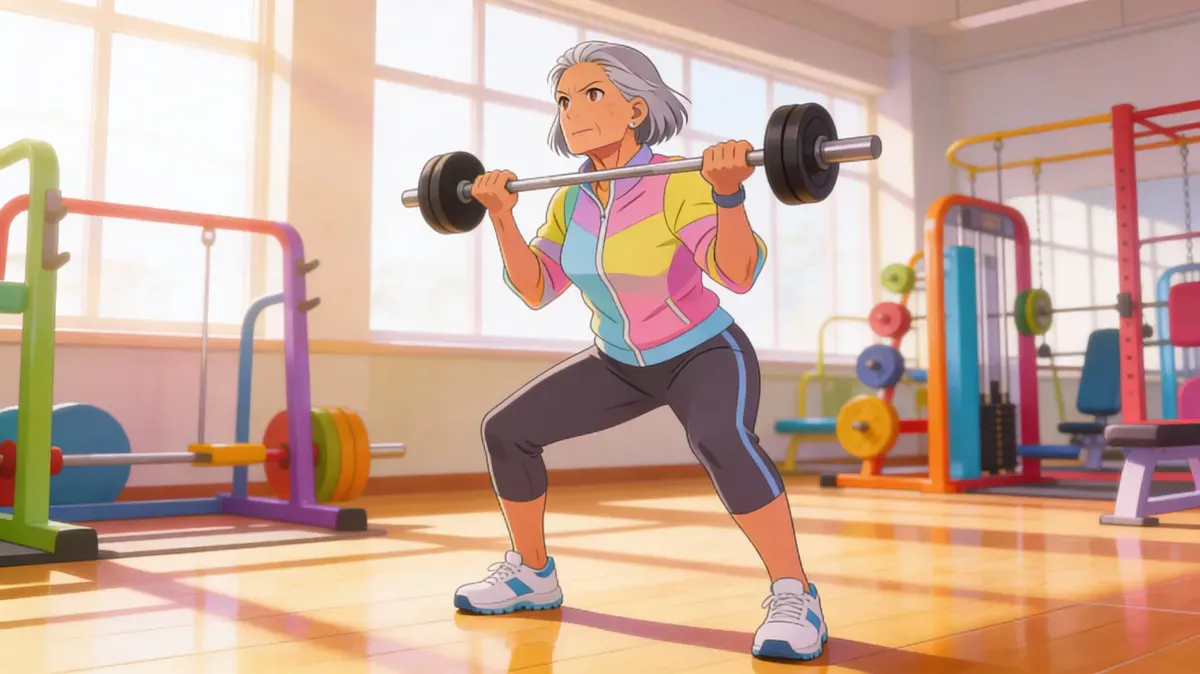
Why it works: Resistance training is the most powerful stimulus for muscle protein synthesis and hypertrophy. Studies show it’s effective at any age.
How to do it:
- Frequency: 2-3 sessions per week
- Duration: 30-45 minutes per session to start; progress toward 50-60 minutes if recovery, supervision, and tolerance are good
- Intensity: Moderate (60-70% of max)
- Volume: 2-3 sets of 8-15 reps per exercise
Fundamental exercises:
- Squats (or chair stands)
- Lunges
- Push-ups (or modified version)
- Resistance band rows
- Shoulder press
Expected results: After 8-12 weeks of consistent training, you can expect meaningful increases in strength (studies report 25–100% depending on baseline) and modest gains in muscle mass (typically 1–5% in sarcopenic older adults). A 2025 network meta-analysis found that combining exercise with nutrition, especially resistance training plus protein, ranked best for handgrip strength, gait speed, and appendicular muscle mass, with a 3.69 kg mean improvement in handgrip strength vs. control; however, the authors rated the certainty of evidence as low to very low, so individual results still vary. Adding an eccentric training emphasis — focusing on the lowering phase — can increase these gains by a further 40-50% because eccentric contractions produce a stronger growth signal per unit of effort. Combining resistance training with creatine supplementation amplifies these gains: a 2025 duration-stratified systematic review confirmed that 5 g/day (0.1–0.14 g/kg/day) of creatine monohydrate plus 2–3 weekly resistance sessions for at least 8 weeks reliably increases appendicular lean mass and upper- and lower-body strength in older adults. Creatine also preserves bone mineral density in tandem with muscle — see the detailed guide on creatine’s brain and bone benefits for the complete picture.
2. Optimize Protein Intake
Why it works: Proteins provide essential amino acids for building and repairing muscle tissue. With age, the body becomes less efficient at using them — a phenomenon scientists call anabolic resistance. For a detailed breakdown of how much protein you actually need after 40, including per-meal dosing strategies, see our dedicated guide.
How much to consume:
- Healthy older adults: 1.0–1.2 g/kg of body weight per day (the legacy adult RDA is 0.8 g/kg, but aging muscle often needs more stimulus)
- With sarcopenia or at risk: 1.2–1.5 g/kg of body weight per day
- With chronic kidney disease: do not exceed 1.3 g/kg/day without clinical supervision
- Practical example: A 154 lbs (70 kg) person should consume 84–105 g of protein daily
A small 2025 indicator amino acid oxidation study in older adults with sarcopenia estimated an average protein requirement of 1.21 g/kg/day and a recommended intake of 1.54 g/kg/day. Because the study was small, don’t treat 1.54 g/kg as a universal target; treat 1.2 g/kg/day as a practical floor and individualize upward when you are frail, losing weight, or rebuilding muscle.
Optimal distribution:
- Divide protein across 3-4 meals
- 25-30 g of protein per meal to maximize protein synthesis — crossing the leucine threshold every meal is critical after 40
- Protein-rich breakfast is essential (often neglected)
Best protein sources:
- Chicken, turkey, fish
- Eggs
- Dairy (Greek yogurt, cottage cheese)
- Legumes (lentils, chickpeas, beans)
- Tofu and tempeh
For a detailed ranking of which sources deliver the highest leucine content and bioavailability after 50, see our guide to the best protein sources for longevity after 50.
3. Don’t Neglect Vitamin D
Why it works: Vitamin D is essential for muscle function, and deficiency is extremely common in older adults. Current reviews suggest vitamin D alone is unlikely to rebuild strength if you are already sufficient, but correcting deficiency can support muscle function, fall prevention, and the response to protein plus resistance training.
Optimal levels:
- Target: 30-50 ng/mL in blood
- Many elderly are below 20 ng/mL
How to get it:
- Sun: 15-20 minutes of exposure daily (arms and legs uncovered)
- Foods: Fatty fish, eggs, mushrooms, fortified foods
- Supplementation: 1000-2000 IU/day of vitamin D3 (not D2) (consult doctor for higher doses)
4. Add Aerobic Exercise
Why it works: Aerobic activity improves circulation to muscles, insulin sensitivity, and mitochondrial function.
How to do it:
- Frequency: 3-5 times per week
- Duration: 20-30 minutes
- Intensity: Moderate (you can talk but with some breathlessness)
Recommended activities:
- Brisk walking (3-3.7 mph / 5-6 km/h) — research shows that 7,000 daily steps at a brisk pace can reduce all-cause mortality by 47%
- Swimming
- Cycling
- Nordic walking
- Running — if you’re over 40 and want to add running to your routine, our beginner’s guide to running after 40 covers a safe, progressive approach
Tip: Always combine aerobic and resistance training. Aerobic alone doesn’t prevent sarcopenia; strength training is needed.
5. Prioritize Quality Sleep
Why it works: During deep sleep, the body releases GH (growth hormone), essential for muscle repair and building.
Goals:
- 7-8 hours of sleep per night
- Quality > quantity: deep sleep is crucial
Strategies to improve sleep:
- Regular sleep and wake times
- Dark, cool room
- No screens 1 hour before bed
- Avoid caffeine after 2:00 PM
6. Control Inflammation
Why it works: Chronic low-grade inflammation accelerates muscle catabolism. Reducing it protects muscle mass.
Anti-inflammatory foods:
- Fatty fish (omega-3)
- Leafy green vegetables
- Berries
- Extra virgin olive oil
- Nuts and seeds
A plant-forward dietary pattern naturally delivers most of these foods while also reducing IGF-1 and mTOR activation — both of which contribute to the chronic inflammation that accelerates muscle catabolism.
Avoid:
- Refined sugars
- Ultra-processed foods
- Excess alcohol
- Trans fats
7. Maintain a Healthy Body Weight
Why it works: Sarcopenic obesity (combination of excess fat and muscle loss) is particularly dangerous. Maintaining a healthy weight preserves muscle function.
Watch out for:
- Avoiding crash diets that cause muscle loss
- If losing weight, increase protein and do resistance training
- Focus on body composition, not just weight
- Consider body recomposition — losing fat while gaining muscle at stable weight — for a measurable biological-age benefit beyond the scale
2026 Update — GLP-1 Drugs and Muscle Preservation: If you’re taking semaglutide (Ozempic/Wegovy), tirzepatide (Zepbound/Mounjaro), or a similar GLP-1-based therapy for weight loss, don’t interpret every pound of “lean mass” loss as lost skeletal muscle. A 2026 systematic review found that fat loss predominates and lean tissue is relatively preserved, while a 2026 Cell Reports Medicine study found no disproportionate loss of muscle function in middle-aged adults. The caution still matters for older or frail adults: trial estimates vary, and some analyses report roughly 25–40% of total weight lost as lean mass, which can be clinically important if you start with low reserves. Mitigation strategy: combine therapy with 1.2–1.6 g/kg/day of protein (using adjusted body weight when appropriate), 20–30 g per meal, plus resistance training 2–3×/week. Adjunct supplements with evidence include leucine, HMB, creatine, omega-3, and vitamin D when deficient. On the horizon: the BELIEVE Phase 2 trial showed that the investigational activin-pathway inhibitor bimagrumab plus semaglutide produced greater fat loss while preserving more lean mass than semaglutide alone, but this is not standard clinical care yet.
Specific Exercises to Combat Sarcopenia
Basic Program for Beginners
Warm-up (5-10 minutes):
- Marching in place
- Arm circles
- Joint movements (dynamic movements are preferable to static stretches here — the evidence on stretching and injury prevention shows dynamic warm-ups outperform static holds before exercise)
Strength circuit (30 minutes, 2-3 times per week):
| Exercise | Sets | Reps | Notes |
|---|---|---|---|
| Chair stands | 3 | 10-15 | Without using arms |
| Wall push-ups | 3 | 10-12 | Push-ups against the wall |
| Step-ups | 3 | 10 per leg | Use railing if needed |
| Resistance band rows | 3 | 12-15 | Pull toward abdomen |
| Glute bridges | 3 | 12-15 | Lift hips off the ground |
| Plank | 3 | 20-30 sec | Or knee version |
Cool-down (5 minutes):
- Gentle stretching
- Deep breathing
Progression Over Time
Weeks 1-4: Focus on technique, light loads Weeks 5-8: Increase reps or sets Weeks 9-12: Introduce greater resistance (stronger bands, light dumbbells) After 12 weeks: Consider a more advanced program with a professional
How to Measure Your Muscle Strength
Tracking progress is essential for staying motivated and verifying program effectiveness.
Self-Assessment Tests
Chair Stand Test (30-Second Chair Stand):
- Sit on a chair without armrests
- Cross arms over chest
- Stand up and sit down as many times as possible in 30 seconds
| Age | Below Average | Average | Above Average |
|---|---|---|---|
| 60-64 | <14 | 14-19 | >19 |
| 65-69 | <12 | 12-18 | >18 |
| 70-74 | <12 | 12-17 | >17 |
| 75-79 | <11 | 11-17 | >17 |
| 80+ | <10 | 10-14 | >14 |
- Measure time to walk 13 ft (4 meters)
- Normal speed: >2.6 ft/s (0.8 m/s)
- Reduced speed: <2.6 ft/s (0.8 m/s) may indicate sarcopenia
How SuperAge Helps You Monitor Your Muscle Health
Tracking your physical activity and health parameters related to muscle strength can be complex. SuperAge simplifies this process by integrating your Apple Watch data to give you a complete picture.
Physical Activity Monitoring
SuperAge automatically tracks your workout sessions, allowing you to:
- See how many strength sessions you do each week
- Monitor your training consistency over time
- Correlate physical activity with other health parameters
Parameters Related to Muscle Health
Through HealthKit, SuperAge monitors indicators that reflect your overall physical condition:
- VO2 max: Improves with regular training
- Resting heart rate: Decreases with better fitness
- Heart rate variability (HRV): Indicates recovery and training adaptation
- Activity level: Ensures you’re moving enough every day
Biological Age and Muscle Strength
Your biological age is influenced by many factors, including your cardiovascular fitness and physical activity level. Maintaining muscle mass and strength contributes to:
- Improving your aerobic capacity (VO2 max)
- Optimizing metabolism
- Keeping your biological age younger than your chronological age
Frequently Asked Questions About Sarcopenia
At what age does sarcopenia start?
Muscle loss begins gradually around age 30, but becomes clinically significant after 50-60 years. After 65, sarcopenia prevalence ranges from 5–13% among those in their early 60s, rising to up to 50% in adults over 80, depending on diagnostic criteria used.
Can sarcopenia be reversed?
Yes, in most cases. Studies show that even people over 80 can significantly increase muscle mass and strength with appropriate resistance training programs. The key is to start, regardless of age.
How much protein should I eat to prevent sarcopenia?
Experts recommend 1.0–1.2 g of protein per kg of body weight per day for healthy older adults, with 1.2 g/kg a practical floor when appetite is low or training volume is rising. Those at risk or already with sarcopenia should aim for 1.2–1.5 g/kg, and some weight-loss or GLP-1 users may need 1.2–1.6 g/kg under clinical guidance. Example: a 154 lbs (70 kg) person should consume 84–105 g of protein daily. People with chronic kidney disease should not exceed 1.3 g/kg without medical supervision.
What’s the best exercise for sarcopenia?
Resistance training (weights, bands, bodyweight exercises) is most effective. Ideally, 2-3 sessions per week involving all major muscle groups. Aerobic exercise is helpful but not sufficient alone.
Is sarcopenia dangerous?
Yes. Sarcopenia significantly increases the risk of falls, fractures, disability, and loss of independence — the defining features of frailty — as well as higher mortality. It’s also associated with higher hospitalization risk and loss of independence. That’s why prevention is so important.
Key Takeaways
- Start early: Muscle loss begins at 30; prevention is never too early
- Resistance training: It’s the most effective tool; 2-3 weekly sessions can make a difference
- Adequate protein: 1.2–1.5 g/kg of body weight for at-risk adults (1.0–1.2 g/kg for healthy older adults), distributed across multiple daily meals
- It’s never too late: Even people in their 80s can increase mass and strength with training
- Monitoring: Tracking progress helps stay motivated and verify effectiveness
Start Protecting Your Muscles Today
Sarcopenia isn’t an inevitable sentence of aging. With the right exercise, nutrition, and lifestyle strategies, you can maintain your strength, independence, and quality of life for decades.
The best time to start was 10 years ago. The second best time is now.
You don’t need an expensive gym or sophisticated equipment. Start with simple exercises at home, gradually increase intensity, and track your progress.
Want to track your physical activity and see how it affects your biological age? Download SuperAge and start monitoring the metrics that matter for your longevity.
References
- Sarcopenia: A Contemporary Health Problem among Older Adult Populations - Nutrients, 2020
- Sarcopenia: revised European consensus on definition and diagnosis - Age and Ageing (EWGSOP2), 2019
- A focus shift from sarcopenia to muscle health — AWGS 2025 Consensus Update - Nature Aging, 2025
- Exercise and nutrition strategies for sarcopenia: network meta-analysis based on EWGSOP and AWGS criteria - Frontiers in Nutrition, 2025
- Dietary protein requirements of older adults with sarcopenia determined by the indicator amino acid oxidation technology - Frontiers in Nutrition, 2025
- Global prevalence of sarcopenia and severe sarcopenia: systematic review and meta-analysis - Journal of Cachexia, Sarcopenia and Muscle, 2021
- Sarcopenia in older adults: how to prevent it with exercise - Cibum
- Muscles and age: sarcopenia is fought with exercise therapy - Aging Project UniUPO
- The impact of creatine supplementation associated with resistance training on muscular strength and lean tissue mass in the aged: a systematic review and meta-analysis - European Review of Aging and Physical Activity, 2025
- Muscle loss and GLP-1 receptor agonists use - PMC, 2026
- GLP-1 agonists and changes in body mass and composition in adults with overweight or obesity - International Journal of Obesity, 2026
- Weight loss with GLP-1 medicines does not result in a disproportionate loss of muscle mass or function in obese mice and humans - Cell Reports Medicine, 2026
- Bimagrumab plus semaglutide alone or in combination for the treatment of obesity - Nature Medicine, 2026
Last updated: June 25, 2026. This article is regularly reviewed for accuracy.
Related Articles
Ferritin and aging: how to read iron stores without overreacting
Ferritin reflects iron stores and inflammation. Learn practical risk zones, why ferritin needs TSAT and CRP context, and how to discuss high or low values.