Sarcopenic obesity: when you're losing muscle and gaining fat at the same time
Sarcopenic obesity affects 11% of adults over 60 and raises mortality risk by 83%. Learn why losing muscle while gaining fat accelerates aging and how to reverse it.
The scale says you weigh the same as you did 10 years ago. Your BMI is “normal.” But something has quietly shifted beneath the surface: the muscle that once filled your frame has been steadily replaced by fat. You’re weaker, slower, more easily winded — yet your weight hasn’t changed.
This is sarcopenic obesity, and it’s one of the most dangerous — and most invisible — conditions of aging. A 2025 study from the Federal University of São Carlos found that the combination of abdominal fat accumulation and muscle loss increases the risk of death by 83% compared to people without these conditions. Yet most people with sarcopenic obesity don’t know they have it, because the standard metric everyone relies on — BMI — can’t see it.
Globally, an estimated 11% of adults over 60 have sarcopenic obesity, with prevalence rising sharply after 70. It’s not just about appearance. This dual condition amplifies cardiovascular disease, fractures, dementia, disability, and all-cause mortality far beyond what either sarcopenia or obesity would cause alone.
What you’ll learn:
- Why sarcopenic obesity is more dangerous than being overweight or losing muscle alone
- The vicious cycle that makes muscle loss and fat gain accelerate each other
- Why BMI completely misses this condition
- Evidence-based strategies to reverse body composition decline after 50
What is sarcopenic obesity?
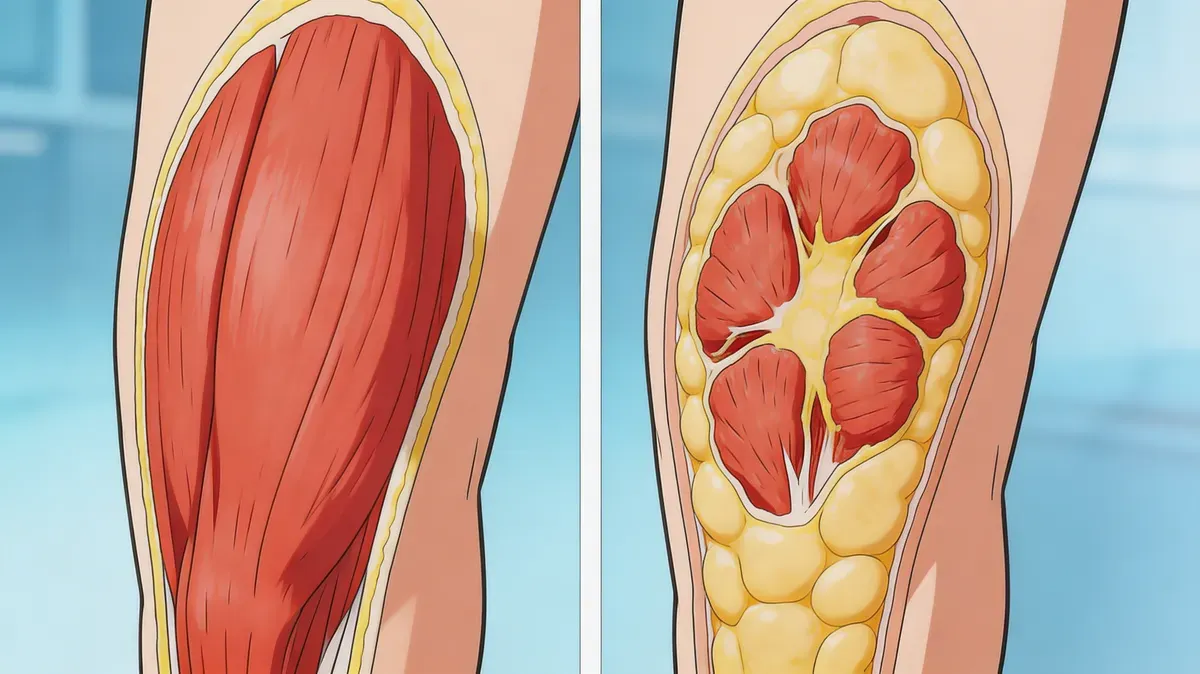
Sarcopenic obesity is the coexistence of two conditions: sarcopenia (loss of muscle mass and strength) and obesity (excess body fat). The dangerous part is that these aren’t just two separate problems happening simultaneously — they create a vicious cycle where each condition worsens the other.
Quick definition: Sarcopenic obesity is a body composition disorder characterized by the simultaneous loss of skeletal muscle mass and accumulation of excess body fat, creating a synergistic increase in metabolic, cardiovascular, and mortality risk beyond either condition alone.
Why BMI fails to detect it
BMI divides weight by height squared. It cannot distinguish between 180 lbs (82 kg) of muscle and 180 lbs of fat. A person with sarcopenic obesity can have a “normal” BMI of 24 while carrying dangerously low muscle mass and dangerously high visceral fat.
This is why body composition — not body weight — is the metric that matters after 50.
The science behind sarcopenic obesity
The vicious cycle: how muscle loss feeds fat gain (and vice versa)
After age 30, you lose approximately 3-8% of muscle mass per decade, accelerating after 60. Meanwhile, fat mass tends to increase — particularly visceral fat around the organs. These aren’t independent trends. They fuel each other through multiple pathways:
Muscle loss → fat gain:
- Less muscle = lower basal metabolic rate (muscle burns 3x more calories at rest than fat)
- Lower calorie expenditure with the same food intake = fat accumulation
- Reduced physical capacity = less activity = more fat storage
Fat gain → muscle loss:
- Excess fat tissue produces inflammatory cytokines (TNF-α, IL-6) that directly promote muscle breakdown
- Insulin resistance impairs muscle protein synthesis
- Fat infiltration into muscle tissue (myosteatosis) reduces muscle quality even before mass visibly declines
- Excess fat promotes hormonal changes — lower testosterone, higher cortisol — that accelerate muscle catabolism
The inflammation connection
Chronic low-grade inflammation — inflammaging — sits at the center of the sarcopenic obesity cycle. Fat tissue, especially visceral fat, acts as an endocrine organ pumping out inflammatory mediators. These mediators:
- Activate muscle protein degradation pathways (NF-κB, ubiquitin-proteasome)
- Suppress mTOR signaling needed for muscle repair
- Impair mitochondrial function in muscle fibers
- Promote insulin resistance, which further blocks muscle anabolism
Sarcopenic obesity and longevity: what the research says
The mortality data is stark:
- 83% increased mortality risk: A 2025 Brazilian-UK study found that combined abdominal obesity and muscle loss nearly doubled the risk of death over follow-up
- JAMA Network Open (2024): A meta-analysis confirmed that sarcopenic obesity carries higher mortality risk than either sarcopenia or obesity alone
- Cardiovascular risk: Sarcopenic obesity independently increases risk of heart failure, stroke, and atrial fibrillation
- Disability cascade: Falls, fractures, hospitalization, and loss of independence occur at much higher rates
Sarcopenic obesity and biological age
Why body composition is a biological age driver
Your biological age reflects how fast your body is actually aging — and body composition is one of its most powerful determinants. Sarcopenic obesity accelerates biological aging through every known pathway:
- Metabolic aging: Insulin resistance, elevated glucose, and high triglycerides drive metabolic syndrome — a cluster of conditions that age every organ system
- Inflammatory aging: Elevated hsCRP and NLR directly increase calculated biological age
- Hormonal aging: Declining testosterone, growth hormone, and DHEA-S compound the muscle-fat imbalance
- Functional aging: Reduced grip strength, slower walking speed, and impaired balance are all independent mortality predictors
The body fat percentage blind spot
Even people who look lean can have sarcopenic obesity. Key thresholds:
| Metric | Healthy Range (Men) | Healthy Range (Women) | Sarcopenic Obesity Risk |
|---|---|---|---|
| Body fat % | 15-22% | 22-30% | > 25% (M) / > 35% (F) with low muscle |
| Appendicular lean mass/height² | > 7.0 kg/m² | > 5.5 kg/m² | Below threshold with high fat |
| Waist circumference | < 40 in (102 cm) | < 35 in (88 cm) | Above threshold with low strength |
| Grip strength | > 57 lbs (26 kg) | > 35 lbs (16 kg) | Below threshold |
7 proven strategies to reverse sarcopenic obesity
1. Resistance training is non-negotiable — it’s the primary treatment
No medication, supplement, or diet can replace what resistance training does for sarcopenic obesity. It simultaneously builds muscle, reduces visceral fat, improves insulin sensitivity, and lowers inflammation.
Why it works: Resistance exercise activates mTOR signaling (muscle building) while improving AMPK-mediated fat oxidation. It’s the only intervention that directly addresses both sides of the sarcopenic obesity equation.
How to do it:
- Minimum 2-3 sessions per week, targeting all major muscle groups
- Focus on compound movements: squats, deadlifts, rows, presses, lunges
- Progressive overload: gradually increase weight, reps, or sets over time
- Start with body weight or light resistance if deconditioned — consistency matters more than intensity initially
Expected results: Measurable strength gains within 4-6 weeks. Visible body composition changes within 8-12 weeks. Lean body mass increases of 2-4 lbs (1-2 kg) over 12-16 weeks are typical.
2. Prioritize protein — much more than you think
After 60, you need significantly more protein than younger adults due to “anabolic resistance” — the reduced ability of aging muscle to respond to protein intake.
Why it works: Leucine — the amino acid that triggers muscle protein synthesis — requires a higher threshold in older adults to activate the mTOR pathway. This means both higher total protein and higher per-meal doses.
How to do it:
- Target 1.2-1.6 g of protein per kg of body weight daily (0.55-0.73 g per lb)
- For a 165 lb (75 kg) person: 90-120 g protein per day
- Distribute evenly across meals: 30-40 g per meal (the “muscle-full” threshold for older adults)
- Prioritize high-quality protein sources: eggs, fish, poultry, dairy, legumes
- Consider leucine-rich foods: whey protein, eggs, chicken breast, soybeans
3. Don’t crash diet — you’ll lose muscle faster than fat
This is critical: aggressive caloric restriction in older adults with sarcopenic obesity accelerates muscle loss. Your body preferentially breaks down muscle when calories drop rapidly — exactly the opposite of what you need.
How to do it:
- Modest caloric deficit: 300-500 kcal/day below maintenance, no more
- Never go below 1,200 kcal/day (women) or 1,500 kcal/day (men)
- Protect muscle with high protein intake during any weight loss phase
- Combine dietary changes with resistance training — always
- Weight loss of 0.5-1 lb (0.25-0.5 kg) per week is optimal to preserve muscle
4. Measure body composition, not just weight
You can’t manage what you can’t measure. And you can’t measure sarcopenic obesity with a bathroom scale.
How to do it:
- DEXA scan: Gold standard for body composition — measures fat mass, lean mass, and bone density separately. Get a baseline at 50, repeat every 1-2 years
- Bioelectrical impedance: Less accurate than DEXA but available in many smart scales — track trends rather than absolute numbers
- Waist-to-hip ratio: Simple, free, and correlates strongly with visceral fat risk
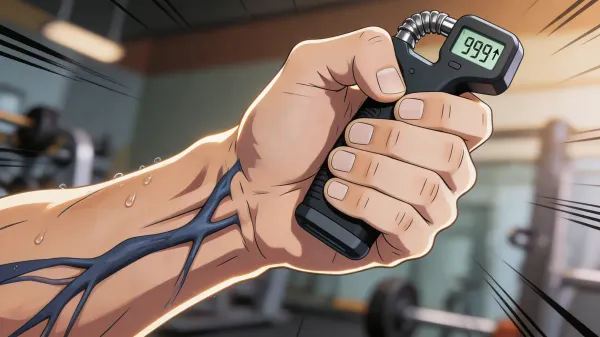
- Grip strength: Use a hand dynamometer — one of the strongest mortality predictors available. Below 57 lbs (26 kg) for men or 35 lbs (16 kg) for women is concerning
5. Target visceral fat specifically
Not all fat is equal. Subcutaneous fat (under the skin) is relatively benign. Visceral fat — packed around your organs — is the metabolically active tissue driving inflammation and insulin resistance.
How to do it:
- Aerobic exercise is particularly effective at reducing visceral fat: 150+ minutes/week of moderate activity
- Combine with resistance training for maximum effect
- Reduce refined carbohydrates and added sugars — they preferentially feed visceral fat storage
- Manage stress: chronic cortisol directly promotes visceral fat deposition
- Prioritize sleep: sleeping < 6 hours increases visceral fat accumulation by 12% over 5 years
6. Address hormonal contributors
Hormonal changes after 50 directly drive the muscle-loss/fat-gain shift:
Key hormones to discuss with your doctor:
- Testosterone: Declines 1-2% per year after 30 in men; low levels accelerate both muscle loss and fat gain
- Growth hormone: Drops dramatically with age; exercise and sleep are the most effective natural stimulants
- DHEA-S: Adrenal hormone that supports both muscle maintenance and fat metabolism
- Thyroid hormones: Even subclinical hypothyroidism can shift body composition unfavorably
How to do it:
- Get comprehensive hormonal testing after 50 (testosterone, free T, DHEA-S, TSH, free T4)
- Address deficiencies under medical supervision
- Optimize natural production: sleep, exercise, stress management, vitamin D, zinc
7. Anti-inflammatory nutrition as foundation
Since inflammation drives the sarcopenic obesity cycle, an anti-inflammatory dietary pattern addresses the root cause:
How to do it:
- Mediterranean-style eating pattern: olive oil, fatty fish, nuts, vegetables, legumes
- Omega-3 fatty acids: 2-3 servings of fatty fish per week, or discuss supplementation with your doctor
- Polyphenol-rich foods: berries, green tea, dark chocolate, turmeric
- Minimize ultra-processed foods, added sugars, and refined seed oils
- Adequate vitamin D: deficiency is linked to both muscle loss and inflammation
How to track and measure sarcopenic obesity risk
Key metrics to monitor
| Metric | How to Measure | Frequency | What It Reveals |
|---|---|---|---|
| Body fat % | DEXA scan / smart scale | Every 6-12 months | Fat mass trends |
| Lean body mass | DEXA scan | Annually | Muscle mass trends |
| Grip strength | Hand dynamometer | Every 3-6 months | Muscle quality + mortality risk |
| Walking speed | Timed 4-meter walk | Every 6 months | Functional capacity |
| Waist circumference | Tape measure | Monthly | Visceral fat proxy |
| Chair stand test | 5x sit-to-stand time | Every 3 months | Lower body strength |
Red flags that suggest sarcopenic obesity
- Weight stable but clothes fitting differently (looser arms/legs, tighter waist)
- Progressive weakness — difficulty with stairs, carrying groceries, opening jars
- Decreasing exercise tolerance despite consistent effort
- Frequent falls or balance problems
- BMI “normal” but waist circumference increasing
How SuperAge helps you track body composition and biological age
Sarcopenic obesity is invisible to standard metrics. SuperAge helps you see beyond the scale by integrating the data that actually matters.
Beyond BMI — real body composition tracking
SuperAge incorporates body composition data alongside your daily health metrics to calculate a biological age that reflects your true physiological state — not just your weight.
Daily functional indicators via Apple Watch
Your Apple Watch tracks several metrics that reflect the muscle-fat balance:
- Walking speed and steadiness: Declining values often signal sarcopenia progression
- VO2 max estimates: Drop when muscle mass declines and fat mass increases
- Grip strength (when manually logged): One of the strongest single mortality predictors
- Active calories burned: Decreasing despite similar activity levels can signal metabolic decline from muscle loss
Biological age trending
SuperAge shows you how your body composition changes affect your overall aging trajectory. When you start a resistance training program, increase protein, and reduce visceral fat, SuperAge quantifies the impact — showing you the biological age benefits of reversing sarcopenic obesity in real time.
Frequently asked questions
Can sarcopenic obesity be reversed?
Yes — especially in early to moderate stages. Resistance training combined with adequate protein intake and modest caloric deficit is the evidence-based protocol. Studies show that older adults can gain 2-4 lbs (1-2 kg) of lean mass and lose significant visceral fat over 12-16 weeks. The key is combining exercise with nutrition — either alone is far less effective than both together.
I’m thin — can I still have sarcopenic obesity?
Absolutely. This is one of the most dangerous misconceptions. “Thin on the outside, fat on the inside” (TOFI phenotype) describes people with normal BMI but high body fat and low muscle mass. The only way to detect it is body composition testing — BMI and weight alone cannot reveal this condition.
Is cardio or strength training more important?
For sarcopenic obesity specifically, resistance training is more important because it’s the only intervention that directly builds muscle mass. However, the optimal approach combines both: resistance training 2-3x/week for muscle, plus aerobic exercise 150+ minutes/week for visceral fat reduction and cardiovascular health. If you must choose one, choose strength training.
At what age should I start worrying about sarcopenic obesity?
Muscle loss begins in your 30s and accelerates after 50. Fat redistribution (from subcutaneous to visceral) starts in your 40s. By 60, the risk of sarcopenic obesity climbs steeply. The ideal time to start prevention is in your 40s — build a muscle reserve before age-related losses compound. But starting at any age produces meaningful benefits.
How does sarcopenic obesity affect my biological age?
Dramatically. The combination of low muscle mass, high body fat, chronic inflammation, and insulin resistance pushes virtually every biological age biomarker in the wrong direction. Conversely, reversing sarcopenic obesity through resistance training and nutrition can measurably reduce biological age — some studies show improvements equivalent to 2-5 biological years within 6 months.
Key takeaways
- Sarcopenic obesity — losing muscle while gaining fat — affects 11% of adults over 60 and increases mortality risk by 83%
- BMI is blind to this condition: you can have a “normal” weight and still carry dangerous body composition
- The vicious cycle: muscle loss reduces metabolism, causing fat gain, which produces inflammation, which accelerates muscle loss
- Resistance training + high protein is the evidence-based treatment — no pill or supplement can substitute
- Measure body composition, not just weight: DEXA scans, grip strength, and waist circumference reveal what the scale cannot
Reclaim your body composition today
Your body composition is not your destiny. The muscle-fat balance that defines sarcopenic obesity can be shifted back in your favor at any age — with the right training, nutrition, and monitoring.
Ready to see beyond the scale? Download SuperAge and start tracking how your body composition, strength, and daily health metrics affect your biological age.
References
- Martins VJB, et al. (2025). “Abdominal obesity and muscle loss increase the risk of death by 83% after age 50.” Federal University of São Carlos / University College London
- Gao Q, et al. (2024). “Sarcopenia and sarcopenic obesity and mortality among older people.” JAMA Network Open
- Batsis JA, Villareal DT. (2018). “Sarcopenic obesity in older adults: aetiology, epidemiology and treatment strategies.” Nature Reviews Endocrinology
- Donini LM, et al. (2024). “Sarcopenic obesity in older adults: a clinical overview.” Nature Reviews Endocrinology, 2:1-13
- Polyzos SA, et al. (2023). “Sarcopenic obesity: epidemiology, pathophysiology, cardiovascular disease, mortality, and management.” Frontiers in Endocrinology
- Li B, et al. (2024). “Sarcopenic obesity: emerging mechanisms and therapeutic potential.” Metabolism, 151:155759
Last updated: 2026-03-23. This article is regularly reviewed to ensure accuracy.
Related Articles

Frailty index: How to measure and prevent the silent progression of aging
Frailty predicts falls, hospitalization, and loss of independence better than age alone. Learn screening tools, risk factors, and prevention steps.