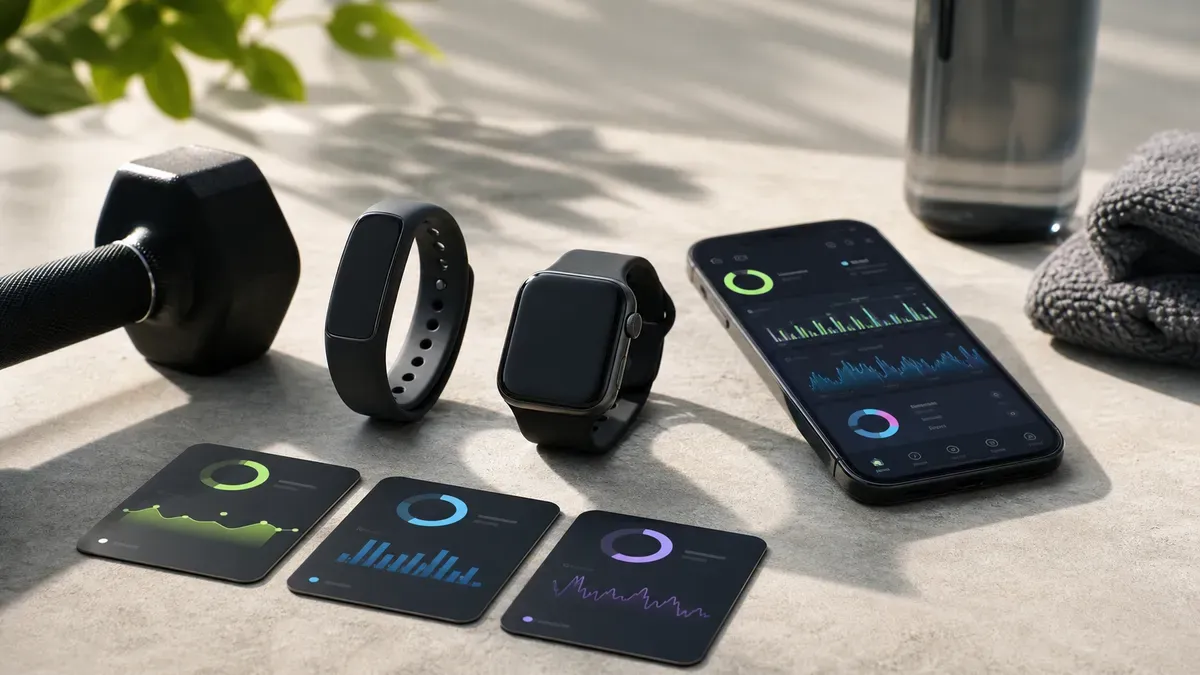
5 best Whoop alternatives for longevity tracking in 2026
Compare Whoop alternatives for longevity tracking: Apple Health, HRV, sleep, training load, and biological-age insights without another band or data silo.
Whoop is still one of the clearest products for strain, recovery, and sleep coaching. The question in 2026 is narrower than “which fitness tracker is best?” A better question is: how does Whoop compare to alternatives for longevity, Apple Health, HRV, recovery, sleep, training load, and biological-age tracking?
That framing changes the answer. If you want a closed athlete-recovery system, Whoop remains strong. If you want your health data to live in Apple Health, want biological age from the signals you already collect, or want a lower-cost recovery layer without another band, the best alternative may be an app rather than another wearable.
This guide compares five alternatives through that longevity lens, not as a generic app roundup. The practical goal is simple: pick the tool that turns your existing data into better long-term health decisions.
The quick answer
- Best for biological age and Apple Health longevity tracking: SuperAge
- Best for sleep and overnight HRV: Oura Ring
- Best all-in-one Apple Health dashboard: Bevel
- Best low-cost Whoop-style recovery score: Athlytic
- Best for sustainable training habits: Gentler Streak
The most important split is not “wearable versus app.” It is closed ecosystem versus reusable health data. Whoop gives you a polished recovery system inside Whoop. Apple Health-based alternatives let multiple apps interpret the same history, which matters if you want trends across years rather than a single daily readiness number.
What changed in 2026
The comparison is different now than it was a year ago.
Whoop’s current lineup starts with Whoop One, then moves to Peak and Life. One covers the core sleep, strain, recovery, coaching, VO2 max, and heart-rate-zone experience. Peak adds Healthspan and Pace of Aging. Life adds the MG hardware tier with heart-screening and blood-pressure-insight features in supported regions. In other words, Whoop now competes more directly with longevity apps, but the healthspan layer is tied to higher Whoop tiers and Whoop hardware.
Oura also moved forward. Oura Ring 5 launched in May 2026 starting at $399 in the U.S., while Ring 4 remains available at a lower starting price in many markets. Oura is still the clearest choice if your priority is overnight comfort, sleep consistency, temperature trends, and finger-based HRV.
Google entered the screenless band category with Fitbit Air in May 2026. It is a serious new Whoop-style hardware alternative at $99.99 with Google Health Premium available after a trial, but it is not yet the strongest pick for Apple Health-first longevity tracking or biological age. For that reason, it belongs in the “watch this space” section rather than replacing the five picks below.
How to compare Whoop alternatives for longevity
For longevity, the right comparison framework is not the number of charts in the app. It is whether the tool helps you interpret durable health signals:
- Apple Health access: Can you reuse the data with other apps, or is it locked inside one ecosystem?
- HRV and resting heart rate: Does it track recovery trends, not just a single morning score?
- Sleep: Does it capture duration, consistency, stages, and overnight physiology well enough to support behavior change?
- Training load: Does it help you balance stimulus and recovery across weeks?
- Cardiorespiratory fitness: Does it include VO2 max or a comparable aerobic-fitness signal?
- Biological-age or healthspan layer: Does it translate the data into a long-term aging signal?
Here is the practical comparison.
| Option | Longevity angle | Apple Health path | HRV / recovery | Sleep | Training load | Biological age / aging |
|---|---|---|---|---|---|---|
| SuperAge | Biological age from existing health data | Strong | Yes, as part of aging and recovery trends | Yes | Yes | Core feature |
| Oura Ring | Best overnight sleep and HRV signal | Partial via sync | Strong overnight | Strong | Basic | No native biological age |
| Bevel | Broad Apple Health dashboard | Strong | Strong | Strong | Strong | Pro feature |
| Athlytic | Whoop-style recovery on Apple Watch | Strong | Strong | Good | Strong | Limited / not the core |
| Gentler Streak | Sustainable activity and recovery habits | Strong | Indirect | Good | Habit-focused | No |
| Whoop | Closed strain, recovery, Healthspan on higher tiers | Limited | Strong | Strong | Strong | Peak / Life Healthspan |
1. SuperAge - best for biological age and Apple Health longevity tracking
Price: Free / $49.99 per year Premium Platform: iOS, Apple Health, Apple Watch and compatible data sources Best for: Turning health data into biological-age and pace-of-aging trends
SuperAge is the clearest Whoop alternative if your real question is not “how hard should I train today?” but “is my body aging better or worse over time?”
The difference is the data model. Whoop interprets data generated by a Whoop band. SuperAge reads from Apple Health, so it can work with the signals you may already be collecting: HRV, resting heart rate, sleep, VO2 max, activity, body composition, workouts, and supported blood biomarkers. That makes it less like a second wearable and more like a longevity layer on top of your existing health record.
That matters because biological age is not one metric. It is a composite view of cardiovascular fitness, recovery, sleep, activity, and metabolic health. A low readiness score may explain one bad morning. A worse biological-age trend suggests the underlying pattern is moving in the wrong direction.
Pros:
- Uses Apple Health instead of requiring proprietary hardware
- Makes biological age the main metric, not a buried add-on
- Tracks long-term aging, recovery, and fitness signals together
- Lower annual cost than Whoop Peak or Life
- Works well alongside other Apple Health apps rather than replacing them
Cons:
- Best for iPhone and Apple Watch users
- Not a screenless band for Android users
- Premium features still require a subscription
- Not designed as a team-training or social-athlete platform
Choose SuperAge if longevity is the main job. If you already wear an Apple Watch, this is the most direct way to turn passive data into a biological-age view without buying another device.
2. Oura Ring - best for sleep and overnight HRV
Price: Ring 5 starts at $399 in the U.S.; Ring 4 starts lower in many markets; Oura Membership is $5.99 per month or $69.99 per year in the U.S. Platform: iOS and Android Best for: Sleep consistency, overnight HRV, temperature trends, and readiness
Oura is the strongest hardware alternative if your main reason for wearing Whoop is passive overnight tracking. A ring is usually easier to sleep with than a watch, and finger-based optical signals can be cleaner at night than wrist signals for many people.
For longevity, Oura is excellent at the recovery half of the equation: sleep duration, sleep consistency, resting heart rate, HRV, respiratory signals, and temperature trends. The limitation is fitness breadth. Oura does not replace Apple Watch for VO2 max, workout structure, ECG, walking metrics, or rich day-to-day activity context. It is better as a sleep-and-recovery specialist than as a complete biological-age stack.
Pros:
- Strong overnight sleep and HRV tracking
- Comfortable for 24/7 wear, especially during sleep
- Works with both iOS and Android
- Readiness score is easy to understand
- Pairs well with Apple Watch if you want both sleep and fitness signals
Cons:
- Requires ring hardware and an ongoing membership for the full experience
- Less useful for real-time workouts than a watch
- No native biological-age score
- Sizing matters, and ring fit can change over time
- Apple Health sync helps, but the Oura app remains its own ecosystem
Choose Oura if sleep quality and overnight recovery are the bottleneck. If you want one integrated longevity score, pair it with Apple Health and a biological-age app rather than expecting Oura alone to answer that question.
3. Bevel - best all-in-one Apple Health dashboard
Price: Free / Pro at $14.99 per month or $99.99 per year in the U.S. Platform: iOS with Apple Health and Apple Watch Best for: Users who want one dense dashboard for recovery, sleep, strain, stress, nutrition, health records, and biological age
Bevel is closest to the “Apple Health command center” idea. It pulls health data into a polished dashboard and now includes Biological Age, Health Records, and AI coaching in Pro. If you want one app that tries to interpret almost everything, Bevel is one of the strongest options.
For a Whoop switcher, Bevel is attractive because it keeps the familiar recovery-and-strain vocabulary while avoiding a second wearable. The tradeoff is focus. Bevel covers a lot: sleep, recovery, strain, strength, energy, stress, nutrition, health records, and more. That can be useful if you want one dashboard, but it can also be more than you need if your priority is simply biological age or recovery.
Pros:
- Strong Apple Health integration
- Broad dashboard across recovery, sleep, strain, stress, and fitness
- Biological Age and Health Records available in Pro
- Good replacement if you like Whoop-style interpretation but already wear Apple Watch
- Useful free tier for many users
Cons:
- Pro is more expensive than focused alternatives
- Biological Age is part of a broader dashboard, not the sole product focus
- Can feel dense if you only want one answer
- Apple ecosystem only
- Pricing and available offers can vary by country
Choose Bevel if you want one app to organize nearly all of Apple Health. Choose a narrower app if you care about one specific question: aging, recovery, sleep, or sustainable training.
4. Athlytic - best low-cost Whoop-style recovery tracking
Price: Free download; Athlytic Pro is $29.99 per year in the U.S. App Store Platform: iOS and Apple Watch Best for: Recovery, exertion, sleep, and training load from Apple Watch data
Athlytic is the most direct software alternative for people who liked Whoop’s daily recovery logic but do not want the Whoop subscription or hardware. It uses Apple Watch data to estimate recovery, exertion, target exertion, sleep needs, HRV trends, and daily readiness.
The longevity value is not a biological-age score. It is better training regulation. If you repeatedly train hard when HRV, resting heart rate, and sleep are telling you to back off, you are not building fitness; you are accumulating stress. Athlytic gives Apple Watch users a lower-cost way to manage that balance.
Pros:
- Much cheaper than Whoop on an annual basis
- Uses Apple Watch and Apple Health data
- Recovery and exertion framing is familiar to Whoop users
- Strong value for recreational athletes
- Good for training load without buying another wearable
Cons:
- Not a biological-age app
- Accuracy depends on Apple Watch wear consistency and Health data quality
- Interface can feel metric-heavy
- iOS and Apple Watch only
- Less useful if you do not train regularly
Choose Athlytic if you want Whoop-style recovery at Apple Watch-app pricing. If longevity and biological age are the priority, use it alongside SuperAge rather than instead of it.
5. Gentler Streak - best for sustainable training habits
Price: Free download; common Premium plans include $7.99 per month or $39.99 per year in the U.S. App Store Platform: iOS and Apple Watch Best for: Staying active without overreaching
Gentler Streak is not trying to be Whoop. That is why it belongs here. A lot of longevity users do not need more pressure to optimize; they need a system that keeps them consistent for years.
The app’s Activity Path gives you a visual range for whether your recent activity is too little, balanced, or approaching overreaching. It treats rest as part of the streak rather than a failure, which makes it useful for beginners, people returning from injury, and anyone whose exercise pattern alternates between overdoing it and stopping.
Pros:
- Excellent for consistency and long-term adherence
- Uses Apple Health and Apple Watch
- Helps prevent the “always push harder” trap
- Strong design and clear daily guidance
- Good fit for general health and longevity users
Cons:
- Not a deep analytics platform
- No biological-age score
- Less useful for competitive athletes who want granular performance modeling
- Premium needed for the full experience
- Apple ecosystem only
Choose Gentler Streak if the biggest healthspan problem is not measurement, but consistency. A sustainable training rhythm beats a perfect recovery score that you ignore.
Where Fitbit Air fits
Fitbit Air deserves mention because it is the newest direct screenless-band challenge to Whoop. Google announced it on May 7, 2026 as a lightweight, screenless, 24/7 tracker starting at $99.99, with heart rate, HRV, sleep, SpO2, Afib alerts in supported contexts, automatic activity detection, and Google Health Premium after a trial.
That makes Fitbit Air interesting for Android users and people who want a cheaper passive band. It is not yet the top longevity pick here because the long-term Apple Health and biological-age story is less mature than the Apple Watch plus dedicated longevity app route. If you want a low-cost screenless tracker, watch Fitbit Air. If you want Apple Health-based longevity interpretation today, start with Apple Watch data and a focused app.
Which one should you choose?
Choose based on the job, not the brand:
- If you care about biological age: SuperAge.
- If you care about sleep and overnight HRV: Oura Ring.
- If you want one broad dashboard: Bevel.
- If you want daily recovery and training load: Athlytic.
- If you want sustainable exercise habits: Gentler Streak.
- If you want a closed recovery band and do not mind the subscription: Whoop.
- If you want a cheaper screenless hardware experiment: Fitbit Air, with the caveat that its longevity ecosystem is newer.
You can also combine tools. A common longevity stack is Apple Watch plus SuperAge for biological age, Athlytic for recovery and training load, and Oura for sleep if you do not like wearing a watch overnight. The risk is not technical conflict; it is decision fatigue. Keep one primary score and use the rest as context.
Frequently asked questions
How does Whoop compare to alternatives for longevity?
Whoop is strongest when you want a closed recovery-and-strain system with minimal setup. Alternatives are stronger when you want reusable Apple Health data, biological age, lower annual cost, or a more open health history. For longevity specifically, Apple Health-based tools are often more flexible because they can combine sleep, HRV, VO2 max, activity, body composition, labs, and other signals over time.
What is the best Whoop alternative if I already have an Apple Watch?
SuperAge is best if your priority is biological age and longevity. Athlytic is best if your priority is recovery and training load. Bevel is best if you want one broad dashboard. Gentler Streak is best if you need help staying consistent without overtraining.
Is Whoop Healthspan the same as biological age?
Whoop Healthspan includes WHOOP Age and Pace of Aging on Peak and Life memberships. That makes Whoop more relevant for longevity than older versions, but it is still tied to Whoop hardware and Whoop’s data model. A biological-age app built on Apple Health can reuse a broader data set if you already collect metrics from Apple Watch, smart scales, labs, or other sources.
Which alternative is best for HRV?
For overnight HRV, Oura is the strongest dedicated hardware option. For Apple Watch users, Athlytic, Bevel, and SuperAge all interpret HRV in different ways. The key is consistency: wear the same device regularly, compare trends rather than single readings, and pair HRV with sleep, resting heart rate, training load, and symptoms.
Which alternative is best for sleep?
Oura is the best sleep-first pick. Whoop is also strong for sleep coaching, while Apple Watch apps are best if you already tolerate sleeping with the watch and want the data to stay in Apple Health. If you are evaluating the top three devices directly, read the Apple Watch vs Oura vs Whoop comparison.
Can I switch from Whoop without losing my history?
Most alternatives cannot import your full Whoop history directly. If you wore an Apple Watch at the same time, Apple Health-based apps can often use that existing Apple Health history immediately. If you only wore Whoop, expect a new baseline period when you move to another ecosystem.
Do I need a wearable at all for biological age?
For wearable-based biological age, yes: the score improves when you have consistent data such as HRV, resting heart rate, sleep, activity, VO2 max, and body metrics. Blood-test biological-age methods can work without a wearable, but they answer a different question. The best setup combines periodic lab markers with continuous wearable trends.
Key takeaways
- Whoop is still strong for strain, recovery, and sleep coaching, but it is no longer the only serious path for healthspan tracking.
- For longevity, the most important question is whether your data can support long-term trends across Apple Health, sleep, HRV, training load, VO2 max, labs, and body metrics.
- SuperAge is the best fit if you want biological-age tracking from data you already generate.
- Oura is the best fit if sleep and overnight HRV are your bottleneck.
- Athlytic is the closest low-cost Apple Watch answer to Whoop-style recovery.
- Bevel is best if you want one broad Apple Health dashboard, while Gentler Streak is best if consistency matters more than more metrics.
- Fitbit Air is the newest screenless hardware alternative, but its longevity ecosystem is still early compared with Apple Health-based workflows.
References
- WHOOP membership options
- WHOOP Healthspan: WHOOP Age and Pace of Aging guide
- Oura Store
- Oura Membership
- Google: Introducing the all-new Fitbit Air
- Apple Health and Apple Watch health metrics
- SuperAge App Store listing
- Bevel Membership & Pricing
- Athlytic App Store listing
- Gentler Streak App Store listing
- American Heart Association: cardiorespiratory fitness as a clinical vital sign
- Shaffer and Ginsberg: An overview of heart rate variability metrics and norms
- The Oura Ring versus medical-grade sleep studies: systematic review and meta-analysis
Related Articles

How illness changes resting heart rate and HRV
Learn why illness can raise resting heart rate and lower HRV, how to read wearable trends, when to rest, and which warning signs need prompt medical care.