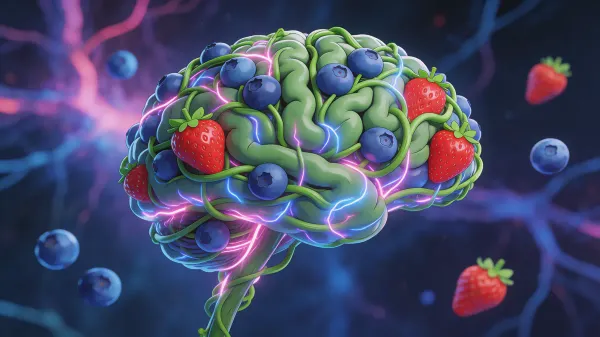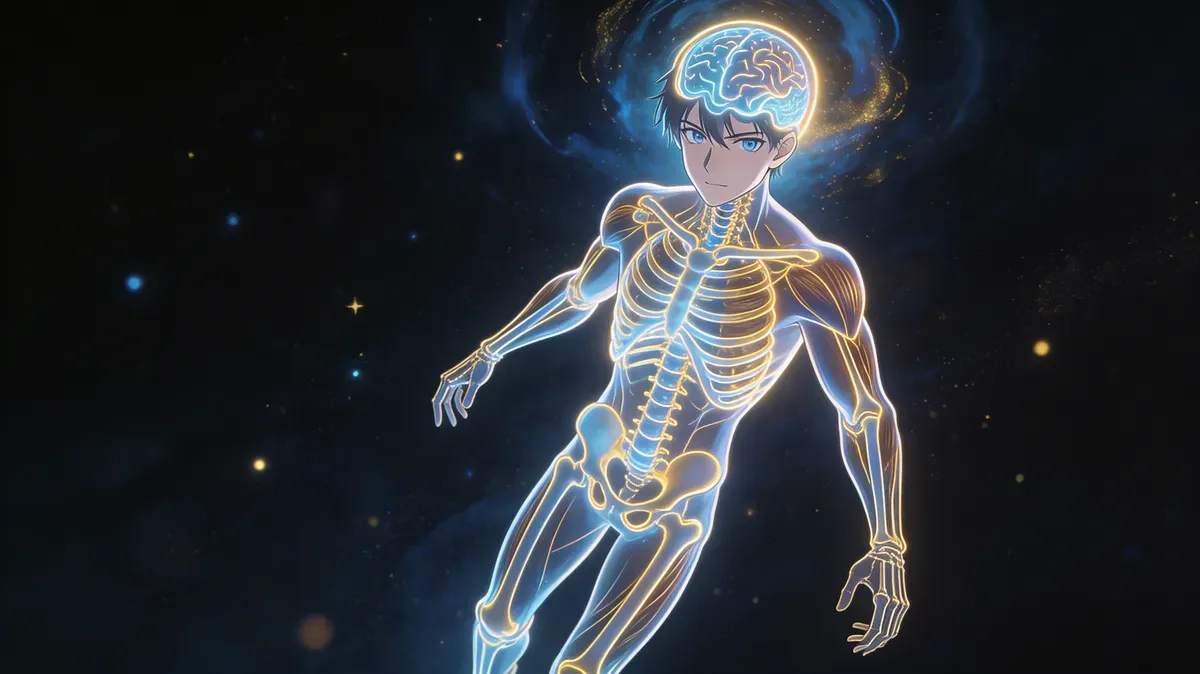
Creatine monohydrate beyond muscle: brain and bone
Creatine may support brain energy and training-related bone health after 40, but evidence is mixed. Learn dosing, safety, and realistic expectations.
Creatine monohydrate is usually discussed as a muscle supplement, but the same phosphocreatine system also matters in the brain and bone. That makes creatine interesting for healthy aging, especially after 40.
The evidence needs a careful reading. Muscle and training benefits are the strongest. Brain benefits are biologically plausible and sometimes measurable, especially under sleep loss, stress, older age, or low dietary creatine. Bone benefits are more mixed: creatine may help indirectly by improving training quality, but it is not a stand-alone bone-density supplement.
This article looks beyond muscle without overselling the claim. Creatine can support the systems that help you train, recover, think under load, and maintain function, but it does not replace resistance training, osteoporosis care, sleep, protein, or medical guidance.
What you’ll learn:
- Why creatine is more than a muscle supplement
- What the current evidence says about brain function and mental fatigue
- Why bone-density claims need caution
- Which dose is realistic for brain, bone, and healthy aging
- How to track whether creatine is actually helping
Quick answer
Creatine beyond muscle is best understood as an energy-buffering supplement. It helps regenerate ATP in high-demand tissues, including muscle and brain, and may support training quality that indirectly benefits bone.
For cognition, evidence is promising but inconsistent. Benefits are more plausible in older adults, vegetarians, vegans, sleep-deprived people, or people under high cognitive stress. EFSA concluded in 2024 that current evidence does not support a broad cognitive-function health claim.
For bone, creatine should be paired with resistance training. A 2015 trial suggested femoral-neck BMD preservation in postmenopausal women, but a later 2-year RCT and meta-analytic evidence did not confirm a reliable BMD advantage. Treat creatine as a possible training support, not an osteoporosis treatment.
Key facts
- Creatine -> ATP buffer: phosphocreatine helps regenerate ATP during short, high-demand work.
- Brain benefit -> context-dependent: effects appear stronger under sleep loss, aging, stress, or low dietary creatine.
- Bone benefit -> training-mediated: creatine may help bone mainly by supporting harder resistance training.
- BMD evidence -> mixed: small positive trials exist, but larger or pooled analyses are less convincing.
- Dose -> usually 3-5 g/day: higher doses are used in some studies but are not required for most people.
- Safety -> healthy-adult context: standard doses appear safe in healthy adults, but kidney disease requires clinician guidance.
Related guides: creatine after 40, strength training after 40, creatinine high but eGFR normal.
What is creatine, really?
Creatine is a naturally occurring compound made from glycine, arginine, and methionine. Most body creatine is stored in skeletal muscle, while smaller pools exist in the brain, heart, kidney, and other high-energy tissues.
Quick definition: Creatine helps regenerate ATP, the cell’s usable energy currency. It is most proven for muscle performance and training adaptation, with emerging but less settled evidence for brain and bone outcomes.
The phosphocreatine-creatine kinase shuttle
Cells store little ATP directly. When demand rises, creatine kinase transfers a phosphate group from phosphocreatine to ADP, rapidly regenerating ATP. This mechanism helps muscles repeat hard efforts and helps neurons maintain energy-intensive processes such as ion gradients and signaling.
The same biology makes creatine relevant outside the gym. The question is not whether brain and bone use energy; they do. The question is whether supplementation changes clinical outcomes enough to matter. For brain, the answer may be yes in selected contexts. For bone, the answer is still uncertain.
The brain: creatine, cognition, and mental fatigue
The brain consumes a large share of daily energy. Because creatine helps buffer ATP, it is plausible that higher creatine availability could support mental performance when the brain is under strain.
What the evidence supports
Small trials and meta-analyses suggest possible benefits for short-term memory, reasoning, and mental fatigue. Signals tend to be stronger in older adults, vegetarians and vegans, sleep-deprived participants, or people under cognitive stress.
That pattern makes sense: creatine is more likely to help when baseline creatine availability is low or energy demand is unusually high.
What remains uncertain
Creatine is not a guaranteed nootropic. Studies vary by dose, population, duration, cognitive test, and baseline diet. A 2024 EFSA review concluded that current human evidence does not substantiate a general claim that creatine improves cognitive function.
The practical framing is narrower: creatine may improve cognitive resilience in some people, especially when sleep, diet, or aging make brain-energy buffering more relevant.
Related reading: For the muscle-focused deep dive, see our guide on creatine after 40 for brain and muscle.
The bones: promising mechanism, mixed outcomes
Bone is living tissue. Osteoblasts need ATP to build matrix and mineralize bone, and bone responds to mechanical loading from muscle contractions. Creatine could matter through both pathways.
Why creatine might help bone
The strongest mechanism is indirect. Creatine can help people train with more volume or intensity. Better training can create stronger mechanical loading, and mechanical loading is one of the main signals for maintaining bone.
What trials show
A 2015 trial in postmenopausal women found that creatine plus supervised resistance training preserved femoral-neck BMD better than placebo. That result is encouraging because femoral-neck BMD is clinically meaningful for hip-fracture risk.
But later evidence is less clear. A 2018 brief meta-analysis found no greater BMD effect from creatine plus resistance training compared with resistance training alone. A 2-year RCT in postmenopausal women also did not support a primary BMD benefit, although lean tissue improved in completers.
Practical interpretation
Creatine is not a primary bone supplement. For bone aging, prioritize progressive resistance training, impact or weight-bearing exercise when appropriate, enough protein, vitamin D sufficiency, calcium adequacy, fall prevention, and medical osteoporosis care when indicated. Creatine can sit beside that plan as a training-support tool.
Dosing: what actually makes sense
The default evidence-based dose remains simple: 3-5 g/day of creatine monohydrate. Loading is optional and usually unnecessary for healthy-aging use.
For brain support
Some cognitive and sleep-deprivation studies use higher doses, but higher is not automatically better for long-term use. Start with 3-5 g/day. Consider higher doses only if tolerated, clinically appropriate, and paired with a clear reason to test them.
For bone and training support
Bone-related trials often used weight-based dosing around 0.1 g/kg/day, but the BMD evidence is mixed. For most adults, consistency with 3-5 g/day plus progressive resistance training is more practical than chasing a special bone dose.
Form and timing
- Use creatine monohydrate. It has the best human evidence.
- Take it daily. Timing matters less than consistency.
- Mix and drink soon after. Creatine is easy to use in water, coffee, or a shake.
- Expect small weight changes. Early water-weight gain is common and not fat gain.
- Tell your clinician before labs. Creatine can raise serum creatinine without necessarily lowering true kidney filtration.
Who benefits most?
Creatine response depends on diet, training status, age, and baseline tissue stores.
More likely to benefit
- Vegetarians and vegans: dietary creatine intake is very low.
- Adults over 50 or 60: muscle reserve, recovery, and cognitive resilience become more important.
- People doing resistance training: creatine works best when training supplies the adaptation signal.
- Sleep-deprived or high-stress people: cognitive benefits are more plausible when the brain is under energy strain.
- Postmenopausal women who lift: creatine may support training quality, but it should not be treated as a proven BMD therapy.
Less likely to notice dramatic effects
People who already eat a lot of meat or fish, train consistently, sleep well, and have high baseline creatine stores may still benefit, but the effect is often smaller and harder to feel.
Creatine and biological aging
Creatine connects to aging through function, not through a proven lifespan extension pathway.
Mitochondrial and cellular energy
Creatine kinase and phosphocreatine interact with mitochondrial energy flow. Supporting this system may help cells buffer short bursts of demand, which is relevant to mitochondrial dysfunction. That does not prove anti-aging effects by itself.
Muscle, falls, and independence
The strongest aging pathway is still muscle. Creatine plus resistance training can support strength, lean mass, and training consistency. Those outcomes matter because weakness, falls, and loss of independence are major aging risks.
Cognition and sleep resilience
Brain-energy buffering may help some people maintain performance during sleep loss or stress. Treat this as a resilience hypothesis with supportive evidence, not as a dementia-prevention claim.
How SuperAge integrates creatine into your longevity strategy
Creatine is not a magic bullet — it’s an input into a broader system. SuperAge helps you see the full picture.
Tracking muscle, bone, and cognitive markers
SuperAge integrates Apple Watch and health data — grip strength, resistance training sessions, heart rate recovery, sleep quality — with biomarker inputs you enter manually. This gives you a unified view of the tissues creatine influences.
Personalized supplementation guidance
Based on your dietary profile (vegetarian, omnivore, high-meat), age, and activity level, SuperAge provides an evidence-based creatine recommendation aligned with your biological age goals.
Progress visualization
Watching your strength, cognitive scores, and bone-health proxies (like grip strength) evolve alongside your biological age turns abstract supplementation into concrete results.
Frequently asked questions
Do I need to load creatine for brain or bone benefits?
Usually no. Loading can saturate muscle faster, but for healthy-aging use, 3-5 g/day is simpler and better tolerated. Brain and bone outcomes are not proven to require loading.
Does creatine improve cognition?
Maybe in some people and some tasks. Evidence is most plausible in older adults, vegetarians, vegans, sleep-deprived people, or people under high cognitive stress. Broad nootropic claims are premature.
Does creatine improve bone density?
Not reliably by itself. Some trials are encouraging, but later pooled and longer-term evidence is mixed. Creatine should be paired with resistance training and treated as training support, not osteoporosis therapy.
Is creatine kidney-safe?
For healthy adults, standard-dose creatine has a strong safety record. It can raise serum creatinine, which may confuse creatinine-based eGFR. People with kidney disease or reduced eGFR should ask a clinician first.
Can women take creatine?
Yes. Creatine is not male-specific. Women, including postmenopausal women, can use creatine, especially when pairing it with resistance training and adequate protein.
Key takeaways
- Creatine is more than a muscle supplement, but muscle evidence is still strongest.
- Brain benefits are plausible and context-dependent, not guaranteed.
- Bone benefits require caution: creatine may support training, but BMD evidence is mixed.
- 3-5 g/day of creatine monohydrate is the practical starting dose.
- Safety is strong in healthy adults, but kidney disease changes the risk discussion.
Start using creatine as a longevity support tool
Creatine monohydrate is low-cost, well-studied, and easy to test. The best use after 40 is not as a miracle brain or bone supplement, but as a support for training, recovery, and energy resilience.
Ready to track the signals that matter? Download SuperAge and monitor how training, sleep, recovery, and biomarkers shape your biological age.
References
- Sharifian G et al. - “Impact of creatine supplementation and exercise training in older adults: a systematic review and meta-analysis” - European Review of Aging and Physical Activity (2025) - PubMed
- Candow DG et al. - “Creatine monohydrate supplementation for older adults and clinical populations” - Journal of the International Society of Sports Nutrition (2025) - PubMed
- EFSA NDA Panel - “Creatine and improvement in cognitive function: evaluation of a health claim” - EFSA Journal (2024) - EFSA
- Xu C et al. - “The effects of creatine supplementation on cognitive function in adults: a systematic review and meta-analysis” - Frontiers in Nutrition (2024) - PubMed
- Prokopidis K et al. - “Effects of creatine supplementation on memory in healthy individuals: a systematic review and meta-analysis” - Nutrition Reviews (2023) - PubMed
- Chilibeck PD et al. - “Effects of creatine and resistance training on bone health in postmenopausal women” - Medicine & Science in Sports & Exercise (2015) - PubMed
- Chilibeck PD et al. - “A 2-yr randomized controlled trial on creatine supplementation during exercise for postmenopausal bone health” - Medicine & Science in Sports & Exercise (2023) - PubMed
- Forbes SC et al. - “Creatine supplementation during resistance training does not lead to greater bone mineral density in older humans: a brief meta-analysis” - Frontiers in Nutrition (2018) - Full text
- Naeini F et al. - “Effect of creatine supplementation on kidney function: a systematic review and meta-analysis” - BMC Nephrology (2025) - DOI
- Antonio J et al. - “Common questions and misconceptions about creatine supplementation” - JISSN (2021) - Full text
Last updated: June 2026. This article is regularly reviewed to ensure accuracy.
Related Articles
Magnesium glycinate vs citrate vs threonate: Which form should you take?
Compare magnesium glycinate, citrate, and threonate side by side. Learn which form is best for sleep, digestion, brain health, and how each one affects aging.