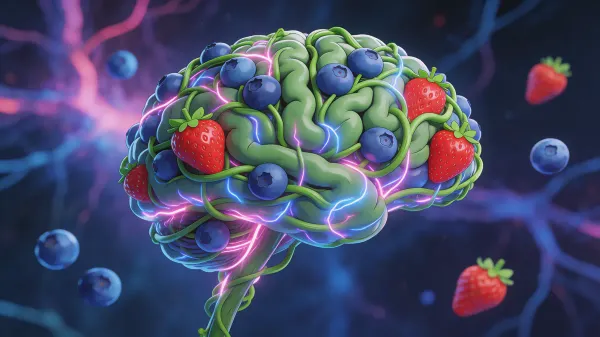
Ginkgo biloba: cerebral circulation and cognitive aging
Ginkgo biloba may support cognition in impairment, but prevention data are mixed. Review EGb 761 evidence, dosing, safety risks, and limits.
The ginkgo tree is one of the oldest surviving tree lineages on Earth. Individual specimens can live for centuries, and some famous trees are estimated to be over 1,000 years old. The species’ resilience makes Ginkgo biloba a compelling botanical story, but resilience in a tree is not the same as proven anti-aging effects in humans.
That distinction frames the central question about Ginkgo biloba extract: does a standardized compound derived from this tree meaningfully support the aging human brain?
The answer is more nuanced than either fans or critics suggest. Many clinical studies have tested ginkgo extract in humans, and the data reveals a useful pattern if you separate standardized EGb 761 trials, dementia studies, prevention trials, and generic supplement claims.
What you’ll learn:
- How ginkgo extract may influence cerebral blood flow through vascular and platelet pathways
- What the largest clinical trials (GEM, GINDEM, GuidAge) actually concluded
- Where the evidence genuinely supports cognitive benefits — and where it does not
- Optimal extract standardization, dosing, and safety considerations
Quick answer
Ginkgo biloba extract has the best clinical support as standardized EGb 761 for people with existing mild cognitive impairment or dementia symptoms, especially at 240 mg/day in trials. Large prevention trials in cognitively healthy older adults did not show reduced dementia incidence. Ginkgo may affect platelet function and bleeding risk, so discuss it with a clinician if you take anticoagulants, antiplatelet drugs, SSRIs, seizure medications, or have surgery planned.
Key facts
- EGb 761 is the best-studied standardized ginkgo extract, typically 24% flavone glycosides and 6% terpene lactones.
- Ginkgo evidence is stronger for symptomatic cognitive impairment than for prevention in healthy adults.
- GEM and GuidAge did not show dementia-prevention benefits in large older-adult cohorts.
- Bleeding risk and drug interactions matter, especially with anticoagulants, antiplatelet drugs, NSAIDs, and planned surgery.
- Generic ginkgo supplements and teas may not match the extract, dose, or purity used in clinical trials.
What is ginkgo biloba extract?
Ginkgo biloba extract (GBE) is a standardized preparation made from the dried green leaves of the Ginkgo biloba tree. The most studied extract — EGb 761 — is standardized to contain 24% flavonoid glycosides (primarily quercetin, kaempferol, and isorhamnetin derivatives) and 6% terpene lactones (ginkgolides A, B, C, and bilobalide).
Quick definition: Ginkgo biloba extract is a standardized botanical preparation studied for cerebral circulation, platelet-activating factor modulation, and antioxidant effects. The strongest clinical evidence is in existing cognitive impairment and dementia symptoms, not prevention in healthy adults.
The raw leaf contains over 40 identified compounds, but the therapeutic activity is attributed primarily to two groups: the flavonoids (antioxidant and vascular effects) and the terpene lactones (anti-inflammatory and neuroprotective effects). Ginkgolides are particularly notable as potent antagonists of platelet-activating factor (PAF).
Why ginkgo matters for your health
Cerebral blood flow tends to decline with age, and reduced perfusion can impair oxygen delivery, waste clearance, and blood-brain barrier integrity. Any intervention that meaningfully supports vascular health is relevant to brain aging, but ginkgo should be judged by human outcome data, not only by vascular mechanisms.
The science behind ginkgo
How ginkgo affects cerebral blood flow
Ginkgo extract may influence brain perfusion through several converging mechanisms:
| Mechanism | Active compounds | Vascular effect |
|---|---|---|
| Nitric oxide enhancement | Flavonoids | Vasodilation of cerebral arterioles |
| PAF antagonism | Ginkgolides A & B | Reduced platelet aggregation, improved microcirculation |
| Endothelial protection | Flavonoids + bilobalide | Preserved endothelial function, reduced permeability |
| Erythrocyte flexibility | Ginkgolides | Improved red blood cell deformability in capillaries |
| Free radical scavenging | Flavonoids | Reduced oxidative damage to vascular endothelium |
Small perfusion studies have reported regional cerebral blood-flow changes after ginkgo administration, but these imaging findings should not be treated as proof of long-term cognitive protection.
Ginkgo and longevity: what the research says
Antioxidant neuroprotection: Ginkgo flavonoids are potent scavengers of superoxide, hydroxyl, and peroxyl radicals in brain tissue. They also chelate iron and copper ions, preventing Fenton-reaction-driven oxidative damage. This dual action — direct scavenging plus metal chelation — is more comprehensive than many single-target antioxidants.
Mitochondrial protection: Bilobalide, the primary diterpene in ginkgo extract, has been shown to preserve mitochondrial membrane potential and reduce cytochrome c release under oxidative stress conditions. Mitochondrial dysfunction is one of the recognized hallmarks of aging.
Anti-amyloid activity: In vitro and animal studies suggest EGb 761 may inhibit amyloid-β aggregation and reduce amyloid-induced neurotoxicity. A 2025 retrospective Frontiers cohort in amyloid PET-positive mild cognitive impairment reported preserved cognition and lower plasma amyloid-β oligomerization with ginkgo monotherapy, but this needs confirmation in randomized trials.
Chronic inflammation: Ginkgolides suppress NF-κB activation and reduce pro-inflammatory cytokine production (TNF-α, IL-1β, IL-6) in microglial cells — the brain’s resident immune cells. This is relevant to age-related neuroinflammation and inflammaging.
What clinical trials actually show
This is where honest assessment matters. The ginkgo literature is enormous — over 400 human studies — but the quality varies dramatically. Here is what the strongest evidence actually demonstrates:
Where ginkgo WORKS: dementia and cognitive impairment
The most consistent positive results come from trials in patients with existing cognitive impairment or dementia:
| Trial | Subjects | Dose | Duration | Finding |
|---|---|---|---|---|
| Le Bars et al. (1997) | 309, mild-moderate dementia | 120 mg EGb 761 | 52 weeks | Significant improvement in cognitive function (ADAS-Cog) vs. placebo |
| Napryeyenko & Borzenko (2007) | 395, dementia + BPSD | 240 mg EGb 761 | 22 weeks | Significant improvement in cognition, behavior, and daily activities |
| Ihl et al. (2011) | 410, mild-moderate dementia | 240 mg EGb 761 | 24 weeks | Significant improvement in cognition (SKT) and daily function |
| Frontiers (2025) | Amyloid PET+ MCI patients | 240 mg EGb 761 | 12 months | Retrospective cohort: preserved cognition, improved functioning, reduced Aβ oligomerization |
A systematic review of dose-response data concluded: efficacy was only demonstrated at 240 mg/day of EGb 761. Lower doses (80–120 mg) showed inconsistent results.
Where ginkgo does NOT work: prevention in healthy adults
The largest prevention trial — the GEM study (Ginkgo Evaluation of Memory, 2008) — enrolled 3,069 adults aged 72–96 and followed them for a median of 6.1 years:
- Result: Ginkgo did NOT reduce the incidence of dementia or Alzheimer’s disease compared to placebo.
- Cognitive decline rates: No significant differences in any cognitive domain — memory, attention, visuospatial abilities, language, or executive function.
- The GuidAge trial (2012, France): 2,854 adults aged 70+ complaining of memory problems, followed for 5 years. Same conclusion — no prevention effect.
The honest takeaway: Ginkgo biloba is better supported as symptomatic support in people who already have cognitive impairment than as dementia prevention for cognitively healthy adults.
5 evidence-informed benefits of ginkgo
1. May support cerebral microcirculation
Ginkgo’s vascular and platelet-activating factor effects may support microcirculation in some contexts. This is its most mechanistically plausible benefit and one proposed foundation for cognitive effects.
Why it matters for aging: Reduced cerebral blood flow is both a cause and a consequence of neurodegeneration. Improving perfusion supports oxygen delivery, waste clearance, and blood-brain barrier integrity.
2. Enhances cognitive function in impaired individuals
At 240 mg/day, EGb 761 has shown benefits for cognition, behavior, and daily functioning in some patients with mild-to-moderate cognitive impairment or dementia. Nutritional approaches targeting related brain pathways — such as Alpha-GPC — are sometimes discussed alongside ginkgo, but medical evaluation should come first when cognition changes.
Why it matters for aging: If you or a family member are experiencing early cognitive changes, standardized ginkgo may be a complementary option to discuss with a clinician — not a replacement for diagnosis or evidence-based care.
3. Provides antioxidant activity
Ginkgo flavonoids show antioxidant activity in experimental models, including free-radical scavenging and metal-chelation effects. Human cognitive outcomes, however, depend on more than antioxidant chemistry.
Why it matters for aging: Cumulative oxidative damage is one mechanism of brain aging. Ginkgo’s antioxidant profile may complement neurotrophic approaches — such as boosting BDNF through exercise or targeted supplementation — but it should not be framed as proven brain-age reversal.
4. Reduces neuroinflammation
Ginkgolides inhibit PAF-mediated inflammatory cascades and reduce microglial activation. This anti-inflammatory activity targets the same neuroinflammatory pathways implicated in Alzheimer’s disease and vascular dementia.
Why it matters for aging: Chronic, low-grade neuroinflammation — driven by senescent microglia — is increasingly recognized as a key driver of age-related cognitive decline. Compounds that reduce this neuroinflammatory burden — including ginkgo, bacopa monnieri, and lion’s mane — operate through complementary anti-inflammatory mechanisms.
5. Improves peripheral circulation
Beyond the brain, ginkgo has been studied for peripheral circulation. Evidence is mixed: older trials suggested possible improvements in walking distance, but a Cochrane review found no clinically significant benefit for intermittent claudication overall. Raynaud’s evidence is limited and should be treated as preliminary.
Why it matters for aging: Peripheral vascular health directly impacts mobility, exercise capacity, and thermoregulation — but ginkgo is not a substitute for vascular risk assessment, exercise therapy, or prescribed PAD treatment.
How to track and measure the effects
Key metrics
| Metric | How to measure | What to look for |
|---|---|---|
| Cognitive performance | Standardized apps (Lumosity, CogQuiz) or pen-paper tests | Improvement after 8–12 weeks |
| Memory recall | Self-test: read a list, recall after 30 min | More items recalled |
| Blood pressure | Home cuff, morning readings | Stable or slightly lower |
| HRV | Wearable overnight tracking | Higher values (improved autonomic balance) |
| Exercise tolerance | Walking distance or duration without pain | Track clinically if claudication is present |
Optimal dosing and practical guidelines
Evidence-based dosing
| Goal | Daily dose | Extract type | Duration |
|---|---|---|---|
| Cognitive support (impaired) | 240 mg | EGb 761 (24/6 standardization) | 6+ months |
| Cerebral circulation | 120–240 mg | EGb 761 | 8+ weeks |
| Peripheral circulation | 120–240 mg | EGb 761 | 12+ weeks |
Critical notes
- Standardization matters enormously: Clinical benefits are documented almost exclusively with EGb 761 (24% flavonoid glycosides / 6% terpene lactones). Generic extracts with different standardization may not produce the same results.
- Dose matters: The GEM and GuidAge trials used 120 mg twice daily (240 mg total). Trials using lower doses showed inconsistent results. Do not underdose.
- Ginkgolic acid: Raw ginkgo leaves and poorly processed extracts contain ginkgolic acid, a known allergen and potential carcinogen. Quality extracts limit this to <5 ppm.
- Bleeding risk: Ginkgo may increase bleeding risk, especially with anticoagulants, antiplatelet drugs, NSAIDs, or other supplements that affect clotting. Ask your surgeon or clinician when to stop before procedures; many clinicians prefer stopping nonessential supplements 1-2 weeks before surgery.
- Drug interactions: Potential interactions with anticoagulants, anticonvulsants, and SSRI antidepressants. Medical supervision advised.
The information provided does not replace professional medical advice. Consult your healthcare provider before starting any supplementation.
How SuperAge helps you track brain health metrics
Monitoring whether a cerebrovascular intervention like ginkgo is having a measurable effect requires tracking the right metrics consistently. SuperAge helps:
Cardiovascular metrics
SuperAge tracks resting heart rate and heart rate variability through Apple Watch — metrics that reflect cardiovascular fitness and autonomic function, both influenced by vascular health.
Biological age calculation
SuperAge integrates multiple health metrics into a biological age score. Better cardiovascular fitness, stable blood pressure, and consistent recovery contribute to the cardiovascular and fitness components of this calculation.
Long-term trend tracking
Ginkgo’s benefits emerge over months, not days. SuperAge’s trend visualization helps you determine whether supplementation is contributing to measurable improvements in your health trajectory.
Frequently asked questions
Does ginkgo biloba prevent Alzheimer’s disease?
No. The two largest prevention trials — GEM (3,069 subjects, 6 years) and GuidAge (2,854 subjects, 5 years) — found no significant reduction in Alzheimer’s incidence. However, ginkgo does appear to improve cognitive function and daily activities in people who already have mild cognitive impairment or dementia.
How long does ginkgo take to work?
Clinical trials showing cognitive benefits typically used 8–24 weeks of treatment at 240 mg/day. Acute effects on blood flow may occur within hours, but meaningful cognitive improvements require weeks to months of sustained supplementation.
Can I take ginkgo with blood pressure medication?
Ginkgo does not significantly lower blood pressure in most studies, but it can affect platelet function and may interact with medications. Consult your physician before combining it with antihypertensives, especially if you also take anticoagulants, antiplatelet drugs, NSAIDs, or multiple supplements.
Is ginkgo safe for long-term use?
Clinical trials lasting up to 5 years (GuidAge) reported no major safety signal in the studied population. The most common side effects are mild: headache, GI discomfort, and dizziness. The key safety concern is bleeding risk and medication interaction, especially with anticoagulants, antiplatelet drugs, NSAIDs, seizure medications, SSRIs, or planned surgery.
Are ginkgo leaf teas effective?
Probably not. Ginkgo leaf tea does not provide the standardized concentration of active compounds (24% flavonoids, 6% terpene lactones) used in clinical trials. Additionally, unprocessed leaves may contain elevated levels of ginkgolic acid. Standardized extracts are necessary for the effects described in the clinical literature.
Key takeaways
- Cerebral circulation is a core mechanism: Ginkgo may influence brain blood flow through vascular, platelet-activating factor, and endothelial pathways
- Treatment, not prevention: The strongest evidence supports ginkgo in people with existing cognitive impairment, not as a preventive in healthy adults
- Dose and extract matter: Only EGb 761 at 240 mg/day has consistent clinical support. Lower doses and generic extracts have not reliably demonstrated the same benefits
- Safety is good with caveats: Well-tolerated in trials lasting up to 5 years, but bleeding risk requires caution with anticoagulants and before surgery
Support your brain’s circulation as you age
Cerebral blood flow and vascular health can change with age. Whether you choose ginkgo or other strategies, monitoring the metrics that reflect brain health gives you better data for earlier decisions.
Ready to take control? Download SuperAge and start tracking how your cardiovascular fitness and biological age evolve over time.
References
- DeKosky, S. et al. — “Ginkgo biloba for prevention of dementia: a randomized controlled trial” — JAMA (2008).
- Vellas, B. et al. — “Long-term use of standardised Ginkgo biloba extract for the prevention of Alzheimer’s disease (GuidAge)” — Lancet Neurology (2012).
- Le Bars, P. et al. — “A placebo-controlled, double-blind, randomized trial of an extract of Ginkgo biloba for dementia” — JAMA (1997).
- Ihl, R. et al. — “Efficacy and safety of a once-daily formulation of Ginkgo biloba extract EGb 761 in dementia” — International Journal of Geriatric Psychiatry (2011).
- Tan, M. et al. — “Efficacy and adverse effects of Ginkgo biloba for cognitive impairment and dementia: a systematic review and meta-analysis” — Journal of Alzheimer’s Disease (2015).
- Yuan, Q. et al. — “An Overview of Systematic Reviews of Ginkgo biloba Extracts for Mild Cognitive Impairment and Dementia” — Frontiers in Aging Neuroscience (2016).
- Frontiers in Neurology — “Efficacy of Ginkgo biloba extract in amyloid PET-positive patients with mild cognitive impairment” (2025).
- NCCIH — “Ginkgo: Usefulness and Safety” (updated 2024).
- Cochrane — “Ginkgo biloba for people with leg pain while walking (intermittent claudication)” (2013).
Last updated: 2026-06-08. This article is regularly reviewed to ensure accuracy.
Related Articles

L-theanine: calm focus and stress-driven aging
L-theanine promotes calm focus without drowsiness and may slow stress-driven aging. Explore the science on alpha waves, cortisol, AGEs, sleep, and optimal dosing.