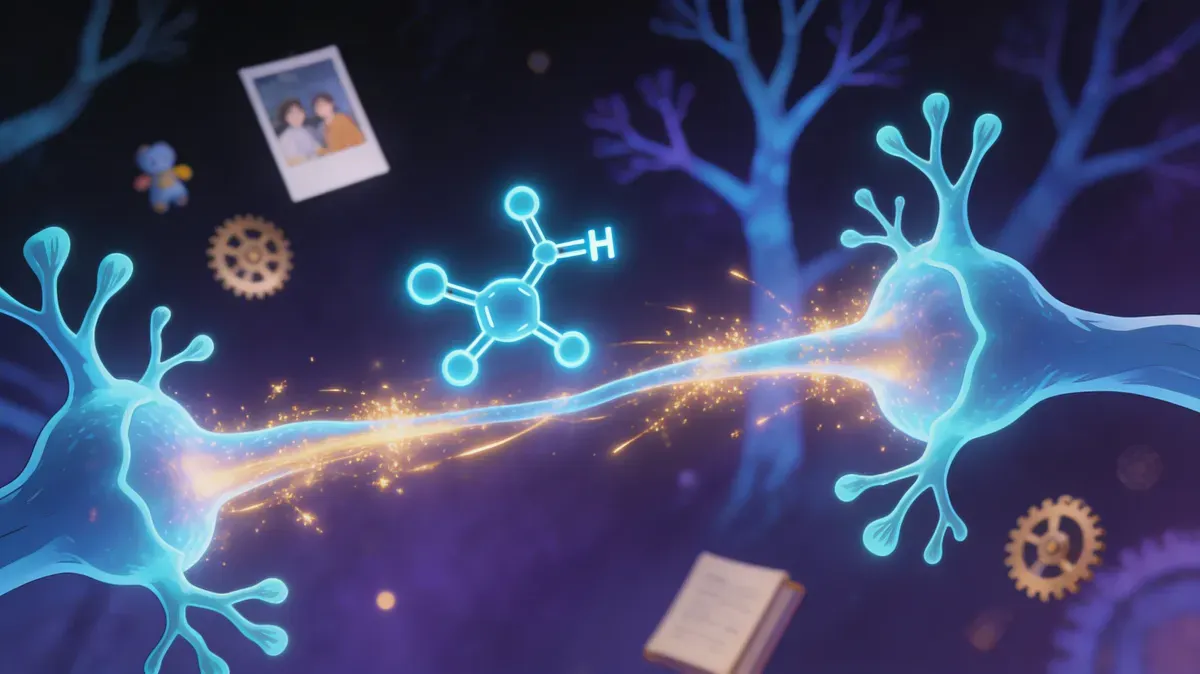
Acetylcholine and aging: Why your memory neurotransmitter declines and how to protect it
Acetylcholine supports memory, attention, sleep, and vagal tone. Learn what changes with age, how choline intake matters, and safer ways to track it.
You walk into a room and forget why you’re there. You reach for a word you’ve used a thousand times and it vanishes. You read a paragraph, get to the end, and realize you retained nothing. These aren’t just inconveniences of getting older — they’re early signals that your brain’s most important memory chemical is running low.
Acetylcholine is the neurotransmitter that makes learning, memory formation, and focused attention possible. The cholinergic system can weaken with normal aging and is affected early in Alzheimer’s disease. U.S. intake data also show that most adults fall below the adequate intake for choline, its dietary precursor; that is a population-level gap, not a diagnosis of deficiency for every adult.
Here’s what the science says about acetylcholine decline, why it matters far beyond forgetting names, and what you can actually do about it.
What you’ll learn:
- How acetylcholine governs memory, attention, and even muscle function
- Why the cholinergic system is uniquely vulnerable to aging
- 7 evidence-based strategies to support acetylcholine production naturally
Quick answer
Acetylcholine is a neurotransmitter for memory, attention, REM sleep, muscle contraction, and vagal tone. Aging, Alzheimer’s pathology, sleep disruption, and anticholinergic medications can weaken cholinergic signaling; the first practical step is auditing choline, not assuming every adult is clinically deficient.
Key facts
- Acetylcholine supports memory encoding, sustained attention, parasympathetic activation, and movement.
- Choline is the main dietary precursor; low intake is a population gap, not an automatic deficiency diagnosis.
- Sleep matters because acetylcholine falls in deep sleep and rises during REM; review deep sleep optimization.
- Vagal tone shows up in the HRV guide, and tracking it alongside early signs of cognitive decline can reveal early risk signals.
What is acetylcholine?
Acetylcholine (ACh) was the first neurotransmitter ever discovered, identified by Otto Loewi in 1921. It operates across both the central and peripheral nervous systems, making it one of the most widespread signaling molecules in the body.
Quick definition: Acetylcholine is a neurotransmitter essential for memory encoding, sustained attention, muscle contraction, and parasympathetic nervous system activation — and its signaling declines progressively with age.
Why acetylcholine matters for your brain and body
Unlike neurotransmitters with narrow roles, acetylcholine serves multiple critical functions:
- Memory encoding — ACh is required to convert short-term experiences into long-term memories, particularly in the hippocampus
- Sustained attention — The basal forebrain cholinergic system maintains focused attention and filters distractions
- Working memory — Cholinergic signaling supports attention and working memory; reduced ACh transmission can make holding and updating information harder
- Sleep architecture — ACh drives REM sleep, the phase critical for memory consolidation and emotional processing
- Muscle contraction — At the neuromuscular junction, ACh triggers every voluntary muscle movement
- Parasympathetic regulation — ACh activates the “rest and digest” system, lowering heart rate and promoting recovery
When acetylcholine declines, you don’t just lose memory. You lose the ability to learn new information, maintain focus, sleep deeply, and recover efficiently.
The science behind acetylcholine decline
The cholinergic system is among the earliest and most severely affected networks in brain aging. Understanding the mechanisms reveals why proactive intervention is essential.
How the cholinergic system ages
Multiple components of the acetylcholine system deteriorate simultaneously:
| Component | Age-related change | Functional impact |
|---|---|---|
| Cholinergic neurons (basal forebrain) | Progressive loss from ~age 40 | Reduced ACh production capacity |
| Nicotinic receptors | 5–10% decline per decade | Decreased sensitivity to available ACh |
| Muscarinic receptors | Modest decline, impaired signaling | Reduced downstream effects even with adequate ACh |
| Choline acetyltransferase (ChAT) | Declining activity | Slower ACh synthesis rate |
| Acetylcholinesterase (AChE) | Relatively preserved | Continues breaking down ACh at the same rate despite reduced production |
The critical imbalance: your brain produces less acetylcholine with each decade, but the enzyme that destroys it (acetylcholinesterase) keeps working at full capacity. The result is an accelerating deficit.
A 2019 Neuropsychopharmacology molecular-imaging study found that older animals had a blunted acetylcholine response in the retrosplenial cortex after acetylcholinesterase inhibition. That supports early cholinergic vulnerability, but it is not a direct human screening test.
Acetylcholine and longevity: what the research says
The relationship between acetylcholine and biological aging extends far beyond memory.
The cholinergic anti-inflammatory pathway is one of the body’s key mechanisms for controlling systemic inflammation. Acetylcholine released by the vagus nerve suppresses the production of pro-inflammatory cytokines including TNF-alpha and IL-6. As cholinergic function declines with age, this anti-inflammatory brake weakens — contributing directly to inflammaging, the chronic low-grade inflammation that accelerates every hallmark of aging.
Research published in Brain (Oxford) demonstrated that cholinergic system integrity predicts the trajectory of cognitive decline — individuals with better-preserved cholinergic function at baseline maintained cognitive performance for years longer than those with early cholinergic deterioration, even when controlling for amyloid pathology.
This finding is profound: it suggests that supporting acetylcholine may provide cognitive resilience independent of other Alzheimer’s pathology.
New to brain health? Check out our guide on neuroplasticity and brain regeneration for the basics on how your brain adapts at any age.
The cholinergic system also interacts directly with BDNF, the brain’s primary growth factor. Acetylcholine stimulates BDNF release in the hippocampus, and BDNF in turn supports cholinergic neuron survival. When either system declines, the other follows — creating a degenerative feedback loop that can be interrupted with the right interventions. Among natural compounds, lion’s mane mushroom stands out for its ability to stimulate nerve growth factor (NGF), which is essential for the survival of exactly the cholinergic neurons most vulnerable in Alzheimer’s disease.
7 evidence-based strategies to support acetylcholine naturally
Unlike dopamine or serotonin, acetylcholine production is heavily dependent on dietary precursors. This makes it uniquely responsive to nutritional and lifestyle strategies.
1. Fix the choline gap first
Why it works: Choline is the essential precursor for acetylcholine synthesis. Your body cannot always make enough on its own, so intake must come from food. The adequate intake is 550 mg/day for men and 425 mg/day for women, and NHANES analyses show most adults fall below those targets. Treat that as a reason to audit your diet, not proof of clinical deficiency.
How to do it:
- Prioritize choline-rich foods daily: eggs (147 mg per egg — the single best source), beef liver (3 oz / 85 g = 356 mg), chicken, salmon, cruciferous vegetables
- Aim for at least 2–3 eggs daily — this alone provides 300–450 mg of choline
- Consider supplemental choline if dietary intake is insufficient (alpha-GPC or citicoline are the most bioavailable forms)
- Combine with adequate B12 — the methylation cycle that supports choline metabolism requires B12 as a cofactor
Expected results: Improved memory formation and mental clarity within 2–4 weeks of correcting a choline deficit.
2. Engage in aerobic exercise
Why it works: Aerobic exercise increases cholinergic neurotransmission through multiple mechanisms: it upregulates choline acetyltransferase (the enzyme that makes ACh), increases BDNF which supports cholinergic neuron survival, and improves cerebral blood flow to cholinergic centers.
How to do it:
- Perform 150+ minutes per week of moderate-intensity aerobic exercise
- Walking, cycling, swimming, and dancing are all effective
- VO2 max improvement correlates strongly with cholinergic system preservation
- Consistency matters more than intensity for cholinergic benefits — aim for 4–5 sessions per week
Expected results: Measurable improvements in attention and working memory within 6–8 weeks of consistent aerobic training. Long-term exercise is associated with slower cholinergic decline over decades.
3. Protect and extend deep sleep
Why it works: Acetylcholine has a unique relationship with sleep. ACh levels drop during deep (NREM) sleep — and this drop is necessary for memory consolidation. During REM sleep, ACh surges back to waking levels, enabling dream formation and emotional memory processing. Disrupted sleep architecture impairs both phases of this cycle.
How to do it:
- Target 7–8 hours with a focus on deep sleep optimization
- Maintain a consistent sleep schedule — cholinergic cycling depends on circadian regularity
- Avoid anticholinergic medications before bed (many OTC sleep aids, antihistamines, and antidepressants block acetylcholine)
- Keep the bedroom cool — body temperature regulation directly affects sleep architecture and ACh cycling
Expected results: Enhanced memory consolidation within days. Long-term sleep optimization preserves cholinergic cycling capacity.
4. Challenge your brain with novel learning
Why it works: The cholinergic system operates on a “use it or strengthen it” principle. Novel learning tasks activate the basal forebrain cholinergic projections, and repeated activation strengthens these pathways. Routine activities, by contrast, gradually shift to non-cholinergic circuits.
How to do it:
- Learn a new language — bilingual cognitive demands are among the strongest cholinergic activators
- Study a musical instrument — motor-cognitive integration requires sustained cholinergic engagement
- Take courses or read in unfamiliar subjects — the novelty component is essential
- Play strategy games that require working memory (chess, bridge) rather than reflex games
Expected results: Improved sustained attention and working memory within 4–8 weeks. Lifelong learning habits are associated with delayed cognitive decline by an estimated 4–7 years.
5. Support acetylcholine cofactors
Why it works: Converting choline to acetylcholine requires multiple cofactors. A bottleneck in any one slows the entire production chain.
How to do it:
- Vitamin B5 (pantothenic acid): Directly required for ACh synthesis via acetyl-CoA. Found in chicken, beef, potatoes, oats, and tomatoes
- Vitamin B1 (thiamine): Required for pyruvate dehydrogenase, which produces the acetyl group. Found in whole grains, pork, and legumes
- Folate: Supports the methylation cycle that recycles choline. Found in leafy greens, legumes, and fortified grains
- Magnesium: Modulates NMDA receptors that interact with cholinergic transmission. Threonate form crosses the blood-brain barrier
Expected results: Gradual improvement in ACh production capacity over 4–8 weeks when correcting deficiencies.
6. Avoid acetylcholine blockers
Why it works: Many common medications and substances actively block acetylcholine receptors (anticholinergic effect). A 2019 study in JAMA Internal Medicine found that cumulative anticholinergic exposure was associated with a 50% increased dementia risk.
What to watch for:
- OTC antihistamines (diphenhydramine/Benadryl) — strongly anticholinergic
- Tricyclic antidepressants — block muscarinic ACh receptors
- Bladder antispasmodics (oxybutynin) — significant anticholinergic burden
- Some muscle relaxants — cyclobenzaprine has anticholinergic properties
- Alcohol — acutely impairs cholinergic transmission and damages cholinergic neurons chronically
What to do: Review your medication list with your doctor. Many anticholinergic drugs have non-anticholinergic alternatives. Never stop prescribed medications without medical guidance.
The information provided does not replace professional medical advice. Consult your healthcare provider before making any changes to your medication regimen.
7. Stimulate the vagus nerve
Why it works: The vagus nerve is the primary parasympathetic pathway, and its function is mediated by acetylcholine. Vagal stimulation has been shown to increase ACh release, activate the cholinergic anti-inflammatory pathway, and improve HRV — a direct measure of vagal tone. Vagal activation also stimulates GABAergic interneurons in the brainstem, reinforcing the inhibitory tone that both acetylcholine and GABA systems depend on.
How to do it:
- Practice slow, deep breathing (4–6 breaths per minute) for 10–15 minutes daily
- Cold face immersion — splashing cold water on your face activates the diving reflex via vagal pathways
- Gargling vigorously — stimulates the vagus nerve through pharyngeal muscles
- Singing or chanting — activates vagal pathways through vocal cord engagement
- Monitor your HRV trends — improving HRV reflects improving vagal (cholinergic) tone
Expected results: Measurable HRV improvements within 2–4 weeks. Sustained practice builds cholinergic resilience over months.
How to track and measure cholinergic health
Direct acetylcholine measurement isn’t available outside of research settings. However, several accessible metrics correlate with cholinergic system function.
Key metrics to monitor
| Metric | Optimal range | What it indicates |
|---|---|---|
| HRV (RMSSD) | Age-adjusted; higher is better | Vagal tone — directly reflects parasympathetic (cholinergic) function |
| Deep sleep % | 15–25% of total sleep | ACh cycling integrity — consistently low deep sleep may signal cholinergic impairment |
| REM sleep % | 20–25% of total sleep | ACh surges during REM — reduced REM indicates impaired cholinergic activation |
| Resting heart rate | 55–65 bpm | Parasympathetic control; elevated RHR suggests reduced vagal ACh output |
| Working memory performance | Stable or improving | Most ACh-sensitive cognitive domain; track with standardized apps |
How SuperAge helps you protect cholinergic function
Acetylcholine can’t be measured from your wrist — but the metrics most closely tied to cholinergic health can. SuperAge transforms your Apple Watch data into early warning signals for brain aging.
Continuous HRV monitoring
Your heart rate variability is the strongest non-invasive proxy for vagal (cholinergic) tone. SuperAge tracks HRV continuously, revealing trends that may signal cholinergic decline before memory symptoms appear. A sustained downward HRV trend warrants attention.
Sleep architecture insights
SuperAge monitors your sleep patterns, helping you track whether you’re getting adequate deep and REM sleep — the phases where acetylcholine cycling is most critical. Disrupted sleep architecture is often the earliest detectable sign of cholinergic impairment.
Your biological age, tracked
Cholinergic decline is one thread in the broader tapestry of biological aging. SuperAge calculates your biological age from multiple health metrics, giving you a comprehensive picture of how your body and brain are aging together.
Frequently asked questions
What are the symptoms of low acetylcholine?
The most common symptoms include difficulty forming new memories, poor sustained attention, mental fog, reduced ability to learn new skills, dry mouth, constipation, and disrupted sleep (particularly reduced REM sleep). In more severe cases, confusion, disorientation, and difficulty with complex tasks may develop. Many people attribute these symptoms to “normal aging” when they actually reflect addressable cholinergic decline.
Can you take acetylcholine as a supplement?
No — acetylcholine cannot be taken directly as a supplement because it doesn’t cross the blood-brain barrier and is rapidly broken down in the bloodstream. However, you can support its production by supplementing its precursors, primarily choline (as alpha-GPC or citicoline) and its cofactors (vitamins B5, B1, and folate). Some natural compounds like huperzine A inhibit the enzyme that breaks down acetylcholine, effectively raising levels.
How much choline do you need daily?
The adequate intake is 550 mg/day for adult men and 425 mg/day for adult women, though some researchers argue these values are too low. Three eggs provide approximately 440 mg. Most adults consume only 300–350 mg daily — well below recommendations. Pregnant and breastfeeding women need significantly more (450–550 mg) due to the critical role of choline in fetal brain development.
Is there a connection between acetylcholine and Alzheimer’s disease?
Yes — the cholinergic hypothesis of Alzheimer’s disease, proposed in 1982, identifies acetylcholine dysfunction as a central feature. Most FDA-approved Alzheimer’s medications (donepezil, rivastigmine, galantamine) work by inhibiting acetylcholinesterase — the enzyme that breaks down acetylcholine. While Alzheimer’s involves multiple pathological processes, cholinergic degeneration in the basal forebrain is one of the earliest detectable changes, often preceding clinical symptoms by years.
How are acetylcholine and dopamine related in aging?
Acetylcholine and dopamine have a complex reciprocal relationship. In the striatum, they work in balance — acetylcholine modulates dopamine release, and dopamine modulates acetylcholine release. Both decline with aging, but through different mechanisms. Their combined decline produces the characteristic aging profile: reduced motivation (dopamine) coupled with impaired memory and attention (acetylcholine). Supporting both systems simultaneously produces synergistic benefits.
Key takeaways
- Acetylcholine is your brain’s memory and attention chemical: It governs learning, working memory, sustained focus, sleep architecture, and anti-inflammatory signaling
- The cholinergic system starts declining from age 40: Production drops while the breakdown enzyme remains active, creating an accelerating deficit
- Most adults fall below adequate choline intake: this essential precursor must come from food, especially eggs, liver, and cruciferous vegetables.
- Common medications actively block acetylcholine: Antihistamines, certain antidepressants, and bladder medications carry significant anticholinergic burden
- HRV is your best proxy metric: Vagal tone directly reflects cholinergic function and can be tracked daily with a wearable
Start protecting your memory today
Every memory you form, every new skill you learn, every moment of sustained focus — acetylcholine makes it possible. Its decline is gradual and silent, but the consequences compound over decades.
The strategies in this guide aren’t complicated. Eat enough choline. Move your body. Protect your sleep. Avoid ACh blockers. Challenge your brain. The earlier you start, the more cognitive reserve you build.
Ready to take control? Download SuperAge and start tracking the metrics that reveal how your brain is aging — HRV, sleep quality, and biological age, all in one place.
References
- Schliebs, R. & Arendt, T. (2011). The cholinergic system in aging and neuronal degeneration. Behavioural Brain Research, 221(2), 555-563.
- Hampel, H. et al. (2018). The cholinergic system in the pathophysiology and treatment of Alzheimer’s disease. Brain, 141(7), 1917-1933.
- Vallianatou, T. et al. (2019). Molecular imaging identifies age-related attenuation of acetylcholine in retrosplenial cortex. Neuropsychopharmacology, 44, 2127-2134.
- Sabandal, J.M. et al. (2022). Acetylcholine deficit causes dysfunctional inhibitory control in an aging-dependent manner. Scientific Reports, 12, 20903.
- Cummings, J.L. & Back, C. (1998). The cholinergic hypothesis of neuropsychiatric symptoms in Alzheimer’s disease. American Journal of Geriatric Psychiatry, 6(2), S64-S78.
- Coupland, C.A.C. et al. (2019). Anticholinergic drug exposure and the risk of dementia. JAMA Internal Medicine, 179(8), 1084-1093.
- Zeisel, S.H. (2017). Choline, other methyl-donors and epigenetics. Nutrients, 9(5), 445.
- Wallace, T.C. & Fulgoni, V.L. (2017). Usual choline intakes are associated with egg and protein food consumption in the United States. Nutrients, 9(8), 839.
Last updated: June 6, 2026. This article is regularly reviewed to ensure accuracy.
Related Articles

Alpha-GPC: choline for cognitive aging and brain longevity
Alpha-GPC is a choline donor studied for MCI and dementia. Learn evidence, dose ranges, food-first choline strategy, and stroke-risk cautions.