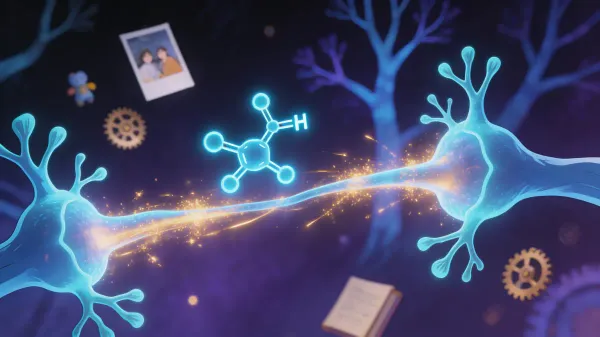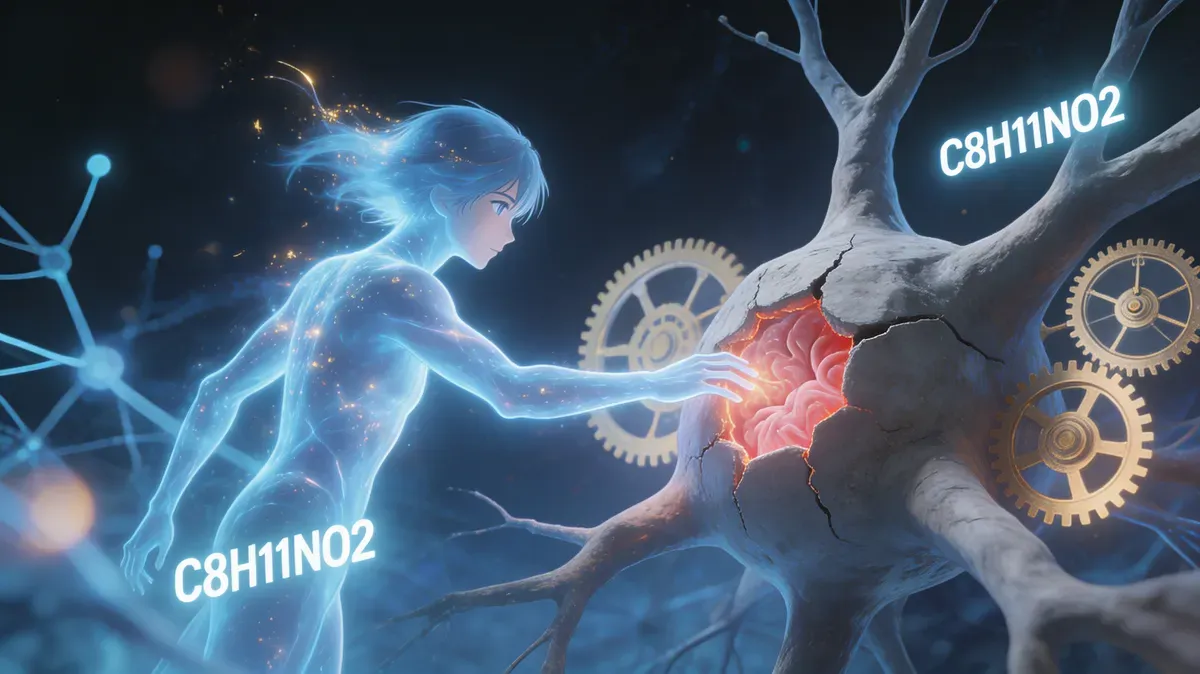
Dopamine and aging: Why motivation fades and how to restore it
Dopamine receptors and transporters decline with age. Learn how that affects motivation, reward, movement and the habits that support brain aging.
Dopamine does not vanish overnight as you age, and it is not simply a “pleasure chemical.” The better-supported picture from PET and SPECT imaging is more specific: several dopamine receptors and transporters decline across adulthood, while dopamine synthesis capacity appears more preserved.
That distinction matters. Lower dopaminergic signaling can make reward anticipation, effort, movement speed and cognitive flexibility feel less automatic. It can also make healthy habits harder to repeat, because the same reward system that helps you pursue goals is part of what reinforces exercise, social connection and novelty.
This guide explains what changes with age, which claims are still preliminary, and which lifestyle levers have the strongest evidence for supporting dopaminergic function without pretending that you can “hack” dopamine directly.
What you’ll learn:
- Why dopamine drops faster than any other neurotransmitter with age
- The surprising link between dopamine decline and accelerated biological aging
- 8 evidence-based strategies to protect and restore dopamine function naturally
Quick answer
Dopamine-related motivation can fade with age, but the evidence is mainly about receptors, transporters and circuit responsiveness, not a simple blood-testable dopamine level. Imaging meta-analyses suggest age-related declines across dopamine targets, with different rates by receptor type and brain region.
The practical takeaway is cautious but useful: exercise, sleep consistency, protein adequacy, morning light, novelty, social engagement and recovery can support the systems that depend on dopamine. They do not replace medical care for depression, Parkinson’s disease, ADHD or medication-related dopamine problems.
Think of dopamine health as a behavior-and-brain circuit issue. The goal is not to chase bigger spikes; it is to preserve sensitivity, energy metabolism and routines that keep effort feeling worthwhile.
Key facts
- Dopamine aging -> receptors: human imaging studies show age-related declines in dopamine receptors and transporters, while synthesis capacity may decline less.
- Motivation -> reward anticipation: dopamine is more about wanting, effort and learning from reward cues than simple pleasure.
- Exercise -> dopamine support: animal and human evidence links physical activity with dopamine signaling, but exact human “boost” percentages are not settled.
- Sleep -> receptor availability: sleep deprivation alters striatal D2/D3 receptor availability and can impair attention and working memory.
- Cold exposure -> acute stress response: the famous 250% dopamine figure comes from plasma dopamine after one hour in cold water, not a typical short cold shower or brain dopamine scan.
- Clinical context -> caution: if motivation loss is severe, sudden or paired with depression, tremor or medication changes, it needs clinical evaluation.
What is dopamine?
Dopamine is a neurotransmitter — a chemical messenger that neurons use to communicate. It’s produced primarily in two regions of the midbrain: the substantia nigra and the ventral tegmental area (VTA).
Quick definition: Dopamine is a neurotransmitter that regulates motivation, reward processing, motor control, and cognitive flexibility — and it declines significantly with age.
Why dopamine matters beyond “feeling good”
Most people associate dopamine with pleasure, but that’s only a fraction of its role. Dopamine governs:
- Motivation and drive — the anticipation of reward, not just the reward itself
- Motor control — smooth, coordinated movement (its loss causes Parkinson’s disease)
- Cognitive flexibility — the ability to switch between tasks and adapt to new situations
- Working memory — holding and manipulating information in real time
- Risk assessment — evaluating whether a potential reward is worth pursuing
When dopamine declines, you don’t just feel less pleasure. You lose the wanting — the internal push that transforms intention into action.
The science behind dopamine decline
The dopamine system is among the most age-vulnerable networks in the human brain. Understanding how it deteriorates reveals why targeted intervention matters.
How dopamine changes decade by decade
PET and SPECT studies do not measure “total dopamine in the brain” directly. They measure targets such as D1 receptors, D2/D3 receptors, dopamine transporters and synthesis capacity.
The best concise estimate is a range, not one universal number. A 2017 meta-analysis found age-related reductions across dopamine measures from about 3.7% to 14% per decade, depending on the target. D1 receptors tended to show larger declines, while synthesis capacity appeared relatively more preserved.
That means the old headline “dopamine drops 13% per decade after 45” is too blunt. A more accurate reading is that dopamine signaling becomes less efficient with age because receptors, transporters, metabolic resilience and circuit responsiveness change together.
Three mechanisms likely contribute:
- Receptor and transporter loss — the brain may have fewer dopamine targets and transporters available in key regions.
- Cellular stress in dopamine neurons — mitochondrial stress, oxidative stress and energy availability can make dopamine neurons vulnerable.
- Circuit-level change — reward anticipation and effort signals can become less reliable even when dopamine is not the only factor.
Dopamine and longevity: what the research says
The connection between dopamine and biological aging is real, but it should be framed as an interaction, not a one-way cause. Dopaminergic circuits influence movement, effort, reward learning and social drive. Those behaviors strongly affect metabolic health, cardiovascular fitness and brain resilience.
Recent work strengthens that picture. A 2025 study in aging mice found that voluntary exercise increased evoked striatal dopamine release and improved motor performance. A 2025 Molecular Psychiatry paper reported that aging reduced Bdnf expression in the ventral tegmental area and lowered reward-seeking motivation in male mice.
Cornell-led work in 2025 also highlighted an energy-metabolism vulnerability in aging midbrain dopamine neurons. The practical meaning is not that glucose, BDNF or dopamine alone explains motivation. It is that dopamine neurons sit at the intersection of metabolism, movement, neuroplasticity and reward behavior.
8 proven ways to boost dopamine naturally
The brain’s dopamine system is remarkably responsive to lifestyle intervention. These strategies target different mechanisms — from increasing production to protecting existing neurons.
1. Exercise intensely (but not every day)
Why it works: Exercise is one of the better-supported levers for brain aging, and dopamine is likely part of the effect. In animal models, voluntary exercise can increase evoked striatal dopamine release and improve motor performance. In humans, exercise improves cognition, mood and metabolic health, but exact dopamine-release percentages are not yet a reliable consumer metric.
How to do it:
- Perform 2-3 sessions of vigorous exercise per week if your medical status allows it
- Combine cardio with resistance training rather than relying on one modality
- Use intensity sparingly: hard days should be followed by easier recovery days
- Track motivation, sleep and HRV so “more exercise” does not become overtraining
Expected results: The realistic goal is better energy, movement confidence and consistency over weeks. Treat any claim of a precise dopamine percentage increase as preliminary unless it comes from a direct human imaging study.
2. Prioritize protein — especially tyrosine-rich foods
Why it works: Dopamine is synthesized from the amino acid tyrosine, which comes from dietary protein. Without adequate tyrosine, your brain simply cannot produce enough dopamine.
How to do it:
- Aim for 0.7–1.0 g of protein per pound of body weight daily (1.5–2.2 g/kg)
- Focus on tyrosine-rich sources: eggs, fish, chicken, turkey, almonds, avocados, bananas, and soy
- Consume protein at breakfast — tyrosine availability is highest when competing amino acids are lowest
- Read our guide on how much protein you need after 40 for detailed recommendations
Expected results: Improved morning alertness and sustained motivation throughout the day within 1–2 weeks.
3. Get cold exposure
Why it works: Cold exposure can acutely raise catecholamines and alertness. The widely repeated 250% dopamine number comes from a 2000 study measuring plasma dopamine after one hour of immersion in 14°C water. That is not the same as a 2-minute cold shower, and it is not a direct measure of dopamine inside the brain.
How to do it:
- Start with 30 seconds of cool or cold water at the end of a normal shower
- Progress gradually only if you tolerate it well
- Avoid unsupervised cold immersion if you have cardiovascular disease, fainting risk or uncontrolled blood pressure
Expected results: Cold can feel motivating because it is a strong acute stressor. Use it as an optional alertness tool, not as proof that you are rebuilding dopamine neurons.
4. Protect sleep architecture
Why it works: Dopamine receptor sensitivity resets during deep sleep. Sleep deprivation downregulates D2 receptors in the striatum within a single night, creating a state that mimics years of age-related decline.
How to do it:
- Target 7–8 hours of sleep with emphasis on deep sleep quality
- Maintain a consistent sleep schedule — dopamine circadian rhythm depends on regularity
- Avoid blue light 90 minutes before bed — it disrupts melatonin production which indirectly affects dopamine cycling
Expected results: Restored D2 receptor sensitivity within 2–3 nights of quality sleep. Chronic sleep optimization preserves dopamine function long-term.
5. Reduce constant low-level stimulation
Why it works: The popular phrase “dopamine fasting” is misleading: you cannot fast from dopamine. What you can do is reduce the constant cue-reward loop created by feeds, notifications, snacking and background entertainment.
How to do it:
- Designate 1-2 hours daily as low-stimulation time: no phone, no feeds, no multitasking
- Delay phone checking for 30-60 minutes after waking
- Use walks, focused work or conversation instead of passive scrolling
- Keep the goal behavioral: make ordinary rewards feel noticeable again
Expected results: People often report better focus and less compulsive checking within 1-2 weeks, but this is not the same as proving dopamine receptor upregulation.
6. Leverage sunlight in the first hour
Why it works: Morning sunlight exposure triggers dopamine release in the retina and activates pathways that set the circadian rhythm for dopamine production throughout the day. This is independent of vitamin D synthesis.
How to do it:
- Get 10–30 minutes of direct sunlight within the first hour of waking
- No sunglasses during this period (regular glasses are fine)
- On cloudy days, spend longer outside — overcast light still provides sufficient lux
- Combine with a morning walk for synergistic dopamine and cortisol regulation
Expected results: Improved morning energy and more stable motivation throughout the day within 5–7 days.
7. Build a novelty practice
Why it works: Dopamine neurons fire not in response to rewards themselves, but to unexpected rewards — prediction errors. Routine kills dopamine signaling because the brain stops producing prediction errors for known outcomes.
How to do it:
- Introduce one genuinely new activity per week — a new route, a new recipe, a new skill
- Vary your exercise routine regularly (different locations, types, intensities)
- Travel to unfamiliar environments when possible — novelty-rich environments activate the entire dopaminergic circuit
- Set challenging but achievable goals — the “stretch zone” maximizes dopamine release
Expected results: Reactivation of reward circuits that may have become dormant. Compounding effect over months as novelty-seeking becomes self-reinforcing.
8. Support dopamine cofactors
Why it works: Dopamine synthesis requires multiple cofactors beyond tyrosine. Deficiency in any one creates a bottleneck.
How to do it:
- Iron: Required for tyrosine hydroxylase, the rate-limiting enzyme. Ensure adequate intake through red meat, lentils, or spinach
- Vitamin B6: Converts L-DOPA to dopamine. Found in poultry, fish, potatoes, and bananas
- Folate: Supports methylation pathways that recycle dopamine. Leafy greens, legumes, and fortified grains
- Magnesium: Regulates NMDA receptors that modulate dopamine release. Threonate form specifically crosses the blood-brain barrier
- Omega-3 fatty acids: DHA maintains dopamine receptor membrane fluidity
Expected results: Gradual improvement in dopamine production capacity over 4–8 weeks when correcting deficiencies.
The information provided does not replace professional medical advice. Consult your healthcare provider before starting any supplementation.
How to track and measure dopamine-related health
Direct dopamine measurement requires PET scanning — impractical for everyday use. However, several proxy metrics correlate strongly with dopaminergic function.
Key metrics to monitor
| Metric | Optimal range | What it indicates |
|---|---|---|
| HRV (RMSSD) | Age-dependent; higher is better | Autonomic balance; low HRV correlates with dopaminergic decline |
| Resting heart rate | 55–65 bpm | Cardiovascular-neural efficiency; elevated RHR may signal catecholamine imbalance |
| Deep sleep % | 15–25% of total sleep | D2 receptor recovery; consistently low deep sleep suggests dopamine dysregulation |
| Exercise consistency | 4+ sessions/week | Behavioral proxy for motivation — declining consistency often reflects dopamine decline |
| Reaction time trends | Stable or improving | Cognitive processing speed; dopamine-dependent |
How SuperAge helps you protect dopamine function
You can’t measure dopamine directly from your wrist — but you can track the metrics most closely tied to dopaminergic health. SuperAge turns your Apple Watch data into actionable insights about your brain aging.
Automatic HRV and stress monitoring
Your heart rate variability is one of the strongest non-invasive correlates of autonomic nervous system health, which is intimately connected to dopamine function. SuperAge tracks HRV continuously, showing trends that may reveal dopaminergic decline before you notice motivational changes.
Exercise pattern analysis
SuperAge monitors your training load, exercise consistency, and intensity minutes — giving you objective data on whether you’re hitting the exercise thresholds that maintain dopamine production. A sudden drop in training motivation might show up in your data before you consciously recognize it.
Your biological age, tracked
Dopamine decline is one component of broader biological aging. SuperAge calculates your biological age from multiple health metrics, giving you a single number that reflects how your body — including your brain — is aging. Improving your biological age through the strategies in this article also supports dopamine preservation.
Frequently asked questions
At what age does dopamine start declining?
Dopamine-related measures begin changing in adulthood, but there is no single start date. Imaging studies show different rates by target and region: a 2017 meta-analysis estimated roughly 3.7% to 14% per decade across dopamine measures. Midlife may be when many people notice the behavioral consequences, but the biology is gradual.
Can you reverse dopamine decline with age?
You cannot promise reversal of age-related dopamine neuron or receptor loss. You can improve the conditions that support remaining dopaminergic function: exercise, sleep, metabolic health, protein adequacy, social engagement, novelty and recovery. For Parkinson’s disease, depression, ADHD or medication effects, medical evaluation matters.
What are the first signs of age-related dopamine decline?
Early signs can include reduced initiative, less reward from familiar activities, lower willingness to pursue effortful goals, slower movement or less cognitive flexibility. These symptoms are non-specific, so they can also reflect depression, poor sleep, thyroid issues, anemia, medications, chronic stress or neurodegenerative disease.
Does caffeine protect dopamine neurons?
Observational studies and meta-analyses link caffeine intake with lower Parkinson’s disease risk, but that does not prove caffeine prevents dopamine neuron loss in an individual. Caffeine blocks adenosine receptors and can indirectly affect dopamine signaling. Excess caffeine can worsen sleep and anxiety, which may work against long-term brain health.
How is dopamine decline related to biological aging?
Dopamine decline can be both a marker and amplifier of aging. Mitochondrial stress, oxidative stress and metabolic dysfunction can affect dopamine circuits. In the other direction, lower motivation can make exercise, social contact, learning and sleep routines harder to maintain, creating a feedback loop that accelerates functional aging.
Key takeaways
- Dopamine aging is not one simple number: receptors, transporters, synthesis capacity and circuit responsiveness change at different rates.
- Motivation depends on reward anticipation: dopamine helps convert cues and goals into effort, not just pleasure.
- Exercise and sleep are the strongest practical levers: they support brain health broadly and are plausibly dopaminergic, without requiring exact spike claims.
- Cold exposure is optional and should be framed carefully: the 250% figure is plasma dopamine after prolonged immersion, not proof of a short-shower brain dopamine boost.
- Severe motivation loss needs context: depression, Parkinson’s disease, ADHD, sleep disorders, medications and metabolic problems can all look like low dopamine.
Start protecting your dopamine today
The most dangerous thing about dopamine decline is that it robs you of the very motivation you need to fight it. By the time you notice you’ve lost your drive, the decline is already well underway.
The solution is objective data. When your motivation lies to you — telling you to skip the workout, avoid the cold shower, stay on the couch — your health metrics tell the truth.
Ready to take control? Download SuperAge and start tracking the metrics that reveal how your brain is aging — before motivation decline makes it harder to start.
References
- Karrer, T.M. et al. (2017). Reduced dopamine receptors and transporters but not synthesis capacity in normal aging adults: a meta-analysis. Neurobiology of Aging.
- Dreher, J.C. et al. (2008). Age-related changes in midbrain dopaminergic regulation of the human reward system. PNAS.
- Volkow, N.D. et al. (2000). Association Between Age-Related Decline in Brain Dopamine Activity and Impairment in Frontal and Cingulate Metabolism. American Journal of Psychiatry.
- Bastioli, G. et al. (2025). Voluntary exercise increases striatal dopamine release and improves motor performance in aging mice. npj Parkinson’s Disease.
- Imai lab collaborators. (2025). Aging reduces motivation through decreased Bdnf expression in the ventral tegmental area. Molecular Psychiatry.
- Srámek, P. et al. (2000). Human physiological responses to immersion into water of different temperatures. European Journal of Applied Physiology.
- Volkow, N.D. et al. (2009). Sleep Deprivation Decreases Binding of [11C]Raclopride to Dopamine D2/D3 Receptors in the Human Brain. Journal of Neuroscience.
- Hong, C.T. et al. (2020). The Effect of Caffeine on the Risk and Progression of Parkinson’s Disease: A Meta-Analysis. Nutrients.
- Weill Cornell Medicine. (2025). Aging midbrain neurons face energy crisis linked to Parkinson’s. Cornell Chronicle.
Last updated: 2026-06-07. This article is regularly reviewed for accuracy.
Related Articles
Blueberries vs strawberries: which berry protects your brain from aging?
Compare anthocyanin profiles in blueberries and strawberries. Discover which berry slows cognitive decline, boosts memory, and lowers your biological age.