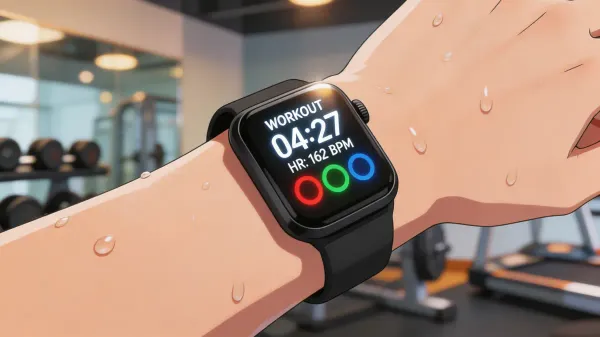
Intensity minutes: How to hit your weekly exercise goal (and why it matters)
Learn what intensity minutes are, why the WHO recommends 150 per week, and how to track them with your Apple Watch. Science-backed strategies to move smarter.
Nearly one third of adults worldwide do not meet the WHO’s recommended physical activity levels. That’s about 1.8 billion people moving too little — with higher risk for heart disease, type 2 diabetes, dementia, some cancers, and premature death.
The problem is not always laziness. It’s that many people count the wrong thing. They track total minutes at the gym, steps on a pedometer, or calories on a screen — but never ask: how hard was I actually working?
That’s where intensity minutes come in. Unlike raw exercise time, intensity minutes measure the quality of your effort based on your heart rate. A 30-minute brisk walk and a 30-minute scroll on your phone while sitting on the exercise bike are not the same thing — and your body knows it.
What you’ll learn:
- What intensity minutes are and how they’re calculated
- The WHO’s 150-minute weekly target and the science behind it
- 7 practical ways to accumulate more intensity minutes every week
- How tracking intensity (not just duration) can transform your health
What are intensity minutes?
Intensity minutes measure the time you spend exercising at a moderate or vigorous effort level, based on your heart rate relative to your maximum heart rate (HR max).
Quick definition: Intensity minutes are the total minutes spent in moderate-to-vigorous physical activity, where vigorous minutes count double because of their greater physiological impact.
Unlike simply counting how long you exercise, intensity minutes weight your effort. A 15-minute high-intensity interval session can earn you 30 intensity minutes, while a leisurely 15-minute stroll might earn you zero.
How intensity minutes are calculated
Most fitness trackers and health apps use heart rate zones to classify your effort:
| Zone | Heart Rate Range | Intensity Level | Multiplier |
|---|---|---|---|
| Light | Below 60% HR max | Not counted | 0x |
| Moderate | 60–80% HR max | Moderate | 1x |
| Elevated/Vigorous | 80–100% HR max | High | 2x |
The formula is simple: Total Intensity Minutes = Moderate Minutes + (Vigorous Minutes × 2)
For example, if you do 20 minutes of brisk walking (moderate) and 10 minutes of sprinting (vigorous), your total is 20 + (10 × 2) = 40 intensity minutes.
Why intensity matters, but volume still counts
A 2022 Circulation cohort study tracking more than 116,000 adults found that guideline-level physical activity was linked to lower mortality, with near-maximal associations around 300–600 minutes per week of moderate activity or 150–300 minutes per week of vigorous activity. A 2024 accelerometer-based analysis also found that higher physical activity intensity was more closely associated with lower mortality risk than simple volume, especially for cardiovascular mortality.
The takeaway: total movement still matters, but minutes spent at a true moderate or vigorous effort carry more health signal than the same clock time spent barely moving.
The science behind intensity minutes
The 150-minute weekly target isn’t arbitrary. It is the lower end of the adult guideline range where scientific evidence consistently shows meaningful health improvements. Current WHO, CDC, and American Heart Association guidance still converges on 150–300 minutes of moderate aerobic activity per week, 75–150 minutes of vigorous activity, or an equivalent mix, plus muscle-strengthening activity at least 2 days per week.
What happens in your body during moderate exercise
When your heart rate reaches 60–80% of its maximum, several physiological processes activate:
- Improved cardiovascular efficiency: Your heart pumps more blood per beat (increased stroke volume), strengthening the cardiac muscle over time
- Enhanced fat oxidation: At moderate intensity, your body can use a higher share of fat as fuel, although the exact mix depends on fitness, diet, duration, and intensity
- Mitochondrial biogenesis: Your cells produce more mitochondria, the powerhouses that generate cellular energy
- Reduced inflammation: Regular moderate activity lowers circulating levels of inflammatory markers like hs-CRP and IL-6
What happens during vigorous exercise
Above 80% HR max, additional adaptations kick in:
- VO2 max improvement: Vigorous intervals are one of the most time-efficient ways to increase maximal oxygen uptake, a key predictor of longevity
- EPOC (afterburn effect): Your metabolism stays elevated for hours after vigorous exercise, burning additional calories at rest
- Metabolic stress: High-intensity effort can improve insulin sensitivity and glucose disposal when programmed with enough recovery
- Cardiac adaptation: Over time, the heart adapts to handle higher outputs, improving both peak performance and recovery speed
Why vigorous minutes count double
The 2:1 weighting is a public-health equivalency, not a promise that every vigorous minute is exactly twice as beneficial for every person. The WHO, CDC, and American Heart Association all use this conversion because population evidence shows that roughly 75 minutes of vigorous activity can provide benefits comparable to 150 minutes of moderate activity.
7 proven ways to accumulate more intensity minutes
Meeting the 150-minute weekly goal is more achievable than it sounds — especially when you understand that vigorous minutes count double.
1. Use the “talk test” to calibrate effort
Why it works: The talk test is the simplest, equipment-free method to gauge your exercise intensity. During moderate activity, you can talk but not sing. During vigorous activity, you can barely complete a sentence.
How to do it:
- During your workout, try speaking a full sentence out loud
- If you can talk comfortably but singing feels difficult, you’re in the moderate zone
- If you can only say a few words before needing a breath, you’re in the vigorous zone
- If you can sing, you’re in the light zone — increase your pace
Expected results: Immediate awareness of your true exercise intensity, helping you avoid “junk miles” that don’t count toward your goal.
2. Add intervals to your walks
Why it works: Walking is the most accessible exercise, but at a leisurely pace it often stays in the light zone. Adding speed intervals pushes your heart rate into the moderate and vigorous zones.
How to do it:
- Walk at your normal pace for 3 minutes
- Speed up to a brisk pace (3.5–4.5 mph / 5.6–7.2 km/h) for 2 minutes
- Alternate for 20–30 minutes
- Gradually increase the fast intervals and decrease the recovery periods
Expected results: A 30-minute interval walk can yield 20–25 intensity minutes, compared to 5–10 from a leisurely stroll. The Japanese 3-3 walking method offers a simple structure: alternate three purposeful minutes with three easy minutes.
3. Try the “exercise snack” approach
Why it works: Brief bursts of vigorous activity spread throughout the day — often called “exercise snacks” or vigorous intermittent lifestyle physical activity — can push your heart rate into a meaningful training zone without a formal workout. In UK Biobank wearable data, about 4–5 minutes per day of vigorous lifestyle bursts was associated with substantially lower all-cause, cancer, and cardiovascular mortality compared with none.
How to do it:
- Perform 3–5 one-minute vigorous efforts throughout your day
- Options include stair sprints, jumping jacks, burpees, or fast cycling
- Space them at least 1–2 hours apart
- Each minute at vigorous intensity earns you 2 intensity minutes
Expected results: 5 daily exercise snacks × 2 (vigorous multiplier) = 10 intensity minutes per day, or 70 per week — nearly half the weekly target.
4. Take the stairs — and make them count
Why it works: Stair climbing naturally pushes your heart rate above 60% of your max. A 2023 study found that climbing just 5 flights per day (about 50 stairs) was associated with a 20% lower risk of cardiovascular disease.
How to do it:
- Choose stairs over elevators whenever possible
- Climb at a brisk pace (not a leisurely step)
- Try taking stairs two at a time for a more vigorous effort
- Track your flights climbed to stay motivated
Expected results: 10 minutes of brisk stair climbing per day can yield 10–20 intensity minutes (moderate to vigorous), contributing 70–140 intensity minutes per week.
5. Incorporate strength training with minimal rest
Why it works: Traditional strength training with long rest periods may not elevate heart rate enough to count as intensity minutes, even though it still matters for health. Circuit-style training with short rest periods keeps your heart rate in the moderate-to-vigorous zone while still building strength.
How to do it:
- Choose 4–6 compound exercises (squats, push-ups, rows, lunges, overhead press, deadlifts)
- Perform 8–12 reps of each with 30–45 seconds rest between exercises
- Complete 3–4 rounds
- Monitor your heart rate to confirm you’re staying in the target zone
Expected results: A 30-minute circuit session can generate 20–28 intensity minutes while building strength simultaneously. Do not use intensity minutes as your only strength metric, because heart rate does not fully capture mechanical tension, volume load, or reps near failure.
6. Make your cardio progressive
Why it works: Many people hit a plateau because they exercise at the same intensity for months. Progressive overload applies to cardio too — gradually increasing intensity ensures your sessions continue to challenge your cardiovascular system.
How to do it:
- Week 1–2: 60% of your cardio time at moderate intensity
- Week 3–4: Increase to 70% moderate, add 10% vigorous intervals
- Week 5–6: Move to 50% moderate, 20% vigorous
- Track your weekly intensity minutes to measure progress
Expected results: Within 6 weeks, you’ll accumulate 30–50% more intensity minutes per session at the same workout duration.
7. Pair exercise with daily activities
Why it works: “Incidental HIIT” — weaving vigorous bursts into daily routines — has been shown to reduce all-cause mortality by up to 26% in people who don’t formally exercise (JAMA Oncology, 2023).
How to do it:
- Sprint to catch the bus instead of walking
- Carry groceries in multiple fast trips instead of one slow one
- Play actively with your kids or pets (tag, chase, fetch)
- Bike to work at a pace that raises your heart rate
Expected results: 15–30 bonus intensity minutes per week with zero dedicated exercise time.
How to track and measure intensity minutes
Tracking intensity minutes manually is impractical — you’d need to monitor your heart rate continuously and calculate weighted totals. This is where wearable technology makes the difference.
Key metrics to monitor
| Metric | Weekly Target | What It Tells You |
|---|---|---|
| Total intensity minutes | 150+ | Whether you meet the WHO minimum |
| Moderate minutes | Varies | Time spent at 60–80% HR max |
| Vigorous minutes | Varies | Time spent at 80–100% HR max (counts 2x) |
| Daily consistency | 5+ days active | Whether your activity is spread through the week |
| Intensity mix | Mostly moderate with planned vigorous work | Whether your effort distribution matches your fitness and recovery |
Understanding your heart rate zones
Your maximum heart rate is often estimated as 220 minus your age, although individual max heart rate can vary widely. For a 45-year-old, the rough estimate would be:
- HR max: 175 bpm
- Light zone (below 60%): Under 105 bpm — not counted
- Moderate zone (60–80%): 105–140 bpm — counts 1x
- Vigorous zone (80–100%): 140–175 bpm — counts 2x
Apple Watch calculates personalized heart rate zones using your health data, including resting heart rate and observed peak heart rates during workouts. That usually improves the estimate, but wrist-based optical sensors can still be less reliable during irregular motion, loose fit, tattoos, arrhythmias, or very intense intervals.
Weekly vs. daily goals
The WHO recommends weekly totals, so how you distribute them is flexible. Large “weekend warrior” studies suggest that, for the same total amount of moderate-to-vigorous activity, concentrating exercise into 1–2 sessions can produce similar mortality benefits to spreading it across 3+ sessions. Spreading activity across the week may still help with adherence, daily blood pressure, glucose control, and sleep.
A practical daily target: aim for roughly 22 intensity minutes per day (150 ÷ 7), with flexibility to bank extra minutes on active days.
Intensity minutes and biological age: what the research says
Most people track intensity minutes to lose weight or improve fitness. But the deeper impact — one that most health apps don’t show you — is on how fast your body ages at the cellular level.
A NHANES telomere analysis found that adults reporting high physical activity — roughly the equivalent of jogging for 30 minutes (women) or 40 minutes (men) five days a week — had longer leukocyte telomeres than sedentary adults. The estimated difference was about 9 years of cellular aging, but this was observational and does not prove that one exercise routine literally reverses age by 9 years.
The connection runs deeper than telomeres. Exercise intensity directly influences:
- Epigenetic clocks: A 2025 NHANES DNA-methylation analysis found higher physical activity associated with younger biological age estimates across several clocks, while noting that causality and dose-response still need stronger longitudinal evidence
- Inflammatory aging (inflammaging): Regular moderate-to-vigorous activity reduces chronic low-grade inflammation — a primary driver of accelerated aging measured by markers like hs-CRP
- VO2 max preservation: VO2 max declines approximately 10% per decade after 30, but consistent vigorous exercise can cut that decline in half — making it one of the strongest predictors of all-cause mortality
- Insulin sensitivity: Exercise intensity is directly correlated with improved insulin signaling, which influences glycation and metabolic aging
A 2024 study in the European Journal of Preventive Cardiology reported that physical activity intensity distribution may be a stronger predictor of cardiovascular and all-cause mortality than total physical activity volume. In other words, it’s not just how much you move — it’s also how hard you push.
Want to go deeper? Read our guide on how biological age is calculated for the full science behind aging clocks and what you can do to influence yours.
How SuperAge helps you track intensity minutes
Manually calculating intensity minutes from your workouts is tedious and inaccurate. SuperAge automates the entire process using data from your Apple Watch and iPhone.
Automatic intensity classification
SuperAge reads your workout heart rate data through Apple HealthKit and classifies every minute into three zones:
- Light (below 60% HR max): Not counted — these are recovery or low-effort minutes
- Moderate (60–80% HR max): Counted at standard weight (1x)
- Elevated (80–100% HR max): Counted at double weight (2x)
You don’t need to calculate anything. Every workout you record with your Apple Watch automatically feeds into your intensity minutes total.
Weekly progress tracking
SuperAge displays your 7-day intensity minutes chart, showing:
- Daily weighted intensity minutes for each day of the week
- Your weekly total compared to the 150-minute goal
- A clear progress indicator showing how close you are to your target
- The ratio between moderate and elevated effort
Your biological age, tracked
Beyond intensity minutes, SuperAge calculates your biological age using over 25 health metrics — including VO2 max, resting heart rate, HRV, sleep quality, and blood biomarkers. As you consistently meet your intensity minutes goal, you’ll see these downstream metrics improve over time, reflected in a lower biological age.
Frequently asked questions
What counts as moderate-intensity exercise?
Moderate-intensity exercise raises your heart rate to 60–80% of your maximum. Common examples include brisk walking at 3.5–4.5 mph (5.6–7.2 km/h), cycling under 10 mph (16 km/h), recreational swimming, and gardening with moderate effort. The talk test is a quick check: you should be able to talk but not sing.
Is 150 intensity minutes per week enough?
For most adults, 150 minutes of moderate intensity (or 75 vigorous) is the minimum for significant health benefits. Research shows a dose-response relationship, with large cohort data suggesting near-maximal mortality associations around 300–600 minutes per week of moderate activity or 150–300 minutes of vigorous activity. More is not automatically better forever; the curve appears to flatten at very high volumes.
Do vigorous minutes really count double?
Yes for guideline tracking. The WHO, CDC, and American Heart Association all recognize that 1 minute of vigorous activity can be counted as roughly equivalent to 2 minutes of moderate activity. Treat it as a practical scoring rule, not a precise biological exchange rate.
Can I bank all my intensity minutes on the weekend?
“Weekend warrior” studies suggest that people who reach the recommended weekly total can see similar mortality benefits whether activity is concentrated into 1–2 sessions or spread across 3+ sessions. If your schedule forces weekend-heavy training, it still counts. If you can spread movement across the week, it may be easier on recovery and better for daily metabolic regulation.
How accurate is Apple Watch at tracking intensity minutes?
Apple Watch heart-rate data is generally useful for intensity classification, especially during steady rhythmic activities like walking, running, and cycling. A 2025 living systematic review found low average heart-rate bias during exercise, but with meaningful limits of agreement and lower reliability during irregular movement patterns or arrhythmia. Use the trend, not a single minute, as the signal.
Key takeaways
- Intensity minutes measure effort quality: They weight your exercise time by how hard you’re actually working, using heart rate zones as the metric
- The WHO recommends 150 per week: This is the evidence-based minimum for reducing disease risk and mortality — but more is better up to about 600 minutes
- Vigorous activity counts double: 75 minutes of vigorous exercise equals 150 minutes of moderate activity, making high-intensity training extremely time-efficient
- Exercise intensity predicts aging: Research shows that how hard you push matters more than total volume for biological age markers like telomere length and VO2 max decline
- Automation removes the guesswork: Let your Apple Watch and SuperAge handle the calculation so you can focus on moving
Start earning your intensity minutes today
You don’t need to overhaul your entire routine. Start by adding one 2-minute walking interval to your daily walk. Replace one elevator ride with stairs. Try one exercise snack between meetings. Small changes compound — and your body tracks every minute.
Ready to see your progress? Download SuperAge and start tracking your intensity minutes alongside your biological age — automatically, from your Apple Watch.
References
- WHO Global Guidelines on Physical Activity and Sedentary Behaviour (2020) — Evidence base for 150–300 moderate minutes, 75–150 vigorous minutes, or an equivalent mix
- Guthold et al. (2024), The Lancet Global Health — Global trends in insufficient physical activity, estimating 31.3% of adults and 1.8 billion people below recommendations in 2022
- Lee et al. (2022), Circulation — Long-term physical activity intensity and all-cause mortality in 116,000+ adults, with near-maximal associations at 300–600 min/week moderate or 150–300 min/week vigorous activity
- European Journal of Preventive Cardiology (2024/2025) — Accelerometer-based analysis suggesting physical activity intensity distribution is strongly associated with mortality risk
- Fuller et al. (2025), npj Digital Medicine — Living systematic review and meta-analysis of Apple Watch measurement accuracy
- Stamatakis et al. (2022), Nature Medicine — Wearable-measured vigorous intermittent lifestyle physical activity and mortality risk in UK Biobank adults
- Rezende et al. (2022), JAMA Internal Medicine — Weekend-warrior and regular physical activity patterns showed similar mortality rates after accounting for total MVPA
- Song et al. (2023), Atherosclerosis — More than five flights of stairs daily associated with lower ASCVD risk
- Tucker (2017), Preventive Medicine — Physical activity and leukocyte telomere length in U.S. adults
- You et al. (2025), npj Aging — Physical activity associated with DNA-methylation-predicted epigenetic age measures in NHANES
Last updated: 2026-06-28. This article is regularly reviewed to ensure accuracy.
Related Articles

10,000 steps a day: Myth or scientific reality?
10,000 steps is not magic. Learn what research says about 7,000 steps, age-based targets, walking pace, walking bouts, and practical ways to move more.