How much exercise do you really need per day? Science-backed guidelines
Discover exactly how much exercise time you need daily for optimal health. Evidence-based guidelines by age, fitness level, and goal — plus how to track it.
The WHO says 150 minutes per week. Your gym buddy swears by 60 minutes a day. Your Apple Watch closes the green ring at 30 minutes. So which number is actually right?
The answer depends on what you’re optimizing for — and most people are either doing far less than they think or grinding through workouts that deliver diminishing returns. A 2022 Harvard-led study tracking over 100,000 adults found that people doing 300 to 600 minutes of moderate activity per week had a 26–31% lower risk of premature death compared with inactive adults; people meeting the minimum guideline range still saw about a 20–21% lower risk. Beyond 600 minutes, the measurable benefit plateaued.
The science is clear: exercise time matters, but more isn’t always better. What matters most is hitting a consistent daily threshold that matches your goals, your age, and your recovery capacity. This guide breaks down exactly how much exercise time you need — with no guesswork.
What you’ll learn:
- The evidence-based daily exercise targets by age and goal
- Why 30 minutes may not be enough — and when 60 minutes is too much
- How to split your time between cardio, strength, and flexibility
What counts as exercise time?
Before setting a target, you need to know what actually qualifies. Not all movement counts equally, and the distinction between moderate and vigorous intensity changes everything about how much time you need.
Quick definition: Exercise time is the total duration spent in intentional physical activity at moderate or vigorous intensity — typically measured as minutes per day or per week.
Moderate vs. vigorous intensity
The difference between moderate and vigorous exercise isn’t about the activity itself — it’s about how hard your body works during it.
| Intensity | Heart rate zone | Talk test | Examples |
|---|---|---|---|
| Light | < 50% max HR | Can sing | Casual walking, stretching, light housework |
| Moderate | 50–70% max HR | Can talk but not sing | Brisk walking at 3.5 mph (5.6 km/h), cycling < 10 mph (16 km/h), water aerobics |
| Vigorous | 70–85% max HR | Can only say a few words | Running at 6+ mph (9.7+ km/h), swimming laps, HIIT, cycling > 12 mph (19 km/h) |
This matters because one minute of vigorous exercise equals roughly two minutes of moderate activity in terms of health benefits. So if the guidelines say 150 minutes of moderate exercise per week, you can achieve equivalent benefits with just 75 minutes of vigorous activity — or a mix of both.
What doesn’t count
Standing at your desk, slow strolling, and light stretching are valuable for reducing sedentary time but don’t qualify as moderate or vigorous exercise for meeting daily targets. WHO guidance still counts replacing sitting with light movement as beneficial; it just sits in a different bucket from exercise minutes. For exercise time, your heart rate and breathing need to stay elevated. Most fitness trackers use heart rate thresholds to distinguish between genuine exercise and everyday movement.
Official guidelines: what the science recommends
Every major health organization has weighed in on how much exercise adults need. The WHO, CDC/HHS, American Heart Association, and ACSM all point to the same baseline — with a few practical nuances.
The baseline: 150 minutes per week
The WHO, American Heart Association, and U.S. Department of Health and Human Services all converge on the same minimum:
- 150–300 minutes per week of moderate-intensity aerobic activity, OR
- 75–150 minutes per week of vigorous-intensity activity, OR
- An equivalent combination of both
That works out to roughly 22–43 minutes per day of moderate exercise, or 11–21 minutes per day of vigorous exercise.
Strength training: the non-negotiable addition
Aerobic exercise alone isn’t enough. All major guidelines also recommend:
- At least 2 days per week of muscle-strengthening activities
- Working all major muscle groups (legs, hips, back, chest, shoulders, arms, abdomen)
- Enough work to train each major movement pattern; for most people, that means two focused 30–45 minute sessions or several shorter sessions
Research consistently shows that strength training after 40 delivers outsized returns — preserving muscle mass, bone density, and metabolic rate in ways that cardio alone cannot.
The 2026 ACSM resistance-training position stand is useful here: consistency and training all major muscle groups at least twice weekly matter more than chasing a perfect program. A 2026 British Journal of Sports Medicine cohort study also found that 90–119 minutes per week of resistance training was associated with lower all-cause mortality, with no additional mortality reduction above about 120 minutes per week. That is observational evidence, not a mandate to lift for exactly two hours.
The sweet spot: 300+ minutes per week
Meeting the 150-minute minimum is strongly protective. The incremental gains are clearest when you move toward the upper guideline range and beyond. A landmark 2022 study published in Circulation found:
| Weekly exercise | Mortality reduction vs inactive adults | Cardiovascular benefit |
|---|---|---|
| 150 min moderate | 21% lower all-cause | 22% lower CV death |
| 300 min moderate | 26% lower all-cause | 28% lower CV death |
| 300–600 min moderate | 31% lower all-cause | 38% lower CV death |
| 600+ min moderate | No additional benefit | Plateaus |
The optimal target for most adults: about 45 minutes per day of moderate exercise, or roughly 300 minutes per week. Going beyond 600 minutes weekly doesn’t hurt, but it doesn’t add measurable longevity benefits either.
How much exercise by age: a practical breakdown
Your exercise needs change across decades — not because movement becomes less important, but because recovery capacity, injury risk, and physiological priorities shift.
Ages 18–30: build the foundation
- Target: 45–60 minutes per day, 5–6 days per week
- Split: 60% cardio, 30% strength, 10% flexibility
- Key focus: Building VO2 max and lean muscle mass — both peak in your late 20s and decline from there
This is the decade to invest in cardiovascular capacity and muscle. The fitness base you build now determines your trajectory for the next 40 years.
Ages 30–40: maintain and diversify
- Target: 40–50 minutes per day, 5 days per week
- Split: 50% cardio, 35% strength, 15% flexibility/mobility
- Key focus: Preventing the early decline in metabolic rate and maintaining muscle mass
Metabolic rate drops approximately 1–2% per decade starting in your 30s. Strength training becomes more critical to counteract this decline.
Ages 40–50: prioritize strength and recovery
- Target: 30–45 minutes per day, 5 days per week
- Split: 40% strength, 40% cardio, 20% flexibility/mobility
- Key focus: Countering sarcopenia (age-related muscle loss) and joint health
Recovery takes longer. Training intensity matters more than volume. Two to three well-structured strength sessions per week provide more benefit than daily moderate cardio.
Ages 50–60: quality over quantity
- Target: 30–40 minutes per day, 5–6 days per week
- Split: 40% strength, 30% cardio, 30% balance/flexibility
- Key focus: Fall prevention, bone density, and grip strength maintenance
Balance training becomes essential. Falls are the leading cause of injury-related death in adults over 65, and the prevention window starts in your 50s. The single leg balance test is a simple but powerful predictor of your functional age.
Ages 60+: move every day, intensity as tolerated
- Target: 30 minutes per day, every day
- Split: 30% strength, 30% walking/cardio, 40% balance/flexibility/mobility
- Key focus: Maintaining independence, preventing falls, preserving cognitive function
The minimum threshold matters most here. Even 15 minutes of daily walking significantly reduces mortality risk in adults over 60. The key is consistency — daily movement trumps occasional intense sessions.
Exercise time by goal
Different objectives demand different time commitments. Here’s what the evidence supports for each common goal.
Weight loss: 45–60 minutes per day
The American College of Sports Medicine recommends 250–300 minutes per week of moderate exercise for clinically significant weight loss. That’s roughly 45–60 minutes on most days. Combining exercise with dietary changes produces better results than either alone — exercise without calorie awareness typically yields only 2–3% body weight loss.
For targeting stubborn visceral fat, studies show that both HIIT and moderate continuous exercise are effective, but HIIT delivers faster results in less time. Not sure which sport to pick for your 45-minute sessions? See which sport burns the most calories — the data comparison shows wide variance across activities.
Heart health: 30 minutes per day
The cardiovascular system responds well to consistency. Thirty minutes of moderate activity most days — brisk walking, cycling, or swimming — reduces heart disease risk by 30–40%. Your resting heart rate and HRV are two of the most reliable indicators that your exercise routine is working.
Muscle building: 45–60 minutes, 3–4 days per week
Most adults can get the muscle-building stimulus they need in 3–4 sessions of 45–60 minutes targeting different muscle groups, with adequate protein intake and rest days between sessions. Longer sessions are not automatically better; the key variables are progressive overload, total weekly sets, good technique, and recovery.
Mental health: 20–30 minutes per day
Exercise is one of the most effective lifestyle interventions for anxiety and depression. A 2026 British Journal of Sports Medicine umbrella review found that exercise reduced depression and anxiety symptoms across age groups, with aerobic exercise especially useful and shorter, lower-intensity programs often helping anxiety. The effect can begin after a single session, and consistency amplifies it.
General health maintenance: 30 minutes per day
If you have no specific performance or body composition goal, 30 minutes of daily moderate activity is the minimum effective dose. This is the threshold below which health risks begin to climb — and above which the biggest gains in life expectancy occur.
The exercise variety factor
Duration isn’t the only variable. Recent research reveals that what you do matters almost as much as how long you do it.
A 2026 BMJ Medicine analysis of two long-running cohorts found that people who engaged in the highest variety of physical activities had a 19% lower all-cause mortality risk than those with the lowest variety — even after adjusting for total exercise volume. If you’re wondering how walking fits into this mix — and whether it can replace gym sessions — read our breakdown of walking vs 30 minutes of structured exercise to see exactly what each modality contributes. For the evidence on which specific sports deliver the most longevity per hour, see best sports for longevity — the Copenhagen data shows social sports add nearly triple the life expectancy of gym sessions.
The ideal weekly mix
| Activity type | Minimum | Optimal | Why it matters |
|---|---|---|---|
| Aerobic (walking, running, cycling) | 150 min | 300 min | Cardiovascular health, endurance |
| Strength training | 2 sessions | 3–4 sessions | Muscle preservation, bone density, metabolism |
| Flexibility/mobility | 10 min daily | 15–20 min daily | Joint health, injury prevention |
| Balance training (ages 50+) | 2 sessions | 3 sessions | Fall prevention, proprioception |
| High-intensity intervals | 1 session | 2 sessions | VO2 max, metabolic flexibility |
This doesn’t mean you need five different workout types every week. A 45-minute session can combine cardio and strength. A yoga class covers flexibility and balance. The point is to avoid doing only one thing.
How to track and measure exercise time
What gets measured gets managed. But not all tracking methods are equal, and obsessing over exact minutes can backfire.
Key metrics to monitor
| Metric | Target range | What it tells you |
|---|---|---|
| Weekly exercise minutes | 150–300 min | Are you meeting the minimum? |
| Active days per week | 5+ days | Consistency matters more than volume |
| Vigorous minutes ratio | 30–50% of total | Are you pushing hard enough? |
| Rest days per week | 1–2 days | Are you recovering adequately? |
| Training load | Balanced trend | Are you overtraining or undertraining? |
Apple Watch exercise tracking
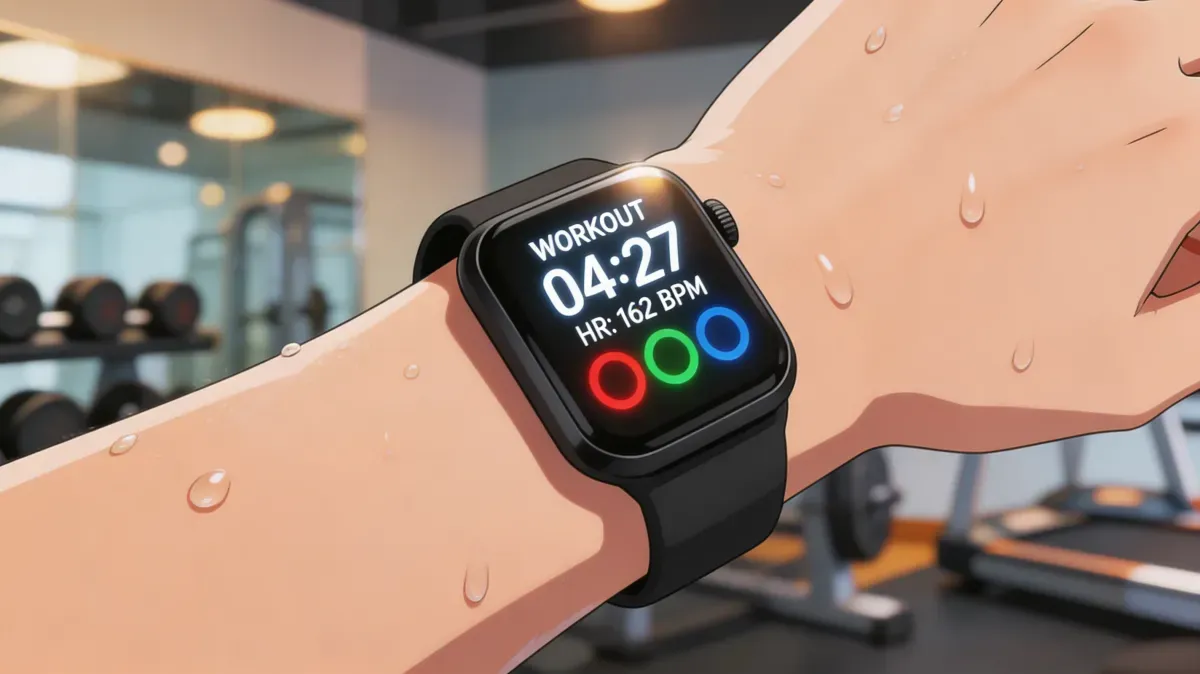
Apple Watch automatically tracks exercise minutes using heart rate and motion data. The green Exercise ring closes at 30 minutes by default — a reasonable minimum, but not necessarily your optimal target. The ring counts any activity at or above a brisk walk pace, using your personal heart rate zones to determine what qualifies. For a sport-by-sport breakdown of how heart rate zones work in practice across different activities, see heart rate zones by sport.
For a more complete picture, look at weekly trends rather than daily rings. A single 60-minute Saturday hike doesn’t compensate for five sedentary weekdays.
Exercise time and biological age: what the research says
Here’s where the numbers get compelling, but they need careful wording. Exercise time doesn’t just reduce disease risk — it is associated with more favorable biological-aging markers, and small intervention studies suggest some markers can shift after structured training. These markers are not the same as proving that your whole body becomes a fixed number of years younger.
A study of over 5,800 adults published in Preventive Medicine found that those who jogged for 30–40 minutes five days a week had telomeres equivalent to someone nine years younger than their chronological age. Telomeres — the protective caps on your chromosomes — shorten with age, and their length is one of the most reliable biomarkers of biological aging.
But it’s not just telomeres. A 2025 study in npj Aging showed that a 12-week supervised exercise program in 26 men reduced a proteomic aging score by the equivalent of 10 months. A separate small study found that sedentary women aged 50–70 who started eight weeks of combined aerobic and strength training reduced DNA methylation age by about two years. Promising, but still small-study evidence.
The dose-response relationship is clear:
| Weekly exercise time | Biological-aging interpretation |
|---|---|
| < 60 min | Better than none, but usually below guideline dose |
| 150 min moderate | Meets the core dose linked to broad health benefits |
| 200–300 min moderate | Stronger dose for cardiometabolic and longevity protection |
| 150+ min vigorous (running equivalent) | Linked with longer telomeres in observational data |
| 2+ days strength training | Preserves muscle and metabolic health; aging-clock evidence is emerging |
The takeaway: consistent daily exercise is one of the most powerful tools available to slow biological aging — often more effective than any supplement or diet alone.
How SuperAge helps you optimize exercise time
Tracking exercise time manually is tedious and inaccurate. Most people either overestimate how much they move or lose track of weekly totals. SuperAge automates this entirely. If you want a structured week-by-week plan for converting your exercise time into measurable biological age improvement, your first 90 days on SuperAge sequences the exact interventions to add each week.
Automatic exercise tracking
SuperAge pulls exercise data directly from Apple Health and Apple Watch — every workout, walk, and active session is logged automatically. You see your daily and weekly exercise minutes without entering anything manually.
Exercise time in your Fitness Age
SuperAge doesn’t just show you a number. It uses your exercise time as one of the key inputs for calculating your Fitness Age — a composite score that tells you whether your body performs like someone older or younger than your actual age. Meeting optimal exercise targets directly improves your Fitness Age score.
Personalized insights
Rather than chasing a generic 30-minute ring, SuperAge contextualizes your exercise time against your age, your recent trends, and your other health metrics. It shows you whether your current activity level is maintaining, improving, or declining your overall fitness trajectory.
Progress over time
Week-over-week and month-over-month trends reveal patterns that daily tracking misses. SuperAge visualizes these trends so you can see whether you’re consistently hitting the thresholds that matter for long-term health.
Frequently asked questions
Is 30 minutes of exercise a day enough?
For basic health maintenance, yes — 30 minutes of moderate daily exercise meets the WHO minimum and reduces all-cause mortality by about 21%. But for optimal benefits, research suggests 45 minutes per day (about 300 minutes per week) delivers significantly greater protection against cardiovascular disease and premature death.
Can I exercise too much?
Yes, though the threshold is higher than most people think. Benefits plateau above 600 minutes per week of moderate exercise (about 90 minutes daily). Beyond that, there’s no additional longevity benefit, and excessive training without adequate recovery can lead to overtraining, immune suppression, and hormonal disruption.
Does it matter what time of day I exercise?
Consistency matters more than timing. That said, research suggests morning exercise may slightly improve sleep quality and blood pressure regulation, while afternoon exercise may optimize strength and power output. The best time to exercise is whenever you’ll actually do it consistently.
Can I split my exercise into shorter sessions?
Absolutely. Research shows that three 10-minute walks provide similar cardiovascular benefits to a single 30-minute walk. The key is that each session needs to reach at least moderate intensity to count. This is especially useful for busy schedules.
Is the “weekend warrior” pattern enough?
Yes — if the total weekly volume is high enough. Recent systematic-review and cohort evidence suggests that adults who concentrate guideline-level moderate-to-vigorous activity into one or two sessions per week can see mortality benefits in the same general direction as people who spread activity across the week. The takeaway: total weekly volume matters more than perfect frequency. If your schedule allows only Saturday and Sunday, you can still hit the dose that drives longevity — but keep using light movement breaks on weekdays to reduce sitting time.
How many rest days do I need per week?
Most adults benefit from 1–2 rest days per week, though “rest” doesn’t mean complete inactivity. Light walking, gentle stretching, or yoga on rest days supports recovery without adding training stress. Your training readiness score is a reliable indicator of when your body needs a break.
Key takeaways
- The minimum effective dose is 150 minutes per week (about 22 minutes daily if spread across seven days, or 30 minutes on five days) of moderate exercise — but 300 minutes per week delivers greater benefits
- Strength training at least 2 days per week is non-negotiable regardless of age — it preserves muscle, bone density, and metabolic health
- Exercise variety is linked with lower mortality beyond what total time alone predicts — mix cardio, strength, flexibility, and balance work
- Consistent exercise supports healthier biological-aging markers — telomere, proteomic, and epigenetic studies are promising, but not a literal age-reversal guarantee
- Track weekly trends, not daily minutes — consistency across weeks matters far more than any single day’s performance
Start moving today
You don’t need a perfect plan. You need a consistent habit. Start with 30 minutes of brisk walking tomorrow. Build from there. Track your progress, notice the patterns, and let the data guide your progression.
Ready to see how your exercise habits affect your real age? Download SuperAge and start tracking your exercise time alongside your biological age — automatically.
References
- World Health Organization (2020). “WHO guidelines on physical activity and sedentary behaviour.”
- CDC (2023). “Adult Activity: An Overview.”
- Lee DH, et al. (2022). “Long-term leisure-time physical activity intensity and all-cause and cause-specific mortality.” Circulation, 146(7), 523–534.
- American College of Sports Medicine (2026). “Resistance Training Prescription for Muscle Function, Hypertrophy, and Physical Performance in Healthy Adults: An Overview of Reviews.”
- Giovannucci E, et al. (2026). “Long-term resistance training with all-cause and cause-specific mortality.” British Journal of Sports Medicine.
- Han H, et al. (2026). “Physical activity types, variety, and mortality: results from two prospective cohort studies.” BMJ Medicine.
- Banach M, et al. (2023). “The association between daily step count and all-cause and cardiovascular mortality: a meta-analysis.” European Journal of Preventive Cardiology.
- Munro NR, et al. (2026). “Effect of exercise on depression and anxiety symptoms: systematic umbrella review with meta-meta-analysis.” British Journal of Sports Medicine.
- Weekend Warrior systematic review and meta-analysis (2025). PMC12604259.
- Tucker LA (2017). “Physical activity and telomere length in U.S. men and women: An NHANES investigation.” Preventive Medicine, 100, 145–151.
- Lee-Ødegård S, et al. (2025). “Reversal of proteomic aging with exercise.” npj Aging.
- da Silva Rodrigues RD, et al. (2023). “Eight weeks of physical training decreases 2 years of DNA methylation age of sedentary women.” Healthcare.
Last updated: 2026-06-29. This article is regularly reviewed to ensure accuracy.
Related Articles

Sedentary time: How much sitting is too much?
Discover how sedentary time affects your health, the science-backed thresholds for too much sitting, and practical strategies to reduce sitting time every day.