GABA and aging: sleep, stress, and what the evidence says
GABA supports sleep, stress resilience, and cognition. Learn what aging research shows, what oral GABA can and cannot do, and practical ways to support calm.
Your brain contains roughly 86 billion neurons, and healthy function depends on a balance between excitation and inhibition. One of the main braking systems has a name: GABA (gamma-aminobutyric acid), the most abundant inhibitory neurotransmitter in the human central nervous system.
Here is the aging connection: magnetic resonance spectroscopy studies suggest cortical GABA follows a lifespan trajectory, with some brain regions showing measurable decline from midlife onward. A longitudinal Imaging Neuroscience study found within-person GABA declines over time, but this does not mean every sleep, anxiety, or focus change after 40 is caused by GABA alone.
If falling asleep takes longer, stress feels harder to shake, or concentration fractures more easily than it did a decade ago, GABAergic signaling may be one piece of the picture alongside sleep debt, hormones, medications, alcohol, stress load, and medical conditions.
What you’ll learn:
- What GABA does and why it matters for longevity
- How cortical GABA appears to change with age, and where evidence is still developing
- 7 practical strategies that may support GABA-related sleep and stress pathways
- How SuperAge tracks downstream sleep, stress, and recovery markers
Quick answer
GABA is the brain’s main inhibitory neurotransmitter, and research suggests cortical GABA changes across the lifespan. Lower GABAergic tone may be linked with sleep disruption, anxiety, sensory overload, and cognitive changes, but you cannot diagnose “low GABA” from symptoms or a wearable. The most evidence-aligned support strategies are sleep consistency, exercise or yoga, stress recovery, adequate magnesium and B6 from diet, and cautious supplement use with medical guidance.
Key facts
- GABA reduces neuronal excitability and helps balance glutamate-driven activation.
- Age-related GABA decline has been observed with brain MRS, but timing and size vary by region and person.
- Oral GABA supplements have mixed human evidence and uncertain direct brain uptake.
- Yoga, sleep, breathwork, and stress recovery may support GABA-related pathways, but effect sizes vary.
- HRV, deep sleep, sleep latency, and stress recovery are practical downstream markers, not direct GABA measurements.
What is GABA?
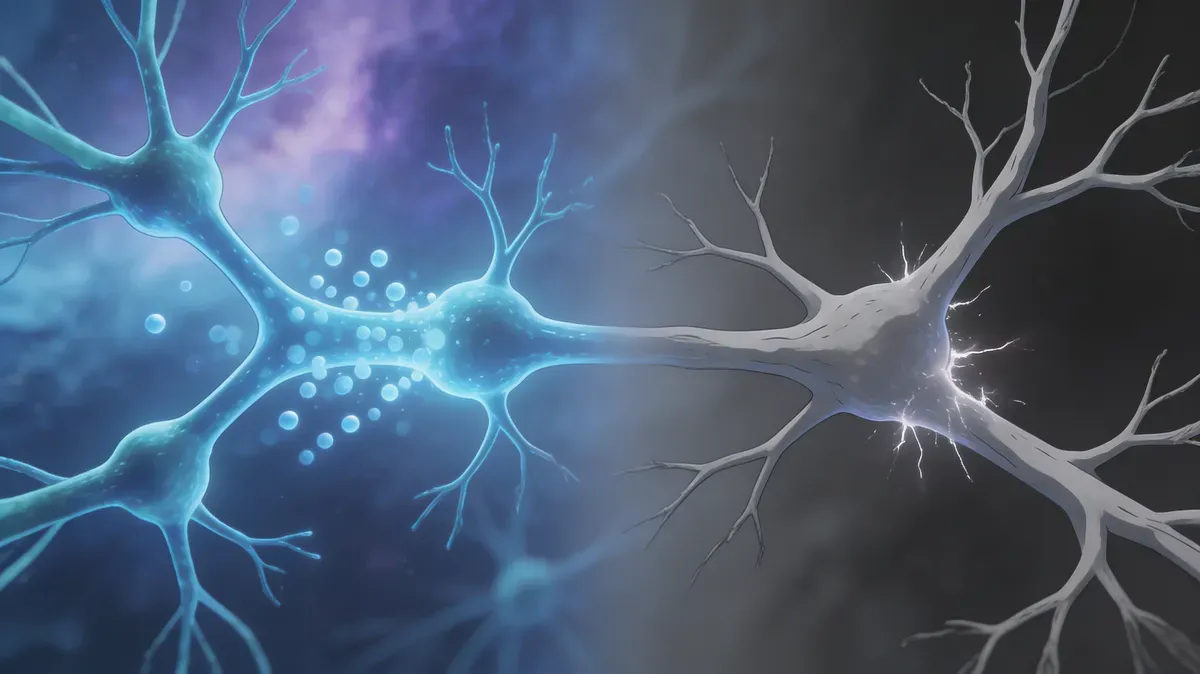
GABA — gamma-aminobutyric acid — is an amino acid that functions as the brain’s primary inhibitory neurotransmitter. While excitatory neurotransmitters like glutamate accelerate neural firing, GABA does the opposite: it slows things down, calms overactive circuits, and restores equilibrium.
Quick definition: GABA is the brain’s chief inhibitory neurotransmitter — it reduces neuronal excitability, enabling calm focus, restorative sleep, and balanced mood.
Why GABA matters for your health
Every major brain function depends on the balance between excitation (glutamate) and inhibition (GABA). Just as dopamine drives motivation and reward, GABA provides the essential counterweight — without adequate inhibition, excitatory signaling becomes uncontrolled:
| Function | GABA’s role |
|---|---|
| Sleep | Silences wake-promoting neurons so deep sleep can begin |
| Anxiety regulation | Dampens amygdala hyperactivity |
| Motor control | Fine-tunes movement precision |
| Cognitive filtering | Blocks irrelevant stimuli so you can focus |
| Pain modulation | Reduces pain signal amplification in the spinal cord |
When GABAergic signaling is well balanced, sleep, stress recovery, sensory filtering, and motor control tend to work more smoothly. When inhibitory signaling is disrupted, those systems can become more vulnerable, although symptoms usually have multiple causes.
The science behind GABA and aging
How GABA works in the brain
GABA binds to two main receptor types:
- GABA-A receptors — fast-acting ion channels that produce immediate calming effects (these are what benzodiazepines and alcohol target)
- GABA-B receptors — slower metabotropic receptors involved in muscle relaxation, memory consolidation, and long-term mood regulation
The brain synthesizes GABA from glutamate via the enzyme glutamic acid decarboxylase (GAD), which requires vitamin B6 as a cofactor. Aging research suggests inhibitory signaling changes with age, but the exact contribution of GAD activity, receptor changes, and regional brain metabolism varies by person and study.
When and how GABA declines
A landmark 2021 individual-participant meta-analysis published in eLife, pooling data from over 1,000 participants across 8 countries, mapped the complete lifespan trajectory of cortical GABA:
- Childhood → adolescence: rapid GABA increase
- 20s → early 40s: plateau (peak inhibitory capacity)
- ~40 onward: gradual, measurable decline
This decline is not uniform across the brain. The prefrontal cortex — critical for decision-making and working memory — and the motor cortex show the steepest age-related drops. A 2021 study in Neurobiology of Aging found that lower GABA in the ventral visual cortex correlated with reduced neural distinctiveness, meaning the aging brain becomes less precise at distinguishing between different stimuli.
GABA and longevity: what the research says
The connection between GABA and lifespan is strongest in preclinical and brain-aging research, not in direct human lifespan trials:
- C. elegans research (Nature Communications): in worms, metabotropic GABA signaling modulated lifespan through GBB-1 and DAF-16/FOXO. That is a useful aging model, but it does not prove that raising GABA extends human life.
- Cortical GABA and successful cognitive aging (Translational Psychiatry, 2025): cognitively-intact adults over 80 showed relatively stabilized GABA levels, suggesting GABA may be a marker of preserved brain function in the oldest-old.
- GABA and chronic cortisol elevation: chronic stress can disturb inhibitory-excitatory balance while elevating cortisol. This may connect GABA-related pathways with sleep, stress recovery, and epigenetic aging, but the relationship is not a one-step cause-and-effect chain.
New to biological aging? Read our guide on how biological age is calculated for the foundational concepts.
Signs that may overlap with lower GABAergic tone
GABA decline does not announce itself with a single dramatic symptom, and these signs are not diagnostic. They can overlap with sleep debt, perimenopause, thyroid problems, medication effects, alcohol, depression, anxiety disorders, pain, and other medical issues:
Sleep disruption
- Difficulty falling asleep (increased sleep latency)
- Lighter sleep with more frequent awakenings
- Reduced deep sleep duration
- Waking feeling unrefreshed despite adequate hours
For women: progesterone decline compounds GABA-related sleep disruption — its metabolite allopregnanolone is a direct GABA-A receptor activator that falls sharply in perimenopause.
Emotional changes
- Increased baseline anxiety or feeling “wired but tired”
- Reduced stress tolerance — smaller triggers produce bigger reactions
- Persistent inner restlessness
- Racing thoughts, especially at night
Cognitive shifts
- Difficulty filtering distractions
- Reduced ability to concentrate for extended periods
- Slower processing of complex information
- Early signs of cognitive decline appearing sooner than expected
Physical symptoms
- Increased muscle tension, especially in jaw, shoulders, and neck
- Heightened sensitivity to sound, light, or sensory stimuli
- Occasional muscle twitches or tremors
7 practical ways to support GABA naturally
1. Prioritize magnesium intake
Why it may help: Magnesium supports normal nerve excitability and may interact with GABA-A and NMDA receptor activity. Studies show that magnesium deficiency is associated with anxiety, insomnia, and hyperexcitability, and supplementation appears most useful when intake or status is low.
How to do it:
- Aim for 400–420 mg/day (men) or 310–320 mg/day (women)
- Best food sources: pumpkin seeds (168 mg per 1 oz / 28 g), dark chocolate, spinach, almonds
- Magnesium glycinate or threonate are commonly used for sleep or nervous-system support, although head-to-head human evidence is limited
Expected results: sleep or tension may improve within 1–2 weeks if a deficiency or low intake is part of the problem.
2. Exercise consistently — especially yoga and moderate cardio
Why it may help: Acute exercise and yoga can influence brain chemistry, mood, and autonomic balance. A foundational 2010 MRS study in the Journal of Alternative and Complementary Medicine found higher thalamic GABA after a yoga session compared with a reading control, and longer yoga practice was linked with mood and anxiety improvements.
How to do it:
- 3–4 yoga sessions per week (even 30 minutes is effective)
- Moderate-intensity aerobic exercise 150+ minutes per week (3.1 mph / 5 km/h walking pace or higher)
- Strength training provides additional benefits through stress reduction
Expected results: many people notice better stress tolerance and sleep quality within weeks; direct GABA changes require research-grade MRS to measure.
3. Optimize deep sleep architecture
Why it may help: GABAergic neurons in sleep-regulating circuits help quiet wake-promoting systems so sleep can begin. Poor sleep, stress, and circadian disruption can all shift inhibitory-excitatory balance, which is why sleep regularity is one of the most practical ways to support the system.
How to do it:
- Maintain a consistent sleep-wake schedule (±30 minutes)
- Keep bedroom temperature at 65–68 °F (18–20 °C)
- Block blue light 90 minutes before bed
- Limit caffeine after 2 PM. Caffeine primarily blocks adenosine receptors, increasing arousal and indirectly making it harder for sleep-promoting inhibitory systems to take over. For the full science of how adenosine and caffeine interact during sleep, see our dedicated guide.
Expected results: improved deep sleep metrics within 1–2 weeks.
4. Eat GABA-supporting foods
Why it may help: Certain foods contain GABA directly or provide precursors and cofactors that support normal neurotransmitter synthesis. Fermented foods can contain GABA because bacterial fermentation produces it, but amounts vary widely by product and preparation.
How to do it:
- GABA-rich foods: kimchi, miso, tempeh, yogurt, kefir
- Glutamate precursors: tomatoes, mushrooms, walnuts, green tea (L-theanine)
- B6 cofactor sources: chickpeas, salmon, potatoes, bananas (B6 is essential for the GAD enzyme)
Expected results: dietary support is gradual; combine with other strategies for synergistic effects.
5. Practice breathwork and meditation
Why it may help: Slow, deep breathing and meditation shift the autonomic nervous system toward parasympathetic recovery. Small neuroimaging studies have linked contemplative practice with GABA-related brain measures, while separate epigenetic-clock research suggests long-term meditation practice may be associated with slower biological aging through stress and autonomic pathways.
How to do it:
- Box breathing: inhale 4 seconds, hold 4, exhale 4, hold 4 — repeat for 5–10 minutes
- Yoga nidra or body scan meditation for 20 minutes before sleep
- Consistent daily practice matters more than session length
Expected results: acute reductions in stress and easier sleep onset can appear within days; direct brain GABA changes are not something a consumer wearable can confirm.
6. Manage chronic stress before it disrupts recovery
Why it may help: Chronic stress can push the nervous system toward higher arousal, higher cortisol, poorer sleep, and reduced recovery. Research on chronic stress and epigenetic aging suggests sustained stress biology can affect DNA methylation patterns; GABA-related inhibitory balance is one plausible part of that wider stress-recovery network.
How to do it:
- Identify and reduce avoidable stressors
- Adopt a stress-recovery practice (not just stress management): walking in nature, social connection, creative expression
- Track HRV as an objective marker of autonomic balance. Low or falling HRV can signal poor recovery, not a direct diagnosis of low GABA.
Expected results: recovery and sleep consistency often improve over 4–8 weeks with sustained practice.
7. Consider targeted supplementation (with medical guidance)
Why it works: Several supplements have evidence for supporting GABAergic function:
| Supplement | Mechanism | Evidence level |
|---|---|---|
| L-theanine (200 mg) | May support relaxation, alpha-wave activity, and glutamate-GABA balance | Moderate |
| Taurine (1–3 g) | Interacts with inhibitory neurotransmitter receptors in preclinical research | Emerging |
| Magnesium threonate | May support brain magnesium status and normal excitability | Emerging to moderate |
| Vitamin B6 (25–50 mg) | Essential cofactor for GAD enzyme; most relevant when intake is low | Strong for deficiency |
Important note on oral GABA supplements: while marketed widely, oral GABA has uncertain ability to cross the blood-brain barrier in meaningful amounts. A 2020 systematic review found limited evidence for stress benefits and very limited evidence for sleep benefits, with small studies and mixed results. Any benefit may be indirect, for example through the gut-brain axis, rather than from direct brain uptake.
The information provided does not replace professional medical advice. Consult your healthcare provider before starting any supplementation.
How to track and measure GABAergic health
Direct GABA measurement requires magnetic resonance spectroscopy (MRS) — a specialized brain imaging technique not available for routine monitoring. However, several proxy markers can help you monitor sleep, stress, and recovery patterns that overlap with GABAergic function:
Key metrics to monitor
| Metric | Optimal range | What it indicates |
|---|---|---|
| HRV (RMSSD) | Above age-adjusted median | Parasympathetic recovery and autonomic balance |
| Deep sleep % | 15–25% of total sleep | Sleep architecture and recovery quality |
| Sleep latency | Under 15 minutes | Ease of sleep initiation |
| Resting heart rate | 55–65 bpm | Cardiovascular recovery and stress load |
| Stress recovery time | Returns to baseline within 30–60 min | Resilience after stressors |
How SuperAge helps you track your brain’s calming system
You cannot measure GABA at home, but you can track downstream markers that show whether sleep, stress, and recovery are moving in the right direction. SuperAge turns your Apple Watch data into a practical recovery dashboard.
Automatic stress and recovery monitoring
SuperAge continuously tracks your stress levels through HRV analysis. Declining HRV trends can show that your autonomic recovery is under strain, even before you notice subjective symptoms.
Deep sleep tracking
The app monitors your deep sleep percentage, a useful marker of sleep architecture and overnight recovery. A declining trend can point to sleep disruption that deserves attention, whether the driver is stress, schedule, alcohol, hormones, or another cause.
Resilience score
SuperAge’s resilience score measures how quickly your body returns to baseline after stress. It is a practical readout of recovery capacity, not a direct GABA measurement.
Your biological age, tracked
All of these markers feed into SuperAge’s biological age calculation, giving you a single number that reflects how well your brain and body are aging across sleep, stress, movement, and recovery.
Frequently asked questions
Does GABA decline cause aging, or does aging cause GABA decline?
Current evidence suggests an association, not a settled causal chain. Aging can affect inhibitory signaling, sleep, stress biology, vascular health, and brain metabolism; disrupted GABAergic tone may also worsen sleep and recovery, which are relevant to healthy aging. The 2025 Translational Psychiatry study showing GABA stabilization in cognitively-intact oldest-old adults suggests cortical GABA may be a marker of preserved cognitive function. GABAergic dysfunction also intersects with depression and accelerated biological aging, but that overlap does not mean GABA decline alone causes either condition.
Do GABA supplements actually work?
The evidence is mixed. Oral GABA has uncertain ability to cross the blood-brain barrier in meaningful amounts, so direct brain effects are unclear. Some small studies show sleep or stress benefits at roughly 100–300 mg doses, possibly through gut-brain or autonomic pathways. L-theanine (200 mg, found in green tea) has human evidence for calm focus and stress-related outcomes, but it should not be treated as a guaranteed way to raise brain GABA.
Can you test your GABA levels?
Not easily. GABA measurement requires magnetic resonance spectroscopy (MRS), which is mainly available in research settings. In daily life, proxy markers like HRV, deep sleep percentage, sleep latency, and stress recovery time provide practical insight into sleep and autonomic recovery. These are the markers SuperAge tracks continuously, but they are indirect.
What is the relationship between GABA and anxiety medications?
Benzodiazepines (like diazepam and lorazepam) work by enhancing GABA-A receptor activity — essentially amplifying whatever GABA is present. This is why they are effective but also why they carry dependency risks: the brain downregulates its own GABA receptors in response. Natural GABA support strategies aim to maintain endogenous production rather than artificially amplifying the signal.
At what age does GABA start declining?
According to the eLife meta-analysis of over 1,000 participants, cortical GABA levels tend to plateau during early adulthood and show a gradual decline from around midlife. The rate of decline varies by brain region and person, so age 40 is a population-level pattern, not a diagnostic cutoff.
Key takeaways
- GABA is your brain’s braking system: the primary inhibitory neurotransmitter that enables calm focus, deep sleep, and stress recovery
- Decline appears around midlife in population data: cortical GABA trends downward with age, but timing and symptoms vary
- Stable cortical GABA may mark healthier brain aging: cognitively-intact oldest-old adults show stabilized GABA levels in emerging research
- Natural support strategies are practical, not magic: magnesium sufficiency, yoga, sleep consistency, stress recovery, and cautious supplementation may support GABA-related pathways
- Track the downstream markers: HRV, deep sleep, sleep latency, and stress recovery are practical proxies for recovery health
Start protecting your brain’s calming system today
GABA-related changes can be gradual and easy to miss, but sleep, stress, and cognition are measurable day to day. The good news: the same habits that support inhibitory balance also support healthy aging. Better sleep, less chronic stress, consistent exercise, and adequate magnesium are practical pillars of long-term recovery.
Ready to take control? Download SuperAge and start tracking the stress, sleep, and recovery markers that reveal your brain’s inhibitory health — alongside your biological age.
References
- Porges EC et al. — “GABA levels decline with age: A longitudinal study” — Imaging Neuroscience (2024)
- Cassady K et al. — “The trajectory of cortical GABA across the lifespan, an individual participant data meta-analysis” — eLife (2021)
- Chamberlain JD et al. — “GABA levels in ventral visual cortex decline with age and are associated with neural distinctiveness” — Neurobiology of Aging (2021)
- Britton MK et al. — “Surviving and Thriving: evidence for cortical GABA stabilization in cognitively-intact oldest-old adults” — Translational Psychiatry (2025)
- Streeter CC et al. — “Effects of yoga versus walking on mood, anxiety, and brain GABA levels” — Journal of Alternative and Complementary Medicine (2010)
- Bhandage AK et al. — “Metabotropic GABA signalling modulates longevity in C. elegans” — Nature Communications (2015)
- Hepsomali P et al. — “Effects of oral gamma-aminobutyric acid (GABA) administration on stress and sleep in humans: a systematic review” — Frontiers in Neuroscience (2020)
- Yoto A et al. — “Oral intake of GABA affects mood and activities of central nervous system during stressed condition induced by mental tasks” — Amino Acids (2012)
- Cleveland Clinic — “Gamma-Aminobutyric Acid (GABA): What It Is, Function & Benefits” (reviewed 2022)
Last updated: 2026-06-08. This article is regularly reviewed to ensure accuracy.
Related Articles

Cognitive decline: The early signs you shouldn't ignore
Learn the early warning signs of cognitive decline, what is normal with aging, and how exercise, sleep, hearing, blood pressure, and diet protect the brain.