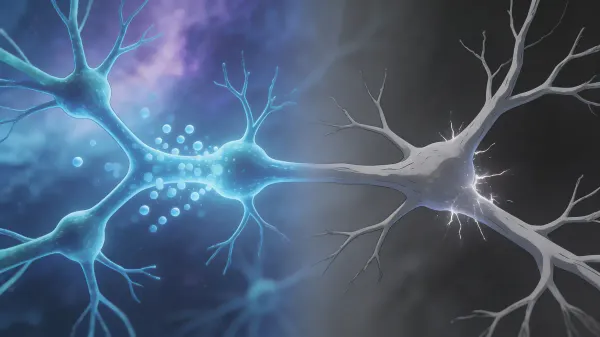
Progesterone, sleep, and aging: The forgotten hormone
Progesterone declines years before menopause, disrupting sleep and accelerating aging. Learn how this neurosteroid works, why 60% of perimenopausal women can't sleep, and what helps.
Estrogen gets the headlines. Testosterone gets the attention. But there’s a third hormone that may matter more for how you age than either — and almost nobody talks about it.
Progesterone begins declining in a woman’s mid-30s, years before estrogen drops at menopause. This early, silent decline triggers a cascade that many women mistake for stress, anxiety, or “just getting older”: disrupted sleep, increased anxiety, difficulty calming the mind at night, and a creeping sense that the brain won’t switch off.
Up to 60% of perimenopausal women report significant sleep disturbances — and progesterone decline is a primary driver. Why? Because progesterone isn’t just a reproductive hormone. It’s a neurosteroid that directly activates your brain’s main calming system: GABA.
When progesterone falls, GABA function becomes impaired. Sleep fragments. Anxiety rises. Deep sleep — the phase where growth hormone is released and tissue repair occurs — becomes harder to reach. And the consequences cascade far beyond tiredness.
What you’ll learn:
- Why progesterone is a neurosteroid, not just a reproductive hormone
- How its decline disrupts sleep, mood, and brain aging years before menopause
- 7 evidence-based strategies to support progesterone and sleep quality naturally
What is progesterone?
Progesterone is a steroid hormone produced primarily by the corpus luteum in the ovaries after ovulation, with smaller amounts from the adrenal glands. Men also produce progesterone, though at much lower levels.
Quick definition: Progesterone is a neurosteroid hormone that regulates the menstrual cycle, supports pregnancy, promotes sleep through GABA receptor modulation, and has calming, neuroprotective, and anti-inflammatory effects — declining significantly from the mid-30s onward.
Why progesterone matters far beyond fertility
While most people associate progesterone with pregnancy, its neurological and systemic roles are equally important:
- Sleep promotion — Progesterone’s metabolite, allopregnanolone, is a potent positive allosteric modulator of GABA-A receptors — the brain’s primary inhibitory (calming) system
- Anxiety regulation — Through GABA modulation, progesterone has natural anxiolytic (anti-anxiety) effects comparable to benzodiazepines, without the addiction risk
- Neuroprotection — Progesterone supports myelin formation, reduces neuroinflammation, and protects neurons from excitotoxic damage
- Bone protection — Progesterone stimulates osteoblast activity independently of estrogen, contributing to bone building (not just preventing bone loss)
- Anti-inflammatory action — Progesterone modulates the immune response, reducing pro-inflammatory cytokine production
- Cardiovascular support — Progesterone promotes vasodilation and helps regulate blood pressure
The science behind progesterone decline
How progesterone changes with age
Progesterone follows a different decline pattern than estrogen:
| Phase | Age (approx.) | Progesterone status | What happens |
|---|---|---|---|
| Peak reproductive years | 20s–early 30s | Robust ovulatory cycles | 15–25 ng/mL in luteal phase; strong sleep, calm mood |
| Early perimenopause | Mid-30s–early 40s | Anovulatory cycles increase | Progesterone drops first — sleep and anxiety symptoms begin |
| Late perimenopause | Mid-40s–early 50s | Most cycles anovulatory | Very low progesterone; sleep severely disrupted |
| Postmenopause | 50s+ | Minimal production (adrenal only) | <0.5 ng/mL; chronic low-progesterone state |
Critical insight: Progesterone declines before estrogen. In early perimenopause, many cycles still produce estrogen but fail to ovulate — meaning no corpus luteum forms and no meaningful progesterone is produced. This creates a state of estrogen dominance (high estrogen relative to progesterone) that amplifies anxiety, sleep disruption, and mood instability.
For a narrower comparison of which hormone drives which aging signal, see estrogen vs progesterone in perimenopause.
This is why many women in their late 30s and early 40s experience significant sleep and mood changes while their periods are still “regular” — and why doctors who only test estrogen often miss the underlying cause. For a broader look at how all these early hormonal shifts affect biological age, see our guide on perimenopause and biological age markers.
The GABA connection: why progesterone loss destroys sleep
The mechanism is elegant and powerful:
- Progesterone crosses the blood-brain barrier
- Brain enzymes convert it to allopregnanolone (ALLO)
- ALLO binds to GABA-A receptors — the same receptors targeted by sleep medications and anti-anxiety drugs
- GABA-A activation promotes neuronal inhibition → calmness, drowsiness, deep sleep entry
When progesterone drops, allopregnanolone drops. GABA-A activation decreases. The result:
- Difficulty falling asleep — the brain can’t downshift from daytime arousal
- Lighter sleep — less time in deep sleep stages
- Nighttime awakenings — reduced GABA tone means the brain is more easily aroused
- Increased anxiety — particularly at night, when GABA function is most critical
- Racing thoughts — the inhibitory “brake” on excitatory neural activity weakens
This explains why perimenopausal insomnia often responds poorly to standard sleep hygiene advice. The problem isn’t behavioral — it’s neurochemical.
Progesterone and longevity: what the research says
Sleep disruption is not merely uncomfortable — it’s a potent accelerator of biological aging.
Chronic sleep deprivation increases inflammatory markers (hs-CRP, IL-6), impairs immune function, accelerates cognitive decline, and promotes metabolic dysfunction. The progesterone-driven sleep disruption of perimenopause therefore compounds the aging effects of estrogen loss — creating a double hit that accelerates biological aging during a critical window.
Research from Stanford Lifestyle Medicine confirms that the habits women build in their 30s and 40s — particularly around sleep, hormonal support, and inflammation management — shape long-term health trajectories. Addressing progesterone decline early, rather than waiting for full menopause, may preserve sleep architecture and slow the aging cascade it triggers.
Want the bigger picture? Read our guide on estrogen and longevity for how estrogen loss compounds these effects.
Progesterone’s neuroprotective properties also extend beyond sleep. It promotes myelin repair (critical for maintaining cognitive processing speed), reduces neuroinflammation, and supports BDNF expression — the brain’s primary growth factor. Its decline therefore contributes to the cognitive changes many women experience in perimenopause: brain fog, word-finding difficulty, and impaired concentration.
7 strategies to support progesterone and sleep naturally
These strategies address both direct progesterone support and the downstream sleep disruption caused by its decline.
1. Discuss bioidentical progesterone with your doctor
Why it matters: Micronized bioidentical progesterone (oral, brand name Prometrium) is structurally identical to the progesterone your body produces. Unlike synthetic progestins (medroxyprogesterone), bioidentical progesterone retains the sleep-promoting, anxiolytic, and neuroprotective properties of natural progesterone — because it converts to allopregnanolone in the brain.
What the evidence says:
- Oral micronized progesterone taken at bedtime significantly improves sleep quality in perimenopausal and postmenopausal women
- It provides the GABA-A modulation that natural progesterone decline eliminates
- When used as part of hormone therapy, it protects the uterine lining without the breast cancer risk increases associated with synthetic progestins
- The 2025 consensus emphasizes that progesterone therapy is most beneficial when initiated during perimenopause
Critical note: This is a medical decision requiring individualized assessment. Consult your gynecologist or endocrinologist.
The information provided does not replace professional medical advice. Hormone therapy decisions should be made with your healthcare provider based on individual risk factors.
2. Support natural progesterone production
Why it works: Before menopause, supporting ovulatory cycles helps maintain natural progesterone production. Several nutritional and lifestyle factors support ovulation.
How to do it:
- Vitamin B6 — Supports luteal phase progesterone production. Found in poultry, fish, potatoes, bananas. 50–100 mg supplementally if needed
- Zinc — Essential for ovulation and corpus luteum function. Found in oysters, beef, pumpkin seeds
- Vitamin C — Studies show it can increase progesterone levels in the luteal phase. Found in citrus, bell peppers, berries
- Adequate caloric intake — Undereating suppresses ovulation and therefore progesterone
- Manage chronic stress — Cortisol and progesterone compete for the same precursor (pregnenolone). Chronic stress “steals” pregnenolone for cortisol production, leaving less for progesterone
Expected results: Improved ovulatory function and higher luteal-phase progesterone within 2–3 cycles when addressing nutritional deficiencies.
3. Optimize GABA naturally
Why it works: When progesterone-derived allopregnanolone declines, you can partially compensate by supporting GABA function through other pathways.
How to do it:
- Magnesium (glycinate or threonate) — Enhances GABA-A receptor function. Take 200–400 mg before bed
- L-theanine — Found in tea, promotes GABA activity and alpha brain waves. 200 mg before bed
- Taurine — An amino acid that activates GABA receptors. Found in meat, fish, and dairy. 500–1,000 mg supplementally
- Valerian root — Acts on GABA-A receptors similarly to allopregnanolone, though less potently
- Avoid alcohol — Despite feeling relaxing, alcohol disrupts GABA receptor function and severely impairs deep sleep
Expected results: Improved sleep onset and quality within 1–2 weeks. Magnesium and L-theanine have the strongest evidence for perimenopausal sleep support.
4. Protect deep sleep architecture
Why it works: Even with declining progesterone, behavioral strategies can partially preserve the deep sleep that’s being disrupted.
How to do it:
- Maintain absolute consistency in sleep and wake times — circadian anchoring supports deep sleep entry
- Keep the bedroom cool (65–68°F / 18–20°C) — body temperature regulation is especially important for women with hot flashes
- Block all light — use blackout curtains. Melatonin production is light-sensitive and melatonin supports deep sleep
- Avoid caffeine after noon — it blocks adenosine receptors and directly impairs deep sleep
- Address hot flashes aggressively — nocturnal vasomotor symptoms are the #1 destroyer of deep sleep in perimenopause
Expected results: Measurable deep sleep improvement within 1–2 weeks. Consistency is the single most powerful behavioral intervention.
5. Exercise for hormonal and sleep benefits
Why it works: Regular exercise supports both progesterone production (by supporting ovulatory function) and sleep quality (independently of hormones). Resistance training is particularly beneficial for perimenopausal women because it preserves lean mass and bone density that decline with hormonal changes.
How to do it:
- Combine resistance training (3x/week) with moderate aerobic exercise (150+ min/week)
- Time intense exercise earlier in the day — late-night workouts can elevate cortisol and core temperature, impairing sleep
- Include yoga or Pilates — they reduce cortisol, improve HRV, and support GABA function through parasympathetic activation
- Avoid excessive exercise volume — overtraining suppresses ovulation and therefore progesterone
Expected results: Improved sleep quality and hormonal balance within 4–8 weeks. The combination of resistance training + yoga produces particularly strong results for perimenopausal women.
6. Manage the stress-progesterone steal
Why it works: When you’re chronically stressed, your adrenal glands prioritize cortisol production over other steroid hormones. Pregnenolone — the precursor to both cortisol and progesterone — gets diverted toward cortisol, leaving less available for progesterone synthesis. This “pregnenolone steal” accelerates progesterone decline.
How to do it:
- Identify and reduce avoidable stressors
- Practice daily stress management: 10–15 minutes of meditation, deep breathing, or mindfulness
- Monitor your HRV — declining HRV signals increasing cortisol dominance
- Prioritize recovery — adequate rest between workouts, social connection, and restorative activities
- Consider adaptogenic herbs (ashwagandha, rhodiola rosea) — some evidence suggests they modulate the cortisol response
Expected results: Reduced cortisol interference with progesterone production within 2–4 weeks. HRV improvements often parallel hormonal rebalancing.
7. Track your cycle and symptoms
Why it works: Understanding your progesterone pattern empowers better timing of interventions and more productive conversations with your doctor.
How to do it:
- Track your cycle length — shortening cycles (under 25 days) often signal declining progesterone
- Note luteal phase symptoms: premenstrual insomnia, anxiety, breast tenderness, and spotting all suggest low progesterone
- Track sleep quality across your cycle — many women sleep significantly worse in the luteal phase when progesterone is supposed to be highest
- Consider at-home progesterone testing (urine metabolite tests) during the luteal phase
- Bring this data to your healthcare provider — it provides objective evidence for treatment decisions
Expected results: Pattern recognition within 2–3 cycles. Data-driven medical consultations lead to more targeted interventions.
How to track and measure progesterone-related health
Key metrics to monitor
| Metric | Optimal range | What it indicates |
|---|---|---|
| Deep sleep % | 15–25% of total sleep | GABA function; low deep sleep may signal progesterone-related disruption |
| Sleep onset latency | <20 minutes | Ability to “switch off”; prolonged onset suggests impaired GABA/progesterone |
| Nighttime awakenings | 0–1 per night | Sleep maintenance; multiple awakenings suggest reduced inhibitory tone |
| HRV | Age-adjusted; higher is better | Autonomic balance; declining HRV signals stress-progesterone imbalance |
| Resting heart rate | 55–65 bpm | Parasympathetic function; progesterone supports parasympathetic tone |
How SuperAge helps you monitor sleep and hormonal health
Progesterone’s effects show up in metrics you can track every day. SuperAge turns your Apple Watch data into early warning signals for the sleep disruption that progesterone decline triggers.
Sleep quality monitoring
SuperAge tracks your sleep patterns continuously — showing deep sleep percentage, sleep onset latency, and nighttime awakenings. Tracking these across your cycle reveals progesterone-related patterns that might otherwise be invisible.
HRV and stress trends
Your heart rate variability reflects the autonomic balance that progesterone supports. SuperAge’s stress tracking reveals whether cortisol is overwhelming your calming systems — the same dynamic that drives the pregnenolone steal.
Your biological age, tracked
Sleep disruption accelerates biological aging. SuperAge calculates your biological age from multiple metrics, showing whether the strategies you’re implementing are effectively counteracting the aging acceleration that progesterone decline and sleep loss trigger.
Frequently asked questions
When does progesterone start declining?
Progesterone typically begins declining in the mid-30s, when anovulatory cycles (cycles where ovulation doesn’t occur) become more frequent. This is 10–15 years before menopause. By the late 40s, most cycles are anovulatory, and progesterone production is minimal. After menopause, only trace amounts are produced by the adrenal glands.
Can men be affected by low progesterone?
Yes, though it’s less studied. Men produce progesterone in smaller amounts from the adrenal glands and testes. Progesterone serves as a precursor to testosterone and cortisol in men, and it also has neurosteroid effects (GABA modulation). Some researchers have linked low progesterone in men to sleep disturbances, anxiety, and impaired brain function, though the clinical significance is less established than in women.
Is progesterone cream effective for sleep?
Transdermal (cream) progesterone absorbs into the bloodstream but bypasses the liver’s first-pass metabolism — meaning less is converted to allopregnanolone, the metabolite responsible for sleep benefits. For sleep specifically, oral micronized progesterone is generally more effective because liver metabolism produces higher allopregnanolone levels. However, transdermal progesterone may be preferred for uterine protection in some HRT regimens. Discuss the optimal delivery method with your doctor based on your primary goals.
How is progesterone different from synthetic progestins?
Bioidentical (micronized) progesterone is molecularly identical to the progesterone your body produces. It retains all the neurosteroid, sleep-promoting, and neuroprotective properties. Synthetic progestins (like medroxyprogesterone acetate in Provera) have a different molecular structure that does not convert to allopregnanolone — meaning they lack the sleep and anti-anxiety benefits and may actually cause insomnia and mood disturbances. This distinction is clinically important when prescribing for sleep and mood symptoms.
Can improving sleep naturally raise progesterone?
The relationship is bidirectional but limited. Better sleep reduces cortisol, which reduces the “pregnenolone steal” and makes more precursor available for progesterone production. Exercise, stress management, and adequate nutrition also support ovulatory function. However, once ovarian reserve declines significantly (late perimenopause onward), lifestyle measures alone cannot restore meaningful progesterone production — which is why bioidentical progesterone therapy becomes important for many women.
Key takeaways
- Progesterone declines years before estrogen: Starting in the mid-30s, anovulatory cycles increase and progesterone drops — triggering sleep and mood changes
- Progesterone is a neurosteroid: Its metabolite (allopregnanolone) activates GABA-A receptors, making it the brain’s natural sleep aid
- 60% of perimenopausal women have sleep issues: Progesterone loss is a primary driver, yet it’s frequently undiagnosed
- Oral bioidentical progesterone helps sleep: Unlike synthetic progestins, micronized progesterone converts to allopregnanolone and restores GABA function
- Stress steals progesterone: Chronic cortisol elevation diverts the shared precursor (pregnenolone) away from progesterone production
Start protecting your sleep and hormonal health
The most insidious aspect of progesterone decline is that it’s invisible. No dramatic hot flashes. No missed periods. Just gradually worse sleep, slowly rising anxiety, and the creeping feeling that your brain doesn’t work the way it used to. By the time most women seek help, years of sleep disruption have already accelerated biological aging.
Don’t wait. Track your sleep. Track your cycle. Talk to your doctor about progesterone — specifically bioidentical, specifically oral if sleep is the primary concern.
Ready to take control? Download SuperAge and start tracking the metrics that reveal how your sleep and hormonal health are aging — deep sleep, HRV, stress, and biological age, all in one place.
References
- Friess, E. et al. (1997). Progesterone-induced changes in sleep in male subjects. American Journal of Physiology, 272(5), E885–E891.
- Schüssler, P. et al. (2008). Progesterone reduces wakefulness in sleep EEG and has no effect on cognition in healthy postmenopausal women. Psychoneuroendocrinology, 33(8), 1124–1131.
- Prior, J.C. (2020). Progesterone for the prevention and treatment of osteoporosis in women. Climacteric, 23(4), 366–376.
- Haver, M.C. (2025). The Science of Progesterone: Better Sleep in Perimenopause and Postmenopause. Clinical review.
- Stanford Lifestyle Medicine (2025). How Perimenopause Affects Sleep.
- PMC (2023). Sleep Disturbances Across a Woman’s Lifespan: What Is the Role of Reproductive Hormones?
- PMC (2025). Sleep Disturbance and Perimenopause: A Narrative Review.
- Bixo, M. et al. (2018). Allopregnanolone and mood disorders. Psychopharmacology, 235(5), 1533–1543.
Last updated: 2026-03-13. This article is regularly reviewed to ensure accuracy.
Related Articles

Menopause and biological age: How the transition accelerates aging
Menopause accelerates epigenetic aging by 6%. Learn how the menopausal transition changes your biological age, what the clocks reveal, and how to slow the acceleration.