Nature exposure and biological aging: the forest bathing evidence
Forest bathing (shinrin-yoku) lowers cortisol, boosts NK cell activity, and reduces inflammatory markers. Discover the science of how nature slows biological aging.
In Japan, physicians prescribe forest walks the way Western doctors prescribe statins. The practice is called shinrin-yoku (森林浴, “forest bathing”) — and it is backed by more than four decades of research across 24 forests and thousands of participants.
A 2019 systematic review and meta-analysis in the International Journal of Biometeorology confirmed that cortisol levels were significantly lower after forest bathing compared with urban control groups. The gut microbiome also responds positively to nature exposure — diverse environmental microbiomes seed the human microbiome through soil and plant contact, an overlooked mechanism of nature’s anti-aging effects. But the most striking finding is immunological: a landmark series of studies by Dr. Qing Li showed that a single 3-day forest visit increased natural killer (NK) cell activity by 50% — and the boost persisted for over 30 days.
NK cells are your immune system’s first line of defense against cancer and virally-infected cells. Their activity declines with age — a hallmark of immunosenescence. Nature, it turns out, partially reverses this decline.
What you’ll learn:
- How forest bathing affects cortisol, NK cells, and inflammatory markers
- The science of phytoncides and biogenic volatile organic compounds
- How much nature exposure is needed for measurable biological effects
- Practical ways to incorporate nature into your longevity routine
What is forest bathing?
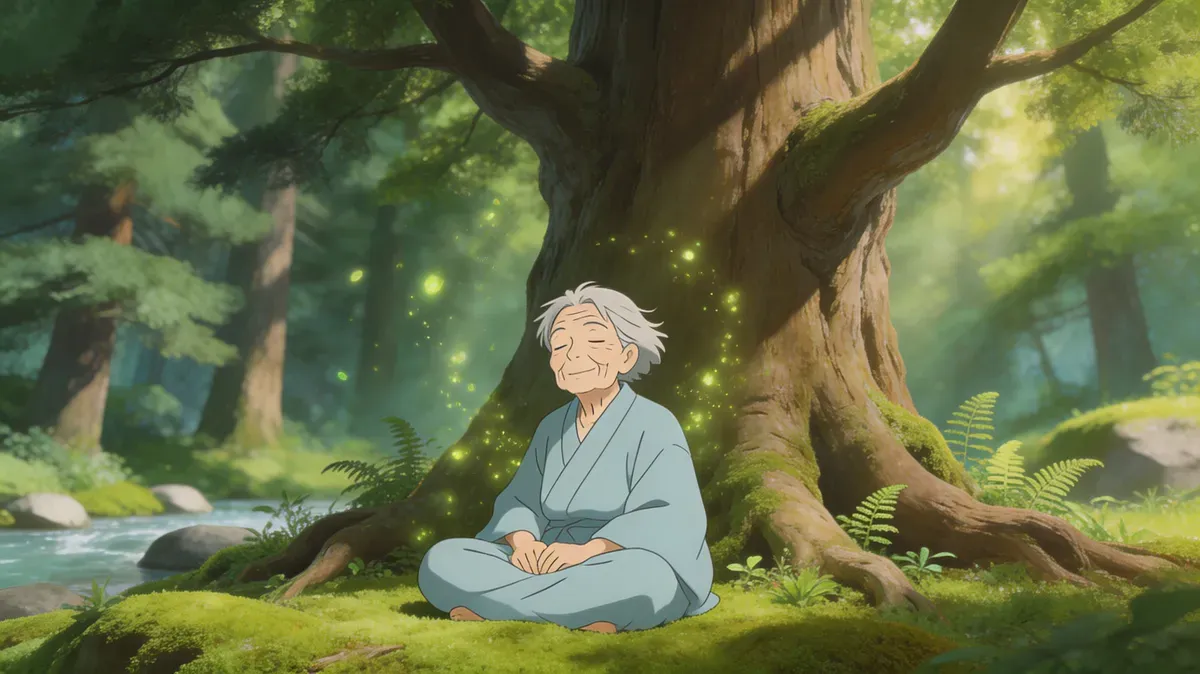
Forest bathing is not exercise. It is the slow, mindful immersion in a forest environment — walking without destination, breathing deeply, engaging all senses. The Japanese Ministry of Agriculture, Forestry and Fisheries coined the term in 1982, and it has since become a formal component of Japanese preventive medicine.
Quick definition: Shinrin-yoku (forest bathing) is the practice of immersive nature exposure that produces measurable reductions in cortisol, blood pressure, and inflammatory markers while boosting immune function — particularly natural killer cell activity.
Why this matters for aging
The biological pathways affected by nature exposure map directly onto the mechanisms of aging:
| Aging mechanism | How nature helps |
|---|---|
| Chronic inflammation | Reduces hs-CRP, IL-6, TNF-α |
| Immunosenescence | Boosts NK cell activity by up to 50% |
| HPA axis dysregulation | Reduces cortisol 12–16% |
| Autonomic imbalance | Shifts toward parasympathetic dominance |
| Chronic stress | Reduces adrenaline and noradrenaline |
The science behind nature and biological aging
Cortisol and stress hormone reduction
The meta-analysis by Antonelli et al. (2019) pooled data from multiple controlled studies and confirmed that forest environments consistently reduce cortisol levels compared to urban environments. The mechanism is partly psychological (reduced cognitive load, attention restoration) and partly biochemical (phytoncide exposure, reduced noise pollution).
Since chronic cortisol directly modifies 85 of the 353 Horvath clock CpG sites, reducing cortisol through nature exposure directly slows epigenetic aging.
NK cell activation and phytoncides
The most remarkable finding in forest bathing research is the immune effect. Dr. Qing Li’s studies at Nippon Medical School demonstrated:
- 50% increase in NK cell activity after a 3-day forest visit
- 40% increase in anti-cancer proteins (perforin, granulysin, granzymes A/B) within NK cells
- Effects lasting 30+ days after a single forest exposure
- The effect is partially attributed to phytoncides — volatile organic compounds released by trees (α-pinene, β-pinene, D-limonene)
Laboratory studies confirmed that exposure to phytoncides alone (via essential oils in a hotel room) increased NK cell activity — suggesting the trees themselves, not just the relaxation, drive the immune response.
Blood pressure and cardiovascular effects
Forest environments reduce both systolic and diastolic blood pressure, with effects detectable within 15 minutes of entering a forest. The cardiovascular benefits extend to improved HRV — indicating a shift from sympathetic (stress) to parasympathetic (recovery) dominance.
Inflammatory marker reduction
A 2025 review in PubMed (“Forest Bathing: Immune Modulation, Stress Regulation, Neurocognitive Resilience”) confirmed that forest bathing reduces inflammatory cytokine profiles alongside the cortisol and immune effects. This positions nature exposure as a multi-pathway anti-aging intervention.
How much nature exposure do you need?
Evidence-based thresholds
| Duration | Setting | Key effects |
|---|---|---|
| 15 minutes | Any green space | Blood pressure reduction, mood improvement |
| 2 hours/week | Forest or park | Significant health and well-being improvements (WHO threshold) |
| 3-day forest visit | Forest | 50% NK cell boost lasting 30+ days |
| 120 min/week split | Multiple shorter visits | Comparable to single long visits |
The landmark “120 minutes per week” threshold comes from a study of 20,000 UK adults published in Scientific Reports (2019): spending at least 2 hours per week in nature was associated with significantly higher self-reported health and well-being, with a dose-response relationship peaking at 200–300 minutes per week.
Quality matters
Not all green spaces are equal:
- Forests provide the strongest phytoncide exposure and NK cell effects
- Urban parks provide cortisol and blood pressure benefits but weaker immune effects
- Coastal environments show similar stress-reduction benefits to forests
- Indoor plants show minimal measurable effects on inflammatory markers
5 ways to build nature into your longevity routine
1. Schedule a weekly 2-hour nature session
Why it works: The 120-minute threshold represents the minimum for sustained health benefits. Treating it as a non-negotiable weekly commitment — like exercise — ensures consistency.
How to do it:
- Choose the greenest, most forested space accessible to you
- Walk slowly (2 mph / 3.2 km/h or less) — this is not a workout
- Leave headphones behind — ambient nature sounds contribute to the effect
- Engage all senses: touch bark, smell soil, watch canopy movement
Expected results: measurable cortisol reduction within the session; cumulative immune benefits with weekly repetition.
2. Practice micro-doses of nature daily
Why it works: Even brief nature exposures (5–15 minutes) produce acute stress reduction. Daily micro-doses maintain the cortisol-lowering effect between longer sessions.
How to do it:
- Morning coffee or tea outdoors (even a balcony counts)
- Walk to work through a park rather than along roads
- Eat lunch outside in a green space
- 10-minute evening walk in a garden or tree-lined street
Expected results: sustained lower baseline cortisol; improved exercise consistency when combined with outdoor movement.
3. Combine forest bathing with mindful breathing
Why it works: Slow breathing (4–6 breaths per minute) combined with phytoncide exposure creates a synergistic effect: the breathing stimulates vagal tone while the phytoncides directly enhance NK cell activity. Meditation in nature amplifies both practices.
How to do it:
- Find a quiet spot in a forest or park
- Practice box breathing (inhale 4 sec, hold 4, exhale 4, hold 4) for 10 minutes
- Breathe deeply to maximize phytoncide inhalation
- Combine with a gratitude practice for additional anti-inflammatory effects
Expected results: acute HRV increase within the session; cumulative benefits with weekly practice.
4. Plan quarterly multi-day nature immersions
Why it works: Dr. Li’s research shows that the most dramatic immune effects come from multi-day forest exposure. A 3-day visit once per quarter could sustain elevated NK cell activity year-round.
How to do it:
- Plan a 2–3 day trip to a forested area each season
- Prioritize conifer forests (highest phytoncide production: pine, cedar, cypress)
- Spend minimum 4 hours daily in the forest environment
- Combine with physical activity: hiking, trail walking
Expected results: 50% NK cell boost lasting 30+ days per visit.
If a nature trip includes a technical adventure rather than quiet immersion, plan it as a separate risk decision. Our canyoning in Italy guide shows how access rules, water, vertical difficulty, and escape options change the choice of gorge.
Before and after wooded walks, pair the route plan with a full-body tick check. Our tick-bite fever and rash guide explains safe removal and when post-exposure symptoms need prompt medical care.
5. Reduce urban environmental stressors
Why it works: The biological benefits of nature are partly relative — they are amplified by reducing the opposing effects of urban environmental stressors. Noise pollution, air pollution, and artificial light all accelerate aging.
How to do it:
- Use air purifiers at home if urban air quality is poor
- Reduce blue light exposure in the evening
- Use nature sound recordings during work if outdoor access is limited
- Bring plants and natural materials into your indoor environment
Expected results: reduced cumulative environmental stress burden; enhanced contrast effect when visiting natural environments. For a deeper dive on heat exposure as a complementary recovery strategy, see sauna science and longevity.
How to track and measure nature’s impact
Key metrics to monitor
| Metric | How nature affects it | Target |
|---|---|---|
| HRV | Increases parasympathetic tone | Above personal baseline |
| Resting heart rate | Decreases with cortisol reduction | 55–65 bpm |
| Blood pressure | Acute and chronic reduction | Below 120/80 mmHg |
| Deep sleep % | Improves with reduced cortisol | 15–25% of total |
| Stress recovery | Faster return to baseline | SuperAge resilience score |
How SuperAge helps you quantify nature’s anti-aging effects
Nature’s effects are real — but without data, you cannot optimize your exposure. SuperAge tracks the biomarkers that nature changes.
Real-time stress monitoring
SuperAge’s stress tracking shows your autonomic state before, during, and after nature exposure. Watching your stress levels drop during a forest walk — and seeing the sustained effect hours later — provides objective confirmation of the dose-response relationship.
HRV and resilience trends
Your HRV trends and resilience score reveal whether weekly nature exposure is building cumulative parasympathetic strength — or whether you need to increase your dose.
Biological age tracking
SuperAge’s biological age integrates all the markers nature affects: HRV, sleep, stress recovery, blood pressure, and activity patterns. Tracking your biological age over months of consistent nature exposure reveals the compound anti-aging effect.
Frequently asked questions
Does forest bathing work in any type of nature, or only forests?
Forests provide the strongest evidence, particularly for NK cell activation via phytoncides. However, coastal environments, parks, and any green space show cortisol and blood pressure benefits. The key factors are: natural sounds (vs. traffic), green visual stimuli, clean air, and absence of urban stressors.
Can indoor plants substitute for outdoor nature?
Not meaningfully for the major biological effects. Indoor plants improve air quality marginally and provide psychological comfort, but they do not produce sufficient phytoncides for immune effects or provide the multisensory stimulation that drives cortisol reduction. Think of indoor plants as a complement, not a substitute.
Is forest bathing safe for people with allergies?
Generally yes, but with considerations. Phytoncides are not the same as pollen. However, people with severe tree pollen allergies should time forest visits outside peak pollen seasons. The immune-boosting effects of forest bathing may actually help modulate allergic responses over time.
Key takeaways
- Forest bathing boosts NK cell activity by 50% — the effect persists for 30+ days
- Cortisol drops significantly during forest exposure, directly slowing epigenetic aging
- 2 hours per week is the evidence-based minimum for sustained health benefits
- Phytoncides from trees drive the immune effects — conifer forests are most potent
- Track the impact: HRV, stress recovery, and biological age reveal nature’s hidden anti-aging effects
Step outside — your biology will thank you
Two hours per week in nature. A 3-day forest visit each season. These are among the simplest and most enjoyable longevity interventions available — and the evidence says they work at the level of your immune cells, your stress hormones, and your epigenetic clocks.
Ready to see how nature changes your biology? Download SuperAge and start tracking the stress, HRV, and aging markers that reveal whether your nature exposure is building biological youth.
If you want to combine nature time with a self-supported coastal journey, read our sea kayak touring guide for route planning, low-impact camping, and water-safety boundaries.
References
- Antonelli M et al. — “Effects of forest bathing (shinrin-yoku) on levels of cortisol as a stress biomarker: a systematic review and meta-analysis” — International Journal of Biometeorology (2019)
- Li Q — “Effect of forest bathing trips on human immune function” — Environmental Health and Preventive Medicine (2010)
- Li Q et al. — “Forest bathing enhances human natural killer activity and expression of anti-cancer proteins” — International Journal of Immunopathology and Pharmacology (2007)
- Park BJ et al. — “The physiological effects of Shinrin-yoku: evidence from field experiments in 24 forests across Japan” — Environmental Health and Preventive Medicine (2010)
- White MP et al. — “Spending at least 120 minutes a week in nature is associated with good health and wellbeing” — Scientific Reports (2019)
- Li Q et al. — “Forest Bathing: Immune Modulation, Stress Regulation, Neurocognitive Resilience, and Neurological Health” — PubMed (2025)
- Miyazaki Y — “Shinrin-yoku: The Japanese Art of Forest Bathing” — Timber Press (2018)
Last updated: 2026-03-23. This article is regularly reviewed to ensure accuracy.
Related Articles

The 12 hallmarks of aging explained: What science says drives biological aging
Discover the 12 hallmarks of aging — from genomic instability to dysbiosis — and what current evidence says about lifestyle levers that may influence them.