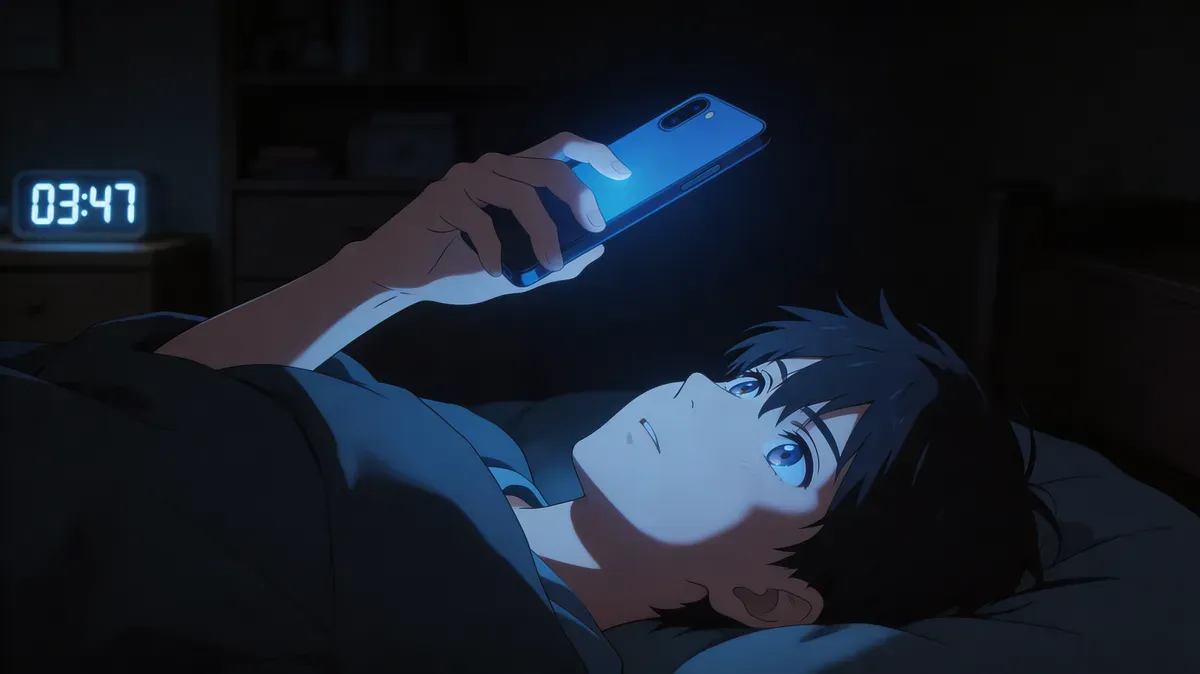
Blue light and circadian disruption: How screens are aging you at night
Blue light at night can suppress melatonin, shift circadian timing, disrupt sleep, and affect metabolic health. Learn the evidence and fixes.
The average adult in the United States and Europe now spends 10 to 13 hours per day looking at screen-based devices. A significant portion of that screen time occurs in the 2-3 hours before bed — precisely the window when the biology of light sensitivity and melatonin production makes artificial light most disruptive to the biological systems that govern how you age. What looks like a harmless habit is, at the molecular level, a daily assault on the circadian machinery that coordinates cellular repair, metabolic regulation, and immune function.
The specific culprit is narrow-band blue light in the 460-480 nanometer range — the dominant wavelength emitted by LED screens, smartphones, tablets, and modern energy-efficient lighting. Research from Harvard Medical School found that this wavelength suppresses melatonin approximately twice as powerfully as green light of equivalent intensity, and shifts the circadian rhythm by up to 3 hours versus 1.5 hours for green light. These are not trivial perturbations. Over months and years, chronic circadian disruption from artificial light is now emerging as a meaningful contributor to metabolic dysfunction, cognitive decline, and accelerated biological aging.
What you’ll learn:
- How the ipRGC-SCN pathway translates evening light into hormonal signals that govern your aging
- Why blue light’s suppression of melatonin does more than just disturb sleep
- The measurable biological consequences of chronic circadian disruption
- Eight evidence-based strategies to protect your circadian biology in a screen-saturated world
Quick answer
Blue light is most disruptive at night because short wavelengths around 446-480 nm activate melanopsin retinal cells, suppress melatonin, and can delay circadian timing. The best first move is to dim and warm lights 90 minutes before bed, avoid bright screens, and get outdoor light soon after waking.
Key facts
- Short-wavelength blue light activates ipRGCs and signals the SCN that it is daytime.
- Evening room light delays melatonin onset and shortens melatonin duration.
- Morning outdoor light anchors circadian timing and improves day-night contrast.
- SuperAge tracks HRV, resting heart rate, sleep duration, and sleep regularity as wearable signals of circadian alignment.
What is blue light and how does the eye detect it?
Visible light spans approximately 380-700 nm. Blue light occupies the 380-500 nm range, with the biologically most active portion — for circadian purposes — centered around 460-480 nm. Natural sunlight contains substantial blue light, which is appropriate and beneficial during the day. The problem is artificial light delivering blue wavelengths at biologically active intensities during hours when, for the vast majority of human evolutionary history, the sky was dark.
Quick definition: Circadian-active blue light is narrow-band electromagnetic radiation in the 460-480 nm range that stimulates intrinsically photosensitive retinal ganglion cells (ipRGCs), signaling the brain’s master clock that it is daytime — even when it is 11 PM.
The ipRGC-SCN pathway
In 2002, researchers discovered a third type of photoreceptor in the human retina distinct from the well-known rods and cones: intrinsically photosensitive retinal ganglion cells (ipRGCs). These cells express the photopigment melanopsin, which has peak sensitivity at approximately 480 nm — right in the blue range.
Unlike rods and cones, which primarily serve vision, ipRGCs function as a dedicated light-to-circadian-clock interface. They project directly via the retinohypothalamic tract to the suprachiasmatic nucleus (SCN) — the brain’s master circadian pacemaker, located in the hypothalamus. When ipRGCs detect blue-wavelength light, they send signals to the SCN that say, in molecular terms: “It is daytime. Suppress melatonin. Raise core body temperature. Elevate cortisol. Increase alertness.”
This pathway evolved over hundreds of thousands of years to use natural sunlight as the primary timing signal. It cannot distinguish between sunrise and a smartphone screen held 12 inches (30 cm) from your face at midnight.
Why evening timing is critical
The circadian sensitivity of ipRGCs follows a time-of-day pattern. The system is most sensitive to light-induced phase shifts in the 2-4 hours before habitual sleep onset — the “circadian dead zone” for light during the daytime becomes the most vulnerable period at night. Blue light exposure at 11 PM is dramatically more circadian-disruptive than equivalent exposure at 3 PM.
The science: how blue light disrupts biology beyond sleep
Understanding blue light’s impact requires moving beyond the popular framing of “it disrupts your sleep.” Circadian disruption touches every biological system that matters for aging — and the mechanisms are increasingly well understood.
Melatonin suppression and its aging consequences
Melatonin is far more than a sleep signal. It is a potent antioxidant produced in the pineal gland — and critically, in mitochondria throughout the body — with documented roles in DNA repair, immune modulation, anti-tumor surveillance, and mitochondrial protection. Melatonin’s nightly surge coordinates a cascade of cellular maintenance processes that can only occur efficiently during circadian night.
Blue light at 200 lux (typical indoor brightness from an LED panel) for 2 hours before bed suppresses melatonin by 40% compared to dim light control conditions. At 460-480 nm, suppression at equivalent intensities is roughly double that of 550 nm green light. This suppression is dose-dependent on both intensity and duration — making the combination of bright, blue-rich screens and late-night hours particularly damaging.
The consequences of chronic melatonin suppression extend well beyond sleep quality:
- Reduced antioxidant protection: Melatonin is a direct free radical scavenger and stimulates expression of antioxidant enzymes (superoxide dismutase, glutathione peroxidase). Chronic suppression reduces this protection during the tissue repair window of sleep
- Impaired DNA repair: Melatonin regulates PARP-1 — a key DNA damage response enzyme — and modulates p53-mediated apoptosis of genomically damaged cells
- Immune dysregulation: The immune system’s circadian clock coordinates T cell proliferation, cytokine production, and natural killer cell activity around the melatonin surge. Disruption shifts immune function toward chronic inflammatory activation
- Anti-tumor context: IARC classifies night shift work as “probably carcinogenic to humans” based on limited human evidence for breast, prostate, colon, and rectal cancers plus stronger animal and mechanistic evidence; melatonin suppression remains a plausible mechanism rather than proof that ordinary screen use causes cancer.
Circadian phase shifting and social jetlag
A single evening of blue-rich light exposure shifts the timing of the circadian clock — the CLOCK and BMAL1 transcription factors that drive 24-hour rhythms in nearly every cell type — by delaying the onset of melatonin, the drop in core body temperature, and the rise in sleep pressure. At 460 nm, phase delays of up to 3 hours have been measured in controlled experiments.
When this happens nightly, the result is chronic circadian misalignment: your biological night does not start at your habitual sleep time, but significantly later. This creates what sleep researchers call “social jetlag” — the perpetual circadian mismatch between internal biological timing and external social schedules, similar to flying westward across multiple time zones every single night and then flying east every morning.
Chronotype research has established that artificially-induced delayed chronotypes — partly driven by artificial blue light — are associated with higher rates of metabolic syndrome, cardiovascular disease, depression, and reduced longevity compared to both true morning and true evening types who live in alignment with their natural biological timing.
Metabolic consequences of circadian disruption
Circadian clocks regulate insulin sensitivity, glucose uptake, lipid metabolism, and appetite hormones — all with significant implications for biological aging. The hypothalamus modulates leptin and ghrelin expression on a 24-hour cycle. Pancreatic beta cells have intrinsic circadian clocks that govern insulin secretion timing.
Disrupting this system through evening blue light and subsequent sleep disruption produces measurable metabolic consequences within days. Research from the University of Colorado found that just one week of simulated social jetlag (shifting sleep 2 hours later than optimal) reduced insulin sensitivity by approximately 15%. The mechanism involves suppression of GLUT4 expression — the primary glucose transporter in muscle and fat tissue — which follows a circadian pattern dependent on intact light-dark signaling.
Over years, these daily metabolic insults contribute to the metabolic dysfunction that drives accelerated biological aging — through elevated fasting glucose, increased insulin resistance, and dysregulated lipid metabolism that feeds the oxidative and inflammatory environment characteristic of biologically old tissue.
Cognitive aging and the sleep-dependent repair window
Deep sleep — particularly slow-wave sleep stages 3 and 4 — is the primary window for glymphatic clearance: the brain’s waste removal system that flushes amyloid beta, tau, and other neurotoxic proteins from the interstitial space between neurons. This clearance process is critically dependent on circadian timing and is suppressed by sleep fragmentation and delay.
Blue light-induced sleep delay and architecture disruption reduce both total slow-wave sleep time and the efficiency of glymphatic clearance. Over years, this creates cumulative accumulation of amyloid and tau — the molecular precursors of Alzheimer’s disease — decades before clinical symptoms appear. This is not speculative; elevated brain amyloid on PET imaging has been detected in healthy adults who are chronic poor sleepers in their 40s and 50s.
8 strategies to protect your circadian biology
1. Establish a hard light cutoff 90 minutes before bed
The most impactful single change is setting a firm boundary on bright screen exposure before sleep. Given that ipRGC sensitivity peaks in the 2-hour pre-sleep window, reducing blue light exposure during this period prevents the most damaging phase of circadian disruption.
How to do it:
- Set a device alarm or phone Screen Time limit at 90 minutes before your target bedtime
- Switch to reading (physical books or paper), light conversation, or other non-screen activities
- If screens are unavoidable, combine with the strategies below rather than treating this as all-or-nothing
2. Enable night mode and reduce screen brightness aggressively
All major smartphone and computer operating systems now include blue light reduction modes that shift display color temperature toward amber and red wavelengths. These modes work by reducing blue channel output — the very wavelengths that most potently stimulate ipRGCs.
How to do it:
- iOS Night Shift: Settings → Display & Brightness → Night Shift. Schedule from sunset to sunrise. Warmest setting is most effective
- Android Night Light: Display Settings → Night Light or Reading Mode — warmest setting, sunset to sunrise
- macOS Night Shift or f.lux (third-party, more customizable): set to 2700K or below for evening use
- Reduce screen brightness to minimum comfortable level — intensity matters as much as wavelength
Limitation: These modes are helpful but do not eliminate blue light output. They are best combined with other strategies.
3. Use amber-tinted blue-blocking glasses in the evening
Purpose-designed amber-tinted glasses blocking wavelengths below 530 nm can reduce melanopsin stimulation by 80-99% when worn appropriately. These are distinct from “computer glasses” with clear or very slightly tinted lenses — those lenses primarily address eye fatigue from glare, not circadian disruption.
How to do it:
- Begin wearing them 2-3 hours before your target sleep time
- Ensure side coverage to block ambient light, not just direct screen light
- Amber is significantly more effective than yellow-tinted lenses for melatonin preservation
Evidence for amber blue-blocking glasses is strongest when they are worn in the 2-3 hours before bed and actually reduce short-wavelength light. A 2021 systematic review found substantial evidence for reducing sleep-onset latency in people with sleep disorders, jet lag, or variable shift work, but results depend on lens filtering, brightness, and consistency.
4. Transition to warm-spectrum bulbs throughout your home
Standard LED bulbs and cool-white fluorescent lighting emit strong blue-spectrum output. Switching your home lighting — particularly bedrooms, bathrooms, and living spaces used in evenings — to warm-spectrum bulbs (2200-2700K color temperature) dramatically reduces ambient blue light load during the 3-4 hours before bed.
How to do it:
- Replace overhead bedroom and living room LEDs with warm (2200-2700K) equivalents
- Use smart bulbs (Hue, LIFX, etc.) that automatically shift to warm spectrum at sunset
- Amber-tinted nightlights or red-spectrum bulbs for bathrooms: the eyes are highly sensitive to bright white light during nighttime bathroom visits, and a single bright overhead light can significantly shift circadian timing
Red and near-infrared wavelengths used in red light therapy panels fall outside the melatonin-suppressing range, making them a circadian-neutral option for evening use — unlike the cool-white LED alternatives they often replace.
5. Increase daytime blue light exposure — especially in the morning
The circadian clock system works through contrast. Bright, blue-rich light in the morning strengthens the circadian signal and makes the system more robust and resilient to evening disruption. Morning light suppresses melatonin at an appropriate time (when it should be suppressed), sharpens the cortisol awakening response, and anchors the circadian phase so that the body’s biological night starts at the right time.
How to do it:
- Get 10-30 minutes of outdoor light within 1 hour of waking — no sunglasses for this purpose
- On cloudy days or in winter, use a 10,000 lux light therapy box for 20-30 minutes in the morning
- Position your desk near a window to maximize daytime light input
- Midday sunlight breaks: even 10 minutes outside at lunch significantly boosts the daily light contrast signal
6. Optimize your sleep environment for complete darkness
Beyond screen exposure, the sleeping environment itself matters. Even dim light during sleep — from streetlights, a clock display, or phone notifications — stimulates ipRGCs at a low level and can suppress melatonin or cause microarousals.
How to do it:
- Use blackout curtains (complete darkness, not merely dim) — particularly important for those in urban environments with significant streetlight intrusion
- Cover all LED indicator lights in the bedroom: router lights, TV standby lights, charging indicators
- Keep the phone face-down or in another room during sleep — notification screen activations at 3 AM stimulate the circadian system at a particularly vulnerable phase
7. Use screen scheduling tools to enforce consistent habits
Willpower is unreliable for habit formation. Building screen cutoffs into device settings ensures the behavior occurs automatically rather than requiring nightly decision-making under conditions of fatigue and reduced prefrontal cortex activity.
How to do it:
- iOS Screen Time → Downtime: configure specific apps (social media, news, YouTube) to require passcode override after your cutoff time
- iPhone Shortcuts automation: trigger a “Wind Down” shortcut at 9:30 PM that enables Night Shift, reduces brightness, enables Do Not Disturb, and opens a sleep-relevant app
- Android Digital Wellbeing schedules offer equivalent functionality
8. Take a 10-minute technology break before sleep as a transition ritual
Abrupt transitions from high-stimulation screen content to attempting sleep are biologically suboptimal. The content of most screen engagement — social media, news, suspense-driven entertainment — activates the sympathetic nervous system and elevates cortisol independently of the blue light mechanism. A 10-minute technology-free transition buffer allows cortisol to begin declining and the parasympathetic nervous system to initiate the physiological preparation for sleep.
Effective transition activities:
- Stretching or gentle mobility work
- Journaling (paper-based) — 5 minutes of gratitude journaling has measurable HRV-improving effects
- Reading physical books under warm light
- Progressive muscle relaxation or 4-7-8 breathing
If you are deciding what to change first, the practical comparison is simple: reduce the late signal that delays sleep, then use morning light as the daily anchor. The full guide to blue light at night vs morning light breaks down which side to prioritize for insomnia, night owls, shift work, and wearable recovery data.
Tracking circadian health and sleep quality
Circadian disruption leaves quantifiable signatures in wearable health data that allow you to monitor whether your interventions are working.
Metrics sensitive to circadian quality
| Metric | What it reflects | Target |
|---|---|---|
| HRV (Heart Rate Variability) | Autonomic recovery overnight | Trending upward with consistent sleep timing |
| Resting heart rate | Overnight recovery quality | Lowest values in early morning hours |
| Sleep efficiency | Time asleep vs. time in bed | >85% |
| Sleep onset latency | How quickly you fall asleep | <20 minutes |
| Deep sleep (SWS) | Glymphatic clearance, cellular repair | 15-25% of total sleep time |
| Wakeups per night | Sleep architecture fragmentation | <2 |
What improving blue light habits looks like in data
When you consistently reduce evening blue light exposure for 2-4 weeks, the expected trajectory in Apple Watch and HealthKit data includes:
- Decreased sleep onset latency (falling asleep faster)
- Increased deep sleep percentage
- Rising HRV trend
- Slightly lower resting heart rate
- More consistent sleep timing (lower night-to-night variability in sleep onset)
How SuperAge integrates circadian health into biological age
Circadian disruption is one of the most quantifiable environmental aging accelerants — and one that directly shows up in the biomarkers that matter most for biological age.
SuperAge tracks HRV, sleep duration, deep sleep metrics, resting heart rate, and sleep regularity using Apple Watch and HealthKit data. These metrics are the digital signatures of circadian health. When your circadian system is aligned — melatonin rises on schedule, slow-wave sleep is deep and consolidated, autonomic recovery is complete by morning — your HRV trends upward, your resting heart rate trends downward, and your biological age reflects the biological cost of that repair.
When chronic evening blue light exposure disrupts this alignment, the consequences appear in your SuperAge data: elevated resting heart rate, declining HRV trend, poor sleep efficiency, and a biological age that runs ahead of your chronological years.
The connection between blue light habits and biological age is not abstract — it is measurable, week by week, in your wearable data. Implementing even two or three of the strategies in this article — hard screen cutoff, warm bulbs, morning light exposure — and watching your HRV respond over 3-4 weeks provides concrete biological feedback that makes habit change sustainable.
Download SuperAge to see how your nightly circadian patterns are reflected in your biological age — and track the impact of every improvement you make to your evening light environment.
Frequently asked questions
Does blue light from screens actually damage the eyes?
This is a common concern but is not the primary biological issue with evening blue light. At the intensities emitted by modern screens (typically 50-200 lux at the eye), there is no established evidence of direct retinal photodamage. The concern is circadian disruption through ipRGC stimulation — a functional interference with hormonal signaling rather than structural eye damage.
Are blue-blocking glasses proven to improve sleep?
Evidence for amber blue-blocking glasses is strongest when they are worn in the 2-3 hours before bed and actually reduce short-wavelength light. A 2021 systematic review found substantial evidence for reducing sleep-onset latency in people with sleep disorders, jet lag, or variable shift work, but results depend on lens filtering, brightness, and consistency.
How long does it take to reset a disrupted circadian rhythm?
With consistent evening light management (low blue-light evenings) combined with regular morning bright light exposure, most people experience measurable improvements in sleep onset and sleep quality within 5-14 days. Full circadian phase normalization — reflected in stable, earlier melatonin onset — typically takes 2-4 weeks of consistent habits.
Is artificial light disruption worse for night owls?
Research suggests that evening chronotypes (night owls) are paradoxically more affected by evening artificial light. Because their natural melatonin onset is already delayed, additional light-driven delays push them further into circadian misalignment with social schedules. Chronotype research suggests that consistent morning light exposure — which is particularly challenging for night owls to implement — is the most effective counterbalance.
Can melatonin supplements compensate for blue light suppression?
Exogenous melatonin at low doses (0.5-1 mg taken 2-3 hours before target sleep time) can partially compensate for blue light-induced phase delays. However, it does not replicate the full complexity of endogenous melatonin’s actions — including its role in mitochondrial antioxidant protection and DNA repair — and does not address the metabolic consequences of circadian disruption that occur independently of melatonin. Behavioral and environmental interventions remain preferable to supplemental compensation.
Key takeaways
- Blue light at 460-480 nm suppresses melatonin twice as powerfully as green light and can shift circadian timing by up to 3 hours — equivalent to chronic transmeridian jetlag
- The consequences extend far beyond sleep quality: metabolic dysfunction, impaired glymphatic clearance, reduced antioxidant protection, and immune dysregulation all follow chronic circadian disruption
- Morning light is as important as evening darkness: anchoring the circadian clock with bright morning light makes the system more resistant to evening disruption
- Amber blue-blocking glasses have qualified evidence: they appear most useful when they meaningfully filter short-wavelength light in the 2-3 hours before bed, especially alongside lower brightness.
- Circadian quality is visible in wearable data: HRV trends, sleep efficiency, and deep sleep percentage reflect circadian alignment objectively
Fix your light environment, slow your biological clock
Every night your phone or TV emits blue light during your most circadian-sensitive hours is a night where cellular repair, melatonin signaling, and metabolic regulation are operating at a fraction of their capacity. Unlike most aging risk factors, your evening light environment is something you can change tonight.
Ready to track how your circadian health affects your biological age? Download SuperAge and see your HRV, deep sleep, and resting heart rate respond to better light habits — week by week.
References
- Lockley SW et al. (2003). “High sensitivity of the human circadian melatonin rhythm to resetting by short wavelength light.” Journal of Clinical Endocrinology & Metabolism, 88(9), 4502-4505. https://doi.org/10.1210/jc.2003-030570
- Brainard GC et al. (2001). “Action spectrum for melatonin regulation in humans: evidence for a novel circadian photoreceptor.” Journal of Neuroscience, 21(16), 6405-6412. https://doi.org/10.1523/JNEUROSCI.21-16-06405.2001
- Gooley JJ et al. (2011). “Exposure to room light before bedtime suppresses melatonin onset and shortens melatonin duration in humans.” Journal of Clinical Endocrinology & Metabolism, 96(3), E463-E472. https://doi.org/10.1210/jc.2010-2098
- Chang AM et al. (2015). “Evening use of light-emitting eReaders negatively affects sleep, circadian timing, and next-morning alertness.” PNAS, 112(4), 1232-1237. https://doi.org/10.1073/pnas.1418490112
- Roenneberg T et al. (2012). “Social jetlag and obesity.” Current Biology, 22(10), 939-943. https://doi.org/10.1016/j.cub.2012.03.038
- Shechter A et al. (2018). “Blocking nocturnal blue light for insomnia: A randomized controlled trial.” Journal of Psychiatric Research, 96, 196-202. https://doi.org/10.1016/j.jpsychires.2017.10.015
- Hester L et al. (2021). “Evening wear of blue-blocking glasses for sleep and mood disorders: a systematic review.” Chronobiology International, 38(10), 1375-1383. https://doi.org/10.1080/07420528.2021.1930029
- Xie L et al. (2013). “Sleep drives metabolite clearance from the adult brain.” Science, 342(6156), 373-377. https://doi.org/10.1126/science.1241224
- Reiter RJ et al. (2016). “Melatonin as an antioxidant: under promises but over delivers.” Journal of Pineal Research, 61(3), 253-278. https://doi.org/10.1111/jpi.12360
- IARC Monographs Working Group. (2019). “Carcinogenicity of night shift work.” The Lancet Oncology, 20(8), 1058-1059. https://doi.org/10.1016/S1470-2045(19)30455-3
Last updated: 2026-06-07. This article is reviewed regularly to ensure accuracy.
The information provided does not replace professional medical advice. Consult your doctor before making significant changes to your lifestyle.
Related Articles
Endogenous melatonin: Why your body's own sleep hormone matters more than any pill
How endogenous melatonin supports circadian timing, sleep and aging biology, plus evidence-informed ways to protect natural nighttime production.