Blue light at night vs morning light: which matters more?
Blue light at night vs morning light is not an either-or choice. Learn which light habit matters most for sleep, circadian timing, and recovery.
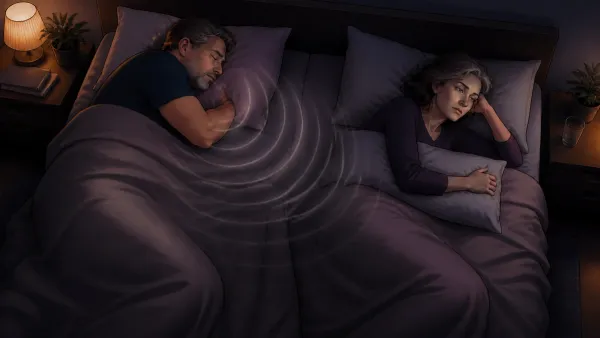
If you are trying to fix your sleep, two pieces of advice show up everywhere: avoid blue light at night and get sunlight in the morning. Both are true. But if you are tired, waking too early, scrolling late, or using wearable data to improve recovery, the practical question is sharper: blue light at night vs morning light: which matters more?
The answer depends on the problem you are trying to solve. Evening blue light is the bigger immediate threat to falling asleep on time because it can suppress melatonin and delay your circadian clock during the exact window when the brain is trying to enter biological night. Morning light is the stronger daily anchor because it tells the clock when daytime starts, improves alertness, and makes the evening melatonin rhythm more predictable.
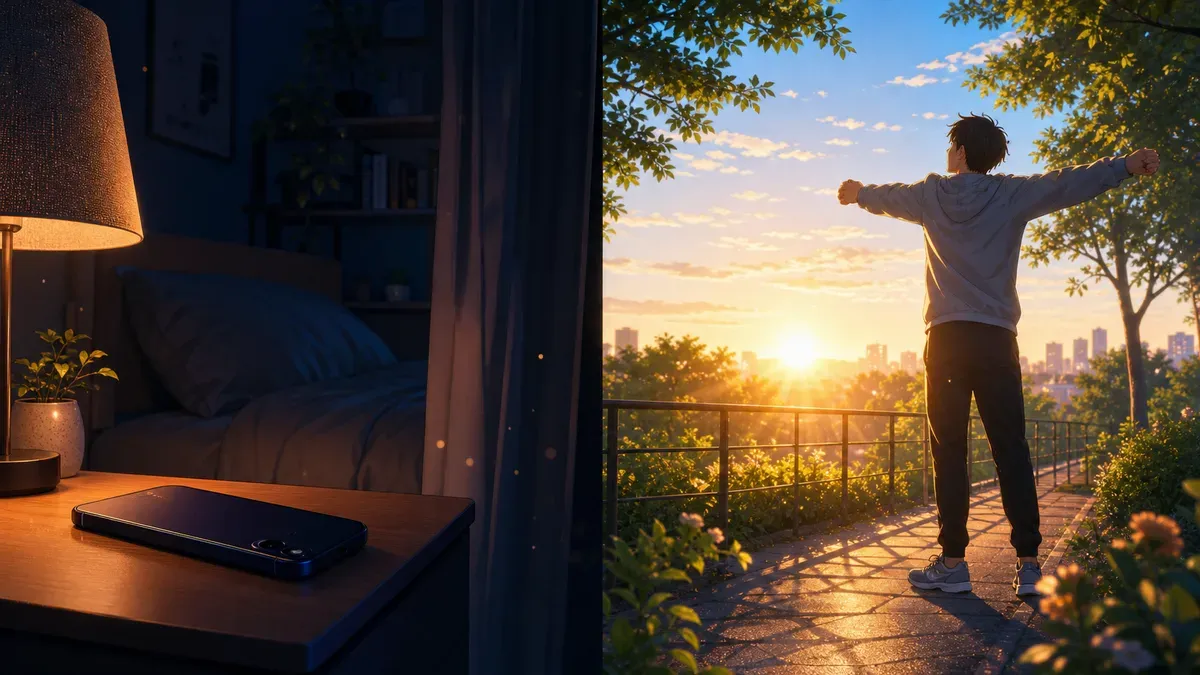
So the most useful rule is not “pick one.” It is this: dim the evening to stop delaying your clock, then brighten the morning to anchor it. If you can only change one habit this week, start with the one that matches your pattern.
What you’ll learn:
- Why evening blue light and morning light affect the same circadian system in opposite directions
- When reducing night light matters more than adding morning light
- When morning light becomes the priority
- A practical light-timing protocol you can track in sleep, HRV, and recovery data
Quick verdict: which matters more?
For most people, evening light restriction is the fastest way to protect sleep onset, while morning light is the better long-term anchor for circadian regularity.
Use this decision table:
| Your main issue | Prioritize first | Why |
|---|---|---|
| You feel sleepy but cannot fall asleep | Reduce blue-rich light at night | Late light delays melatonin and keeps alertness high |
| You wake up groggy and need hours to feel alert | Get bright morning light | Morning light suppresses residual melatonin and strengthens the daytime signal |
| You are a night owl trying to shift earlier | Both, but start with morning light plus evening dimming | Morning light advances the clock; evening light avoidance prevents re-delay |
| You wake too early and cannot return to sleep | Be careful with very early bright light | Too much early light can advance the clock further |
| You work night shifts | Timing must be personalized | Light at the wrong time can make misalignment worse |
| Your wearable shows low HRV after late screens | Reduce night light first | The disruption is happening inside the recovery window |
The reason this comparison is confusing is that the same light can be helpful or harmful depending on timing. Blue-rich daylight at 8 a.m. is a useful biological signal. Blue-rich screen light at 11 p.m. is the same signal delivered at the wrong time.
For the full biology of why short-wavelength light is so potent at night, read our guide to blue light and circadian disruption. If the problem is not just screens but streetlights, bedroom LEDs, or outdoor spillover, the more precise guide is light pollution and aging. This article focuses on the comparison: what to prioritize, when, and how to measure whether it is working.
How light sets your circadian clock
Your circadian rhythm is controlled by the suprachiasmatic nucleus (SCN), a master clock in the brain that receives direct light information from the retina. Specialized cells called intrinsically photosensitive retinal ganglion cells are especially sensitive to short-wavelength, blue-rich light. They are not mainly for vision. They help the brain decide whether it is day or night.
That signal influences:
- Melatonin timing
- Cortisol rhythm
- Core body temperature
- Alertness
- Sleep onset
- Deep sleep pressure
- Glucose regulation
- Autonomic recovery overnight
The important part is timing. Light in the morning tends to advance and stabilize the clock. Light in the evening and early biological night tends to delay it. That is why “more light” is not always better. The goal is a high-contrast light day: bright days, dim nights.
Quick definition: Circadian light timing means matching bright light exposure to the biological day and low light exposure to the biological night so melatonin, cortisol, temperature, and sleep pressure line up predictably.
This is also why sleep advice that only says “avoid screens” is incomplete. If your daytime light exposure is dim, your circadian system may become more sensitive to evening light. If your morning is bright but your evening stays bright too, you keep sending conflicting signals.
Why blue light at night can matter more immediately
Evening light is powerful because it lands during the vulnerable window before sleep. In that period, melatonin should rise, core body temperature should begin drifting down, and alertness should decline. Bright, blue-rich light can push those signals later.
Controlled studies show several consistent effects:
- Evening room light before bed can suppress melatonin onset and shorten the duration of melatonin production.
- Light-emitting screens can delay circadian timing and reduce next-morning alertness compared with reading print under dimmer conditions.
- Melatonin suppression depends on spectrum, intensity, and duration. A dim glance at a phone is not the same as three hours of bright tablet use in bed.
- People vary widely. Some show meaningful melatonin suppression under relatively dim evening light; others need brighter exposure.
That last point matters. If you are sensitive to evening light, a generic “night mode is enough” rule may fail. Night Shift, warm color settings, and blue-light filters reduce short-wavelength output, but they do not make a bright screen biologically invisible.
When night light is the priority
Start with evening light restriction if:
- You fall asleep more than 20-30 minutes later than intended
- You feel “tired but wired” at bedtime
- Your bedtime drifts later across the week
- You watch video, work, or scroll in the final hour before bed
- Your deep sleep drops after late screen nights
- Your HRV is lower after evenings with bright light, late work, or gaming
The goal is not total darkness at sunset. It is a controlled descent. Your brain should see a clear difference between day and night.
The minimum effective evening protocol
Try this for 14 nights:
- Dim overhead lights 2 hours before bed.
- Move screens out of the final 60 minutes when possible.
- If screens are unavoidable, use the warmest color setting and the lowest comfortable brightness.
- Keep light close to the floor or off-axis: lamps beat overhead lighting.
- Use blackout curtains or a sleep mask if streetlight enters the bedroom.
- Keep phone notifications from lighting the room overnight.
This pairs naturally with other sleep-environment changes such as room cooling. If temperature is also a problem, see our guide to body temperature and sleep.
Why morning light may matter more long term
Morning light is the daily timestamp for the circadian system. It tells the brain: this is the start of daytime. That signal helps suppress residual melatonin, strengthens alertness, and makes the next evening’s melatonin rise more predictable.
Morning light is especially useful when the clock is delayed. If you naturally drift later, wake groggy, or struggle after weekends, bright light soon after waking is one of the strongest non-drug tools for moving the rhythm earlier.
Studies of scheduled bright light show that properly timed morning exposure can shift circadian phase earlier. Clinical sleep guidelines also use timed light exposure as a tool for circadian rhythm sleep-wake disorders, though timing matters and the evidence varies by condition.
When morning light is the priority
Start with morning light if:
- You wake groggy even after enough sleep
- Your bedtime and wake time keep drifting later
- You are an evening chronotype trying to function on an earlier schedule
- You spend most of the day indoors
- You feel more alert at night than in the morning
- Your sleep timing is irregular, but you are not using bright screens late
Morning light also helps people who are trying to reduce sleep debt without creating a weekend catch-up pattern. A consistent wake time plus morning light gives the body a stable anchor, making earlier sleep easier over the next several nights.
The minimum effective morning protocol
Try this for 14 mornings:
- Go outside within 30-60 minutes of waking.
- Aim for 10-20 minutes on bright days and 20-30 minutes on cloudy days.
- Do not stare at the sun. Normal outdoor exposure is enough.
- Skip sunglasses for this specific exposure if safe and comfortable.
- If you wake before sunrise, use bright indoor light first, then get outdoor light when available.
- Keep your wake time within a 30-minute window, including weekends.
Outdoor light is usually much brighter than indoor light, even on cloudy days. A bright office may be a few hundred lux. Outdoor daylight can be several thousand to tens of thousands of lux. That intensity difference is why sitting near a window helps but does not fully replace going outside.
If daylight timing is shifting across the year while warm nights or changing schedules also affect sleep, use the seasonal sleep changes guide to separate the light, temperature, and social-clock signals before changing the routine.
The hierarchy: do this first, then this
If you want the highest return with the least complexity, use a two-step hierarchy.
Step 1: protect the last 90 minutes before bed
This is the high-risk window. If late light delays melatonin, morning light may help tomorrow, but you still paid the cost tonight. Protecting this period usually improves sleep onset faster than any other light change.
Target:
- Dim home lighting
- Warm spectrum
- No bright overhead light
- No phone in bed
- Dark bedroom
Step 2: anchor the first 30-60 minutes after waking
Once the evening is not actively delaying your clock, morning light becomes more powerful. It reinforces the earlier rhythm and reduces the chance that your schedule drifts again.
Target:
- Outdoor light
- Consistent wake time
- Morning movement when possible
- Caffeine delayed until after the first light exposure if you are tracking your cortisol awakening response
Step 3: increase daytime contrast
People often live in dim days and bright nights: indoor work all day, screens all evening. That is the opposite of what the circadian system expects. Better daytime contrast means:
- More outdoor breaks
- Brighter work mornings
- Dimmer evenings
- Darker sleep environment
This is why “blue light at night vs morning light” is the wrong frame if you stop at one habit. The circadian system reads the whole 24-hour light pattern.
What to track in Apple Health and wearables
Light timing is not just a subjective habit. It often shows up in recovery data.
Track these signals for two weeks before and after changing your light routine:
| Metric | What should improve | What it means |
|---|---|---|
| Sleep onset latency | Shorter time to fall asleep | Evening dimming is working |
| Sleep midpoint | Less drift across the week | Circadian timing is stabilizing |
| Wake time consistency | Smaller day-to-day swings | Morning anchor is working |
| Deep sleep | More stable first-half sleep | Less evening disruption |
| HRV trend | Gradual upward trend | Better overnight autonomic recovery |
| Resting heart rate | Slightly lower overnight baseline | Lower physiological stress during sleep |
| Morning energy | Less sleep inertia | Morning light and regular timing are helping |
Do not judge the protocol from one night. Alcohol, late meals, illness, emotional stress, training load, and travel can all overwhelm a light intervention. Look for the 14- to 28-day trend.
This is where SuperAge can be useful. SuperAge reads Apple Health and Apple Watch data to connect sleep, HRV, resting heart rate, cardio fitness, and recovery patterns into a biological-age view. If your evening light routine improves sleep timing and your morning light stabilizes wake time, the signal should appear as more consistent recovery rather than a single magical sleep score.
For workout decisions, combine this with training readiness instead of treating one poor night as a crisis.
Light and temperature work together in the final hour before bed. If the light routine is improving but wakeups persist, test the practical range in bedroom temperature and sleep quality.
If light timing improves sleep onset but early awakenings persist, check the acoustic environment too. How much noise during sleep is too much gives the bedroom-noise threshold and masking rules.
If your sleep duration looks adequate but recovery still dips after weekends or late nights, compare Social jet lag vs sleep debt: which ages recovery faster? to decide whether sleep timing or total sleep is the bigger limiter.
Special cases: when the standard advice changes
If you wake too early
Very early bright light can move the clock earlier. If your problem is waking at 4:30 a.m. and feeling sleepy at 8:30 p.m., aggressive early-morning light may not be the first move. You may need more evening light earlier in the evening and dimness closer to bed, ideally with clinician guidance if the pattern is severe.
If you are a shift worker
Shift work changes the goal. Light has to be timed around your intended sleep episode, not the civil clock. Bright morning sun after a night shift can make daytime sleep harder. In that case, sunglasses on the commute home, a dark bedroom, and carefully timed bright light during the work shift may matter more.
If you have bipolar disorder or severe insomnia
Light therapy can affect mood and sleep timing. If you have bipolar disorder, severe insomnia, or a diagnosed circadian rhythm sleep-wake disorder, use clinician guidance before intense bright-light protocols.
If you are older
Age can reduce light transmission through the eye and weaken circadian amplitude. Older adults may need brighter daytime environments and stronger consistency, but the same basic contrast principle applies: brighter days, dimmer nights, regular timing.
Frequently asked questions
Is morning light better than avoiding blue light at night?
Not universally. Morning light is better for anchoring the day and shifting a delayed rhythm earlier. Avoiding blue-rich light at night is better for preventing a delay right before sleep. If your main issue is late sleep onset, start with evening dimming. If your main issue is morning grogginess or a drifting schedule, start with morning light.
Can morning sunlight cancel out late-night screen use?
Only partly. Bright daytime and morning light can make the circadian system more robust, but it does not erase every effect of bright late-night exposure. A better strategy is to use both sides of the signal: bright mornings and dim evenings.
How long before bed should I avoid blue light?
The most practical window is the final 60-90 minutes before bed. If you are very sensitive, have insomnia, or are trying to shift earlier, extend dim-light behavior to 2-3 hours before sleep.
Do blue-light glasses work?
Amber lenses that block short wavelengths can reduce circadian stimulation in the evening, especially when screens are unavoidable. Lightly tinted “computer glasses” are less reliable for sleep because many are designed for glare comfort, not melatonin protection.
Is indoor light enough in the morning?
Sometimes, but outdoor light is usually stronger. If you cannot get outside, use the brightest safe indoor environment available. A light therapy box may help people with delayed sleep timing or winter light deficiency, but timing and dose should be chosen carefully.
Should I use red light at night?
Dim, warm, low-positioned light is usually better than bright white or blue-rich light. Red or amber night lights can be useful for bathrooms and hallways because they preserve navigation without flooding the retina with a daytime signal.
If your total sleep looks adequate but recovery still swings with schedule changes, use sleep regularity vs sleep duration to decide whether consistency or more sleep is the better next fix.
If your only workout window is late, use exercising at night and sleep quality to choose the intensity, cutoff time, and cooldown that protect recovery.
Key takeaways
- Evening blue light and morning light affect the same clock in opposite directions: night light tends to delay; morning light tends to anchor or advance.
- If you cannot fall asleep, fix the evening first: dim lights, reduce screens, and protect the last 60-90 minutes.
- If you wake groggy or drift later, fix the morning first: outdoor light within 30-60 minutes of waking is the cleanest anchor.
- The best protocol is contrast: bright days, dim evenings, dark nights.
- Wearable data can confirm the effect: look for better sleep onset, steadier wake time, more stable HRV, and lower overnight resting heart rate over 2-4 weeks.
References
- Chang AM, Aeschbach D, Duffy JF, Czeisler CA. (2015). “Evening use of light-emitting eReaders negatively affects sleep, circadian timing, and next-morning alertness.” Proceedings of the National Academy of Sciences, 112(4), 1232-1237. https://pubmed.ncbi.nlm.nih.gov/25535358/
- Rea MS, Nagare R, Figueiro MG. (2020). “Predictions of melatonin suppression during the early biological night and their implications for residential light exposures prior to sleeping.” Scientific Reports, 10, 14114. https://www.nature.com/articles/s41598-020-70619-5
- Cajochen C, Stefani O, Schöllhorn I, Lang D, Chellappa SL. (2022). “Influence of evening light exposure on polysomnographically assessed night-time sleep: A systematic review with meta-analysis.” Lighting Research & Technology. https://journals.sagepub.com/doi/10.1177/14771535221078765
- Burgess HJ, et al. (2015). “Phase advancing human circadian rhythms with morning bright light, afternoon melatonin, and gradually shifted sleep: can we reduce morning bright-light duration?” Sleep Medicine. https://pubmed.ncbi.nlm.nih.gov/25620199/
- Friedman L, et al. (2009). “Scheduled bright light for treatment of insomnia in older adults.” Journal of the American Geriatrics Society. https://pmc.ncbi.nlm.nih.gov/articles/PMC2743069/
- Phillips AJK, et al. (2019). “High sensitivity and interindividual variability in the response of the human circadian system to evening light.” Proceedings of the National Academy of Sciences. https://pmc.ncbi.nlm.nih.gov/articles/PMC6575863/
- American Academy of Sleep Medicine. (2007). “Circadian rhythm sleep disorders: Part II, advanced sleep phase disorder, delayed sleep phase disorder, free-running disorder, and irregular sleep-wake rhythm.” https://www.aasm.org/resources/practiceparameters/review_circadianrhythm2.pdf
Last updated: 2026-06-04. This article is reviewed regularly to ensure accuracy.
The information provided does not replace professional medical advice. Consult your doctor before making significant changes to your sleep schedule, light therapy routine, or treatment plan.
Related Articles
Exercising at night and sleep quality: when timing backfires
Exercise at night can help or hurt sleep quality depending on intensity, timing, and recovery. Learn when evening workouts backfire and what to track.