Light pollution and aging: how nighttime light disrupts recovery
Light pollution and aging connect through circadian disruption, melatonin timing, sleep fragmentation, metabolic stress, and poorer recovery.
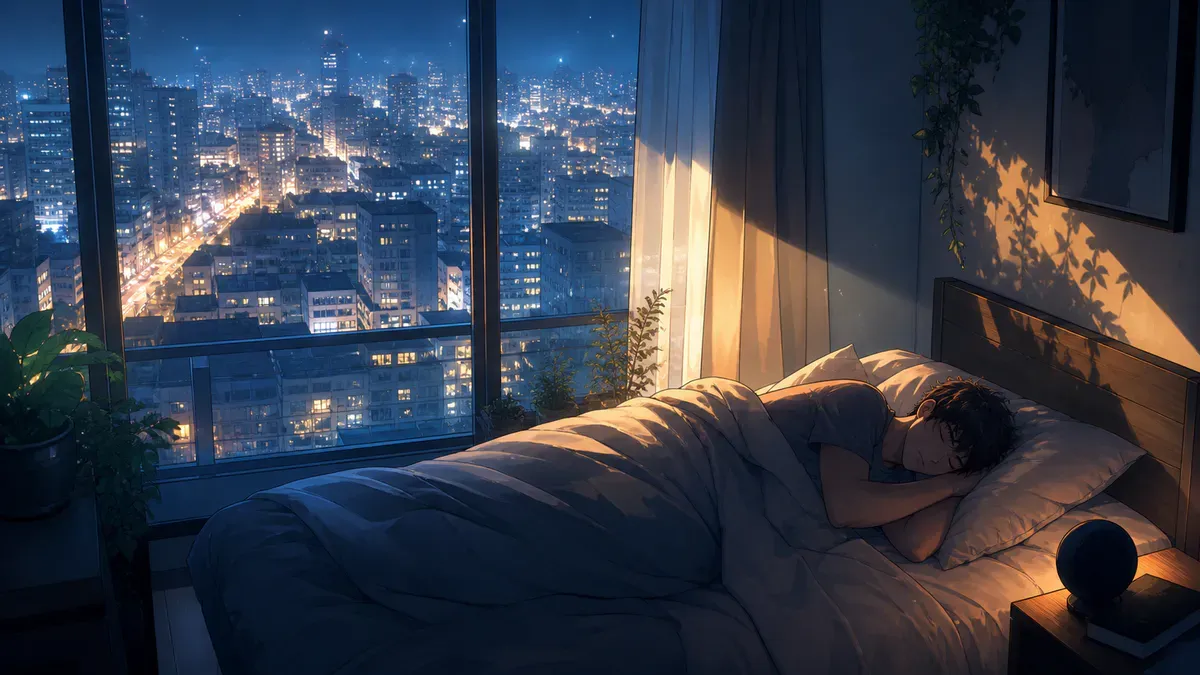
Light pollution and aging connect through the circadian system. The body expects a strong contrast between bright daytime light and dim nighttime darkness. When outdoor lights, hallway LEDs, streetlights, screens, or bedroom glow flatten that contrast, sleep can become lighter, melatonin timing can shift, and recovery signals can drift.
This article is not another screen hygiene guide. For that, see blue light at night vs morning light. This one focuses on ambient nighttime light: the light that reaches your bedroom and neighborhood even when you are not scrolling.
Quick answer
Nighttime light exposure can disrupt aging-relevant recovery by weakening circadian timing, delaying melatonin, fragmenting sleep, increasing nighttime alertness, and worsening next-day metabolic and autonomic signals. The practical fix is not total darkness at all costs. It is brighter mornings, dimmer evenings, darker sleep, reduced bedroom light intrusion, and consistent timing.
Key facts
- Nighttime light signals the circadian system at the wrong time.
- Melatonin timing supports sleep onset and biological night.
- Bedroom light can fragment recovery even when eyes are closed.
- Outdoor light intrusion can matter as much as screens.
- Strong morning light helps anchor the rhythm.
Why darkness is a recovery signal
The light-dark cycle is one of the strongest timing signals for the human body. NHLBI explains that the central circadian clock helps tell the body when it is time for sleep, and light affects melatonin release. Aging already tends to make sleep lighter and circadian rhythms less robust; nighttime light can add another destabilizing signal.
For temperature and sleep timing, see body temperature and sleep. Light and temperature work together: bright light and warm rooms both tell the body that the night is not fully protected.
Sources of nighttime light that people miss
| Source | Why it matters | Simple fix |
|---|---|---|
| Streetlight through curtains | Reaches eyes during awakenings | Blackout curtains or repositioning |
| Bathroom and hallway LEDs | Turns short awakenings into alertness | Motion dimmers or warm low lights |
| Device chargers and clocks | Small but constant bedroom glow | Cover or remove |
| Outdoor security lights | Blue-white light spills indoors | Aim downward, warmer spectrum |
| Partner screen use | Intermittent high-intensity bursts | Screen outside bed or shielded mode |
| Early morning light too weak | Rhythm lacks daytime anchor | Outdoor morning light exposure |
The goal is contrast: bright enough days, dim enough nights.
How light pollution affects biological-age signals
1. Sleep continuity
Even dim light can make the sleep environment less stable for sensitive people. If you wake at 3 a.m. and the room is bright enough to scan objects clearly, your brain receives a cue that can make returning to sleep harder.
2. HRV and resting heart rate
Poor sleep often shows up as lower HRV and higher resting heart rate. A single night is noise. A repeated pattern after late light exposure is a useful signal.
3. Glucose and appetite
Circadian disruption can worsen glucose handling and hunger signals. If nighttime light is paired with late eating or poor sleep, the pattern overlaps with late eating vs poor sleep and glucose.
4. Mood and cognitive load
Fragmented sleep makes attention, mood regulation, and memory feel worse. In older adults, that can be misread as inevitable aging rather than a recoverable environmental mismatch.
A bedroom darkness audit
Try this for one week:
- Stand in your bedroom after lights out and let your eyes adjust for five minutes.
- Identify every visible light source.
- Remove or cover small LEDs.
- Make hallway and bathroom light warm and low.
- Block streetlight or security-light intrusion.
- Get outdoor light in the first hour after waking.
- Track sleep timing, awakenings, HRV, and morning energy.
If sleep improves, the intervention worked even without a lab-grade light meter.
How SuperAge fits the picture
SuperAge can help turn light changes into measurable feedback. If you darken the bedroom and strengthen morning light, watch sleep continuity, resting heart rate, HRV, and next-day activity. The app cannot measure bedroom lux, but it can show whether your recovery trend changes after the environment changes.
FAQ
Is light pollution only an outdoor problem?
No. Outdoor light intrusion is one source, but indoor LEDs, hallway lights, clocks, chargers, and screens can all weaken darkness.
Do blackout curtains matter for aging?
They can matter if outside light is disrupting sleep. The aging-relevant outcome is better sleep continuity and recovery, not the curtain itself.
Is blue light the only issue?
No. Blue-rich light is potent for circadian signaling, but brightness, timing, duration, and contrast also matter.
What if complete darkness causes falls?
Safety wins. Use very low, warm, motion-activated path lighting rather than bright overhead light.
Key takeaways
- Nighttime light is a circadian signal.
- Ambient light matters, not only screens.
- Morning brightness and nighttime darkness work as a pair.
- Recovery metrics can reveal whether the change helped.
- Use low warm safety lights when needed.
Try SuperAge
To see whether darker nights improve sleep, HRV, and biological-age trends, download SuperAge.
References
- National Heart, Lung, and Blood Institute. How sleep works: your sleep/wake cycle.
- Gaston KJ, et al. Artificial light at night: a global disruptor of the night-time environment. 2023.
- Chepesiuk R. Missing the dark: health effects of light pollution. Environmental Health Perspectives. 2009.
- National Institute for Occupational Safety and Health. Circadian rhythms and circadian rhythm sleep-wake disorders.
Related Articles
Best time to exercise for longevity: What circadian science says
Best time to exercise for longevity, covering the 11 AM-5 PM window, chronotype, sleep, HRV, metabolism, circadian training, and evening workouts.