Canoe vs kayak: differences, safety, and which is easier
Canoe vs kayak: compare paddles, stability, storage, rescue, fitness demands, and safety so you can confidently choose the right craft for your first trip.
Quick answer
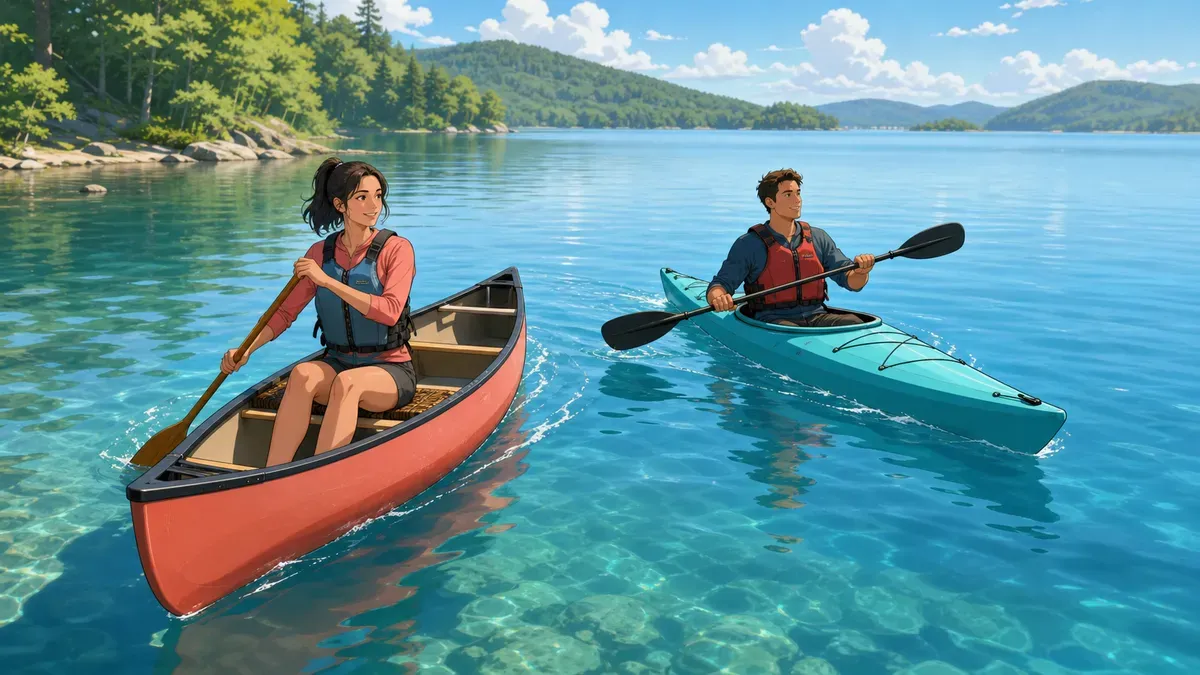
The simplest canoe-vs-kayak difference is the paddling system. A recreational canoe is usually an open, higher-sided craft moved with a single-bladed paddle; a kayak places the paddler lower and uses a double-bladed paddle. Canoes commonly carry people and bulky gear well. Recreational kayaks usually feel easier for one beginner to keep moving in a straight line, while sit-on-top kayaks simplify exits after a capsize.
Neither name tells you whether a craft is safe for a particular lake, river, coast, wind, or paddler. Hull shape, flotation, cockpit design, load, water temperature, rescue skills, and the forecast matter more than the label. For a first outing, rent the right craft locally, wear a fitted personal flotation device (PFD), choose sheltered water, paddle with a competent partner or instructor, and practice getting back to safety before traveling away from shore.
Key facts
- A canoe uses a single-bladed paddle on alternating or selected sides.
- A kayak uses a double-bladed paddle for alternating strokes.
- Hull design determines stability, tracking, speed, and wind response more than the category name alone.
- Cold water triggers involuntary gasping and rapid breathing before hypothermia develops.
- Rescue practice converts a capsize from an improvised emergency into a rehearsed response.
“Canoe” and “kayak” each cover a large family of craft. A wide rental canoe on a quiet pond, a narrow racing canoe, a short whitewater kayak, and a long sea kayak behave so differently that a universal winner does not exist. The useful question is not “Which type is better?” It is “Which specific craft fits my body, companions, load, water, and rescue plan?”
Canoe vs kayak at a glance
| Feature | Recreational canoe | Recreational kayak |
|---|---|---|
| Deck | Usually open | Sit-in cockpit or open sit-on-top deck |
| Paddle | One blade | Two blades |
| Paddler position | Seated on a bench or kneeling | Seated low with legs forward |
| Typical solo learning curve | More steering correction to learn | Alternating stroke often tracks more intuitively |
| Gear access | Easy to reach, but exposed unless packed dry | On-deck storage or enclosed hatches, depending on design |
| Passenger capacity | Often well suited to two paddlers, a child, or bulky gear | Commonly one paddler; tandem models exist |
| Wind response | Higher sides can catch more wind | Lower profile usually catches less wind |
| After a capsize | Open hull may hold a large volume of water | Sit-on-top drains through scuppers; sit-in rescue depends on flotation and skill |
| Best beginner setting | Calm, protected water with an easy landing | Calm, protected water in a model designed for that venue |
This table describes common recreational designs, not a rulebook. Touring canoes can be efficient over distance. Sea kayaks may carry camping loads in sealed compartments. Fishing kayaks can be wide and heavy. If the goal is to pull a lure from a moving craft, our beginner trolling guide explains why boat control, one-line management, depth, and hooks must be learned as one system. Deep-drop fishing is a different offshore system built around heavy near-vertical rigs, bottom control, long retrieval, and release at depth; it is not a beginner extension of choosing a paddle craft. Racing craft trade beginner stability for speed.
The International Canoe Federation defines competition canoe and kayak primarily by paddler position and paddle: canoe athletes kneel with a single blade, while kayak athletes sit and use a double blade. Recreational open-canoe paddlers, however, often sit on a raised seat. That is why shopping categories and Olympic definitions can appear to disagree without either being wrong.
The design differences you actually feel on the water
Open hull vs cockpit or sit-on-top deck
An open canoe makes loading simple. Dry bags, picnic equipment, camping gear, and a second paddler can be arranged within the hull. The trade-off is that rain, waves, or a capsize can put a substantial amount of water inside. Flotation blocks or bags can reduce the volume that floods, but they do not eliminate the need for a recovery plan.
A sit-in kayak surrounds the hips and legs with a deck. Bulkheads and sealed hatches can provide flotation and storage, but not every recreational kayak has adequate compartments. A sit-on-top kayak leaves the paddler exposed on a molded deck and usually drains water through scupper holes. It is often easy to exit, but climbing back aboard still requires practice, strength, and suitable conditions.
High seat vs low seat
A canoe seat gives the hips room and makes changing between sitting and kneeling possible in many models. It also places body mass higher. A kayak seat lowers the center of mass and connects the paddler to foot braces and, in many sit-in models, thigh contact points. Those contacts help transfer force and control edge angle.
Comfort is individual. Limited hip flexion, knee pain, back pain, or difficulty rising from the floor may make one position clearly better. Test the actual craft on land and at the shore rather than assuming a category will fit.
Single blade vs double blade
A kayak paddle alternates left and right. That rhythm naturally corrects some turning and can help a solo beginner travel straight. Correct shaft length and relaxed grip matter: an oversized paddle or a hard arm-only pull wastes energy.
A canoe paddle normally works on one side for several strokes before switching, or uses steering corrections such as a J-stroke. In tandem, the bow and stern paddlers have different jobs and must coordinate timing. The technique can be efficient and elegant, but the first lesson may feel less automatic than alternating a kayak paddle.
Stability is not one thing
Primary stability is how steady a craft feels when sitting flat. A broad, flat-bottomed hull can feel reassuring at the dock. Secondary stability is the support the hull provides as it tilts onto an edge. A craft that feels lively when flat may become predictably firm on edge, while a very flat hull may reach its limit abruptly.
Width is only one variable. Hull cross-section, waterline length, rocker (the upward curve from bow to stern), load placement, seat height, and paddler movement all change the experience.
- More rocker generally improves turning but reduces straight-line tracking.
- A longer waterline generally improves tracking and efficient cruising.
- A wider hull often increases initial steadiness but may require a longer reach to the water.
- Weight placed high or far from the center can reduce stability.
- A poorly fitted seat or foot position makes balance and force transfer harder.
Do not test stability by rocking aggressively beside a hard dock. Learn with an instructor in controlled, obstacle-free water while wearing your PFD.
Which is easier for a beginner?
For a solo adult on calm water, a stable recreational or sit-on-top kayak is often the quickest route to basic forward travel. The double blade reduces the need for an immediate steering correction, the low seat feels secure, and the craft is easy to understand.
A canoe may be easier when the real task is carrying two adults, a child, a dog that has been trained around boats, or camping equipment. One paddler can stabilize while the other enters; partners can share work; and the open hull makes gear management straightforward. But tandem coordination and wind can complicate the first outing.
Physical access changes the answer. A sit-in cockpit may be difficult for someone with limited hip or knee mobility. A high canoe seat may simplify entry but make balance feel less secure. A sit-on-top offers an open exit but can be heavy to carry. Adaptive seating, outriggers, transfer benches, and qualified instruction can change what is possible; choose for the person rather than for the stereotype.
Match the craft to the water, not the other way around
Sheltered lake or slow, familiar river
This is the appropriate first environment for either type when local rules allow it. Look for a managed launch, easy shoreline, low boat traffic, mild weather, and a route that never commits you to a long crossing. Start upwind when practical so the return is not entirely against the wind.
Large lake or exposed coast
A short recreational kayak and an open canoe are not substitutes for a properly equipped sea kayak. Wind can rise, waves can build, cold water can impair rescue, and high cliffs or private shorelines may remove landing options. The US National Park Service distinguishes long sea kayaks with flotation bulkheads from short recreational craft and warns that calm-looking large water can change quickly (NPS kayak guidance).
Take formal coastal instruction, use local forecasts and route knowledge, and carry communication and rescue equipment appropriate to the area. Reading an article does not qualify a beginner for open-water crossings.
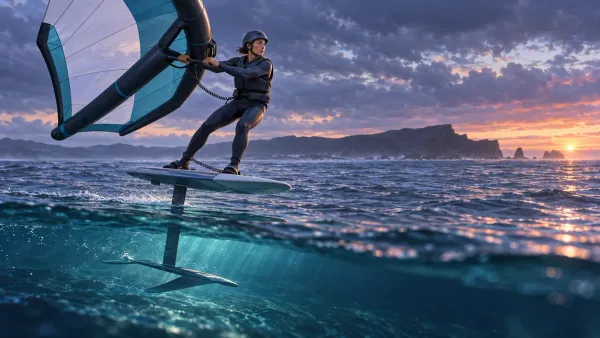
If you are comparing paddle craft with a wind-powered board, our wing-foiling guide for beginners explains why wing control, upwind return, and self-rescue should precede the first foil takeoff.
If the goal is to move below the surface rather than travel across it, equipment becomes a breathing, buoyancy, and information system. Our scuba diving equipment guide covers fit, compatibility, buddy checks, and maintenance before a first purchase.
If you want a shore-based coastal activity without launching a craft, our surfcasting guide for beginners covers beach reading, controlled casting, and conditions that should end a session.
Moving water and whitewater
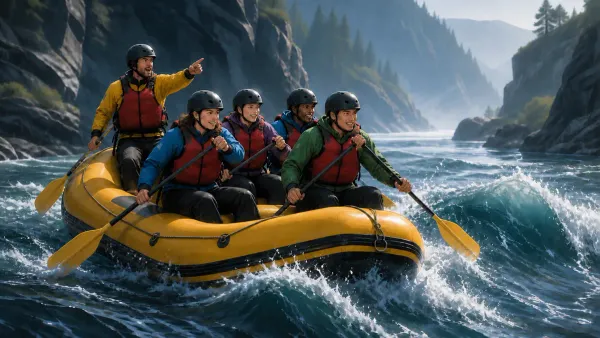
Current adds strainers, foot entrapment, hydraulics, undercuts, and downstream consequences. Craft choice becomes discipline-specific, and a helmet may be required. Our body rafting safety guide explains why fitness and calm-water confidence do not replace moving-water judgment. If the intended format is an inflatable boat with a guide and coordinated crew, use our beginner rafting guide for equipment, commands, and swim response. Begin with professional instruction and a route matched to the least experienced person.
Seven non-negotiables for a first paddle
1. Wear the PFD, not merely carry it
Use a properly fitted, locally approved PFD designed for paddling. Zip and fasten it, then have a trained person check the fit. The US Coast Guard paddling guidance emphasizes wearing a life jacket, learning capsize recovery, avoiding alcohol, filing a float plan, and paddling with companions.
Laws differ by location and age. Treat the legal minimum as a floor, not a complete risk assessment.
2. Dress for immersion
Warm air does not guarantee warm water. Sudden immersion can cause an involuntary gasp, rapid breathing, increased heart rate, and impaired thinking. The US National Weather Service notes that cold shock can be severe in water at 50–60°F (10–15°C) and recommends dressing for water temperature.
A wetsuit or drysuit may be appropriate depending on water temperature, exposure, wind, distance from shore, and rescue time. Get local advice; ordinary cotton clothing is not a cold-water system.
3. Check wind, weather, current, and water level
Check an authoritative local forecast immediately before launch, then keep watching conditions. Wind that is merely inconvenient on land can stop a tired paddler from returning. Thunderstorms, offshore wind, fog, extreme heat, flood flow, and poor water quality are reasons to change or cancel a plan.
4. Keep the first route short and reversible
Stay close enough to an accessible shore that a problem does not become a long exposure. Avoid a crossing, downstream commitment, or steep bank that removes the option to stop. Share a float plan with a responsible person: route, launch, landing, group, craft description, return time, and what to do if you are overdue.
5. Practice capsize recovery
Before traveling, learn how to stay with the craft, account for your partner, empty or right the boat, re-enter or tow it, and reach shore. The exact method differs between canoe, sit-on-top kayak, and sit-in kayak. The National Park Service recommends practicing re-entry, using the buddy system, and staying within the least experienced paddler’s limits.
6. Carry accessible communication and signaling
A phone belongs on your body in a waterproof case, not loose inside a boat that may drift away. Depending on the venue, a whistle, light, VHF marine radio, or personal locator beacon may be appropriate. Know which service local rescuers monitor and do not assume cell coverage.
7. Learn locally
A short skills class can cover fitting, launching, forward and reverse strokes, turning, stopping, side movement, capsize behavior, and route decisions. The American Canoe Association Smart Start program is one example of beginner safety education. Equivalent national federations and qualified local clubs offer region-specific instruction.
Efficient paddling uses the trunk, not just the arms
A relaxed forward stroke begins with posture and contact: neutral spine, feet supported, shoulders down, and hands holding the shaft without crushing it. Rotate through the torso as the blade enters near the feet, connect the pull to the opposite foot or seat contact, and remove the blade before it travels too far behind the hip.
The exact stroke differs between craft, but several beginner cues transfer:
- Set posture before adding power.
- Place the blade cleanly rather than slapping the surface.
- Rotate the ribs and pelvis within a comfortable range.
- Keep the working hand below shoulder height during ordinary strokes.
- Finish early and recover smoothly.
- Reduce force when technique deteriorates.
Research in trained kayakers shows that force production involves coordinated movement of the legs, pelvis, trunk, and upper limbs rather than isolated arm pulling (Bjerkefors et al., 2018). Beginners do not need racing mechanics, but the principle matters: sharing the work can reduce needless shoulder load.
Fitness benefits and realistic limits
Steady paddling can contribute aerobic activity while training trunk control, pulling endurance, grip, and coordination. Competitive kayaking research shows meaningful aerobic and anaerobic demands, especially through the upper body and trunk, but those data come from trained athletes and cannot be pasted onto an easy rental trip (Michael et al., 2008).
Intensity depends on wind, current, craft efficiency, technique, body size, and pace. Use the talk test: for an easy aerobic session, you should be able to speak in full sentences. If you use a wearable, treat wrist heart rate cautiously because grip and repeated wrist movement can reduce optical-sensor reliability. Our heart-rate zones by sport guide explains why effort targets do not transfer perfectly between activities.
Paddling can help you accumulate the broader activity target of at least 150 minutes of moderate exercise per week, but it does not replace leg strength, weight-bearing movement, or balance training. The CDC adult activity guidance also recommends muscle-strengthening work on two days each week. Build a complete routine with our exercise and longevity guide, not around one seasonal activity.
Protect shoulders and the lower back
Most injury data come from competitive or whitewater paddlers, so they do not predict an individual beginner’s risk. They do identify useful caution areas. A survey of 122 high-level paddlers found the shoulder was the most frequently reported injury site, with lower-back problems also common (Klos et al., 2021).
Reduce avoidable load by choosing a paddle and seat that fit, keeping the shaft grip relaxed, using torso rotation, progressing duration gradually, and stopping for sharp pain, weakness, numbness, chest symptoms, severe breathlessness, or loss of coordination. Persistent pain deserves assessment by a qualified clinician.
A simple first-month progression
Progress skill before distance. Every session assumes sheltered water, appropriate supervision, a fitted PFD, and conditions within your training.
| Session | Main goal | Example progression |
|---|---|---|
| 1 | Fit and control | Entry, exit, forward, reverse, stop, turn, and capsize briefing near shore |
| 2 | Efficient rhythm | Easy loops with frequent posture checks and both-direction turns |
| 3 | Rescue | Assisted re-entry or canoe-emptying practice in controlled water |
| 4 | Endurance | A slightly longer conversational paddle with a planned turnaround |
| 5 | Decision skills | Read forecast, choose route, make a float plan, and identify landing options |
| 6 | Consolidation | Repeat the weakest skill before adding distance or more complex water |
Leave recovery between unfamiliar sessions, especially if forearms, shoulders, or back are sore. Our rest-day science guide explains how to distinguish useful training stress from a reason to reduce load.
Use SuperAge to track the routine, not to certify water safety
SuperAge can place paddling inside your larger activity, sleep, heart-rate, and recovery trends. It can help you notice whether a new outdoor habit supports consistency or arrives with rising fatigue and declining recovery.
No biological-age score, readiness metric, or wearable can determine whether a hull is suitable for the venue, whether a storm will develop, or whether you can complete a rescue. Those decisions remain local, skill-based, and human.
After a session, download SuperAge to review the week as a whole and plan the next effort around sustainable progress.
Canoe or kayak: a practical decision matrix
Choose a recreational kayak when you mainly paddle solo on protected water, want an intuitive alternating stroke, and can enter, exit, carry, and rescue that specific model.
Choose a sit-on-top kayak when an open exit and simple drainage fit warm, protected water—but still practice re-entry and dress for immersion.
Choose a canoe when two paddlers, bulky equipment, flexible seating, or easy on-water gear access are central, and you are prepared to learn steering and manage wind.
Choose a touring or sea kayak only with appropriate training when distance, waves, cold water, or exposed shoreline require flotation compartments, rescue systems, and specialized judgment.
Choose instruction before equipment when the venue includes current, surf, open crossings, cold water, difficult landings, or any condition you cannot confidently evaluate.
Renting first is often the best decision. It lets you compare seat comfort, reach, balance, carry weight, and rescue behavior without committing to a craft that looked suitable on land.
Key takeaways
- Canoes usually pair an open hull with a single blade; kayaks place the paddler lower and use a double blade.
- A kayak is often easier for one beginner to propel straight, while a canoe often manages partners and bulky loads better.
- Hull and venue matter more than the category name: a recreational kayak is not a sea kayak.
- Wear a fitted PFD, dress for immersion, check conditions, share a float plan, and stay with competent partners.
- Practice capsize recovery before adding distance.
- Efficient technique shares work across the feet, hips, trunk, and upper body.
- Paddling can support aerobic fitness, but it does not replace strength, weight-bearing activity, or water-specific instruction.
FAQ
Is a canoe or kayak more stable?
It depends on the specific hull. A wide recreational canoe or fishing kayak may have strong primary stability, while a narrower touring craft may feel lively but gain support on edge. Compare the actual models with a qualified instructor; width and category alone do not settle stability.
Is kayaking harder than canoeing?
Solo forward travel is often easier to learn in a recreational kayak because the double blade alternates sides. Canoeing adds steering corrections, and tandem canoeing adds coordination. The answer reverses when carrying a partner or bulky gear is the main goal.
Do you get wetter in a canoe or a kayak?
A double-bladed kayak paddle can drip water onto the paddler, while an open canoe leaves gear exposed to rain and spray. Sit-on-top kayaks are intentionally wet in many conditions. Clothing and dry storage should assume immersion, not promise dryness.
Can one person paddle a two-person canoe?
Often yes, if the canoe is designed and loaded appropriately, but trim matters. A lightly loaded tandem canoe can be difficult to control in wind when paddled from the wrong position. Ask the owner or instructor how that model should be paddled solo.
Is a sit-on-top kayak safer for beginners?
It can simplify exiting and draining in warm, protected water, but it is not universally safer. Re-entry can still be difficult, wind can move it away, cold water remains dangerous, and the design may be wrong for waves or distance. Safety comes from venue fit, clothing, PFD, partners, and practiced rescue.
Do I need to know how to swim?
You should be comfortable in water and meet the provider’s stated swimming requirement. A PFD supports flotation but does not replace calm breathing, partner assistance, or rescue skills. Non-swimmers need direct advice and closely controlled instruction from a qualified local provider.
Can canoeing or kayaking count as cardio?
Yes, when sustained effort raises breathing and heart rate into an appropriate training range. A gentle float may be light activity; paddling into wind can be vigorous. Use effort and duration rather than the activity label, and maintain separate strength and weight-bearing exercise.
Which is better after age 50?
The craft that fits your mobility, balance, joint history, strength, companions, and local water is better. Test entry, exit, seat comfort, paddle reach, carry weight, and rescue with an instructor. Age alone is less informative than function and venue.
References
- International Canoe Federation. Difference between canoe and kayak.
- American Canoe Association. Smart Start for Safe Paddling.
- US Coast Guard Boating Safety Division. Ten paddlesport safety practices.
- US National Park Service, Pictured Rocks. Kayaking and kayak safety.
- US National Weather Service. Cold water hazards and safety.
- US National Park Service, Point Reyes. Your safety while boating.
- Michael JS, Rooney KB, Smith R. The metabolic demands of kayaking: a review. Journal of Sports Science and Medicine. 2008;7(1):1–7.
- Bjerkefors A, Tarassova O, Rosén JS, Zakaria P, Arndt A. Three-dimensional kinematic analysis and power output of elite flat-water kayakers. Sports Biomechanics. 2018;17(3):414–427.
- Klos P, et al. Injuries associated with the practice of calm-water kayaking in the canoeing modality. Journal of Human Kinetics. 2021;77:167–177.
- US Centers for Disease Control and Prevention. Adult activity: an overview.
- Transport Canada. Choosing lifejackets and personal flotation devices.
Related Articles
Canyoning in Italy: where to go and how to choose safely
Plan canyoning in Italy by matching routes to your skills, checking weather and water, choosing qualified guidance, and comparing seven standout regions.