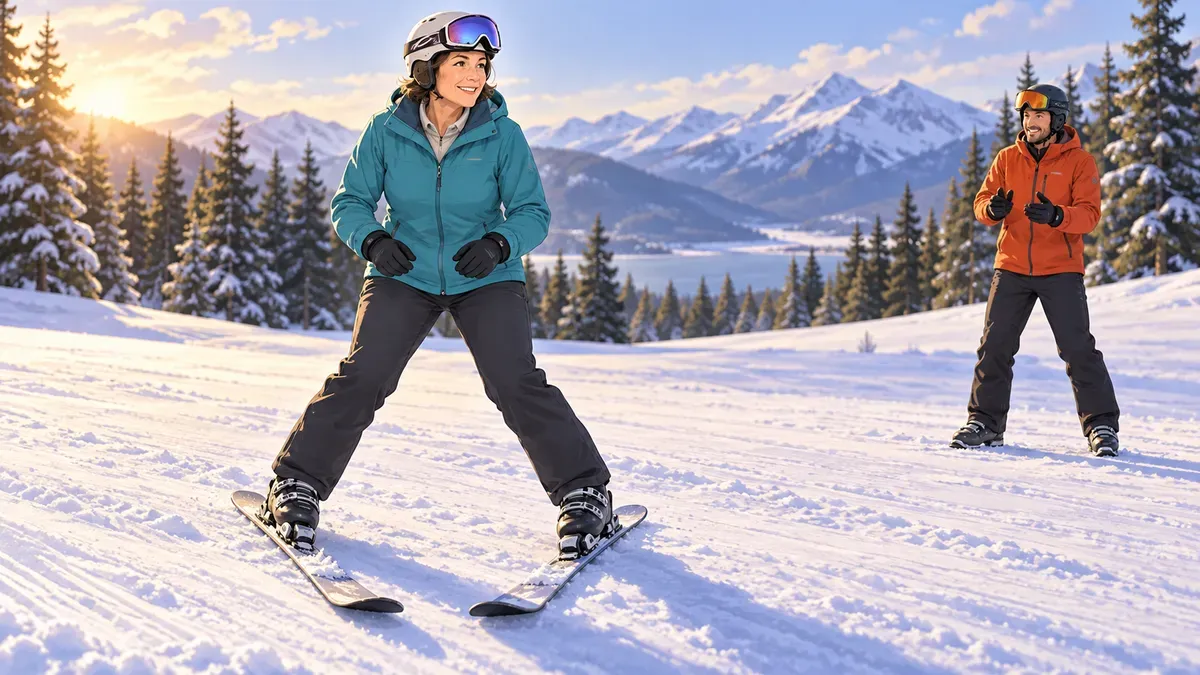
How long does it take to learn to ski? An adult beginner guide
Learn to ski as an adult with realistic lesson expectations, stopping and turning milestones, preparation tips, and a safer plan for your first days on snow.
Learning to ski begins with a useful question: can you choose where you go and bring yourself to a stop? Sliding downhill for the first time can happen quickly. Becoming a skier who controls speed, turns both ways, uses a lift, and notices other people takes repeated practice.
For an adult beginner, the best learning timeline is therefore a sequence of abilities. A holiday gives you a window to start; it does not guarantee a particular slope or turning style by the final day. This guide helps you plan that window around lessons, manageable terrain, and progress you can actually observe.
Quick answer
How long does it take to learn to ski? A first coached session may introduce equipment, balance, a short glide, and basic braking on a gentle learning area. Reliable linked turns and independent control usually require further lessons and practice. Parallel skiing on varied slopes is a later goal. There is no evidence-based number of hours or days that guarantees those outcomes for every adult.
Book instruction for a true first-time skier, leave room for repeat sessions, and advance when your instructor sees consistent stopping, speed control, and direction changes. The terrain, snow, confidence, fitness, equipment fit, and quality of feedback all affect what you can do on a given day.
Key facts
- Beginner ski lessons develop balance, braking, turning, and slope awareness together.
- Turn shape manages downhill speed by changing the skier’s direction of travel.
- Suitable learning terrain reduces the consequence of an imperfect movement.
- Repeated controlled practice builds a more useful skill base than one fast descent.
- Fatigue reduces the margin for learning when movements and attention become unreliable.
Define what “learning to ski” means
Two people can report that they learned in a weekend and mean very different things. One followed an instructor down a short practice slope. The other could stop, turn, and choose an appropriate run without constant prompts. Those outcomes should not be treated as equivalent.
Use the following milestones as a conversation with your instructor. This is an editorial planning framework, not a tested schedule or a self-certification checklist.
| Milestone | What you can demonstrate | What still needs practice |
|---|---|---|
| Equipment and movement | Move on flat snow, handle skis, and understand the basic stance | Sliding balance and a deliberate stop |
| Short controlled glide | Start in a designated learning area and stop where instructed | Turning both directions and repeatability |
| Linked beginner turns | Change direction repeatedly while keeping a manageable speed | More traffic, unfamiliar snow, and lift use |
| Easy-run independence | Follow a suitable route, stop intentionally, and respect other users | Consistency across different easy runs |
| Developing parallel skiing | Match the skis increasingly while retaining speed control | Adaptability, steeper terrain, and more demanding conditions |
A wedge, sometimes called a snowplough, is a useful early tool. It is not a failure to ski “properly.” Equally, parallel-looking skis do not prove control. Someone can hold skis side by side while accelerating beyond their ability to stop.
The PSIA-AASI beginner resources emphasize professional lessons and real-time feedback. That matters because a written cue cannot see the slope, your balance, or the reason a ski is not responding.
Plan your first snow days around lessons
Treat the first visit as orientation, then leave space for coaching and familiar practice. Avoid promising yourself that a particular trail must be completed before the trip ends.
Before the first lesson: explain that you have never skied, discuss relevant pain or limitations, allow time for equipment fitting, and ask where the meeting point and learning area are. Arriving rushed can turn a simple boot adjustment into a stressful start.
During the initial learning block: work on the tasks your instructor selects. These may include moving on flat terrain, standing in balance, gliding briefly, stopping, and changing direction. Keep the objective small enough that you can describe it in one sentence.
On the next visit or lesson: review what held up. Could you stop repeatedly, or only once? Did one turning direction feel much harder? Did control disappear as soon as the slope changed? Tell the instructor those details rather than simply saying you are ready for something harder.
When trying an easy run: have the instructor assess the entire route, including narrow sections, intersections, lift unloading, and the return. A gentle start does not mean every section will suit a beginner. Ask how to get assistance if you cannot continue safely.
After a break from snow: return to familiar learning terrain and check the basic skills again. Recalling the idea of a turn is different from reproducing it in boots on today’s surface.
This approach also protects the holiday budget: choose lessons by their actual learning objective, rather than purchasing access to terrain you may not yet be able to use.
Choose group or private instruction by your needs
Both formats can work. The useful question is how much observation, reassurance, and individual adjustment you need.
| Lesson format | Often useful when | Questions to ask before booking |
|---|---|---|
| First-time adult group | You want structured basics with peers at a similar starting level | Is everyone a true beginner? How are different learning speeds handled? |
| Private instruction | You need tailored pacing, have specific limitations, or want focused help | Can the instructor adapt terrain and tasks to my goals and concerns? |
| Follow-up beginner group | You have some basic control but need repetition and feedback | Which stopping and turning skills are expected at entry? |
| Adaptive instruction | Disability or a functional limitation calls for adapted equipment or teaching | What assessment and support are available before the session? |
A skilled friend can support the day, but being a good skier is different from knowing how to teach a never-ever adult. Social pressure is also harder to resist when everyone else wants to reach the next lift.
An effective lesson leaves you with one or two usable cues and a clear practice task. Ask the instructor which terrain is appropriate for that task and what would mean you should stop or request help.
Learn control before chasing a ski style
Early skiing links balance, steering, and speed. On a shallow learning slope, an instructor may introduce a small wedge and guide you through turns that gradually redirect travel across the hill. The purpose is an intentional path, rather than a rigid pose or an ever-larger braking wedge.
If you feel speed building after each turn, say so immediately. A common learning problem is that the skis point downhill too long before the next direction change. The response is to revisit terrain and turn shape with the instructor, rather than attempt a dramatic last-second stop.
Keep your hands comfortably in front, look toward the available path, and let the ankle, knee, and hip joints move. Avoid sitting rigidly behind the feet or twisting the shoulders forcefully to make the skis turn. These are orientation cues; the instructor should choose the correction after observing you.
Carving comes later, once stopping and linked turns are dependable. Our ski carving guide explains that next skill boundary. Clean edge tracks are optional on a first trip; speed control remains essential at every level.
Prepare your body without exhausting it
General fitness gives you more room to learn, but it does not replace snow instruction. Skiing asks you to maintain balance in stiff boots and manage forces through the legs while the surface moves underneath you.
In the weeks before the visit, continue manageable walking or other aerobic activity and familiar strength work. If you are new to exercise, build gradually rather than compressing preparation into a punishing final week. Our exercise and longevity guide provides the broader activity framework.
As simple practice options, use controlled chair sit-to-stands, comfortable step-ups, and supported standing balance. Start with a small amount, keep movement pain-free, and use a stable support for balance work. These suggestions rehearse general capacities; they are not a validated ski-injury prevention program. The balance training guide offers a more complete progression.
Skiing also involves muscles resisting force while lengthening. In a small study of 24 fit recreational skiers, a four-hour skiing session reduced certain eccentric thigh-strength measures, with reductions still present 24 hours later (Koller et al., 2015). The participants were intermediate skiers, so this does not establish a time limit for beginners. It supports a practical caution: a good aerobic base does not guarantee fresh braking muscles all day. Read our eccentric training guide for that distinction.
On the day, begin with gentle movement and an easy coached warm-up. Eat normally, take breaks, and keep water accessible. Cold weather can make drinking easy to forget; our exercise hydration guide explains how needs vary instead of prescribing one fixed bottle target.
Our guide to estimating skiing calories separates active descents from lifts and breaks and distinguishes total energy from active energy when interpreting a snow session.
For a practical off-snow routine before your first ski day, see our ski fitness exercises guide. It combines controlled strength, balance, and aerobic activity with gradual progression and recovery checks.
Set up equipment and terrain for learning
Secure, comfortable boots and a suitable ski setup make feedback easier to interpret. A loose foot can move inside the boot before the ski responds; painful pressure can make it difficult to concentrate. Tell the fitter about numbness, pressure points, or heel movement rather than assuming discomfort is part of learning.
Have a qualified technician fit and check the boot-binding combination and release settings. Wear a properly fitted snow-sport helmet, eye protection, and adjustable layers. The AAOS skiing guidance recommends appropriate equipment, lessons, ability-matched runs, and stopping when tired or in pain.
Helmet research supports protection against some head injuries, particularly potentially severe injuries, while results vary across periods and injury definitions (Sulheim et al., 2017). A helmet adds protection; choose speed and terrain with the same care while wearing it.
Use a designated learning zone selected with the instructor. Ask about current surface conditions and the easiest return before moving farther. Trail colors and names are local orientation tools; an easy label does not tell you the whole story about today’s ice, visibility, crowding, or slope transitions.
For a first ski trip, our age and readiness guide explains how to assess children’s and adults’ starting needs before choosing lessons or terrain.
Use recovery context alongside your learning log
Once the basic learning plan is in place, SuperAge can help you compare activity, sleep, and available resting heart-rate or HRV trends from Apple Health with your usual baseline. A ski trip combines travel, unfamiliar exercise, cold, and sometimes disrupted sleep, so context is more useful than trying to maximize one day’s numbers.
The wider healthspan goal is keeping the capacity and confidence to enjoy movement. WHO guidance recommends 150–300 minutes of moderate aerobic activity, or 75–150 minutes of vigorous activity, plus strength work on at least two days per week for adults. Ski days can contribute activity, while year-round habits supply continuity.
Keep a separate, simple skill note: which learning area you used, whether you stopped consistently, your harder turning direction, and the cue that helped. Interpret physiological trends alongside how you feel. An app reading cannot certify slope readiness, assess binding release, or rule out an injury.
Manage fear and fatigue with smaller tasks
Fear often becomes more manageable when the next task has a clear beginning and end. Tell the instructor whether you are worried about speed, falling, a lift, or other skiers. “I am scared” is useful; “I cannot predict where I will stop” gives the lesson an even clearer target.
Ask to repeat a task on easier terrain until you can perform it without rushing. Change one demand at a time: a longer glide, another turn, or a new lift introduction. Adding slope, speed, traffic, and unfamiliar snow together makes it difficult to know which problem needs attention.
End practice when stopping becomes less reliable, attention drifts, or you repeatedly lose the cue that worked earlier. Take pain seriously. A shorter successful session creates a better return point than a final descent completed through exhaustion.
If alpine skiing does not suit the experience you want, the classic versus skate cross-country skiing guide explains another snow-sport choice. Nordic skiing still needs technique and route judgment; it is a different activity, not an automatic safety substitute.
Apply slope safety from the first lesson
The NSAA beginner safety guidance includes the Responsibility Code. Its core learning implications are straightforward: keep enough control to avoid others, give priority to people downhill, stop where you are visible, check uphill before joining traffic, respect signs and closures, and ask staff for lift assistance when needed. Keep equipment from running away and stay sober on the slopes.
Learn how to contact patrol before you need it. If a route becomes unmanageable, move to a visible safe place when possible and request help. Do not let embarrassment push you into a descent you cannot control.
After a fall, urgent warning signs include confusion, loss of consciousness, worsening headache, repeated vomiting, significant neck or back pain, a deformed limb, or inability to bear weight. Seek emergency or patrol assistance for serious symptoms. New swelling, instability, or persistent pain also warrants assessment before returning. This guide supports preparation and discussion with an instructor; it does not replace individualized medical care.
Frequently asked questions
Can an adult learn to ski in one day?
A day can introduce equipment, balance, gliding, and basic braking with an instructor. It does not guarantee independent skiing on a full run. Judge the day by repeatable control on suitable terrain, rather than distance covered.
How many ski lessons does a beginner need?
There is no universal number. Start with a true first-time lesson and reserve room for follow-up. Ask the instructor what you can practise safely and which skills need another coached session before changing terrain.
Can I start skiing at 40, 50, or 60?
Age alone does not determine the learning pathway. Current strength, balance, health, confidence, and recovery matter. Discuss relevant conditions or limitations with a clinician when needed and tell the ski school so teaching and terrain can be adapted.
Is it better to learn with a private or group lesson?
A well-matched beginner group offers structure and peers. Private instruction offers more tailored pacing and feedback. Choose according to your needs, the entry level, and the school’s ability to accommodate concerns or limitations.
Do I have to learn the snowplough before parallel turns?
Teaching progressions vary, and an instructor may use terrain and tasks that introduce different ski relationships. The important requirement is reliable braking and turning. A beginner wedge can be useful; parallel skis alone do not establish control.
When am I ready to leave the beginner area?
When your instructor judges that you can manage the whole proposed route, including turns, stopping, traffic, and the lift. Repeatable control matters more than one successful glide or an easy trail label.
Does good fitness make learning to ski quick?
Fitness can help you tolerate practice, but skiing also requires a new movement skill. Strong runners or cyclists still need instruction, suitable terrain, and feedback. Leg fatigue may also develop despite good aerobic fitness.
Should I keep skiing when my legs feel tired?
Rest and reassess. If fatigue reduces braking, turning, attention, or comfort, end the session. Avoid using the final run to prove progress, and seek assessment for pain or injury symptoms.
Key takeaways
- Define progress through stopping, turning, speed control, and awareness.
- Plan a first lesson and follow-up opportunities without a fixed-days promise.
- Match instruction, equipment, and the entire route to your current ability.
- Prepare gradually, practise while fresh, and keep a simple skill log.
- Let an instructor assess terrain progression and seek help when control fails.
Keep your activity and recovery trends in view
Download SuperAge to follow activity and recovery trends alongside the practical learning goals you set with your instructor.
References
- PSIA-AASI: Learn to ski or snowboard. Professional instruction and beginner resources.
- NSAA: Know before you go. Beginner preparation, equipment, and slope responsibility guidance.
- American Academy of Orthopaedic Surgeons: Skiing injury prevention. Preparation, equipment, lessons, and ability-matched terrain.
- Koller A et al. Decrease in eccentric quadriceps and hamstring strength in recreational alpine skiers after prolonged skiing. BMJ Open Sport & Exercise Medicine. 2015;1:e000028. Small study of fatigue after four hours of skiing; not a beginner learning-timeline trial.
- Sulheim S et al. Helmet use and risk of head injuries in alpine skiers and snowboarders: changes after an interval of one decade. British Journal of Sports Medicine. 2017;51:44–50. Observational evidence with outcome and period differences.
- WHO: Everyday actions for better health. General activity recommendations; not a ski-readiness certification.
- CDC: Symptoms of mild TBI and concussion.
Related Articles

Swimming during pregnancy: pool safety, strokes, and comfort
Learn how to approach swimming during pregnancy with comfortable strokes, manageable pool sessions, hygiene checks, and warning signs. Plan your next swim.