Best age to start skiing: readiness for children and adults
Find the best age to start skiing by checking child readiness, adult health, lesson fit, and practical safety needs before planning a first experience on snow.
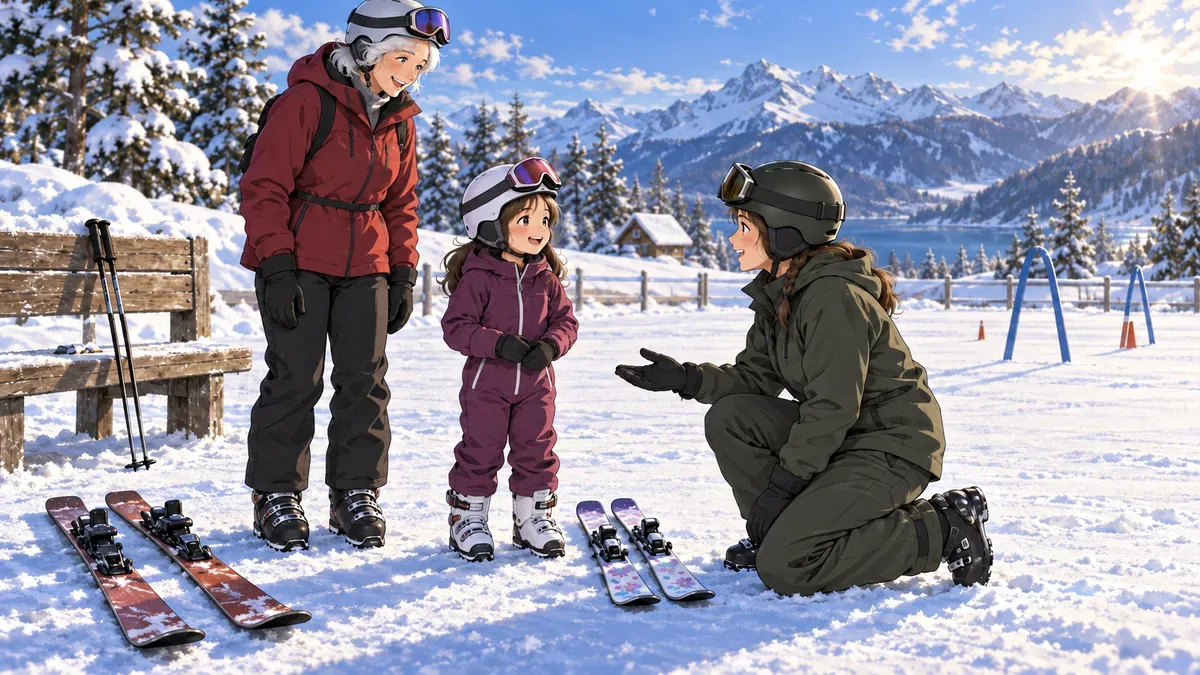
The best age to start skiing is the age at which a person can take part comfortably, understand the task, and learn with appropriate support. A birthday helps you choose a teaching approach. It cannot tell you whether someone is ready for a particular slope.
For families, this means separating a pleasant introduction to snow from a structured lesson. For adults, it means assessing present abilities and health rather than assuming that the opportunity ended in childhood. The goal of the first experience is a willing learner who wants to return.
Quick answer
There is no universally best age to start skiing. Some preschool children can enjoy playful instruction, while others benefit from waiting. Around school age, many children can manage more structured teaching, but readiness still varies. Adults can also begin later in life; age alone does not establish either suitability or safety.
Look for willingness, the ability to follow simple cues, manageable movement in equipment, and a way to communicate discomfort. A qualified instructor should assess the learning setting. Relevant health conditions or functional limitations may also need an individual clinical discussion.
Key facts
- Developmental readiness shapes a child’s ability to follow and enjoy instruction.
- Qualified ski instruction adapts tasks and terrain to the learner.
- Chronological age describes years lived rather than current skiing ability.
- Appropriate equipment supports comfort and control during learning.
- Rest breaks preserve attention and the opportunity to practise while comfortable.
Separate starting early from being ready
A very young child standing on skis in a photograph has not necessarily learned to stop, turn, or notice another skier. Likewise, an older beginner who stays in a learning area may be making useful progress. Compare the task with the person, rather than comparing birthdays.
The American Academy of Pediatrics sports-readiness guidance describes readiness through physical, mental, and social development. It favors play and basic movement for younger children and notes that many children gain the basic skills for simple organized sports around age 6. That is general developmental guidance, not a minimum skiing age or an automatic clearance.
The table below is an editorial conversation aid. Its age bands do not predict learning speed, prescribe lesson duration, or replace an instructor’s assessment.
| Learner stage | A useful starting question | A reasonable first objective |
|---|---|---|
| Very young child, under 3 | Is snow play comfortable and welcome? | Enjoy supervised play without a skiing performance goal |
| Preschool child, roughly 3–5 | Can the child engage with a simple task and communicate needs? | Explore equipment and a playful introduction if the instructor agrees |
| School-age child, roughly 6–9 | Can the child follow cues and remain engaged in a suitable group? | Practise simple control skills with feedback |
| Older child or teenager | Does the lesson match experience, motivation, and maturity? | Build deliberate control without pressure from peers |
| Adult starting at 40, 50, 60, or later | What current abilities or health issues need accommodation? | Establish an individually paced introduction on appropriate terrain |
Starting earlier is not a requirement for enjoying recreational skiing later. The useful decision is whether today’s experience suits the learner, not whether the family has missed an imagined deadline.
Check a child’s readiness in everyday situations
Before booking, notice how the child responds to unfamiliar clothing, a new adult, and a small movement game. You are gathering information for the instructor, not administering a home examination.
Can the child copy a simple action and respond to a short cue? Will they tell someone when a boot hurts, their hands feel cold, or they need the toilet? Do they show curiosity about trying, or mainly a wish to please a parent?
Consider separation and communication together. A child who happily plays with familiar adults may find a new group difficult in heavy clothing. Ask how the teaching format handles reassurance, language needs, breaks, and contact with a parent. These needs can often be accommodated, but should be discussed beforehand.
The AAP’s skiing guidance identifies age, strength, and cooperation as relevant factors and recommends help from qualified instructors. No single observation settles readiness. A child with a disability or developmental difference may benefit from adapted instruction rather than being judged against a typical group format.
Avoid turning the first visit into a test of bravery. If the child is distressed before sliding begins, pause and identify the problem. Discomfort, unfamiliarity, and fear need different responses.
Choose teaching that matches development
A lesson is more than its advertised age range. Ask what the learner will actually do and how the instructor adjusts the task when someone needs a different pace.
For younger children, a small game and a concrete demonstration can be easier to follow than a long explanation. Older children may enjoy discussing a goal and then trying it. Teenagers deserve a setting where being a beginner does not become a social embarrassment.
The PSIA-AASI children’s teaching performance guide expects instructors to relate terrain, activities, and teaching choices to cognitive, emotional, and physical development. This supports individualized teaching; it does not establish one best starting birthday.
Ask these questions before committing to a format:
- Is this a true first-time group, and how are different learning needs handled?
- What happens if the learner is cold, upset, tired, or unable to continue?
- How will the instructor communicate with the learner and accompanying adult?
- Can the session adapt to a disability, anxiety, or a relevant health limitation?
- What would count as a successful first experience for this particular person?
Provider entry requirements describe that provider’s service. They do not establish biological readiness. An age-eligible child may still need a different format or a later attempt.
Starting skiing as an adult or older adult
Beginning at 40, 50, or 60 is a different question from returning with decades of skiing experience. Tell the instructor which situation applies. Years spent away from snow also matter, even if familiar movements return quickly.
Useful discussion points include comfortable walking, getting up from a chair, managing steps, balance, joint movement, and tolerance for unfamiliar activity. These observations help identify adaptations; they are not pass-or-fail ski tests. Our balance training guide offers general off-snow practice, while the ski fitness guide addresses conditioning.
Discuss unstable symptoms, a recent operation or injury, recurrent falls, significant bone fragility, or a limiting heart or lung condition with a clinician before a new skiing attempt. Ask a specific question: what demands or falls should I avoid, and what preparation or supervision would help? Our bone-health guide provides background for that conversation.
The CDC’s older-adult activity recommendations include aerobic activity, muscle strengthening, and balance work. They support maintaining capacity across later life. Meeting general activity recommendations does not certify someone for downhill skiing, and a low activity level does not tell you which adapted introduction might be possible.
Choose a goal small enough to practise without rushing. For the sequence from first lessons to independent control, use our adult beginner skiing guide. The readiness decision comes first; a lesson timeline follows.
Make the first experience easy to reassess
Plan an introduction that can end comfortably. A flexible exit is especially useful when nobody yet knows how the learner will respond to boots, cold, sliding, or a new instructor.
| What you observe | What to discuss or change | When to stop and reassess |
|---|---|---|
| Curiosity with manageable uncertainty | Keep the next task small and clearly explained | Distress grows despite reassurance |
| Boot pressure or numbness | Return to the fitter and explain the location | Symptoms persist or movement becomes painful |
| Attention or control deteriorates | Take a break and revisit an easier task with the instructor | Reliable control does not return |
| Cold hands, wet clothing, or marked shivering | Move to shelter and address warmth | Confusion, unusual drowsiness, or suspected cold injury requires urgent help |
| A wish to follow a more skilled relative | Keep instruction and terrain matched to actual ability | Social pressure overrides the learner’s comfort or control |
These examples are practical prompts, not a validated medical triage tool. When uncertain about symptoms or safety, seek professional help on site.
Keep food, water, dry layers, and an agreed meeting plan accessible. Our exercise hydration guide explains why fluid needs vary. Do not make eating, drinking, or warming up a reward for finishing a run.
Use adult activity trends as supporting context
After the readiness discussion and lesson plan, an adult learner can use SuperAge to view available activity, sleep, resting heart rate, and HRV trends from Apple Health alongside their usual baseline. Travel and unfamiliar exercise can change the context around a first ski visit.
These observations can support a personal note about tiredness or recovery. They cannot assess a child’s development, approve someone for a slope, or replace a clinical or instructor assessment. Use the exercise and longevity guide for the wider goal of maintaining enjoyable movement across life.
Keep safety independent of age
Appropriate teaching and equipment matter for every beginner. The American Academy of Orthopaedic Surgeons recommends lessons, ability-matched runs, suitable equipment, and stopping when tired or in pain. Have boots and bindings checked by a qualified technician; do not guess release settings from an online chart.
Wear a properly fitted snow-sport helmet and eye protection. A primary observational study by Sulheim and colleagues found protective associations for potentially severe head injuries, with results varying across study periods and injury definitions. A helmet does not eliminate head injury risk or justify harder terrain.
The PSIA-AASI beginner resources also explain slope responsibility: maintain control, avoid people downhill, stop visibly, check before entering traffic, respect closures, and request lift assistance when needed. Children need appropriate supervision; skiing ahead of a parent does not establish independence.
Know how to summon patrol. After a head impact, stop skiing and seek assessment for suspected concussion. Worsening headache, repeated vomiting, confusion, seizure, or difficulty staying awake requires urgent help; the CDC concussion guidance explains warning signs. Serious pain, deformity, or inability to bear weight also warrants prompt assistance.
Frequently asked questions
Is 3 too young to start skiing?
Some children may enjoy a playful introduction at 3, while others are not comfortable with the equipment, setting, or teaching format. Discuss readiness with a qualified instructor. There is no need to convert early snow play into a structured skiing goal.
Is 4 or 5 the best age for ski lessons?
Neither birthday guarantees readiness. Interest, communication, movement, and the ability to engage with simple instruction matter. Ask how the lesson adapts to the individual child rather than choosing solely from an advertised age range.
Should a child wait until age 6?
Age 6 is a general reference point in pediatric organized-sport guidance, not a universal skiing rule. Some younger children can participate in suitable playful instruction. Some school-age children still need a different format or more time.
Is starting at 10 or as a teenager too late?
It is not too late for a recreational introduction. Choose a true beginner lesson that respects the learner’s interests and social comfort. Avoid expecting them to join experienced siblings or friends immediately.
Can I start skiing at 50 or 60?
Potentially, depending on health, current function, and appropriate instruction. Age alone does not give clearance or rule out participation. Discuss relevant conditions and limitations before choosing terrain, equipment, or lesson goals.
Does good fitness mean I am ready to ski?
Fitness can support participation, but skiing adds unfamiliar balance, equipment, and decision-making demands. A fit beginner still needs instruction and suitable terrain. General exercise tests cannot certify skiing readiness.
What if my child refuses the lesson?
Pause and find out whether discomfort, cold, separation, confusion, or fear is involved. Talk with the instructor about an adjustment. Ending the attempt and returning another time is a reasonable outcome.
How long should a first session last?
There is no universal duration that fits every age and learner. Plan breaks and an easy stopping option. End before fatigue, distress, cold, or pain makes participation unreliable, and follow the instructor’s assessment.
Key takeaways
- Use age to guide the conversation about development and teaching.
- Separate enjoyable snow play from structured lessons and independent skiing.
- Assess willingness, communication, comfort, and current abilities together.
- Adapt the lesson and consult a clinician when health limitations require it.
- Judge success by an appropriate experience and a willingness to return.
Put adult activity and recovery in context
Download SuperAge to follow your activity and recovery trends while you plan sustainable movement. Let qualified instruction, symptoms, and practical control guide skiing decisions.
References
- American Academy of Pediatrics: Is your child ready for sports?. Updated 2024. General developmental readiness guidance.
- American Academy of Pediatrics: Skiing and snowboarding safety. Child readiness, instruction, supervision, and protection.
- PSIA-AASI: Children’s Specialist performance guide. Version 2.0, 2023. Teaching choices matched to development.
- CDC: Older adult activity overview. Updated 2025. General activity recommendations rather than skiing clearance.
- AAOS: Skiing injury prevention. Preparation, equipment, terrain, and fatigue guidance.
- Sulheim S et al. Helmet use and risk of head injuries in alpine skiers and snowboarders: changes after an interval of one decade. British Journal of Sports Medicine. 2017;51:44–50. Observational case-control evidence.
- PSIA-AASI: Learn to ski or snowboard. Instruction and slope responsibility resources.
- CDC: Symptoms of mild TBI and concussion. Symptoms and danger signs after a head injury.
Related Articles
How to start skateboarding: balance, push, turn, and stop
Learn how to start skateboarding with a safe first-session plan for stance, balance, pushing, turning, and stopping before you try tricks or speed.