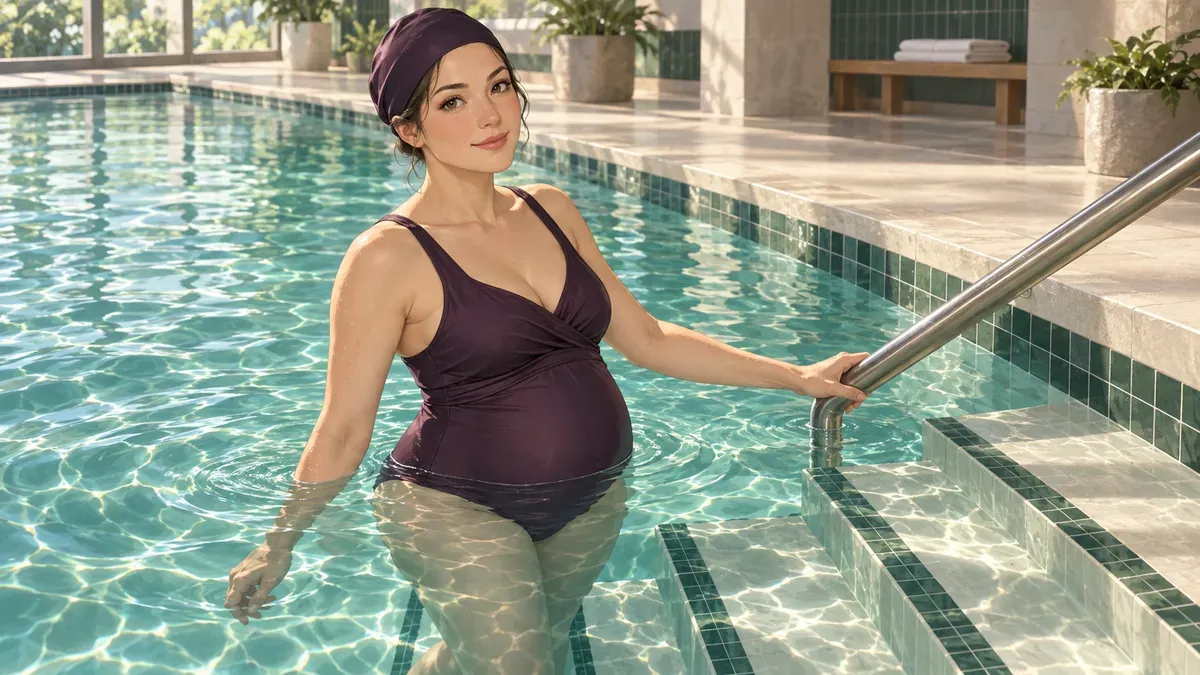
Swimming during pregnancy: pool safety, strokes, and comfort
Learn how to approach swimming during pregnancy with comfortable strokes, manageable pool sessions, hygiene checks, and warning signs. Plan your next swim.
Quick answer
Swimming during pregnancy is usually a suitable activity when the pregnancy is uncomplicated and your prenatal team has no exercise concerns. Choose a well-maintained pool, keep effort manageable, use strokes that remain comfortable, and stop for warning symptoms. Water can make movement feel easier, but it does not remove medical restrictions or make every workout safe.
The useful goal is a pool session you can enter, complete, and recover from comfortably. There is no required number of lengths, no single best stroke for every pregnant swimmer, and no deadline when everyone must stop. Your symptoms, swimming experience, pregnancy assessment, and the pool environment guide those decisions.
Key facts
- Water buoyancy supports body weight and can make low-impact movement more comfortable.
- Prenatal assessment identifies exercise restrictions that a comfortable swim cannot override.
- Perceived effort guides pacing when pregnancy changes the meaning of familiar speeds and heart-rate readings.
- Stroke adjustments reduce symptom-provoking movements without requiring a universal ban on a swimming style.
- Pool hygiene reduces infection exposure while warning symptoms require prompt clinical advice.
Decide whether today is a swimming day
Discuss activity at prenatal visits, including a new swimming routine or a return after a long break. ACOG’s pregnancy exercise guidance supports swimming and water workouts for many uncomplicated pregnancies. A complication, an exercise restriction, or new symptoms changes that starting point.
Ask for individualized advice if you have bleeding, fluid leakage, heart or lung disease, a placental or cervical problem, significant anemia, a higher-risk pregnancy, or an unexplained fall in exercise tolerance. These examples are reasons for assessment, not a list that lets you clear yourself when nothing matches.
Before leaving home, answer three practical questions:
- Am I well enough to be in water? Feeling faint, feverish, acutely unwell, or unable to keep fluids down is a reason to postpone and seek appropriate advice.
- Can I get in and out comfortably? Check steps, handrails, walking distance, changing facilities, and the availability of assistance.
- Can I change the session without pressure? A quieter lane, a shallow-water option, and permission to finish early make adaptation easier.
For the overall prenatal exercise framework, use our exercise-during-pregnancy guide. This article focuses on decisions at the pool rather than a complete strength, cardio, and trimester program.
What water exercise can realistically offer
Buoyancy supports the body while water supplies resistance to movement. That combination can help someone stay active when land-based exercise feels mechanically uncomfortable. The NHS exercise guidance includes swimming as a useful option because water can ease pressure on muscles and joints.
Trials provide some encouraging evidence, with important boundaries:
- A randomized trial involving 111 people with uncomplicated singleton pregnancies found less excessive gestational weight gain with a supervised aquatic program; birth weight did not differ between groups.
- A 320-participant randomized trial reported improvements in some postpartum mood measures after moderate aquatic exercise, without significant group differences in the reported maternal adverse events or newborn indicators.
- A 129-participant trial examined quality of life during a structured water-exercise program and reported benefits in that setting.
These studies tested programs in selected participants. They do not prove that swimming is superior to every other activity, that pool exercise treats depression, or that any stroke and intensity is safe for every pregnancy. A supervised aquatic class also differs from independently swimming hard laps.
Choose water because it helps you maintain appropriate movement and comfort. Do not turn the evidence into a weight-loss target, a promise about delivery, or an obligation to swim when another activity works better.
Set effort before counting lengths
Pregnancy can change how a familiar workout feels. A pace that once felt easy may require more breathing or more frequent rests. Start with effort and symptoms rather than trying to preserve your usual split times.
ACOG’s clinical guidance describes perceived exertion and the talk test as useful intensity tools. In a pool, check conversation at the wall or during upright water exercise; you cannot perform a meaningful talk test while your face is submerged. If you are gasping at every stop, reduce the effort and allow recovery.
Use the perceived-exertion guide to understand effort scales, then apply pregnancy-specific clinical advice. A general training zone, watch score, or age-predicted maximum heart rate is not medical clearance.
The NHS recommends working toward 150 minutes of moderate activity per week, accumulated in manageable sessions, for people who can do so. Those minutes can include several activities; they do not all have to come from swimming. Someone starting from inactivity should begin with less and build gradually.
For example, a short visit containing a few easy swimming blocks and comfortable rests can be a useful first step. Repeat a tolerable session before adding time. Add a little swimming or water walking while keeping the pace easy; do not increase pace, duration, and technical difficulty together.
Count active minutes honestly. Resting at the wall is useful recovery, but a long pool visit is not automatically the same amount of moderate exercise.
Choose strokes by comfort and control
No swimming style deserves a universal pregnancy ranking. The better choice is one you already control, can breathe through comfortably, and can stop without difficulty. A prenatal exercise professional or swimming instructor can help adapt technique within your clinical restrictions.
| Pool activity | Useful adjustment | Reason to change it |
|---|---|---|
| Front crawl | Slow the pace, shorten blocks, and breathe as often as needed | Breathlessness, neck strain, or technique that no longer feels controlled |
| Breaststroke | Keep a comfortable range rather than forcing a wide kick | Pubic, groin, or pelvic pain during or after the kick |
| Backstroke | Discuss suitability if position causes concern; use only when comfortable and well controlled | Dizziness, feeling unwell, discomfort, or difficulty seeing lane traffic |
| Upright water walking | Choose a depth and route with secure footing and easy access to support | Pain, unstable footing, or difficulty maintaining balance |
| Prenatal aquatic class | Tell the instructor your experience, symptoms, and restrictions | Movements or pace that do not match your needs |
Cambridge University Hospitals’ pelvic-pain advice notes that breaststroke can increase pain for some people; front crawl or swimming on the back may be alternatives. It also says a movement need not be avoided if it does not increase pain. That is symptom-led guidance, not permission to ignore persistent pelvic symptoms.
If one stroke hurts, do not keep testing it to prove you can complete the session. Change the movement, shorten the block, or leave the water. Seek pelvic-health assessment when pain persists, affects walking, or repeatedly returns after swimming.
Keep breathing ordinary and exits simple
Use a breathing rhythm that feels repeatable. Do not make the workout a breath-holding challenge, underwater distance attempt, or test of how few breaths you can take. If front-crawl breathing feels rushed, slow down or move to an easier upright activity while you get advice on technique.
Our freestyle-breathing guide explains basic exhalation and head-turn timing. Its drills are general swimming instruction; select only the parts that fit your current prenatal plan.
Practical access matters as much as the main set. Walk carefully on wet surfaces, use an available handrail, and choose an entry method that avoids jumping or a difficult climb. Think through the exit before entering. If a ladder or deep-water exit has become awkward, use a pool with more accessible steps or assistance.
Avoid a lane arrangement that makes you race to keep up or repeatedly dodge faster swimmers. A session organized around easy access and flexible rests is more useful than one that makes every change feel disruptive.
Check hygiene, heat, and the setting
The CDC’s healthy-swimming guidance identifies pregnant people among groups more vulnerable to swimming-related illness. Properly treated water reduces germ transmission, but disinfectants do not eliminate every organism immediately.
Choose a maintained pool and follow closure or water-quality notices. Shower before entering, avoid swallowing pool water, and stay out when you have diarrhea. Ask a clinician about open wounds, recent procedures, or an illness that may affect safe water exposure. Contact a healthcare professional if you become ill after swimming.
Water that feels comfortable is only part of the temperature decision. A hot room, prolonged effort, and limited ventilation can change tolerance. Avoid overheating, bring drinking water, and leave if you feel too hot or unwell. A heated exercise pool and a hot tub are different exposures; do not assume that advice supporting swimming automatically clears a spa session.
The exercise-hydration guide explains why fluid needs vary. Pregnancy requires its own context, especially with vomiting or poor intake; do not apply a general sweat-replacement formula rigidly.
Open water adds currents, waves, cold exposure, changing water quality, and uncertain exits. Our pool-versus-open-water guide describes those environmental differences, but its transition plan is not a prenatal prescription. If you are considering outdoor swimming, discuss your experience and the actual conditions with your prenatal team. Comfortable pool swimming does not establish readiness for a lake or sea session.
An adaptable pool visit
The following is an illustrative structure, not a clinically tested protocol or an individualized prescription. Use it only after any needed prenatal assessment, and shorten it whenever symptoms or ability require.
| Phase | Example time | What to check |
|---|---|---|
| Settle in | 3–5 minutes | Easy entry, gentle upright movement, comfortable temperature |
| First block | 3–5 minutes | Easy swimming or water walking with controlled breathing |
| Pause | As needed | Conversation feels comfortable; no pain, dizziness, or unusual symptoms |
| Repeat if appropriate | Another 3–5 minutes | Same manageable effort, without chasing distance |
| Finish | 3–5 minutes | Gentle movement, safe exit, and time to change without rushing |
You can finish after the first block. You can also use a longer familiar routine if your experience, symptoms, and clinical guidance support it. The table is a starting example, not a minimum dose or maximum safe duration.
For a first visit, make the main objective learning: which entry feels secure, which movement stays comfortable, and how you feel later that day. At the next visit, keep what worked. If fatigue or pain increased afterward, reduce the next session and discuss persistent symptoms with your care team.
Adapt as pregnancy changes
Use changes in comfort and function as information. Nausea may make a shorter visit more realistic. A growing abdomen may alter rotation, breathing timing, or how you climb steps. Later fatigue may make several short blocks easier than uninterrupted laps.
You do not need a new stroke at the start of every trimester. You need permission to change a familiar session when its demands no longer match your body. Choose slower pacing, more rests, a different movement, or another activity altogether.
Bring persistent pain, pelvic heaviness, new leakage, or an unexpected decline in tolerance to a qualified professional. Do not assume that a symptom is harmless because it appeared during an activity usually described as low impact.
Keep useful context with SuperAge
SuperAge can help you review activity, sleep, and recovery trends alongside the routine you are maintaining. Use those trends as context for your own observations and prenatal conversations. A lower pace or changing resting heart rate during pregnancy does not automatically mean training failure.
SuperAge does not monitor fetal wellbeing, diagnose pregnancy complications, or decide whether a swim is safe. A readiness estimate or biological-age result should never override pregnancy-specific assessment or symptoms.
If tracking helps you stay organized, download SuperAge on the App Store and keep the focus on sustainable habits rather than performance targets.
Stop for warning symptoms
Stop exercising, get help leaving the water, and contact your maternity team for vaginal bleeding, suspected fluid leakage, regular painful contractions, dizziness, chest pain, unusual breathlessness, significant abdominal pain, headache, or calf pain and swelling. These align with ACOG’s exercise warning signs.
Severe symptoms, collapse, or difficulty breathing require emergency assistance. Do not resume swimming simply because resting made a concerning symptom temporarily improve. Reduced fetal movement or other pregnancy concerns should follow your maternity team’s assessment instructions.
Key takeaways
- Start with pregnancy assessment, swimming ability, and a suitable pool.
- Use manageable effort and flexible blocks instead of a mandatory lap count.
- Change strokes when they provoke symptoms; breaststroke is not automatically comfortable for pelvic pain.
- Plan entry, exit, hygiene, hydration, and temperature as part of the session.
- Treat the example visit as adaptable guidance, not a universal prescription.
- Let clinical advice and warning symptoms take priority over fitness data.
FAQ
Can I start swimming if I did not exercise before pregnancy?
Often yes in an uncomplicated pregnancy after discussing activity with your prenatal team. Start gradually. If you cannot swim confidently, choose supervised instruction or an appropriate shallow-water class rather than independent deep-water laps.
How many lengths should I swim while pregnant?
There is no universal number. Pool length, technique, experience, symptoms, and pace all change the demand. Begin with manageable time blocks and rests, then adjust according to comfort, recovery, and clinical guidance.
Is breaststroke safe during pregnancy?
It can be comfortable for some swimmers, but its kick may worsen pelvic girdle pain for others. Modify or switch movements if pain appears. Persistent symptoms deserve assessment rather than a stronger effort to finish the set.
Is front crawl forbidden during pregnancy?
There is no blanket rule here that forbids front crawl. It may be a useful alternative when breaststroke aggravates pelvic pain. Use a pace and breathing rhythm you can control, and seek individual advice for symptoms or restrictions.
Can I keep swimming in the third trimester?
Some people can continue during an uncomplicated pregnancy while adapting effort and access. There is no automatic stop date for everyone. New symptoms, restrictions, difficult entry or exit, or poor tolerance should change the decision.
Should I avoid chlorinated pools?
Proper disinfection is part of preventing pool-related illness. Choose a maintained pool and follow healthy-swimming hygiene. That does not guarantee zero risk; discuss individual concerns and seek advice if you become unwell after water exposure.
Can I swim after my waters break?
Do not continue a fitness swim with suspected or confirmed fluid leakage. Stop and contact your maternity team promptly. A supervised water-labor or birth plan is a separate clinical context and does not clear recreational swimming.
References
- ACOG. Exercise during pregnancy: patient guidance.
- ACOG. Physical activity and exercise during pregnancy and the postpartum period. Committee Opinion No. 804.
- NHS. Exercise in pregnancy.
- Cambridge University Hospitals. Pelvic girdle pain in pregnancy.
- CDC. Preventing swimming-related illnesses.
- Bacchi M, et al. Aquatic activities during pregnancy: randomized clinical trial. American Journal of Health Promotion. 2018.
- Navas A, et al. Moderate-intensity aerobic water exercise during pregnancy: multicenter randomized controlled trial. Journal of Clinical Medicine. 2021.
- Rodríguez-Blanque R, et al. Water exercise and quality of life in pregnancy: randomized clinical trial. International Journal of Environmental Research and Public Health. 2020.
This article provides general education, not pregnancy clearance or an individualized exercise prescription. Discuss activity, symptoms, and complications with your prenatal care team. Follow maternity and emergency instructions for warning signs.
Related Articles

How to calculate running pace and set realistic targets
Calculate running pace, convert minutes per mile and kilometer, plan splits, and check realistic training targets. Use the numbers with effort and recovery.