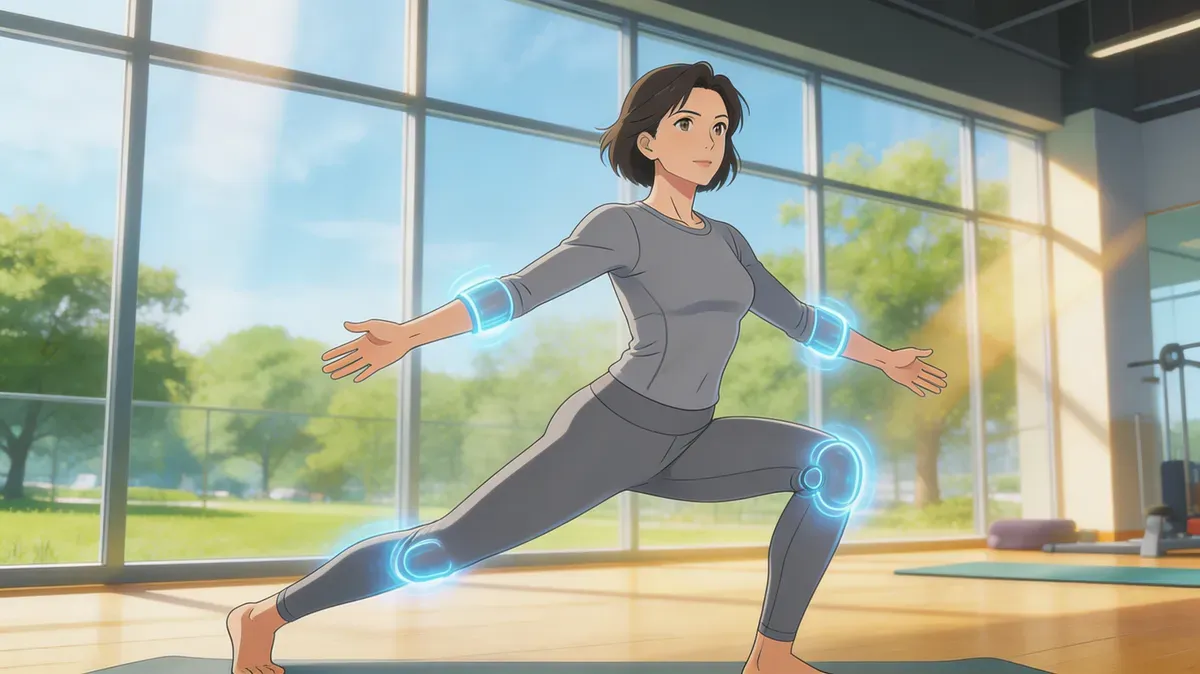
Exercise and joint health after 40: what helps, what hurts
Learn which exercises protect joints after 40, which habits raise osteoarthritis risk, and how strength, recovery, weight, and mobility support cartilage.
There is a deeply rooted belief that exercise wears out your joints the way tires wear out on asphalt. You hear it from well-meaning relatives, from coworkers who quit running at 35, and sometimes even from clinicians who use the old phrase “wear and tear.” The fear is understandable, but the model is incomplete.
Joints are not passive hinges. Cartilage, tendon, bone, and muscle are living tissues that respond to the loads placed on them. The evidence does not support avoiding movement after 40. It supports choosing progressive, recoverable, joint-friendly loading that builds muscle, preserves range of motion, and keeps body weight and inflammation in a healthier range.
The catch is the word “appropriate.” Regular exercise can protect joints and help manage osteoarthritis symptoms, but abrupt spikes in impact, poor movement quality, ignored pain, and inadequate recovery can make joints worse. This guide explains what helps, what hurts, and how to keep moving after 40 without treating your knees, hips, and shoulders like fragile parts.
Quick answer
Exercise usually helps joint health after 40 when it is progressive, varied, and matched to your recovery. Strength training, walking, cycling, swimming, mobility work, and gradual running can support cartilage, muscle, and bone. What hurts is not movement itself but sudden workload spikes, training through sharp or swollen joints, poor technique under load, and relying on supplements instead of strength, weight management, sleep, and medical care when symptoms persist.
Key facts
- Joint cartilage responds to mechanical loading; too little and too much loading can both be harmful.
- Recreational running is not linked with higher hip or knee osteoarthritis rates in large meta-analyses; elite competitive running is a different exposure.
- Exercise and weight loss are strongly recommended in major osteoarthritis guidelines for people with knee or hip OA who can do them safely.
- Knee extensor weakness is associated with higher odds of future knee osteoarthritis, which makes strength training central after 40.
- Collagen may modestly help joint pain in some studies, but glucosamine and chondroitin are not first-line knee or hip OA treatments in current ACR/AF guidance.
What you’ll learn:
- Why cartilage needs loading to survive
- The myth of “wear and tear” arthritis
- Best exercises for joint health after 40
- What hurts: training mistakes that damage joints
- Osteoarthritis prevention through movement
- Joint nutrition: collagen, glycine, and what actually works
- How SuperAge helps you protect your joints
- Frequently asked questions
Your joints are not machines
The mental model most people carry — joints as mechanical hinges that gradually wear down — is fundamentally wrong. Your joints are living tissue. Cartilage, the slippery white tissue that cushions the ends of bones, is composed of specialized cells called chondrocytes embedded in a matrix of collagen, water, and proteoglycans. Unlike a brake pad, cartilage actively remodels itself in response to the forces placed upon it.
Here is the critical fact: cartilage has no direct blood supply. It receives nutrients through a process called imbibition — essentially, a sponge mechanism. When you load a joint (by walking, squatting, or cycling), the cartilage compresses and fluid is squeezed out. When the load is removed, the cartilage re-expands and draws in fresh synovial fluid carrying oxygen and nutrients. Without regular loading cycles, cartilage literally starves.
This is why prolonged inactivity is one of the worst things you can do for your joints. Bed rest studies have shown measurable cartilage thinning in as little as four to six weeks of immobilization. Astronauts returning from extended space missions show cartilage degradation in their knees and hips — not from overuse, but from the absence of gravity-driven loading.
Key insight: Your cartilage is not a consumable resource. It is a living tissue that requires mechanical loading to stay healthy. The question is not whether to exercise, but how to exercise intelligently.
The loading sweet spot
Cartilage responds to loading in a dose-dependent manner. Too little loading leads to atrophy and thinning. Too much — especially sudden spikes in volume or intensity without adequate adaptation — can overwhelm the tissue’s repair capacity and trigger degradation.
Research from the Journal of Orthopaedic Research has mapped this relationship into what scientists call the “joint loading envelope.” Within the envelope, exercise stimulates cartilage repair and maintenance. Outside it — in either direction — cartilage breaks down. The goal of any joint-friendly exercise program is to stay within this envelope while gradually expanding it over time.
This is particularly important after 40, when the rate of cartilage repair slows. Your chondrocytes become less responsive to mechanical signals, and the collagen matrix takes longer to remodel. You can still build and maintain healthy cartilage — the process just requires more patience and smarter programming than it did at 25.
The myth of “wear and tear” arthritis
Osteoarthritis (OA) has been called a “wear and tear” disease for so long that the phrase has become almost synonymous with the condition. But this framing is misleading and, for many people, actively harmful — because it implies that the way to prevent OA is to avoid using your joints.
The evidence tells a different story.
Recreational runners do not have higher rates of knee osteoarthritis than sedentary individuals. A landmark 2017 meta-analysis published in the Journal of Orthopaedic & Sports Physical Therapy analyzed data from over 114,000 participants and found that recreational runners actually had lower rates of knee and hip OA (3.5%) compared to sedentary individuals (10.2%). Only elite, competitive runners showed elevated risk, and even then the relationship was nuanced.
What actually drives osteoarthritis is a combination of factors:
- Chronic low-grade inflammation — often fueled by excess body fat, poor diet, and metabolic dysfunction
- Muscle weakness — particularly of the quadriceps, which act as shock absorbers for the knee
- Prior injury — especially ACL tears and meniscus damage that alter joint mechanics
- Obesity — each additional kilogram of body weight adds roughly 4 kg of force on the knee during walking
- Genetics — some people inherit cartilage that is more susceptible to degradation
Notice what is not on the list: normal, regular physical activity. The “wear and tear” model confuses pathological overloading (which does damage joints) with physiological loading (which maintains them). They are fundamentally different phenomena.
Why sedentary people get more arthritis
If you sit at a desk for eight hours a day and your primary physical activity is walking to the car, your joints are not being “preserved.” They are being starved. The muscles surrounding your joints atrophy, reducing their ability to absorb shock. The cartilage thins from insufficient loading. Inflammatory markers rise as metabolic health declines. And when you do move — carrying groceries, climbing stairs, playing with your kids — the sudden load on deconditioned tissue is far more likely to cause damage than the same activity performed by someone who exercises regularly.
This is one of the cruel ironies of aging: the people who move the least to “protect” their joints are often the ones who end up needing joint replacements.
Best exercises for joint health after 40
The best joint-health program after 40 is not built around one perfect exercise. It combines strength, low-impact cardio, walking, mobility, and enough recovery for tissues to adapt. The goal is to expose cartilage, bone, tendon, and muscle to useful loading without large spikes that exceed your current capacity.
1. Strength training
If you could choose only one intervention for joint protection after 40, choose progressive strength training. Strong muscles absorb force before it reaches cartilage, stabilize joints during movement, and protect you when you stumble, pivot, climb stairs, or carry weight.
For knees, the quadriceps matter especially. Updated systematic-review evidence links knee extensor weakness with higher odds of future knee osteoarthritis. That does not mean one strength number guarantees protection, but it does make lower-body strength training a central habit for joint aging.
Focus on:
- Squats or sit-to-stands
- Hip hinges and deadlift variations
- Step-ups and split squats
- Calf raises
- Glute bridges and hip thrusts
- Lateral lunges and progressive adductor exercises for medial hip and groin capacity
- Rows, presses, and carrying exercises for shoulder and spine resilience
The key is progression. Start with loads you can control, add volume gradually, and keep technique stable. Pain that is sharp, swelling, or worsening during a set is a reason to modify the movement, not to force through it.
2. Swimming and water exercise
Water provides a useful training environment for irritated joints. Buoyancy reduces compressive loading on hips, knees, and ankles, while water resistance lets you train muscles through a large range of motion.
Swimming is especially valuable when joint pain makes land-based cardio difficult. It can help maintain cardiovascular fitness while painful tissues calm down. Water aerobics and pool walking are good options for people who find lap swimming too demanding. For the full cardiovascular case for swimming, see swimming and cardiovascular aging.
Swimming is best used as a complement, not the whole program. Because it removes much of the gravitational load, it does not replace progressive land-based strength training for bone, muscle, and cartilage adaptation.
3. Cycling
Cycling gives the knee rhythmic, low-impact movement through a large range of motion. It is often easier to dose than running because you can control resistance, cadence, and duration precisely.
This makes cycling a strong option for people with knee concerns, especially when it is paired with strength work. The quadriceps and glutes still need progressive loading off the bike, but cycling can provide cardiovascular work without repeated high-impact landings.
Bike fit matters. A saddle that is too low can increase patellofemoral stress and aggravate front-of-knee pain. If cycling regularly irritates your knees, adjust saddle height, cadence, resistance, and cleat position before assuming cycling is the problem.
4. Walking and hiking
Walking is simple, scalable, and highly underrated. It provides cyclical loading that most people can recover from, and it can be progressed from easy walks to brisk walks, hills, and hikes. It also supports balance and gait quality; see walking steadiness and fall prevention. To increase pace without forcing an overstride, follow the posture and progression cues in this fitness walking technique guide.
Varied terrain adds useful proprioceptive work because the muscles around the ankle, knee, and hip make constant small corrections. Hills can increase the training effect when introduced gradually; see why walking uphill is useful for longevity.
5. Yoga and mobility work
Flexibility and mobility training can support joint health by preserving range of motion and improving control at the end ranges of movement. Yoga and mobility work may reduce pain and improve function for some people with osteoarthritis, but they should be framed as support work rather than cartilage-rebuilding therapy.
The practical rule is simple: mobility plus strength beats mobility alone. A joint that moves well and is strong through that range is more resilient than a joint that is flexible but poorly controlled.
For one progressive example, use our goblet squat form guide to adjust stance, depth, and load without forcing one universal technique.
What hurts: training mistakes that damage joints
Exercise protects joints — but only when done intelligently. Certain patterns of training consistently show up in the research as risk factors for joint damage.
1. Excessive high-impact volume without a strength base
Running on hard surfaces is not inherently bad for your joints. But running high mileage without adequate muscular support is. When the muscles surrounding a joint fatigue, they can no longer absorb impact forces effectively, and those forces transmit directly to the cartilage and bone.
The classic scenario: a 45-year-old decides to train for a marathon after years of minimal exercise. They ramp up from 10 km per week to 50 km per week in two months. Their cardiovascular fitness improves rapidly — but their tendons, cartilage, and stabilizing muscles cannot adapt that fast. The result is often patellofemoral pain, IT band syndrome, or worse.
The solution is not to avoid running. It is to build a foundation of strength and muscle mass before pushing running volume, and to increase mileage by no more than 10% per week.
2. Ignoring pain signals
There is a meaningful difference between the discomfort of hard training and the pain of tissue damage. Sharp pain during movement, swelling that persists for more than 24 hours after exercise, pain that worsens progressively during a session, and joint stiffness that lasts more than 30 minutes in the morning are all signals that something is wrong.
Training through these signals does not build toughness. It accumulates damage. The most effective long-term athletes are the ones who have learned to distinguish between productive discomfort and destructive pain — and who modify their training immediately when they detect the latter.
3. Poor movement quality under load
A squat performed with proper alignment distributes force evenly across the knee and hip joints. The same squat performed with the knees caving inward (valgus collapse) concentrates force on the medial compartment of the knee, accelerating cartilage wear in that specific area.
The same principle applies when external mass changes a repeated gait pattern. Our guide to running with weights separates relatively centered vest loading from the larger swing penalty of ankle and hand weights.
After 40, movement quality becomes non-negotiable. Your margin for error is smaller than it was at 20, and the consequences of poor form accumulate over a longer training history. If you are new to strength training, investing in a qualified coach for even a few sessions can pay dividends for decades.
4. Neglecting recovery and periodization
Your cartilage remodels during rest, not during training. Training provides the stimulus; recovery provides the adaptation. People who train hard every day without rest days, deload weeks, or variation in intensity are effectively outpacing their tissue’s ability to repair.
This matters more after 40 because recovery is slower. Understanding how much exercise you actually need — and equally importantly, how much rest — is fundamental to sustainable joint health.
5. Single-plane, repetitive movement
Joints are designed to move in multiple planes. Hips rotate, knees flex and extend with slight rotation, ankles pronate and supinate. When your exercise routine consists exclusively of sagittal-plane movements (forward and back), you strengthen the muscles and cartilage along those planes while neglecting the structures that provide lateral and rotational stability.
This is why choosing activities from different movement categories matters. A well-rounded program includes pushing, pulling, hinging, squatting, carrying, and rotational movements — each loading the joint from a different angle and direction.
Rotational work also needs progression. Our Russian twist technique guide explains how range, torso lean, speed, and load change the demand.
Osteoarthritis prevention through movement
If osteoarthritis is not just a simple “wear and tear” disease, prevention should not mean avoiding movement. The evidence points to a multi-pronged approach: keep body weight in a healthier range, build muscle, control inflammation, preserve range of motion, and dose training so tissues can adapt.
Maintain a healthy body weight
Body weight is one of the clearest modifiable risk factors for knee osteoarthritis. Each extra kilogram increases the mechanical load crossing the knee during walking and stair climbing, and adipose tissue can also contribute to systemic inflammation.
The Framingham data linked modest weight loss in women with a substantially lower risk of later symptomatic knee osteoarthritis. Exercise helps both directly, by increasing energy expenditure, and indirectly, by preserving muscle mass during weight loss.
Build and maintain muscle mass
Strong muscles are the shock absorbers and steering system for your joints. When quadriceps, glutes, calves, and hip stabilizers weaken, more stress reaches passive structures such as cartilage, ligaments, and joint capsules.
Updated systematic-review evidence supports knee extensor weakness as a risk factor for future knee osteoarthritis. That is why major guidelines recommend exercise, especially strengthening, as a core non-drug treatment for knee and hip osteoarthritis when it can be done safely.
Control inflammation
Chronic systemic inflammation, driven by excess visceral fat, poor sleep, chronic stress, and ultra-processed diets, can create a less favorable biochemical environment for cartilage and synovial tissue.
Regular moderate exercise is one of the most reliable anti-inflammatory habits available. It improves insulin sensitivity, reduces visceral fat over time, supports sleep, and triggers myokine signaling from working muscle.
Maintain joint range of motion
Joints that move through a comfortable range distribute load more evenly. Loss of motion from stiff hips, ankles, thoracic spine, calves, or hamstrings can shift forces into narrower areas of cartilage.
Daily mobility work does not need to be elaborate. Five to ten minutes of targeted movement for hips, ankles, and the spine can make strength training and walking feel smoother and easier to recover from.
Respect pain and recovery
Exercise is protective when the dose is recoverable. If a joint becomes swollen, sharp pain appears, or symptoms worsen for more than 24 to 48 hours after training, reduce load, range, or volume and consider medical or physiotherapy guidance. The goal is not to avoid stress; it is to apply the right stress at the right time.
Joint nutrition: collagen, glycine, and what actually works
No supplement can substitute for appropriate loading, strength training, sleep, weight management, and medical care when symptoms persist. Nutrition can still support the tissues that make joints resilient, especially when it is paired with exercise.
Collagen and glycine
Collagen is the primary structural protein in cartilage, tendons, and ligaments. Your body synthesizes collagen from amino acids, especially glycine, proline, and hydroxyproline. Collagen synthesis tends to decline with age, which is one reason recovery and connective-tissue training deserve more attention after 40.
Clinical trials and meta-analyses suggest collagen peptides can modestly improve pain and function in some people with knee osteoarthritis or activity-related joint pain. The evidence is promising but heterogeneous, and it does not prove that collagen rebuilds lost cartilage. Typical study doses are often around 5-15 grams per day.
Practical use: If you try collagen, pair it with a loading stimulus such as strength training or rehab exercise. Vitamin C is required for collagen synthesis, so many protocols combine collagen or gelatin with a vitamin C source before training, but the most important signal remains progressive loading.
Omega-3 fatty acids
EPA and DHA have anti-inflammatory effects. For joint health, omega-3s may help the inflammatory environment around painful joints, but they should be framed as general anti-inflammatory nutrition, not cartilage regrowth therapy.
Vitamin D
Vitamin D receptors are present in joint tissues, and very low vitamin D status has been associated with knee osteoarthritis progression in observational studies. Correcting deficiency is reasonable for bone, muscle, and general health. Megadosing vitamin D is not a proven osteoarthritis treatment.
Glucosamine and chondroitin
Glucosamine and chondroitin are not as strong as their marketing suggests. In the NIH-funded GAIT trial, glucosamine, chondroitin, and the combination were not significantly better than placebo in the overall knee osteoarthritis population. A moderate-to-severe pain subgroup showed a signal for the combination, but this was not enough to make them core therapy.
The 2019 American College of Rheumatology/Arthritis Foundation guideline strongly recommends against glucosamine for knee, hip, and hand osteoarthritis, and strongly recommends against chondroitin for knee and hip osteoarthritis while conditionally allowing chondroitin for hand OA. If you already use these supplements and feel better, discuss them with your clinician, especially if you take blood thinners or have surgery planned.
How SuperAge helps you protect your joints
Joint health is not something you can measure with a single number. It is the result of consistent daily habits maintained over years and decades. SuperAge helps you build and sustain those habits by tracking the metrics that matter most for long-term joint protection.
Activity tracking and exercise balance. SuperAge monitors daily movement, workout intensity, and exercise variety. By tracking whether you are meeting evidence-based targets for both strength training and cardiovascular exercise, it helps you maintain the balanced routine that is most protective for joints.
Recovery monitoring. Overtraining is one of the key drivers of joint irritation. SuperAge tracks recovery indicators, including HRV trends, sleep quality, and training load, so you can identify when you are pushing too hard before your joints pay the price.
Body composition awareness. Because excess body weight is a major modifiable risk factor for knee osteoarthritis, maintaining a healthy body composition is directly relevant to joint health. SuperAge helps you track the relationship between activity, recovery, and body composition over time.
Long-term trend analysis. Joint degeneration is a slow process that unfolds over years. SuperAge trend views help you spot gradual changes in activity patterns, like a slow decline in daily movement or a shift away from strength training, before they translate into joint problems.
Ready to protect your movement span? Download SuperAge and track activity, recovery, body composition, and biological-age trends in one place.
Frequently asked questions
Is running bad for your knees?
No. The largest meta-analysis on the topic (over 114,000 participants) found that recreational runners have lower rates of knee osteoarthritis than sedentary people. The risk increases only with elite-level competitive running. The key is building a strength base, progressing mileage gradually, and listening to pain signals.
Should I stop exercising if my joints hurt?
Not necessarily — but you should modify your approach. Switching to lower-impact activities (cycling, swimming, walking) while maintaining strength training is usually a better strategy than complete rest. Complete inactivity accelerates cartilage degradation. If pain persists beyond two weeks or is accompanied by significant swelling, see a healthcare provider.
What is the single best exercise for knee health?
The squat — in all its variations. Squats strengthen the quadriceps, glutes, and hip stabilizers that protect the knee joint, while also loading the cartilage through a full range of motion. Start with bodyweight squats and progress to loaded variations as your strength improves.
Does cracking your joints cause arthritis?
No. A famous study by Dr. Donald Unger, who cracked the knuckles of one hand for 60 years while leaving the other untouched, found no difference in arthritis rates between the two hands. Joint cracking (crepitus) is typically caused by gas bubbles forming or collapsing in synovial fluid and is not associated with cartilage damage.
How much collagen should I take for joint health?
Clinical trials typically use 10 to 15 grams of collagen peptides per day, taken with a source of vitamin C. Effects usually become noticeable after 8 to 12 weeks of consistent use. While promising, collagen supplementation works best when combined with regular exercise — the mechanical loading drives the collagen into the tissues that need it.
At what age should I start worrying about my joints?
Now. Cartilage health is a decades-long game. The protective habits you build in your 30s and 40s — consistent strength training, maintaining a healthy weight, varied movement patterns — directly determine your joint health in your 60s and 70s. Prevention is dramatically more effective than treatment.
References
- Alentorn-Geli E et al. (2017). The association of recreational and competitive running with hip and knee osteoarthritis: a systematic review and meta-analysis. Journal of Orthopaedic & Sports Physical Therapy. https://pubmed.ncbi.nlm.nih.gov/28504066/
- Kolasinski SL et al. (2020). 2019 American College of Rheumatology/Arthritis Foundation guideline for the management of osteoarthritis of the hand, hip, and knee. Arthritis & Rheumatology. https://pmc.ncbi.nlm.nih.gov/articles/PMC11488261/
- Ramaswamy G et al. (2022). Mechanosignalling in cartilage: an emerging target for the treatment of osteoarthritis. Nature Reviews Rheumatology. https://www.nature.com/articles/s41584-021-00724-w
- Eckstein F et al. (2006). The effects of exercise on human articular cartilage. Journal of Anatomy. https://pmc.ncbi.nlm.nih.gov/articles/PMC2100201/
- Felson DT et al. (1992). Weight loss reduces the risk for symptomatic knee osteoarthritis in women: the Framingham Study. Annals of Internal Medicine. https://pubmed.ncbi.nlm.nih.gov/1543306/
- Øiestad BE et al. (2022). Knee extensor muscle weakness is a risk factor for the development of knee osteoarthritis: an updated systematic review and meta-analysis. British Journal of Sports Medicine. https://pubmed.ncbi.nlm.nih.gov/34916210/
- Simental-Mendía M et al. (2024). Effect of collagen supplementation on knee osteoarthritis: an updated systematic review and meta-analysis of randomised controlled trials. Clinical and Experimental Rheumatology. https://pubmed.ncbi.nlm.nih.gov/39212129/
- Clegg DO et al. (2006). Glucosamine, chondroitin sulfate, and the two in combination for painful knee osteoarthritis. New England Journal of Medicine. https://www.nejm.org/doi/full/10.1056/NEJMoa052771
- Zhang FF et al. (2014). Vitamin D deficiency is associated with progression of knee osteoarthritis. Journal of Nutrition. https://pubmed.ncbi.nlm.nih.gov/25411034/
- Bannuru RR et al. (2019). OARSI guidelines for the non-surgical management of knee, hip, and polyarticular osteoarthritis. Osteoarthritis and Cartilage. https://pubmed.ncbi.nlm.nih.gov/31278997/
Related Articles

Best exercise after 40: a science-based guide by sport
Discover the best exercise after 40 backed by science. Sport-by-sport breakdown covering strength, cardio, flexibility, and how to slow biological aging.