Endothelial function: The vascular aging test your doctor doesn't order
Endothelial function shapes nitric oxide, blood flow, clotting, and vascular aging. Learn flow-mediated dilation testing and vessel-protective habits.
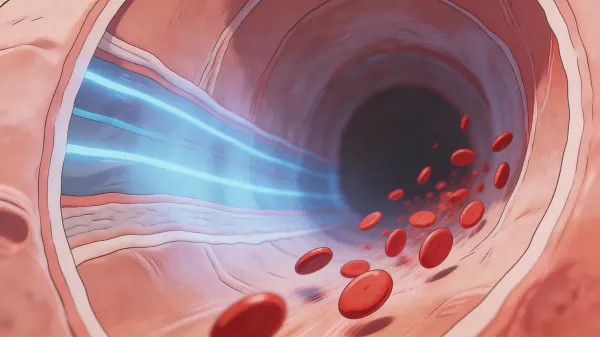
There’s a single-cell-thick layer lining every blood vessel in your body. It weighs about 2.2 lbs (1 kg), covers an area the size of six tennis courts, and it’s arguably the most important organ you’ve never heard of.
It’s your endothelium — and it’s aging faster than you think.
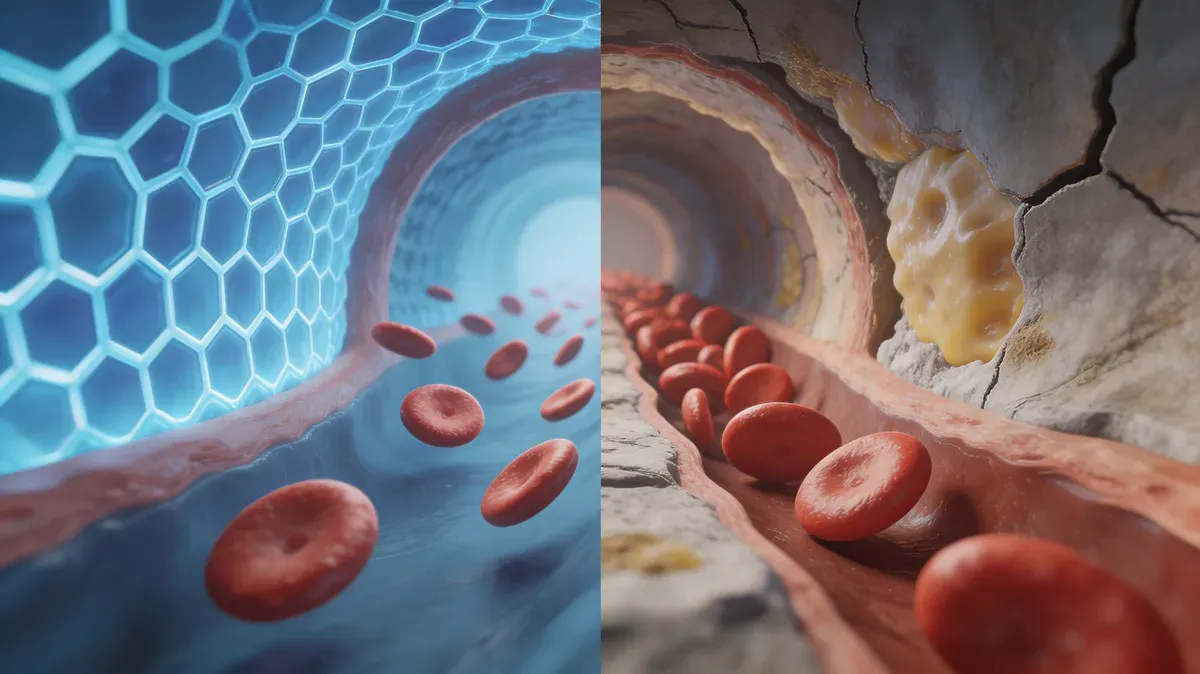
This microscopic membrane does far more than simply contain blood. It actively produces nitric oxide (NO), the molecule that dilates your arteries, prevents clots, suppresses inflammation, and regulates blood pressure. When the endothelium stops working properly — a condition called endothelial dysfunction — it triggers a cascade that leads to arterial stiffness, atherosclerosis, hypertension, and ultimately cardiovascular events.
Here’s the problem: endothelial function is measurable, but it usually is not part of routine primary-care screening. A 2023 reference-value analysis found FMD falls by about 0.3% per decade in healthy adults and also tracks smoking, blood pressure, glucose, cholesterol, and body size. Lower FMD is associated with higher cardiovascular event risk, so it can be useful as an optional vascular-aging marker when interpreted by a qualified clinician.
Quick answer
Short answer: Endothelial function is the ability of the blood-vessel lining to release nitric oxide, widen or tighten arteries, regulate clotting, and control vascular inflammation. It matters for vascular aging because a healthier endothelium keeps blood pressure, arterial stiffness, and plaque biology under better control. The best-supported non-invasive test is brachial artery flow-mediated dilation (FMD), but this measurement is mainly a specialist or research tool rather than a routine diagnosis.
Key facts
- Endothelial function regulates blood flow through nitric oxide (NO).
- The flow-mediated dilation (FMD) test measures brachial artery widening after temporary cuff occlusion.
- Lower flow-mediated dilation (FMD) is associated with higher cardiovascular event risk, but it is not routine screening.
- Continuous aerobic exercise improves flow-mediated dilation (FMD) in randomized-trial meta-analyses.
- Nitrate-rich vegetables support nitric oxide through the oral nitrate-nitrite pathway.
What you’ll learn:
- What the endothelium does and why it matters for aging
- How nitric oxide decline drives vascular aging
- How to test endothelial function (and what results mean)
- 8 evidence-based strategies to restore endothelial health
- Which biomarkers reflect endothelial status
What is the endothelium and why does it matter?
The endothelium is a single layer of specialized cells — endothelial cells — that lines the interior surface of every blood vessel, from your aorta to your smallest capillaries. In total, your body contains roughly 60 trillion endothelial cells forming a continuous membrane that interfaces between your blood and your tissues.
Quick definition: The endothelium is the inner lining of all blood vessels that actively regulates blood flow, inflammation, clotting, and vessel tone by producing signaling molecules — most importantly nitric oxide (NO).
The endothelium as a master regulator
Far from being a passive barrier, the endothelium functions as a distributed endocrine organ with four critical roles:
-
Vasodilation and blood flow: Endothelial cells produce nitric oxide via the enzyme endothelial nitric oxide synthase (eNOS). NO diffuses into smooth muscle cells, causing them to relax — widening blood vessels and increasing blood flow.
-
Anti-thrombotic protection: A healthy endothelium prevents blood clots by producing prostacyclin and tissue plasminogen activator (tPA). When the endothelium is damaged, this protection fails, explaining why endothelial dysfunction precedes most heart attacks.
-
Anti-inflammatory barrier: The endothelium controls which immune cells can enter vessel walls. When healthy, it suppresses the adhesion molecules that allow white blood cells to infiltrate — preventing the chronic vascular inflammation that drives atherosclerosis.
-
Vascular remodeling: Endothelial cells sense blood flow (shear stress) and coordinate vessel adaptation. Regular exercise increases shear stress, which upregulates eNOS expression — a key mechanism by which exercise protects cardiovascular health.
Why “endothelial dysfunction” is the first step in cardiovascular aging
The term “endothelial dysfunction” specifically means reduced nitric oxide bioavailability. This can result from:
- Decreased eNOS expression or activity
- Increased destruction of NO by reactive oxygen species (oxidative stress)
- Reduced availability of the eNOS substrate L-arginine or cofactor tetrahydrobiopterin (BH4)
Research consistently shows that endothelial dysfunction appears decades before clinical cardiovascular disease. A landmark study in the New England Journal of Medicine demonstrated that impaired endothelial function independently predicted cardiovascular events even in people with no traditional risk factors.
The science behind endothelial aging
The endothelium doesn’t simply wear out — it undergoes a specific, multi-pathway deterioration that researchers now consider a hallmark of vascular aging.
How nitric oxide declines with age
Nitric oxide production peaks in your 20s and declines progressively thereafter. By age 70, NO bioavailability is reduced by approximately 50-75% compared to young adults. This decline occurs through three converging mechanisms:
1. eNOS uncoupling: With age, the enzyme that produces NO (eNOS) becomes “uncoupled” — instead of producing protective NO, it generates superoxide radicals that further damage the endothelium. The primary trigger is depletion of the cofactor BH4 by oxidative stress.
2. Asymmetric dimethylarginine (ADMA) accumulation: ADMA is a naturally occurring molecule that inhibits eNOS. Blood levels of ADMA increase with age and are elevated in virtually every cardiovascular risk condition — diabetes, hypertension, hyperlipidemia, and chronic kidney disease.
3. Oxidative stress: The balance between NO production and NO destruction shifts with age. Superoxide produced by mitochondria, NADPH oxidase, and uncoupled eNOS reacts with NO to form peroxynitrite — a highly toxic radical that damages endothelial cells and further reduces NO availability.
The endothelial dysfunction cascade
Once NO production falls below a critical threshold, a self-amplifying cascade begins:
- Reduced vasodilation → increased blood pressure → mechanical stress on vessel walls
- Increased adhesion molecules → white blood cells infiltrate vessel walls → chronic inflammation
- Prothrombotic shift → increased clotting risk → microthrombi damage small vessels
- Smooth muscle proliferation → vessel wall thickening → arterial stiffness
- Lipid infiltration → LDL crosses the damaged endothelium → atherosclerotic plaque formation
This cascade explains why endothelial dysfunction is now considered the initiating event in atherosclerosis — not cholesterol alone. When this process advances in the arteries of the legs, it produces peripheral artery disease — one of the most underdiagnosed manifestations of systemic vascular aging. The same mechanism, applied to penile microvasculature, means erectile dysfunction predicts cardiovascular events by 3-5 years. ApoB-containing particles can only enter the vessel wall when the endothelial barrier is compromised.
Endothelial function and longevity
Population studies consistently link better endothelial function to longer lifespan:
- The Framingham Heart Study found that flow-mediated dilation (FMD) independently predicted cardiovascular events
- Centenarian studies show that preserved endothelial function is a common feature of healthy extreme longevity
- Research on the pace of aging shows that vascular aging is one of the strongest predictors of overall biological aging rate
How to test endothelial function
Endothelial function assessment can be non-invasive, but it is still mostly a specialist or research measurement. Flow-mediated dilation (FMD) can be useful for vascular-aging insight and intervention tracking; it should not replace standard cardiovascular risk assessment, blood pressure care, lipid testing, or clinician-directed evaluation.
Flow-mediated dilation (FMD)
The most established non-invasive method measures how much your brachial artery dilates in response to increased blood flow:
- A blood pressure cuff on your forearm is inflated for 5 minutes, temporarily blocking blood flow
- When released, blood rushes back, creating shear stress on the endothelium
- A healthy endothelium responds by releasing NO, causing the artery to dilate
- The percentage increase in artery diameter is measured by ultrasound
| FMD Result | Interpretation |
|---|---|
| > 6.5% | Healthy endothelial function |
| 4.0-6.5% | Mild dysfunction — early intervention recommended |
| 3.1-4.0% | Moderate dysfunction — significant cardiovascular risk |
| < 3.1% | Severe dysfunction — present in 95% of cardiovascular disease cases |
Reference value by age: FMD declines approximately 0.3% per decade. A healthy 30-year-old might have an FMD of 8-10%, while a healthy 70-year-old averages 5-6%.
Other assessment methods
| Test | What It Measures | Accessibility |
|---|---|---|
| Peripheral arterial tonometry (EndoPAT) | Fingertip pulse amplitude response | Specialized clinics |
| Reactive hyperemia index (RHI) | Ratio of post-occlusion to pre-occlusion pulse | Automated, operator-independent |
| Laser Doppler flowmetry | Microvascular endothelial function | Research settings |
| Pulse wave velocity | Indirect marker — correlates with endothelial health | Cardiology clinics |
When to get tested
Consider endothelial function testing if you:
- Have a family history of premature cardiovascular disease
- Have metabolic risk factors (elevated fasting glucose, insulin resistance, elevated hs-CRP)
- Want to track the vascular impact of lifestyle interventions
- Are over 40 and interested in comprehensive longevity assessment
8 evidence-informed ways to support endothelial function
1. Prioritize aerobic exercise
Why it works: Aerobic exercise increases blood flow, which creates shear stress on the endothelium. This mechanical signal upregulates eNOS expression, increases NO production, and improves antioxidant defenses. A meta-analysis of 182 studies found that regular aerobic exercise improves FMD by an average of 2-3% — a clinically significant improvement.
How to do it:
- Aim for 150-300 minutes per week of moderate-intensity aerobic exercise
- Include both steady-state cardio and HIIT (both improve endothelial function through different mechanisms)
- Walking counts: even brisk walking at 3.5 mph (5.6 km/h) for 30 minutes daily significantly improves FMD
- Swimming is particularly effective as hydrostatic pressure provides additional vascular stimulus
Expected results: Measurable FMD improvement within 4-8 weeks of consistent exercise.
2. Eat nitrate-rich vegetables daily
Why it works: Dietary nitrate from vegetables is converted to nitrite by oral bacteria and then to nitric oxide in the bloodstream — a pathway entirely independent of eNOS. This “backup system” becomes increasingly important as eNOS function declines with age.
How to do it:
- Eat beetroot, arugula, spinach, or celery daily (these contain 250+ mg nitrate per 3.5 oz / 100 g serving)
- Do NOT use antibacterial mouthwash — it kills the oral bacteria that convert nitrate to nitrite, reducing NO production by up to 25%
- Combine nitrate sources with vitamin C (enhances conversion to NO)
- Eat a large mixed salad daily (diverse greens maximize nitrate intake)
Expected results: Acute blood pressure reduction within 2-3 hours; improved FMD within 2-4 weeks.
3. Optimize antioxidant intake to protect NO
Why it works: The primary mechanism of endothelial dysfunction isn’t insufficient NO production — it’s excessive NO destruction by superoxide radicals. Antioxidants that specifically target the vascular compartment can shift this balance.
How to do it:
- Eat polyphenol-rich foods daily: berries, dark chocolate (>70% cacao), green tea, extra-virgin olive oil
- Include vitamin C-rich foods: bell peppers, citrus, kiwi (vitamin C regenerates BH4, preventing eNOS uncoupling)
- Consume lycopene sources: cooked tomatoes, watermelon (lycopene specifically protects endothelial cells)
- Drink 2-3 cups of green tea daily (catechins improve eNOS coupling)
Expected results: Improved antioxidant status and reduced oxidative stress markers within 6-8 weeks.
4. Manage blood sugar to prevent glycation damage
Why it works: Hyperglycemia is one of the most potent destroyers of endothelial function. Glycation damages eNOS directly, and advanced glycation end products (AGEs) bind to endothelial RAGE receptors, triggering inflammation and oxidative stress.
How to do it:
- Keep post-meal glucose below 140 mg/dL (7.8 mmol/L)
- Monitor HbA1c — aim for < 5.4%
- Eat protein and fat before carbohydrates to blunt glucose spikes
- Walk for 10-15 minutes after meals (reduces post-meal glucose by 20-30%)
- Consider a Mediterranean-style diet (consistently shown to improve endothelial function)
Expected results: Reduced glycation damage and improved FMD within 8-12 weeks.
5. Reduce chronic inflammation
Why it works: Chronic low-grade inflammation directly damages endothelial cells, increases oxidative stress, and promotes the expression of adhesion molecules that allow immune cells to infiltrate vessel walls. Reducing inflammation is essential for endothelial recovery.
How to do it:
- Optimize omega-3 intake: fatty fish 2-3 times per week, or algal omega-3 for plant-based diets
- Reduce omega-6/omega-3 ratio (aim for < 4:1)
- Address gut health — intestinal permeability is a major driver of systemic inflammation that damages the endothelium
- Manage chronic stress — cortisol promotes endothelial inflammation
Expected results: Reduced hs-CRP and improved vascular function within 8-12 weeks.
6. Optimize sleep for overnight vascular repair
Why it works: The endothelium repairs itself primarily during deep sleep, when blood pressure dips (nocturnal dipping) and growth factors promote endothelial cell renewal. Sleep deprivation (< 6 hours) has been shown to impair FMD by 30-40% within just 48 hours.
How to do it:
- Prioritize 7-8 hours of quality sleep
- Maintain consistent sleep-wake times
- Address sleep apnea if present — it’s one of the most potent destroyers of endothelial function due to intermittent hypoxia
- Keep the bedroom dark and cool: 65-68°F (18-20°C)
Expected results: Restored nocturnal vascular repair; improved FMD within 2-4 weeks.
7. Maintain healthy body composition
Why it works: Visceral fat is an active endocrine organ that secretes inflammatory cytokines (adipokines) directly into the portal circulation, creating a state of chronic endothelial inflammation. Losing visceral fat dramatically improves endothelial function — often more than any single medication.
How to do it:
- Prioritize body fat percentage over scale weight
- Combine resistance training with aerobic exercise for optimal body composition
- Address insulin sensitivity — insulin resistance and visceral fat form a self-reinforcing cycle
- Monitor waist circumference: < 35 in (89 cm) for women, < 40 in (102 cm) for men
Expected results: Significant FMD improvement with 5-10% body fat reduction over 3-6 months.
8. Practice cold exposure strategically
Why it works: Cold exposure is a lower-certainty tool than exercise, blood pressure control, or diet. It acutely challenges vascular constriction and dilation and may improve vascular reactivity in some people, but the evidence is not strong enough to treat it as a core endothelial therapy.
How to do it:
- End showers with 30-60 seconds of cold water (start with 20 seconds, progress gradually)
- If tolerated, practice cold immersion 2-3 times per week at 50-59°F (10-15°C) for 2-5 minutes
- Combine with sauna use for contrast therapy (heat + cold enhances vascular reactivity more than either alone)
- Contraindicated in uncontrolled hypertension or known cardiovascular disease without medical clearance
Expected results: Improved vascular reactivity and cold tolerance within 2-4 weeks.
How to track endothelial health with biomarkers
While direct FMD testing requires specialized equipment, several blood and wearable markers correlate with endothelial function:
Blood biomarkers
| Biomarker | Optimal Range | Connection to Endothelium |
|---|---|---|
| hs-CRP | < 1.0 mg/L | Endothelial inflammation marker |
| Fasting glucose | 70-90 mg/dL | Glycation damage to endothelium |
| HbA1c | < 5.4% | Chronic glycation exposure |
| Triglycerides/HDL ratio | < 2.0 | Metabolic endothelial stress |
| ApoB | < 90 mg/dL | Particle burden on endothelium |
| Homocysteine | < 10 μmol/L | eNOS uncoupling driver |
Wearable markers
Your Apple Watch tracks several metrics that indirectly reflect vascular and endothelial health:
- Blood pressure: Elevated readings suggest endothelial dysfunction
- HRV: Higher HRV correlates with better endothelial function
- Resting heart rate: Lower RHR reflects efficient vascular tone
- VO2 max: Strongly correlated with FMD values
How SuperAge helps you monitor vascular aging
Endothelial function doesn’t exist in isolation — it’s connected to every metric that contributes to your biological age.
Integrated vascular monitoring
SuperAge tracks the Apple Watch metrics most closely correlated with endothelial health — HRV, resting heart rate, blood pressure trends, and VO2 max — presenting them alongside your biological age calculation for a complete vascular aging picture.
Trend analysis
Short-term fluctuations in any single metric mean little. SuperAge tracks your metrics over weeks and months, helping you identify whether your dietary and exercise interventions are translating into measurable cardiovascular improvement.
Biological age as the ultimate vascular marker
Your biological age as calculated by SuperAge integrates multiple biomarkers that reflect endothelial health. Improvements in endothelial function show up as improvements in biological age — giving you a single number to track your vascular aging trajectory.
Frequently asked questions
Can endothelial dysfunction be reversed?
Yes. Multiple studies show that endothelial dysfunction is reversible with lifestyle interventions. Aerobic exercise alone improves FMD by 2-3% on average. Combined with dietary changes (nitrate-rich vegetables, polyphenols, reduced sugar), improvements of 4-5% in FMD have been documented within 8-12 weeks. The earlier you intervene, the more reversible the damage.
What’s the relationship between endothelial function and arterial stiffness?
Endothelial dysfunction precedes and causes arterial stiffness. When NO production declines, smooth muscle cells in arterial walls contract and proliferate, and the extracellular matrix accumulates collagen while losing elastin. This process transforms elastic arteries into rigid pipes. Restoring endothelial function can halt and partially reverse early-stage stiffening.
At what age does endothelial function start declining?
Measurable decline begins in the late 20s to early 30s, with FMD decreasing approximately 0.3% per decade in healthy individuals. However, lifestyle factors can dramatically accelerate or slow this timeline. A sedentary 40-year-old smoker may have worse endothelial function than an active 70-year-old.
Does nitric oxide decline affect biological age?
Absolutely. Nitric oxide bioavailability is one of the strongest correlates of cardiovascular biological age. The PhenoAge algorithm used by SuperAge includes biomarkers (albumin, CRP, glucose) that are directly influenced by endothelial NO status. Restoring NO production has been shown to improve multiple aging biomarkers simultaneously.
Key takeaways
- Your endothelium is an organ: This single-cell layer lining 60,000 miles (96,500 km) of blood vessels produces nitric oxide — the master molecule of vascular health
- Endothelial dysfunction precedes heart disease by decades: It’s the first step in atherosclerosis, not cholesterol alone
- Testing is available: Flow-mediated dilation (FMD) is non-invasive and predicts cardiovascular events better than traditional risk factors
- It’s reversible: Exercise, nitrate-rich diet, blood sugar control, and inflammation reduction can restore endothelial function at any age
- Track your progress: Monitor hs-CRP, glucose, HRV, and biological age to gauge endothelial health over time
Take control of your vascular aging today
Your endothelium is aging right now — but you have the tools to slow, halt, and even reverse the process. Every brisk walk, every beet you eat, every night of quality sleep is a dose of nitric oxide for your arteries.
Ready to see how your vascular health affects your biological age? Download SuperAge and start tracking the metrics that matter — HRV, resting heart rate, VO2 max, and your overall biological age.
References
- Heiss C et al. (2023). “Flow-mediated dilation reference values for evaluation of endothelial function and cardiovascular health.” Cardiovascular Research. https://doi.org/10.1093/cvr/cvac095 — FMD reference values, cutoffs, age decline, and clinical-use cautions.
- Thijssen DHJ et al. (2011). “Assessment of flow-mediated dilation in humans: a methodological and physiological guideline.” American Journal of Physiology-Heart and Circulatory Physiology. https://doi.org/10.1152/ajpheart.00471.2010 — Standardized FMD methodology and physiological interpretation.
- Ras RT et al. (2013). “Flow-mediated dilation and cardiovascular risk prediction: a systematic review with meta-analysis.” International Journal of Cardiology. https://doi.org/10.1016/j.ijcard.2012.09.047 — Prospective evidence linking higher FMD with lower cardiovascular event risk.
- Tao X et al. (2023). “Effect of continuous aerobic exercise on endothelial function: a systematic review and meta-analysis of randomized controlled trials.” Frontiers in Physiology. https://doi.org/10.3389/fphys.2023.1043108 — Randomized-trial meta-analysis showing continuous aerobic exercise improves FMD.
- Seals DR et al. (2011). “Aging and vascular endothelial function in humans.” Clinical Science. https://doi.org/10.1042/CS20100476 — Review of vascular endothelial aging mechanisms and modifiable lifestyle factors.
Last updated: 2026-06-07. This article is regularly reviewed to ensure accuracy.
Related Articles

Peripheral artery disease: The hidden vascular aging test you should know
PAD affects 13% of adults over 50 and often goes undetected. Learn about the ankle-brachial index, walking tests, and how vascular aging connects to your longevity.