Leaky gut and inflammaging: How intestinal permeability drives biological aging
Intestinal barrier dysfunction is an evolutionarily conserved hallmark of aging. Learn how leaky gut drives inflammaging, what zonulin reveals, and how to restore your gut barrier.
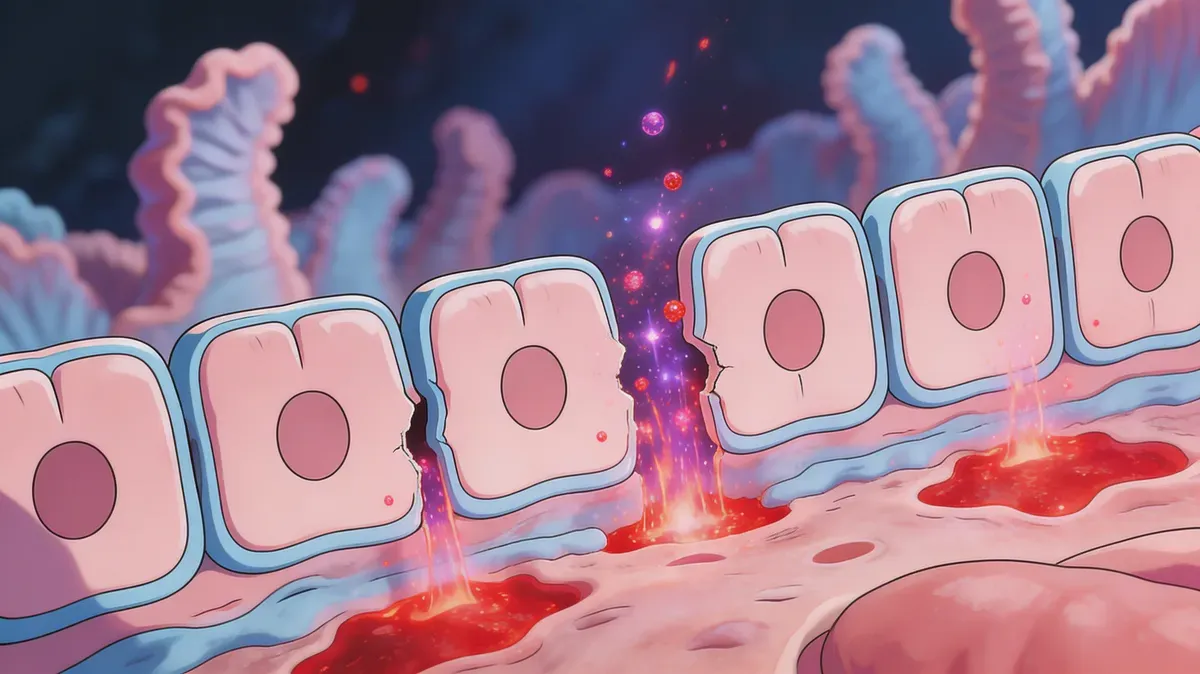
Your intestinal lining is a single cell layer thick. Just one layer of epithelial cells — connected by protein complexes called tight junctions — stands between 38 trillion gut bacteria and your bloodstream. When that barrier holds, bacteria and their toxic byproducts stay where they belong. When it breaks down, they leak into circulation, triggering the chronic, low-grade inflammation that drives virtually every age-related disease.
This isn’t a fringe theory. In 2023, a landmark paper in Disease Models & Mechanisms declared intestinal barrier dysfunction “an evolutionarily conserved hallmark of aging” — observed across species from fruit flies to mice to humans. And research published in GeroScience (2024) confirmed the direct link: gastrointestinal barrier dysfunction drives systemic inflammaging, which accelerates cardiovascular disease, type 2 diabetes, neurodegeneration, and frailty.
The evidence now shows that serum zonulin — the protein that regulates tight junction permeability — is 22% higher in adults over 70 compared to young adults, and correlates directly with inflammatory markers and physical frailty. Your gut barrier is quietly failing, and it’s making you age faster.
What you’ll learn:
- How the intestinal barrier breaks down with age and why it matters
- The zonulin-inflammation-aging cascade that connects gut permeability to biological age
- 7 evidence-based strategies to restore and protect your gut barrier
What is leaky gut?
Leaky gut — clinically termed “increased intestinal permeability” — occurs when the tight junctions between intestinal epithelial cells loosen, allowing substances that should stay in the gut to pass into the bloodstream.
Quick definition: Leaky gut is the breakdown of intestinal barrier integrity through tight junction dysregulation, allowing bacterial endotoxins (LPS), food particles, and inflammatory molecules to enter systemic circulation and trigger chronic immune activation.
The gut barrier: your internal firewall
The intestinal barrier system has multiple layers of defense:
| Layer | Function | What goes wrong with age |
|---|---|---|
| Mucus layer | Physical barrier; traps bacteria away from epithelium | Thins; Akkermansia and other mucin-maintaining species decline |
| Epithelial cells | Single-cell wall; selective nutrient absorption | Slower turnover; reduced regenerative capacity |
| Tight junctions | Protein complexes sealing gaps between cells | Occludin and claudin synthesis declines; zonulin increases |
| Immune cells (GALT) | Gut-associated lymphoid tissue; monitors and responds | Immunosenescence reduces surveillance efficiency |
| Microbiome | Competitive exclusion of pathogens; SCFA production | Dysbiosis reduces butyrate and barrier-supporting metabolites |
When any layer fails, the ones below it bear additional load. When multiple layers fail simultaneously — as happens with aging — the result is systemic endotoxemia: a constant low-level leak of bacterial products into the blood.
The science behind intestinal permeability and aging
The zonulin pathway
Zonulin is the only known physiological regulator of intestinal tight junctions. Discovered by Alessio Fasano at Harvard, zonulin works like a key that opens the locks between intestinal cells. In controlled amounts, this is normal — it allows the immune system to sample gut contents. But when zonulin is chronically elevated, the tight junctions stay open too long and too wide.
What drives zonulin elevation with age:
- Gut dysbiosis (pathogenic bacteria trigger zonulin release via pattern recognition receptors)
- Gluten and gliadin exposure (in susceptible individuals)
- Chronic psychological stress (cortisol-mediated gut permeability)
- Medications (NSAIDs, proton pump inhibitors, antibiotics)
- Alcohol consumption
- Refined sugar and ultra-processed foods
Research published in the Journal of the American Geriatrics Society found that serum zonulin concentrations are 22% higher in healthy adults aged 70+ versus adults aged 18–30. This isn’t disease-related — it occurs in healthy aging, suggesting that barrier breakdown is a universal age-related phenomenon.
The LPS-inflammaging cascade
Once the barrier breaks down, the consequences cascade rapidly:
Step 1: Endotoxin translocation Bacterial lipopolysaccharide (LPS) — the cell wall component of gram-negative bacteria — leaks through damaged tight junctions into the portal circulation and then systemic blood.
Step 2: Immune activation LPS binds Toll-like receptor 4 (TLR4) on immune cells, activating the NF-κB inflammatory pathway. This triggers production of TNF-alpha, IL-6, and IL-1β — the signature cytokines of inflammaging.
Step 3: Chronic low-grade inflammation Unlike an acute infection (which resolves), this leak is continuous. The immune system stays perpetually activated at a low level — consuming energy, generating oxidative stress, and damaging tissues. Hs-CRP rises. Inflammatory markers become chronically elevated.
Step 4: Multi-system aging acceleration Chronic inflammation drives virtually every hallmark of aging:
- Telomere shortening accelerates
- Mitochondrial function declines
- Cellular senescence increases
- Epigenetic clocks advance faster
- Immune aging intensifies
The frailty connection
The link between gut permeability and physical decline is now well-established. A systematic review of frail versus healthy older adults found that frail individuals had:
- Significantly higher serum zonulin
- Elevated pro-inflammatory cytokines (TNF-α, HMGB-1, IL-6)
- Reduced microbial diversity
- Greater abundance of pathogenic species
Critically, zonulin correlates negatively with skeletal muscle strength and habitual physical activity — meaning the leakier your gut, the weaker and less active you tend to be. Recent research (2025) even found a direct association between serum zonulin and sarcopenia in older adults, suggesting that gut permeability may directly contribute to age-related muscle loss.
The gut-brain barrier parallel
The blood-brain barrier (BBB) shares structural similarities with the intestinal barrier — both rely on tight junction proteins to maintain selective permeability. Research increasingly shows that intestinal barrier dysfunction precedes and predicts blood-brain barrier dysfunction. The gut-brain connection runs through four parallel pathways — neural, immune, endocrine, and metabolic — all of which are compromised when the gut barrier fails. When gut permeability increases:
- Circulating LPS reaches the brain
- Neuroinflammation increases through microglial activation
- BDNF production declines
- Amyloid beta clearance is impaired
- Cognitive decline accelerates
Fixing the gut barrier may be neuroprotection by another name.
7 proven strategies to restore your gut barrier
1. Feed your butyrate producers
Why it works: Butyrate is the primary fuel source for colonocytes (gut lining cells) and the most important metabolite for tight junction maintenance. Without adequate butyrate, epithelial cells literally starve and the barrier weakens. Butyrate also suppresses NF-κB activation, directly reducing the inflammatory cascade that leaky gut triggers.
How to do it:
- Eat resistant starch daily: cooked and cooled potatoes, cooked and cooled rice, green bananas, legumes
- Include diverse fermentable fibers: oats, barley, onions, garlic, leeks, asparagus
- Aim for 25–35 grams of total fiber daily — most adults get less than 15 g
- Increase gradually (5 g per week) with adequate water to prevent bloating
Expected results: Increased fecal butyrate levels and improved barrier markers within 4–6 weeks.
2. Prioritize polyphenol-rich foods
Why it works: Polyphenols directly strengthen tight junction proteins, reduce zonulin secretion, and selectively promote barrier-protective bacteria like Akkermansia muciniphila. Studies show that polyphenol-rich diets reduce circulating LPS and inflammatory markers — attacking the leaky gut cascade at its source.
How to do it:
- Berries daily: blueberries, blackberries, raspberries (among the highest polyphenol concentrations)
- Extra virgin olive oil as primary fat source (hydroxytyrosol is particularly protective)
- Green tea or matcha: 2–3 cups daily (EGCG strengthens tight junctions)
- Pomegranate, dark chocolate (70%+ cacao), and red/purple grapes
- Spices: turmeric (curcumin), ginger, cinnamon — all have barrier-protective properties
Expected results: Reduced circulating endotoxin markers within 6–8 weeks.
3. Eliminate barrier-damaging substances
Why it works: Some substances directly damage tight junctions or stimulate zonulin release. Removing them stops the damage at its source — often producing the fastest improvement in barrier function.
How to do it:
- Minimize alcohol: even moderate alcohol directly increases intestinal permeability within hours
- Reduce NSAIDs: ibuprofen and similar drugs damage the gut lining — use only when medically necessary
- Limit ultra-processed foods: emulsifiers (polysorbate 80, carboxymethylcellulose) directly disrupt the mucus layer
- Reduce refined sugar: feeds pathogenic bacteria and increases zonulin release
- Review medications: proton pump inhibitors significantly alter gut pH and microbiome composition — discuss alternatives with your doctor if on long-term use
Expected results: Reduced zonulin and inflammatory markers within 2–4 weeks of eliminating key triggers.
4. Support mucus layer integrity
Why it works: The mucus layer is the first line of defense — a physical barrier that keeps bacteria away from epithelial cells. When it thins (as happens with aging and dysbiosis), bacteria contact the epithelium directly, triggering immune activation even before tight junctions fail.
How to do it:
- Include mucilaginous foods: okra, flaxseed, chia seeds, aloe vera
- Eat foods rich in vitamin A: sweet potatoes, carrots, liver — vitamin A is critical for mucus-producing goblet cell function
- Fermented foods support Akkermansia muciniphila, which paradoxically strengthens mucus by stimulating its production — sauerkraut is particularly useful here, as its fermentation metabolite ILA directly reinforces tight junction proteins in the intestinal epithelium
- Avoid artificial sweeteners (especially saccharin and sucralose) — they thin the mucus layer in animal studies
Expected results: Improved mucosal defense within 4–8 weeks.
5. Manage stress to protect your barrier
Why it works: Psychological stress directly increases intestinal permeability through the HPA axis. Cortisol activates mast cells in the gut lining, which release histamine and proteases that damage tight junctions. Chronic stress also shifts the microbiome toward pathogenic species and reduces butyrate production — a double hit on barrier integrity.
How to do it:
- Daily stress management: 10+ minutes of meditation, breathwork, or nature exposure
- Regular exercise (moderate — not overtraining, which increases permeability)
- Adequate sleep: sleep deprivation independently increases intestinal permeability
- Social connection: isolation elevates cortisol and worsens gut barrier function
- Track HRV as a daily proxy for stress load — declining HRV signals rising cortisol and gut permeability risk
Expected results: Reduced stress-mediated permeability within 4–6 weeks of consistent practice.
6. Exercise at the right intensity
Why it works: Moderate exercise strengthens the gut barrier by improving blood flow to the intestines, enhancing mucus production, and promoting beneficial microbial diversity. However, high-intensity or prolonged exercise (marathon-distance running, overtraining) temporarily increases gut permeability through heat stress and blood flow redistribution — the so-called “exercise-induced leaky gut.”
How to do it:
- 150+ minutes of moderate exercise weekly (walking, cycling, swimming, resistance training)
- Limit extreme endurance sessions — if you do long sessions, support gut integrity with adequate hydration and fueling
- Avoid training in extreme heat without acclimatization
- Allow adequate recovery between intense sessions — overtraining syndrome includes gut barrier breakdown as a component
Expected results: Improved barrier function and microbial diversity within 6–8 weeks.
7. Consider targeted supplementation
Why it works: Specific nutrients directly support tight junction protein synthesis, mucus production, and anti-inflammatory signaling in the gut. While food should always come first, targeted supplementation can accelerate barrier repair — especially when starting from a deficit.
How to do it:
- L-glutamine (5–10 g daily): the primary fuel for small intestinal enterocytes; supports tight junction assembly — also naturally delivered via bone broth’s glycine and glutamine matrix
- Zinc (15–30 mg daily): critical for tight junction protein synthesis and intestinal cell turnover
- Vitamin D (2,000–4,000 IU daily): regulates tight junction proteins and antimicrobial peptide production — deficiency is associated with increased permeability
- Omega-3 fatty acids (EPA+DHA 2–3 g daily): reduce NF-κB activation and support resolution of gut inflammation
- Always consult your healthcare provider before starting supplementation
The information provided does not replace professional medical advice. Consult your healthcare provider before starting any supplementation.
Expected results: Measurable improvements in barrier markers within 8–12 weeks.
How to track and measure intestinal permeability
Clinical biomarkers
| Biomarker | What it measures | What elevation means |
|---|---|---|
| Serum zonulin | Tight junction regulation | Increased intestinal permeability |
| LPS-binding protein (LBP) | Endotoxin in circulation | Bacterial translocation from gut |
| hs-CRP | Systemic inflammation | Gut-driven inflammaging cascade active |
| Calprotectin (fecal) | Gut mucosal inflammation | Direct intestinal barrier stress |
| IL-6, TNF-alpha | Pro-inflammatory cytokines | NF-κB pathway activation from LPS |
Daily proxy metrics
| Metric | Connection to gut barrier | What to watch for |
|---|---|---|
| HRV | Autonomic/gut-brain axis | Declining trend = rising inflammation |
| Resting heart rate | Sympathetic activation | Rising trend = systemic stress |
| Deep sleep % | Cortisol regulation | Declining = elevated cortisol → barrier stress |
| Digestive symptoms | Direct barrier function | Bloating, food sensitivities, irregularity |
| Energy levels | Endotoxin-driven fatigue | Persistent fatigue = possible endotoxemia |
How SuperAge helps you monitor gut-related aging
You can’t measure zonulin from your wrist — but you can track the systemic signals that intestinal permeability controls. SuperAge monitors the daily metrics that reveal whether your gut barrier is protecting you or driving inflammation.
Inflammation tracking through HRV
SuperAge tracks heart rate variability — the most accessible daily proxy for systemic inflammation. Since gut barrier dysfunction is a primary driver of inflammaging, HRV trend declines can signal worsening permeability weeks before symptoms appear.
Sleep and recovery monitoring
Your gut barrier repairs during sleep. SuperAge tracks deep sleep percentage and sleep consistency — both critical for overnight barrier restoration and cortisol regulation that directly impacts tight junction integrity.
Your biological age, tracked
Chronic intestinal permeability accelerates biological aging through the inflammaging cascade. SuperAge calculates your biological age from multiple health metrics, giving you a single number that captures the net inflammatory burden — including the silent contribution of a compromised gut barrier.
Frequently asked questions
Is leaky gut a real medical condition?
Yes — though the terminology has evolved. The medical term is “increased intestinal permeability,” and it’s measurable through validated biomarkers (zonulin, lactulose-mannitol test, LPS-binding protein). It was formally recognized as an evolutionarily conserved hallmark of aging in 2023. The confusion arises because “leaky gut” was historically used in alternative medicine before the scientific evidence caught up. The evidence is now robust: intestinal barrier dysfunction is real, measurable, and clinically significant.
What are the symptoms of leaky gut?
Leaky gut often has no obvious gastrointestinal symptoms — that’s what makes it dangerous. The primary consequences are systemic: chronic fatigue, joint pain, brain fog, food sensitivities, skin issues (eczema, rosacea), and frequent infections. When GI symptoms are present, they typically include bloating, gas, irregular bowel movements, and food intolerances. Many people with significant intestinal permeability have no digestive complaints — the inflammation manifests elsewhere.
How long does it take to heal a leaky gut?
Timeline depends on severity and the interventions used. Mild permeability (from stress, poor diet, or short-term NSAID use) can improve within 4–6 weeks of dietary and lifestyle changes. Moderate dysfunction (chronic dysbiosis, prolonged medication use) typically requires 8–12 weeks. Severe cases (antibiotic-induced dysbiosis, autoimmune-related) may need 6+ months of consistent intervention. The key is consistency — intermittent changes produce intermittent results.
Does aging inevitably cause leaky gut?
Intestinal permeability increases with age in all studied populations — but the degree is highly modifiable. Centenarians maintain barrier function far better than age-matched frail elderly, largely through preserved microbiome diversity and lower inflammatory burden. The strategies in this article can significantly slow or partially reverse age-related barrier breakdown. Aging makes you more vulnerable to leaky gut, but it doesn’t make it inevitable.
Can leaky gut affect brain health?
Directly. The gut-brain barrier axis means that increased intestinal permeability predicts and precedes blood-brain barrier dysfunction. Circulating LPS from gut leakage activates brain microglia, increases neuroinflammation, reduces BDNF, and impairs amyloid beta clearance — all pathways that accelerate cognitive decline and increase Alzheimer’s risk. Protecting your gut barrier is one of the most effective neuroprotective strategies available.
Key takeaways
- Intestinal barrier dysfunction is a hallmark of aging: Evolutionarily conserved across species, measurable through zonulin (22% higher in adults 70+)
- The LPS-inflammaging cascade: Leaky gut → endotoxin translocation → chronic NF-κB activation → accelerated biological aging
- Butyrate is your barrier’s best friend: Feed butyrate-producing bacteria with resistant starch and diverse fibers
- Eliminate before you supplement: Remove barrier-damaging substances (alcohol, NSAIDs, ultra-processed foods) before adding repair nutrients
- Track inflammation proxies daily: HRV, deep sleep, and energy levels reveal gut barrier status without blood tests
Start protecting your gut barrier today
Your gut lining is one cell thick. One layer between your bacteria and your blood. When it holds, you age normally. When it breaks, you age faster — through the silent, relentless inflammaging cascade that drives every major age-related disease.
The good news: your barrier responds to what you eat, how you move, how you sleep, and how you manage stress. Every choice either strengthens or weakens it.
Ready to take control? Download SuperAge and start tracking HRV, sleep, and biological age — the daily signals that reveal whether your gut barrier is holding strong or silently driving inflammation.
References
- Rera, M. et al. (2023). Intestinal barrier dysfunction: an evolutionarily conserved hallmark of aging. Disease Models & Mechanisms, 16(4), dmm049969.
- Ahmadi, S. et al. (2024). Leaky gut in systemic inflammation: exploring the link between gastrointestinal disorders and age-related diseases. GeroScience, 47, 1537–1556.
- Qi, Y. et al. (2017). Intestinal permeability biomarker zonulin is elevated in healthy aging. Journal of the American Geriatrics Society, 65(5), 747–752.
- Thevaranjan, N. et al. (2017). Age-associated microbial dysbiosis promotes intestinal permeability, systemic inflammation, and macrophage dysfunction. Cell Host & Microbe, 21(4), 455–466.
- Fasano, A. (2011). Zonulin and its regulation of intestinal barrier function: the biological door to inflammation, autoimmunity, and cancer. Physiological Reviews, 91(1), 151–175.
- Paray, B.A. et al. (2020). Leaky gut and autoimmunity: an intricate balance in individuals health and the diseased state. International Journal of Molecular Sciences, 21(24), 9770.
- Takiishi, T. et al. (2017). Intestinal barrier and gut microbiota: shaping our immune responses throughout life. Tissue Barriers, 5(4), e1373208.
- Ohlsson, L. et al. (2019). Leaky gut biomarkers in depression and suicidal behavior. Acta Psychiatrica Scandinavica, 139(2), 185–193.
- Clark, A. & Mach, N. (2016). Exercise-induced stress behavior, gut-microbiota-brain axis and diet. Journal of the International Society of Sports Nutrition, 13, 43.
- Mu, Q. et al. (2017). Leaky gut as a danger signal for autoimmune diseases. Frontiers in Immunology, 8, 598.
Last updated: 2026-03-13. This article is regularly reviewed to ensure accuracy.
Related Articles

Immunosenescence: Why your immune system ages and how to fight back
Immunosenescence is the gradual decline of your immune system with age. Learn what causes it, how it accelerates biological aging, and 8 proven strategies to strengthen immune function.