Dysbiosis: The newest hallmark of aging and how to reverse it
Dysbiosis is a proposed hallmark of aging. Learn how gut microbiome changes affect inflammation, metabolism and practical repair strategies.
In 2023, Carlos López-Otín and colleagues updated the hallmarks of aging framework in Cell, expanding the original list to 12. One of the new integrative hallmarks was gut microbiota dysbiosis: age-associated disruption of the microbial ecosystem that helps regulate immunity, metabolism, barrier function and inflammation.
Dysbiosis is unusually actionable because the microbiome can shift with diet, medications, exercise, sleep, stress and environment. The strongest causal evidence that microbiota can move aging phenotypes comes from animal work, including young-to-aged fecal microbiota transfer studies. In humans, the evidence is more practical but more modest: fermented-food and dietary-diversity interventions can change diversity and inflammatory markers within weeks.
So the goal is not to promise that a meal plan can reverse aging. The better claim is that improving dysbiosis can reduce one upstream pressure on inflammaging, metabolic dysfunction and gut-brain signaling.
What you’ll learn:
- Why dysbiosis was formally added as a hallmark of aging and what that means
- How dysbiosis connects to and amplifies all other hallmarks
- The evidence for reversibility — from animal models to human interventions
- A comprehensive reversal strategy targeting each connection point
Quick answer
Dysbiosis was added to the expanded 2023 hallmarks framework as an integrative hallmark of aging. It describes age-related microbiome disruption that can worsen inflammation, barrier function, immune signaling, metabolism and gut-brain communication.
It is also one of the more modifiable hallmarks. Plant diversity, fermented foods, adequate fiber, exercise, sleep regularity, stress reduction and careful antibiotic use can shift microbiome function in weeks to months.
The caveat: human lifestyle studies show changes in diversity and inflammatory markers, not guaranteed reversal of biological age. Strong “rejuvenation” claims mostly come from animal FMT studies and should be interpreted cautiously.
Key facts
- Dysbiosis -> hallmark: the 2023 Cell framework lists dysbiosis as an integrative hallmark that interacts with inflammation.
- Microbiome -> inflammation: lower microbial diversity and fewer SCFA producers can weaken the gut barrier and amplify inflammaging.
- Human evidence -> modifiable: fermented-food diets increased diversity and reduced inflammatory proteins in a controlled Stanford study.
- Animal evidence -> causality: young-to-aged microbiota transfer can improve aging phenotypes in mice, but this is not a consumer FMT recommendation.
- Diet -> diversity: 30+ plant foods per week is associated with higher microbial diversity in American Gut Project data.
- Clinical context -> caution: severe gut symptoms, weight loss, blood in stool or antibiotic complications need medical care, not a DIY microbiome protocol.
What is dysbiosis as a hallmark of aging?
In the hallmarks framework, dysbiosis refers to the age-associated alteration of the microbiota — the community of microorganisms living on and within the human body, primarily in the gut.
Quick definition: Dysbiosis as a hallmark of aging is the progressive loss of microbial diversity, decline of beneficial species, overgrowth of pathogenic organisms, and reduction of health-promoting metabolites that occurs with aging — driving inflammation, immune dysfunction, and accelerated biological aging through interconnected pathways.
The three criteria that earned dysbiosis hallmark status
| Criterion | Evidence |
|---|---|
| 1. Age-associated manifestation | Microbial diversity declines 20–30% from adulthood to old age; Bifidobacterium and butyrate producers decrease; Proteobacteria and pathobionts increase |
| 2. Experimental acceleration | Germ-free mice colonized with aged microbiota develop accelerated aging phenotypes; antibiotic-induced dysbiosis accelerates inflammaging |
| 3. Therapeutic reversibility | Fecal microbiota transplant from young to aged mice extends healthspan and lifespan; dietary interventions restore diversity and reduce aging markers in humans |
The reversibility criterion is what makes dysbiosis different from many other hallmarks of aging. While reversing telomere shortening or genomic instability requires sophisticated interventions, reversing dysbiosis requires — at its core — changing what you eat.
The science: dysbiosis as an integrative hallmark
Classification within the hallmarks framework
López-Otín et al. organized the 12 hallmarks into three categories:
Primary hallmarks (causes of damage): Genomic instability, telomere attrition, epigenetic alterations, loss of proteostasis, disabled macroautophagy
Antagonistic hallmarks (responses to damage): Deregulated nutrient sensing, mitochondrial dysfunction, cellular senescence
Integrative hallmarks (consequences that affect the whole organism): Stem cell exhaustion, altered intercellular communication, chronic inflammation, dysbiosis
Dysbiosis and chronic inflammation are classified together as integrative hallmarks because they are deeply interconnected and affect the entire organism. Dysbiosis drives inflammation; inflammation worsens dysbiosis. Together they create a self-reinforcing cycle that amplifies every other hallmark.
How dysbiosis connects to every other hallmark
This is what makes dysbiosis so significant — it isn’t isolated. It amplifies aging across every pathway:
Dysbiosis → Chronic inflammation (Hallmark 11) Loss of butyrate producers → weakened gut barrier → LPS translocation → NF-κB activation → elevated hs-CRP, IL-6, TNF-alpha. This is the most direct and well-documented connection.
Dysbiosis → Epigenetic alterations (Hallmark 3) Reduced butyrate (a histone deacetylase inhibitor) → altered histone acetylation → accelerated epigenetic clock advancement. Microbial metabolites directly modify host gene expression.
Dysbiosis → Mitochondrial dysfunction (Hallmark 7) SCFAs support mitochondrial biogenesis and oxidative capacity. Dysbiosis-driven SCFA decline impairs mitochondrial function. LPS from gut leakage directly damages mitochondrial membranes through oxidative stress.
Dysbiosis → Deregulated nutrient sensing (Hallmark 6) Gut bacteria modulate insulin signaling, AMPK activation, and mTOR pathways. Dysbiosis impairs insulin sensitivity and disrupts the metabolic signaling networks that regulate aging rate.
Dysbiosis → Cellular senescence (Hallmark 8) Chronic inflammation from dysbiosis promotes senescent cell accumulation through SASP (senescence-associated secretory phenotype) signaling. More inflammation = more zombie cells = more inflammation — a vicious cycle.
Dysbiosis → Immunosenescence (via altered intercellular communication) Chronic immune activation from gut-derived antigens exhausts the immune system. T-cell repertoire narrows, immune surveillance declines, and infection susceptibility increases.
Dysbiosis → Disabled macroautophagy (Hallmark 5) Butyrate and other SCFAs activate autophagy through AMPK signaling. Without adequate SCFA production, cellular recycling slows, and damaged proteins and organelles accumulate.
Dysbiosis → Cognitive aging (via gut-brain axis) Reduced SCFA production → lower BDNF → impaired neuroplasticity. LPS leakage → neuroinflammation → microglial overactivation. The gut-brain axis translates gut dysbiosis directly into cognitive decline.
The reversibility evidence
The strongest argument for dysbiosis as a hallmark is the evidence that reversing it reverses aging phenotypes:
Animal evidence:
- Fecal microbiota transplant (FMT) from young to aged mice: increased lifespan, improved healthspan markers, reduced inflammaging
- FMT from aged to young mice: accelerated aging phenotypes — proving the causal direction
- Specific species supplementation: Akkermansia muciniphila extends lifespan in aged mice when supplemented
Human evidence:
- Fermented food diets: 10 weeks increased diversity and reduced 19 inflammatory markers (Stanford study)
- High-fiber diets: increase butyrate production and beneficial species within weeks
- Exercise interventions: independently increase gut diversity and SCFA production
- Centenarian microbiomes: maintain youthful diversity and function — proving sustained microbiome health is achievable at extreme ages
A comprehensive dysbiosis reversal strategy
Since dysbiosis connects to every other hallmark, the reversal strategy must be multi-pronged — targeting the microbiome directly while addressing the downstream pathways it influences.
1. Restore microbial diversity through dietary diversity
The connection: Diversity loss is the primary feature of age-related dysbiosis. The American Gut Project found that eating 30+ different plant foods per week is the strongest predictor of microbial diversity.
Protocol:
- 30+ distinct plant species per week (count every herb, spice, seed, nut, grain, legume, fruit, vegetable)
- 25–35 grams of diverse fiber daily from multiple types (resistant starch, inulin, pectin, beta-glucan)
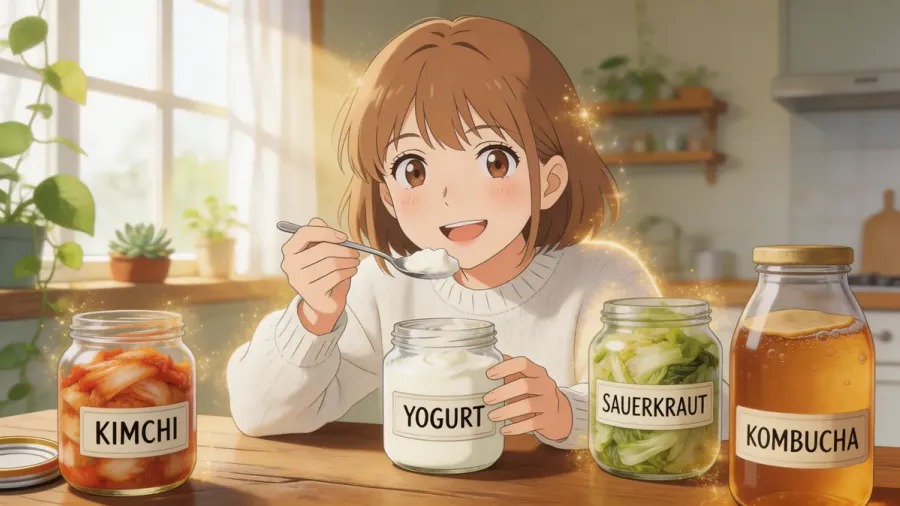
- 2–3 servings of fermented foods daily (yogurt, kefir, sauerkraut, kimchi, miso)
- Rotate foods seasonally — seasonal variation provides year-round microbial diversity exposure
2. Rebuild the gut barrier
The connection: Barrier dysfunction (leaky gut) is the bridge between dysbiosis and systemic inflammation — the two integrative hallmarks that reinforce each other.
Protocol:
- Polyphenol-rich foods daily: berries, green tea, extra virgin olive oil, dark chocolate (70%+ cacao)
- Eliminate barrier-damaging substances: minimize alcohol, NSAIDs, ultra-processed foods
- Support tight junction nutrients: zinc (15–30 mg), vitamin D (2,000–4,000 IU), L-glutamine (5–10 g)
- Adequate hydration: water supports mucus layer integrity
3. Suppress inflammaging at the source
The connection: Dysbiosis-driven chronic inflammation is the mechanism through which gut health impacts every organ system. Suppressing inflammation breaks the cycle.
Protocol:
- Anti-inflammatory foods: fatty fish 2–3x/week, nuts daily, leafy greens at every meal
- Omega-3 fatty acids: EPA+DHA 2–3 g daily from food or supplementation
- Curcumin from turmeric (with black pepper for absorption) — direct NF-κB inhibition
- Reishi mushroom (dual extract, 500–1,500 mg/day) — triterpenoids inhibit NF-κB while beta-glucans support gut immune tissue and microbiota composition
- Regular exercise: the most potent anti-inflammatory lifestyle intervention
4. Support metabolic signaling
The connection: Dysbiosis impairs insulin sensitivity, AMPK activation, and mTOR regulation — the nutrient-sensing pathways that control aging rate.
Protocol:
- Time-restricted eating (12–16 hour overnight fast) — activates AMPK and enhances microbial circadian rhythmicity
- Maintain healthy body composition — visceral fat produces inflammatory cytokines that worsen dysbiosis
- Regular exercise — independently improves insulin sensitivity and microbial diversity
- Monitor metabolic markers: fasting glucose, HbA1c, waist circumference
5. Protect sleep and circadian rhythm
The connection: The microbiome has circadian rhythmicity. Sleep disruption alters microbial composition within 48 hours. Conversely, dysbiosis impairs gut-derived serotonin and GABA production, worsening sleep quality.
Protocol:
- 7–8 hours with adequate deep sleep (15–25%)
- Consistent sleep-wake timing (±30 minutes, including weekends)
- No late-night eating — disrupts microbial feeding cycles
- Morning light exposure — synchronizes circadian rhythm for both host and microbiome
6. Manage stress to break the dysbiosis-cortisol cycle
The connection: Chronic stress damages gut barrier integrity through cortisol, shifts the microbiome toward pathogenic species, and reduces vagal tone — weakening the neural gut-brain communication pathway.
Protocol:
- Daily stress management: meditation, breathwork, or nature exposure (10+ minutes)
- Vagal toning exercises: slow breathing (6 breaths/minute), cold exposure, singing
- Track HRV as a daily proxy for stress load and gut-brain axis health
- Social connection — isolation independently worsens gut microbiome composition
7. Minimize iatrogenic microbiome damage
The connection: Medications — particularly antibiotics, NSAIDs, and proton pump inhibitors — are among the most potent disruptors of the gut microbiome. Reducing unnecessary pharmaceutical exposure preserves microbial diversity.
Protocol:
- Only use antibiotics when truly necessary; request narrow-spectrum when possible
- Review chronic medications with your doctor — PPIs, NSAIDs, and metformin all alter the microbiome
- Support recovery with fermented foods and diverse fiber during and after any antibiotic course
- Avoid antibacterial household products that reduce environmental microbial exposure
How to track dysbiosis reversal
Direct testing
| Test | What it measures | Frequency |
|---|---|---|
| Microbiome sequencing (16S/shotgun) | Species diversity, composition, functional capacity | Every 6–12 months |
| Fecal calprotectin | Gut mucosal inflammation | As needed (symptom-driven) |
| Serum zonulin | Intestinal permeability | Every 6–12 months |
Daily proxy metrics
| Metric | Dysbiosis connection | Reversal target |
|---|---|---|
| HRV | Gut-brain axis, inflammation | Improving trend |
| Deep sleep % | Gut neurotransmitter production | 15–25% |
| Resting heart rate | Systemic inflammation | Stable or decreasing |
| Bowel regularity | Fermentation balance, transit time | 1–2 daily, well-formed |
| Energy and mood | Gut-brain axis, SCFA production | Consistent daily |
| Body composition | Metabolic-microbiome axis | Stable lean mass |
How SuperAge helps you track hallmark reversal
Dysbiosis amplifies every hallmark of aging — and SuperAge tracks the integrated metrics that reveal whether your reversal strategy is working across all pathways simultaneously.
HRV: your inflammation dashboard
SuperAge tracks heart rate variability — the most accessible daily indicator of the dysbiosis-inflammation axis. As your microbiome diversity recovers and SCFA production increases, inflammation decreases and HRV improves. It’s the closest thing to a daily dysbiosis readout you can get without a lab.
Sleep and metabolic tracking
SuperAge monitors deep sleep, body composition, and exercise consistency — three metrics that reflect the metabolic and neurological pathways most affected by dysbiosis. Improving trends across all three signal multi-hallmark reversal, not just isolated improvement.
Your biological age, tracked
SuperAge calculates your biological age from multiple health metrics. Since dysbiosis amplifies every other hallmark, reversing it should produce measurable biological age reduction — the ultimate confirmation that your strategy is working.
Frequently asked questions
Why was dysbiosis added as a hallmark of aging?
Dysbiosis met all three criteria established by López-Otín for hallmark status: (1) it manifests consistently with age across all studied populations, (2) experimentally inducing it accelerates aging (transplanting aged microbiota into young mice), and (3) reversing it decelerates aging (transplanting young microbiota into aged mice extends healthspan and lifespan). The combination of age-association, causal evidence, and therapeutic reversibility qualified it as a formal hallmark — specifically an integrative hallmark that amplifies all other aging processes.
Can you actually reverse dysbiosis?
Yes — and this is what makes dysbiosis unique among the hallmarks. While you can’t easily reverse genomic instability or telomere attrition with lifestyle changes alone, microbiome composition responds within days to dietary shifts. The Stanford study showed measurable diversity increases within 10 weeks of a high-fermented-food diet. Exercise independently improves diversity within 6–8 weeks. Centenarians demonstrate that maintaining a youthful microbiome at extreme ages is achievable. The reversal isn’t instantaneous, and some species lost through repeated antibiotic exposure may not return, but the trajectory is highly modifiable.
How does dysbiosis differ from the other hallmarks?
Dysbiosis is classified as an integrative hallmark — meaning it operates at the whole-organism level and amplifies other hallmarks rather than causing damage directly. Unlike primary hallmarks (genomic instability, telomere attrition) that represent molecular damage, dysbiosis represents an ecosystem imbalance that drives damage through inflammation, metabolic disruption, and immune dysfunction. Its integrative nature means that addressing it provides disproportionate benefit — improving the microbiome simultaneously impacts inflammation, epigenetics, immunity, metabolism, and cognition.
Is dysbiosis the most reversible hallmark of aging?
Arguably, yes. The microbiome responds to dietary and lifestyle interventions faster than any other hallmark. Composition changes begin within 24–48 hours of dietary shifts. Inflammatory markers improve within weeks. Diversity increases measurably within 10 weeks. In contrast, reversing epigenetic aging, restoring telomere length, or clearing senescent cells requires months to years of intervention — or pharmaceutical approaches still in development. The microbiome is the lowest-hanging fruit in longevity science.
What’s the fastest way to improve my gut microbiome?
Combine three simultaneous interventions: (1) increase fermented food intake to 4–6 servings daily (introduces new species), (2) increase fiber to 30+ grams from diverse plant sources (feeds existing and newly introduced species), and (3) eliminate the top three microbiome-damaging factors (alcohol, ultra-processed foods, unnecessary medications). This triple approach addresses both the input (new organisms), the environment (adequate substrate), and the threats (damaging exposures) simultaneously. Measurable improvements in diversity and inflammatory markers emerge within 4–10 weeks.
Key takeaways
- Dysbiosis is a proposed integrative hallmark of aging: added in the 2023 expanded hallmarks framework because it interacts with inflammation, immunity and metabolism.
- The microbiome is modifiable: plant diversity, fermented foods, fiber, exercise, sleep and medication stewardship can shift gut ecology.
- Reversal claims need nuance: animal FMT studies are causal and compelling, but human lifestyle studies mainly show changes in diversity and inflammatory markers.
- Diversity is a practical target: 30+ plant foods weekly, varied fiber types and fermented foods are more defensible than a single probiotic fix.
- Track downstream signals: HRV, sleep, bowel regularity, metabolic markers and symptoms tell you whether the plan is helping beyond lab microbiome data.
Start reversing this hallmark today
Of all 12 hallmarks of aging, dysbiosis is the one you have the most control over — today, with the food in your kitchen, the exercise in your schedule, and the sleep in your routine. No gene therapy. No experimental drugs. No expensive interventions.
The microbiome is the hallmark of aging that listens to what you eat. Start feeding it what it needs.
Ready to take control? Download SuperAge and start tracking HRV, sleep, body composition, and biological age — the integrated metrics that reveal whether you’re successfully reversing the hallmark of aging that amplifies all the others.
References
- López-Otín, C. et al. (2023). Hallmarks of aging: An expanding universe. Cell.
- Parker, A. et al. (2022). Fecal microbiota transfer between young and aged mice reverses hallmarks of the aging gut, eye, and brain. Microbiome.
- Bárcena, C. et al. (2019). Healthspan and lifespan extension by fecal microbiota transplantation into progeroid mice. Nature Medicine.
- Wastyk, H.C. et al. (2021). Gut-microbiota-targeted diets modulate human immune status. Cell.
- Stanford Medicine. (2021). Fermented-food diet increases microbiome diversity and decreases inflammatory proteins. Stanford Medicine News.
- McDonald, D. et al. (2018). American Gut: an Open Platform for Citizen Science Microbiome Research. mSystems.
Last updated: 2026-06-07. This article is regularly reviewed for accuracy.
Related Articles
Fermented foods and biological age: what the Stanford trial really showed
Fermented foods may support microbiome diversity and inflammatory balance. See what the Stanford Cell trial found, what it did not prove, and how to start.