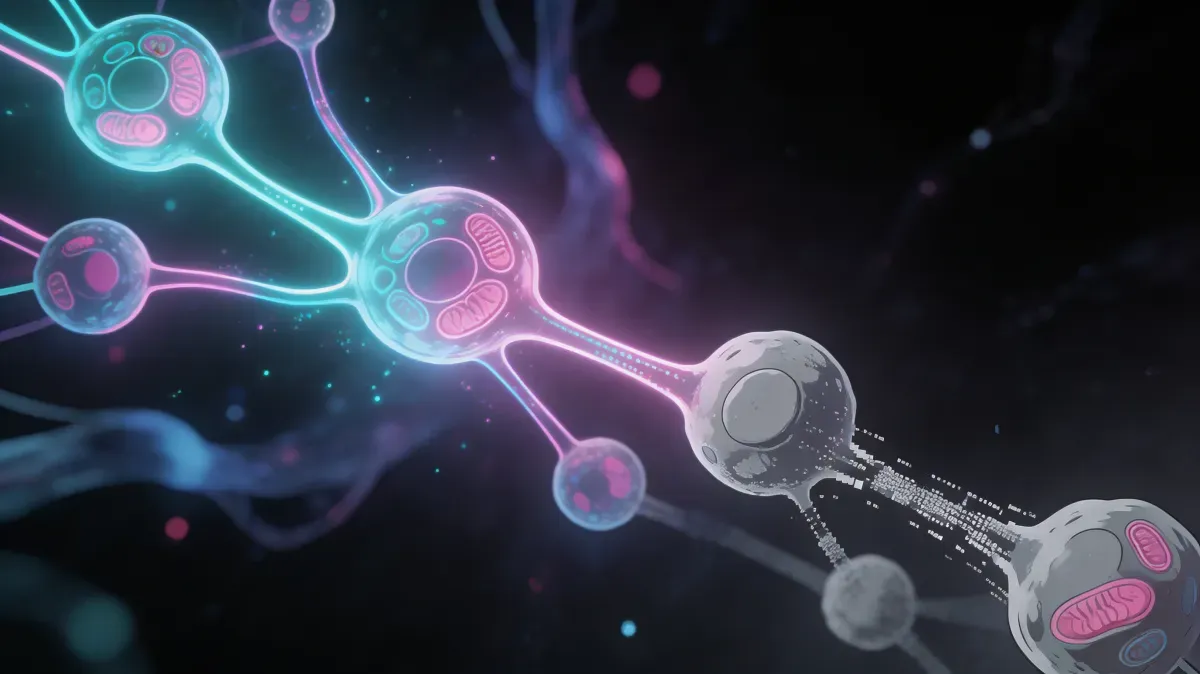
Altered intercellular communication: When your cells stop talking properly
How aging disrupts cell-to-cell communication through inflammaging, SASP, hormone shifts, EVs, and what helps restore clearer cellular signaling.
Quick answer
Altered intercellular communication means aging cells send noisier, more inflammatory, and less coordinated signals to one another. The main drivers are inflammaging, the senescence-associated secretory phenotype (SASP), hormone shifts, gut-immune disruption, visceral fat, and age-related changes in extracellular vesicles. You cannot fully reset this network today, but exercise, sleep, diet quality, stress control, gut health, and visceral-fat reduction can make the signaling environment measurably less inflammatory.
Key facts
- Altered intercellular communication | is | an integrative hallmark of aging because it connects cell-intrinsic damage to whole-body dysfunction.
- Inflammaging | creates | chronic low-grade inflammatory noise that can interfere with immune, metabolic, vascular, brain, and muscle signaling.
- Senescent cells | release | SASP factors that can affect neighboring cells, tissue structure, immune surveillance, and repair signals.
- Exercise, sleep, diet, stress, gut health, and visceral-fat reduction | can improve | communication-related markers such as hs-CRP, insulin sensitivity, HRV, and waist circumference.
Your body contains roughly 37 trillion cells. None of them operates alone. Every second, cells exchange a staggering volume of chemical messages — hormones, cytokines, neurotransmitters, extracellular vesicles — coordinating everything from immune responses to tissue repair to metabolic regulation. This communication network is what keeps a complex organism functioning as a unified whole.
With age, this network breaks down. Signals become distorted. Inflammatory “noise” drowns out important messages. Hormonal signals weaken. Senescent cells broadcast toxic cocktails that corrupt their neighbors. The result is a body where different systems no longer coordinate effectively — immune responses become misdirected, tissue repair slows, metabolic regulation falters, and chronic inflammation becomes the default state.
Altered intercellular communication is recognized as an integrative hallmark of aging — one of the downstream consequences that emerge when other hallmarks (genomic instability, telomere shortening, epigenetic drift) accumulate enough damage. Understanding how cellular communication deteriorates — and what you can do to preserve it — is essential for any serious approach to longevity.
What you’ll learn:
- How cells communicate and why this system degrades with age
- The three main types of communication breakdown: inflammaging, SASP, and hormonal decline
- How disrupted cell signaling drives age-related diseases
- 6 evidence-based strategies to restore healthy intercellular communication
What is intercellular communication?
Intercellular communication encompasses all the mechanisms through which cells exchange information with each other and coordinate their behavior within tissues and across organ systems.
Quick definition: Intercellular communication is the network of signals — chemical, electrical, and mechanical — that cells use to coordinate their activities. It includes hormone signaling (endocrine), local signaling between neighbors (paracrine), direct cell-to-cell contact (juxtacrine), and signaling through extracellular vesicles (exosomes). Aging disrupts all of these channels.
The major communication systems
| System | Range | Key signals | Age-related change |
|---|---|---|---|
| Endocrine | Body-wide | Hormones (insulin, cortisol, testosterone, estrogen, growth hormone) | Declining hormone levels, altered sensitivity |
| Paracrine | Local tissue | Cytokines, growth factors, prostaglandins | Inflammatory shift, SASP contamination |
| Autocrine | Same cell | Self-stimulating signals | Dysregulated feedback loops |
| Juxtacrine | Direct contact | Notch signaling, gap junctions | Reduced gap junction function |
| Exosome-based | Local to systemic | Extracellular vesicles carrying proteins, RNA, lipids | Altered cargo, pro-inflammatory shift |
Why intercellular communication matters for aging
When cells communicate properly, the body can:
- Mount precise immune responses that target pathogens without damaging healthy tissue
- Coordinate tissue repair by directing stem cells to injury sites
- Maintain metabolic homeostasis by adjusting insulin, glucagon, and other metabolic hormones
- Regulate inflammation — turning it on to fight infection and off when the threat passes
When communication breaks down, none of these processes work correctly. The body loses its ability to coordinate — and coordination failure is arguably what aging is at the organismal level.
The science behind communication breakdown
1. Inflammaging: the chronic inflammatory background noise
The most significant change in intercellular communication with age is the shift toward chronic, low-grade systemic inflammation — a state called “inflammaging.” Unlike acute inflammation (which is protective and self-resolving), inflammaging is persistent, low-level, and tissue-destructive.
Inflammaging is driven by multiple sources:
- Senescent cell accumulation: as more cells become senescent (driven by telomere shortening, DNA damage, and oxidative stress), they collectively produce more inflammatory signaling
- Gut microbiome changes: age-related shifts in gut bacteria increase intestinal permeability, allowing bacterial components to enter the bloodstream and trigger systemic inflammation
- Visceral fat: adipose tissue is a major source of inflammatory cytokines (adipokines). As visceral fat increases with age, so does inflammatory signaling
- Mitochondrial debris: damaged mitochondria release mtDNA fragments and cardiolipin into the cytoplasm, activating the NLRP3 inflammasome
- Cellular debris: impaired autophagy means damaged cellular components accumulate and are recognized as danger signals by the immune system
The biomarker most associated with inflammaging is hs-CRP (high-sensitivity C-reactive protein), which rises progressively with age even in the absence of infection or acute disease.
2. The SASP: senescent cells as signal saboteurs
The senescence-associated secretory phenotype (SASP) is perhaps the most insidious form of altered intercellular communication. When cells become senescent (permanently growth-arrested), they don’t just stop dividing — they transform into factories of inflammatory and tissue-degrading molecules.
The SASP includes:
- Pro-inflammatory cytokines: IL-6, IL-8, IL-1β — driving chronic inflammation
- Chemokines: MCP-1, RANTES — recruiting immune cells that cause collateral tissue damage
- Matrix metalloproteinases (MMPs): enzymes that degrade the extracellular matrix, weakening tissue structure
- Growth factors: VEGF, HGF — promoting abnormal tissue remodeling and potentially supporting tumor growth
The most dangerous aspect of the SASP is its contagious nature: the signals secreted by senescent cells can induce senescence in neighboring healthy cells — a “bystander effect” that spreads cellular dysfunction outward. This creates a positive feedback loop where a small number of senescent cells can progressively corrupt entire tissue regions.
3. Hormonal decline: endocrine communication fading
The endocrine system — the body’s long-range communication network — undergoes significant changes with age:
- Growth hormone and IGF-1 decline by approximately 14% per decade after age 30, reducing tissue repair and regeneration capacity
- Sex hormones (testosterone, estrogen) decline progressively, affecting muscle mass, bone density, mood, and metabolic regulation
- DHEA-S — a precursor hormone — decreases by 80–90% between peak levels (age 20–30) and age 70
- Thyroid function may decline subtly, affecting metabolic rate and energy
- Insulin signaling becomes less effective (insulin resistance), disrupting metabolic communication throughout the body
These hormonal changes don’t just affect individual organ systems — they alter the entire milieu of chemical messages that tissues rely on to coordinate their activities.
4. Extracellular vesicle alterations
Cells communicate through tiny membrane-bound packages called extracellular vesicles (EVs), including exosomes. These carry proteins, lipids, and RNA between cells, influencing gene expression in recipient cells. With age:
- EV cargo shifts toward pro-inflammatory profiles
- EVs from senescent cells carry SASP factors, spreading senescence signals systemically
- In animal parabiosis and plasma-EV studies, young-circulation factors can improve molecular and functional measures in aged tissues; this remains preclinical and is not evidence for consumer “young blood” therapy
How altered communication drives age-related diseases
Disrupted intercellular communication is not just a background feature of aging — it directly drives specific diseases:
| Disease | Communication breakdown | Mechanism |
|---|---|---|
| Atherosclerosis | Inflammatory signaling in blood vessel walls | Chronic inflammation activates endothelial cells, recruiting immune cells that form plaques |
| Type 2 diabetes | Insulin resistance | Inflammatory cytokines block insulin receptor signaling in muscle, liver, and fat |
| Osteoporosis | Osteoblast-osteoclast imbalance | Inflammatory signals shift bone remodeling toward destruction over formation |
| Neurodegeneration | Microglial overactivation | Chronic neuroinflammation damages neurons and impairs synaptic communication |
| Sarcopenia | Disrupted muscle-nerve signaling | Loss of neuromuscular junction integrity, inflammatory myokine imbalance |
| Cancer | Immune evasion, tumor-promoting SASP | Senescent cell signals create a microenvironment that supports tumor growth |
| Autoimmune disease | Immune system misdirection | Inflammaging shifts immune balance, increasing self-reactivity |
6 proven ways to restore healthy intercellular communication
1. Exercise — the most powerful anti-inflammatory signal
Why it works: Exercise produces anti-inflammatory myokines (muscle-derived cytokines) including IL-6 (in its acute, anti-inflammatory form), IL-10, and IL-1ra. Regular exercise can lower CRP and other inflammatory markers in some people, improves insulin sensitivity, and modulates immune function; the size of the effect varies by baseline inflammation, training type, and consistency. It may also support immune surveillance of senescent cells.
How to do it:
- 150–300 minutes/week of moderate aerobic exercise (brisk walking at 3 mph / 4.8 km/h, cycling, swimming)
- 2–3 resistance training sessions per week — muscle contractions release beneficial myokines
- Maintain consistency — irregular exercise provides minimal anti-inflammatory benefit
Expected results: If baseline inflammation is elevated, hs-CRP and insulin-sensitivity changes may become measurable after several weeks of consistent training.
2. Optimize your diet to reduce inflammatory signaling
Why it works: Diet directly influences the inflammatory milieu of your body. Ultra-processed foods, excess sugar, and industrial seed oils promote pro-inflammatory signaling. Conversely, a Mediterranean-style diet rich in omega-3s, polyphenols, and fiber shifts intercellular communication toward anti-inflammatory and regenerative patterns.
How to do it:
- Follow a Mediterranean dietary pattern: vegetables, fruits, fish, olive oil, nuts, legumes
- Eat omega-3-rich fish 2–3 times/week (salmon, sardines, mackerel) — omega-3s produce specialized pro-resolving mediators (SPMs) that actively resolve inflammation
- Consume fiber-rich foods to support gut microbiome diversity — a diverse microbiome produces short-chain fatty acids that reduce systemic inflammation
- Minimize ultra-processed foods, added sugars, and trans fats
Expected results: Reduced inflammatory markers within 4–6 weeks; improved gut barrier function within 2–4 weeks.
3. Prioritize sleep to reset inflammatory cycles
Why it works: Sleep is when the immune system rebalances inflammatory signaling. During deep sleep, immune and circadian signals are recalibrated. Chronic sleep disturbance is associated with higher hs-CRP, IL-6, and TNF-α levels — all key mediators of inflammaging. Acute sleep loss can activate cellular inflammatory pathways, although circulating marker changes are more consistent after repeated or persistent sleep restriction.
How to do it:
- Target 7–9 hours of sleep with at least 1.5 hours of deep sleep
- Maintain consistent sleep-wake schedules to preserve circadian immune rhythms
- Address sleep disorders — sleep apnea is a significant driver of systemic inflammation
Expected results: Better sleep regularity can improve recovery and stress physiology quickly, while blood-marker changes are more individual and usually need repeated measurement.
4. Manage chronic stress and cortisol
Why it works: Chronic stress dysregulates the hypothalamic-pituitary-adrenal (HPA) axis, leading to elevated cortisol that alters immune signaling. Initially immunosuppressive, chronic cortisol elevation paradoxically leads to glucocorticoid resistance — where immune cells stop responding to cortisol’s anti-inflammatory signal, resulting in uncontrolled inflammation.
How to do it:
- Practice daily stress management: meditation, deep breathing, yoga, or nature exposure
- Maintain strong social connections — loneliness and social isolation are linked with some inflammatory markers, although the association varies across studies
- Set boundaries with chronic stressors when possible
- Consider professional support for sustained psychological stress
Expected results: Improved cortisol regulation and reduced inflammatory markers within 4–8 weeks.
5. Support gut microbiome health
Why it works: The gut microbiome is a major regulator of systemic intercellular communication. With age, gut diversity decreases, intestinal permeability increases (“leaky gut”), and the balance shifts toward pro-inflammatory bacteria. This allows bacterial components (like lipopolysaccharide/LPS) to enter the bloodstream, triggering systemic inflammatory signaling.
How to do it:
- Eat 30+ different plant foods per week — diversity of plant fiber feeds diverse bacteria
- Include fermented foods daily: yogurt, kefir, sauerkraut, kimchi
- Consume prebiotic-rich foods: garlic, onions, leeks, asparagus, bananas
- Avoid unnecessary antibiotic use — it depletes beneficial gut bacteria
- Minimize artificial sweeteners — some alter gut microbiome composition
Expected results: Improved gut diversity markers within 2–4 weeks; reduced systemic inflammation over 1–3 months.
6. Reduce visceral fat to quiet inflammatory signaling
Why it works: Visceral adipose tissue (VAT) is not passive storage — it’s an active endocrine organ producing inflammatory adipokines (TNF-α, IL-6, resistin, leptin). Excess visceral fat is one of the largest contributors to the inflammatory “noise” that characterizes altered intercellular communication in aging. Reducing VAT directly reduces inflammatory signaling volume.
How to do it:
- Combine aerobic exercise with resistance training — most effective combination for visceral fat reduction
- Practice time-restricted eating to enhance metabolic flexibility and reduce visceral fat
- Prioritize sleep — sleep deprivation increases visceral fat accumulation
- Monitor waist circumference: target below 40 inches / 102 cm (men) or 35 inches / 88 cm (women)
Expected results: Measurable visceral fat reduction within 8–12 weeks of combined diet and exercise intervention.
How to track intercellular communication health
| Metric | Connection to cellular communication | How to track |
|---|---|---|
| hs-CRP | Primary marker of systemic inflammation | Blood test |
| IL-6 | Key inflammatory cytokine in inflammaging | Specialized blood test |
| Fasting insulin | Reflects insulin signaling efficiency | Blood test |
| HRV | Autonomic nervous system communication balance | Apple Watch / SuperAge |
| Waist circumference | Proxy for visceral fat (inflammatory source) | Tape measure |
| Biological age | Integrates multiple communication-related metrics | SuperAge app |
How SuperAge helps you maintain healthy cellular communication
While you can’t directly measure intercellular signaling from a wearable, SuperAge tracks the key lifestyle factors and biomarkers that most strongly influence how your cells communicate.
Inflammation risk monitoring
By tracking exercise consistency, sleep quality, stress levels, and body composition, SuperAge helps you manage the lifestyle factors that drive inflammaging. Consistent exercise can improve inflammatory and metabolic markers, and SuperAge helps you maintain the regularity that matters.
HRV and autonomic balance
Your heart rate variability reflects the communication between your autonomic nervous system and your cardiovascular system. Higher HRV indicates better-regulated signaling; lower HRV suggests disrupted communication. SuperAge tracks HRV trends over time, giving you early warning when your stress-recovery balance shifts.
Biological age as a communication composite
Your biological age integrates metrics that correlate with inflammatory status, hormonal health, and metabolic communication — resting heart rate, HRV, VO2 max, body composition, and activity patterns. Tracking biological age gives you a practical window into whether your cellular communication network is aging faster or slower than expected.
Frequently asked questions
What is inflammaging?
Inflammaging is chronic, sterile, low-grade inflammation that develops with aging in the absence of overt infection. It’s driven by accumulating senescent cells (via the SASP), gut microbiome changes, visceral fat, mitochondrial debris, and impaired autophagy. Inflammaging is considered a central mechanism connecting most hallmarks of aging to age-related diseases and is measurable through biomarkers like hs-CRP.
Can you reverse altered intercellular communication?
Partially. Exercise, anti-inflammatory diet, stress management, and sleep optimization can reduce systemic inflammatory pressure and improve metabolic signaling. Experimental senolytic compounds — including fisetin and other candidates — can clear some senescent cells in preclinical models, but human longevity evidence remains early. A parallel approach gaining momentum in 2025–2026 research is the use of senomorphics (compounds that suppress the SASP without killing senescent cells), which may complement or substitute for senolytics, particularly given findings that some senescent cell subtypes show senolytic resistance with a distinct SASP profile. Complete restoration of youthful signaling patterns is not yet achievable, but meaningful improvement is plausible through lifestyle interventions that reduce inflammatory load.
What is the SASP and why does it matter?
The senescence-associated secretory phenotype (SASP) is the cocktail of inflammatory cytokines, chemokines, proteases, and growth factors that senescent cells secrete. The SASP disrupts normal tissue function, promotes inflammation, and can induce senescence in neighboring healthy cells. It’s one of the most damaging forms of altered intercellular communication and a major target for anti-aging drug development (senolytics and senomorphics).
How does the gut microbiome affect aging?
Your gut microbiome regulates systemic inflammation through the gut-immune axis. With age, gut diversity decreases, intestinal barrier integrity weakens, and pro-inflammatory bacteria proliferate. This “gut dysbiosis” allows bacterial products to enter the bloodstream, triggering systemic inflammatory signaling that accelerates aging across every organ system. Gut microbiome composition is now recognized as both a hallmark of aging (dysbiosis) and a modifier of other hallmarks.
Does social isolation affect cellular aging?
Yes, but the signal is not uniform across every biomarker. Loneliness and social isolation are associated with some inflammatory markers, especially IL-6, CRP, and fibrinogen in certain analyses, but systematic reviews also report heterogeneity and the need for stronger longitudinal data. Social connection is still biologically relevant because social stress can affect hormonal signaling, immune regulation, and inflammatory tone.
Key takeaways
- Altered intercellular communication is a hallmark of aging: it emerges from accumulated damage across other hallmarks and drives systemic dysfunction
- Inflammaging is the central problem: chronic, low-grade inflammation disrupts cellular signaling, drives disease, and accelerates aging across every organ system
- The SASP spreads senescence: senescent cells don’t just stop functioning — they actively sabotage their neighbors through inflammatory secretions
- Exercise is one of the strongest lifestyle signals: regular physical activity produces anti-inflammatory myokines and can improve inflammatory and metabolic markers
- Gut health is communication health: your microbiome regulates systemic inflammatory signaling — support it with diverse plant fiber and fermented foods
Restore your cellular communication today
Your 37 trillion cells depend on clear, precise communication to keep you healthy. Every anti-inflammatory meal, every workout, every night of quality sleep helps maintain the signaling network that coordinates your body’s defense and repair systems.
Ready to take control? Download SuperAge and start tracking exercise, sleep, stress, and biological age — the metrics that reflect how well your cells are communicating.
References
- López-Otín, C., et al. (2023). “Hallmarks of aging: An expanding universe.” Cell, 186(2), 243–278 — altered intercellular communication as an integrative hallmark
- Franceschi, C., et al. (2018). “Inflammaging: a new immune–metabolic viewpoint for age-related diseases.” Nature Reviews Endocrinology, 14, 576–590 — inflammaging framework
- Coppé, J.P., et al. (2010). “The senescence-associated secretory phenotype: the dark side of tumor suppression.” Annual Review of Pathology, 5, 99–118 — SASP characterization
- Pedersen, B.K. & Febbraio, M.A. (2012). “Muscles, exercise and obesity: skeletal muscle as a secretory organ.” Nature Reviews Endocrinology, 8, 457–465 — exercise myokines
- Claesson, M.J., et al. (2012). “Gut microbiota composition correlates with diet and health in the elderly.” Nature, 488, 178–184 — gut microbiome and aging
- Xu, M., et al. (2018). “Senolytics improve physical function and increase lifespan in old age.” Nature Medicine, 24, 1246–1256 — preclinical senescent-cell clearance
- Irwin, M.R., et al. (2016). “Sleep disturbance, sleep duration, and inflammation: a systematic review and meta-analysis.” Biological Psychiatry, 80(1), 40–52 — sleep and inflammatory markers
- Smith, K.J., et al. (2020). “The association between loneliness, social isolation and inflammation: a systematic review and meta-analysis.” Neuroscience & Biobehavioral Reviews, 112, 519–541 — social connection and inflammatory markers
- Zhang, Y., et al. (2024). “Small extracellular vesicles from young plasma reverse age-related functional declines by improving mitochondrial energy metabolism.” Nature Aging, 4, 782–802 — young plasma EVs in aged mice
- Tripathi, U., et al. (2026). “Senolytic-resistant senescent cells have a distinct SASP profile and functional impact: the path to developing senosensitizers.” Aging Cell, 25(1), e70358 — senolytic resistance and senomorphics
Last updated: 2026-06-06. This article is regularly reviewed to ensure accuracy.
Related Articles

Telomere shortening: The cellular clock that counts down your age
Discover how telomere shortening drives aging — from cellular senescence to age-related disease. Learn evidence-based strategies to slow telomere attrition and protect your biological clock.