The gut-brain axis: How your microbiome shapes cognitive aging
Your gut microbiome produces 90% of your serotonin and regulates BDNF. Learn how the gut-brain axis drives cognitive aging and what to do about it.
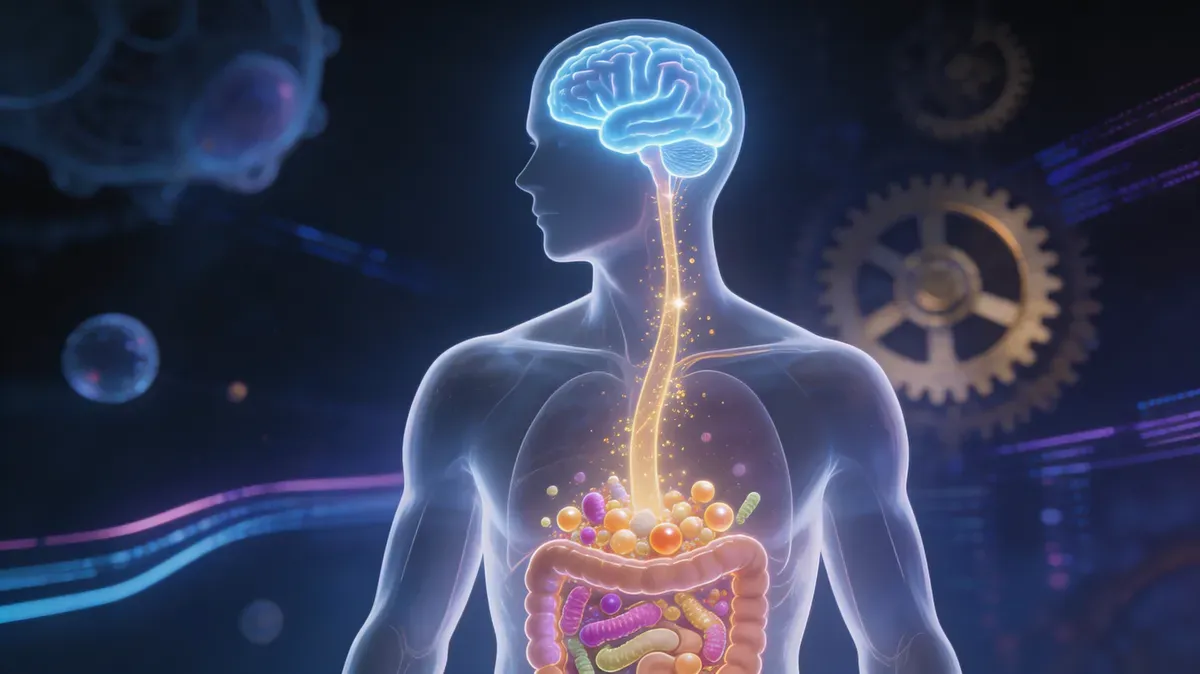
Your gut produces approximately 90% of your body’s serotonin, manufactures GABA, influences dopamine synthesis, and regulates the expression of BDNF — the growth factor that keeps neurons alive and synapses plastic. It does this through the gut-brain axis: a bidirectional communication superhighway connecting 38 trillion bacteria in your intestines to 86 billion neurons in your brain.
When this axis functions well, cognitive performance stays sharp, mood stays stable, and the brain ages slowly. When it breaks down — through dysbiosis, inflammation, and barrier dysfunction — the consequences are severe. A 2025 review in Frontiers in Aging found that gut microbiota dysbiosis is now established as a causal factor in Alzheimer’s disease pathogenesis, not merely a correlate. The same dysbiosis pattern — reduced Bifidobacterium and Akkermansia, increased Proteobacteria — drives neuroinflammation, microglial overactivation, amyloid deposition, and blood-brain barrier breakdown.
The shift in neuroscience is seismic: Alzheimer’s research is moving from a brain-centric model to a systemic one, recognizing that targeting amyloid-beta clearance alone slows progression by only 35%. The other 65% involves peripheral factors — and the gut-brain axis is the most actionable of them all.
What you’ll learn:
- How the gut-brain axis works and why it matters for cognitive aging
- The four communication pathways connecting your microbiome to your brain
- How age-related dysbiosis drives neurodegeneration
- A comprehensive strategy to protect your brain through your gut
What is the gut-brain axis?
The gut-brain axis is the bidirectional communication network between the gastrointestinal system and the central nervous system. It operates through four parallel pathways that together create a constant dialogue between your microbiome and your brain.
Quick definition: The gut-brain axis is a bidirectional communication system linking gut bacteria to brain function through neural (vagus nerve), immune, endocrine, and metabolic pathways — making microbiome health a direct determinant of cognitive aging.
The four communication highways
| Pathway | Mechanism | Speed | Key molecules |
|---|---|---|---|
| Neural (vagus nerve) | Direct nerve signaling from gut to brainstem | Milliseconds | Glutamate, serotonin (5-HT3 receptors) |
| Immune | Cytokines and immune cells cross blood-brain barrier | Hours | IL-6, TNF-alpha, LPS |
| Endocrine | Hormones and neurotransmitters via bloodstream | Minutes to hours | Serotonin, cortisol, GABA |
| Metabolic | Microbial metabolites (SCFAs) reach brain | Hours | Butyrate, propionate, acetate |
All four pathways are affected by age-related changes in the gut microbiome — creating multiple simultaneous routes through which dysbiosis accelerates brain aging.
The science behind gut-brain communication and aging
The vagus nerve: your gut-brain expressway
The vagus nerve is the longest cranial nerve in the body, running from the brainstem to the abdomen. It carries 80% of its signals from the gut to the brain (afferent signaling), making your gut one of the most important sensory organs for brain function.
How it works: Specialized neuropod cells in the gut lining synapse directly with vagal neurons, releasing glutamate to transmit signals at near-neural speed. Serotonin produced by gut enterochromaffin cells activates 5-HT3 receptors on vagal fibers, sending signals to the nucleus tractus solitarius in the brainstem. From there, projections reach the hippocampus (memory), dorsal raphe nucleus (mood), locus coeruleus (alertness), and cortex (cognition).
The aging problem: Vagal tone declines with age, reducing the efficiency of gut-to-brain signaling. This is measurable through HRV — vagal tone is a primary determinant of heart rate variability. Declining HRV reflects not just cardiovascular aging but also deteriorating gut-brain communication.
The neurotransmitter factory in your gut
Your gut bacteria don’t just influence neurotransmitter levels — they directly produce or regulate the synthesis of the molecules your brain needs:
Serotonin (5-HT):
- 90% produced in the gut by enterochromaffin cells
- SCFAs from bacterial fermentation modulate TPH1 expression (the enzyme that synthesizes serotonin)
- Gut serotonin influences mood, sleep, appetite, and pain perception through vagal signaling
- Dysbiosis reduces serotonin production, contributing to depression and cognitive impairment
GABA:
- Produced directly by Lactobacillus and Bifidobacterium species
- The brain’s primary inhibitory neurotransmitter — critical for anxiety regulation, sleep, and cognitive control
- Declining Lactobacillus with age reduces gut-derived GABA signaling
BDNF regulation:
- SCFAs (especially butyrate) regulate BDNF expression in the hippocampus
- BDNF is essential for neuronal survival, synaptic plasticity, and memory formation
- Dysbiosis-driven BDNF reduction is a direct pathway to cognitive decline and neurodegeneration
- Exercise increases both gut SCFA production and brain BDNF — a dual-pathway benefit
Dopamine:
- Gut bacteria influence dopamine precursor availability (tyrosine metabolism)
- Certain species produce dopamine directly
- Gut-derived inflammatory signals reduce dopamine receptor sensitivity in the brain
The neuroinflammation cascade
The most damaging pathway connecting gut dysbiosis to brain aging runs through inflammation:
Step 1: Gut barrier breaks down Age-related dysbiosis reduces butyrate production → tight junctions weaken → intestinal permeability increases
Step 2: Endotoxins enter circulation Bacterial LPS and microbial-associated molecular patterns (MAMPs) cross the compromised gut barrier into the bloodstream
Step 3: Blood-brain barrier is breached Circulating LPS and pro-inflammatory cytokines cross the blood-brain barrier — which shares structural similarities with the gut barrier and deteriorates with age
Step 4: Microglia overactivate LPS engages Toll-like receptors on microglia (the brain’s immune cells), priming them for exaggerated inflammatory responses. This lowers the threshold for neuroinflammation — meaning even minor signals trigger disproportionate microglial activation.
Step 5: Neurodegeneration accelerates Chronic microglial activation drives:
- Amyloid-beta accumulation (impaired clearance)
- Tau hyperphosphorylation (neurofibrillary tangles)
- Synaptic loss and neuronal death
- Reduced BDNF and neuroplasticity
- Accelerated cognitive decline
This gut → inflammation → neurodegeneration cascade is why Alzheimer’s researchers are increasingly looking beyond amyloid-focused therapies. Targeting amyloid alone addresses the downstream symptom. The gut-brain axis addresses the upstream cause.
What dysbiosis looks like in Alzheimer’s patients
Research consistently finds a specific dysbiotic signature in Alzheimer’s disease:
| Change | Direction | Consequence |
|---|---|---|
| Bifidobacterium | Decreased | Less immune regulation, less SCFA production |
| Akkermansia muciniphila | Decreased | Weakened mucus barrier, increased permeability |
| Faecalibacterium prausnitzii | Decreased | Less butyrate, more inflammation |
| Proteobacteria | Increased | More LPS production, more endotoxemia |
| Microbial diversity | Decreased | Less metabolic resilience, less redundancy |
This is the same pattern seen in normal aging — just more pronounced. Alzheimer’s dysbiosis appears to be accelerated aging of the microbiome, not a qualitatively different process. A parallel oral route also contributes: P. gingivalis DNA and its gingipain enzymes have been detected in Alzheimer’s-affected brain tissue — a direct seeding pathway documented in the oral microbiome and longevity research.
7 strategies to protect your brain through your gut
1. Feed the SCFA-producing bacteria
Why it works: SCFAs — especially butyrate — are the primary mechanism through which the gut supports brain health. Butyrate crosses the blood-brain barrier, upregulates BDNF expression, inhibits neuroinflammatory NF-κB signaling, and supports histone acetylation patterns that maintain synaptic plasticity.
How to do it:
- Diverse prebiotic fiber daily: resistant starch (cooked/cooled potatoes, legumes), inulin (garlic, onions), beta-glucan (oats, mushrooms)
- 25–35 grams of total fiber from 30+ plant species per week
- Increase gradually to allow bacterial populations to adapt
Expected results: Increased SCFA production and improved BDNF signaling within 4–6 weeks.
2. Include fermented foods daily
Why it works: Fermented foods provide live organisms plus postbiotic metabolites — including GABA, serotonin precursors, and SCFAs. The Stanford study showed fermented foods reduced inflammatory markers (IL-6, IL-10, IL-12) more effectively than fiber alone — and inflammation is the primary gut-brain pathway driving neurodegeneration.
How to do it:
- 2–3 servings daily: yogurt, kefir, sauerkraut, kimchi, miso, tempeh, kombucha
- Rotate sources for microbial diversity
- Choose unpasteurized versions when available
Expected results: Reduced inflammatory markers and improved microbial diversity within 10 weeks.
3. Protect your gut barrier
Why it works: The gut-brain neuroinflammation cascade begins with barrier breakdown. Every strategy that strengthens tight junctions reduces the LPS leakage that primes microglial overactivation.
How to do it:
- Polyphenol-rich foods: berries, green tea, extra virgin olive oil, dark chocolate
- Minimize barrier-damaging substances: alcohol, NSAIDs, ultra-processed foods
- Adequate zinc (15–30 mg daily) for tight junction protein synthesis
- Vitamin D (2,000–4,000 IU daily) for antimicrobial peptide production
Expected results: Reduced circulating endotoxin markers within 6–8 weeks.
4. Exercise for the dual gut-brain benefit
Why it works: Exercise is uniquely powerful because it works on both ends of the axis simultaneously. It increases gut Akkermansia muciniphila abundance (strengthening the barrier), boosts SCFA production, enhances blood-brain barrier integrity, and directly upregulates BDNF expression in the hippocampus. No other intervention hits all four gut-brain pathways at once.
How to do it:
- 150+ minutes moderate aerobic exercise weekly — the strongest evidence is for sustained aerobic activity
- Include resistance training 2–3 times weekly for additional neuroprotection
- Outdoor exercise adds environmental microbial exposure
- Maintain VO2 max — cardiovascular fitness is one of the strongest predictors of cognitive preservation
Expected results: Improved gut diversity, increased BDNF, and enhanced cognitive function within 8–12 weeks.
5. Prioritize deep sleep for gut-brain repair
Why it works: The gut microbiome has circadian rhythmicity that synchronizes with sleep. Sleep disruption alters microbial composition within 48 hours, reducing beneficial species and increasing pro-inflammatory organisms. Simultaneously, deep sleep is when the glymphatic system clears amyloid-beta and tau from the brain — the proteins whose accumulation drives Alzheimer’s.
How to do it:
- 7–8 hours total with 15–25% deep sleep
- Consistent sleep-wake timing (the microbiome’s circadian rhythm depends on regularity)
- Avoid late eating — disrupts both circadian rhythm and microbial feeding cycles
- Address sleep-disrupting factors: stress, light exposure, temperature
Expected results: Improved microbial balance and enhanced glymphatic clearance within 2–4 weeks.
6. Manage stress to protect the vagal pathway
Why it works: Chronic stress impairs gut-brain communication at every level: it damages the gut barrier through cortisol, reduces vagal tone, shifts the microbiome toward pathogenic species, and increases neuroinflammation. A 2023 study in Molecular Psychiatry demonstrated that gut microbiota changes require vagus nerve integrity to influence depressive behaviors — confirming the vagal pathway as the critical link.
How to do it:
- Daily vagal toning: slow deep breathing (6 breaths/minute), cold water face immersion, gargling, singing
- Regular meditation practice (10+ minutes daily)
- Monitor HRV as a daily proxy for vagal tone — improving HRV reflects improved gut-brain communication
- Nature exposure: forest bathing reduces cortisol and exposes you to environmental microbes
Expected results: Improved vagal tone (higher HRV) and reduced stress-mediated dysbiosis within 4–6 weeks.
7. Engage in cognitively demanding activities
Why it works: Cognitive challenge stimulates BDNF release and neuroplasticity — the same pathways supported by gut-derived SCFAs. Some evidence-based supplements may also reinforce this axis: lion’s mane mushroom stimulates nerve growth factor (NGF) and BDNF, directly supporting the hippocampal neuroplasticity that cognitive exercise depends on. The combination of a healthy gut (producing BDNF-upregulating butyrate) and cognitive demand (requiring BDNF for synaptic strengthening) creates a synergistic effect greater than either alone.
How to do it:
- Learn new skills: languages, musical instruments, complex crafts
- Social engagement: conversation is among the most cognitively demanding human activities
- Novel experiences: travel, new routes, unfamiliar environments
- Strategic games: chess, bridge, complex puzzles
Expected results: Enhanced cognitive reserve and neuroplasticity — compounding with gut health improvements.
How to track and measure gut-brain axis health
Key proxy metrics
| Metric | Gut-brain connection | Optimal trend |
|---|---|---|
| HRV | Vagal tone — the primary neural gut-brain pathway | Higher and consistent |
| Deep sleep % | Glymphatic clearance + microbial circadian health | 15–25% of total |
| Resting heart rate | Autonomic balance; gut inflammation increases RHR | Lower and stable |
| Mood stability | Gut serotonin and GABA production | Consistent, resilient |
| Cognitive performance | BDNF, neuroplasticity, neuroinflammation status | Maintained or improving |
| Digestive comfort | Barrier integrity, fermentation balance | Regular, minimal symptoms |
How SuperAge helps you track gut-brain health
The gut-brain axis manifests through the metrics SuperAge tracks every day — making the app a window into the quality of your microbiome-brain communication.
HRV and vagal tone
SuperAge tracks heart rate variability — the most accessible measure of vagal tone. Since the vagus nerve is the primary neural highway of the gut-brain axis, HRV trends reveal whether gut-brain communication is strong or deteriorating.
Sleep quality monitoring
SuperAge monitors deep sleep percentage — critical for both glymphatic brain clearance and microbiome circadian health. Declining deep sleep signals disruption at both ends of the gut-brain axis.
Your biological age, tracked
Gut-brain axis dysfunction accelerates biological aging through neuroinflammation, BDNF decline, and immune dysregulation. SuperAge calculates your biological age from multiple health metrics, providing a composite indicator that reflects the systemic impact of your gut-brain health.
Frequently asked questions
Can gut health really prevent Alzheimer’s disease?
The evidence increasingly supports gut health as a significant modifiable risk factor for Alzheimer’s. Gut dysbiosis drives the neuroinflammation, blood-brain barrier breakdown, and amyloid clearance impairment that characterize AD. While no single intervention prevents Alzheimer’s entirely, maintaining gut microbiome diversity, barrier integrity, and SCFA production reduces several key pathogenic mechanisms. The shift in AD research toward systemic and peripheral factors specifically includes the gut-brain axis as a primary therapeutic target.
How does the gut produce neurotransmitters?
Gut bacteria directly synthesize neurotransmitters (Lactobacillus produces GABA, certain species produce dopamine and serotonin) and stimulate host cells to produce them (enterochromaffin cells produce 90% of serotonin in response to microbial signals and SCFAs). These neurotransmitters affect the brain through vagal nerve signaling (fastest route), bloodstream transport (endocrine route), and immune modulation. Gut-produced neurotransmitters don’t all cross the blood-brain barrier directly, but they influence brain function through vagal afferent pathways and systemic signaling.
What’s the connection between HRV and gut-brain health?
HRV primarily measures vagal tone — the activity of the vagus nerve, which is the main neural highway of the gut-brain axis. Higher HRV indicates stronger vagal tone, which means more efficient gut-brain communication, better inflammatory regulation, and stronger parasympathetic control. Declining HRV with age reflects, in part, deteriorating gut-brain signaling. Interventions that improve gut health (fiber, fermented foods, exercise) often improve HRV — confirming the gut-brain-vagal connection.
Does exercise improve the gut-brain axis?
Exercise is the most powerful single intervention for the gut-brain axis because it works on both ends simultaneously: it increases gut Akkermansia abundance, boosts SCFA production, strengthens the blood-brain barrier, and directly upregulates BDNF in the hippocampus. Regular aerobic exercise has been shown to reduce the risk of cognitive decline by 30–40%, with mechanisms that specifically include improved gut-brain communication.
How long does it take to improve gut-brain function?
Microbiome composition changes begin within days of dietary intervention. Inflammatory markers improve within 4–8 weeks. Cognitive benefits from improved gut health typically emerge within 8–12 weeks, as BDNF levels increase and neuroinflammation resolves. Full optimization is a longer-term process — centenarians’ preserved cognitive function reflects decades of maintained gut-brain axis health. The key is consistency: temporary changes produce temporary benefits.
Key takeaways
- The gut-brain axis is bidirectional: 80% of vagal nerve signals run from gut to brain — your microbiome is a major sensory organ for your nervous system
- Dysbiosis drives neurodegeneration: The same microbial changes seen in normal aging are accelerated in Alzheimer’s — reduced diversity, lost beneficial species, increased LPS
- Butyrate is brain food: SCFAs from fiber fermentation cross the blood-brain barrier, upregulate BDNF, and suppress neuroinflammation
- Exercise hits both ends: Simultaneously improves gut diversity and brain BDNF — the most powerful single gut-brain intervention
- HRV is your gut-brain dashboard: Vagal tone (measured by HRV) reflects the quality of gut-brain communication in real time
Start protecting your brain through your gut today
Your brain doesn’t age in isolation. It ages in constant dialogue with 38 trillion gut bacteria — through the vagus nerve, through the immune system, through the metabolites those bacteria produce from the food you eat. When that dialogue is healthy, your brain stays sharp. When it breaks down, neurodegeneration accelerates.
The interventions are dietary, behavioral, and accessible. The tracking is available today.
Ready to take control? Download SuperAge and start tracking HRV, sleep quality, and biological age — the daily signals that reveal whether your gut-brain axis is protecting your cognition or silently driving decline.
References
- Li, J. & Mou, H. (2025). Gut-brain axis and a systematic approach to Alzheimer’s disease therapies. Brain Science Advances, 10(1), 1–18.
- Frontiers in Aging (2025). The gut-brain axis in Alzheimer’s disease: how gut microbiota modulate microglial function.
- Frontiers in Microbiology (2025). Microbiome-targeted Alzheimer’s interventions via gut-brain axis.
- Liang, S. et al. (2021). Regulation of neurotransmitters by the gut microbiota and effects on cognition in neurological disorders. Nutrients, 13(6), 2099.
- Zhu, S. et al. (2024). Microbiota-gut-brain axis and its therapeutic applications in neurodegenerative diseases. Signal Transduction and Targeted Therapy, 9, 37.
- Needham, B.D. et al. (2022). Gut microbial molecules in behavioral and neurodegenerative conditions. Nature Reviews Neuroscience, 23(7), 388–408.
- Cryan, J.F. et al. (2019). The microbiota-gut-brain axis. Physiological Reviews, 99(4), 1877–2013.
- Wastyk, H.C. et al. (2021). Gut-microbiota-targeted diets modulate human immune status. Cell, 184(16), 4137–4153.
- Hua, S. et al. (2023). Gut microbiota changes require vagus nerve integrity to promote depressive-like behaviors in mice. Molecular Psychiatry, 28(7), 3002–3012.
- Liu, L. et al. (2025). Interaction of the vagus nerve and serotonin in the gut-brain axis. International Journal of Molecular Sciences, 26(3), 1160.
Last updated: 2026-03-13. This article is regularly reviewed to ensure accuracy.
Related Articles

Cataracts and cognitive aging: shared risk or vision-loss effect?
Cataracts and cognitive aging may overlap through vision loss, shared vascular risk, activity changes, and confounding. Learn what the evidence suggests.