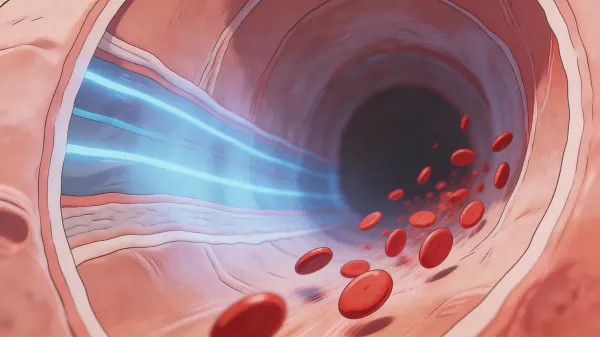
Peripheral artery disease: The hidden vascular aging test you should know
PAD affects 13% of adults over 50 and often goes undetected. Learn about the ankle-brachial index, walking tests, and how vascular aging connects to your longevity.
Your legs might be telling you something your heart hasn’t said yet. Peripheral artery disease (PAD) is one of the most common — and most overlooked — manifestations of systemic vascular aging, affecting roughly 13% of adults over 50 worldwide. Unlike chest pain or a racing heart, PAD announces itself quietly: cramping calves after a short walk, legs that feel heavy on stairs, wounds on the feet that heal slowly. And in many people, it announces itself not at all — until something far more serious happens.
The connection between PAD and biological aging is no coincidence. The same processes that stiffen your arteries, inflame your endothelium, and silently push your vascular biological age ahead of your calendar age are the exact same processes that progressively narrow the arteries supplying your legs. Understanding PAD is therefore not just about preserving your ability to walk — it’s a window into the overall health of your cardiovascular system and, by extension, how fast you’re aging.
What you’ll learn:
- What PAD is and why it’s a vascular aging marker
- The science: arterial stiffness, endothelial dysfunction, and systemic atherosclerosis
- The ankle-brachial index: the definitive diagnostic test
- Walking tests and functional assessment
- 6 evidence-based strategies to prevent and manage PAD
- How to track your vascular health
- How SuperAge connects vascular aging to your biological age
- Frequently asked questions
What Is Peripheral Artery Disease?
Peripheral artery disease is a form of atherosclerosis — the progressive buildup of plaque inside artery walls — that affects arteries outside the heart and brain, most commonly the arteries of the legs and pelvis. As plaque accumulates, arteries narrow and harden, reducing blood flow to the muscles and tissues of the lower limbs.
Quick definition: PAD is a circulatory condition in which narrowed arteries reduce blood flow to the limbs, signaling widespread atherosclerosis and an elevated risk of heart attack, stroke, and premature death.
The numbers underscore why this matters at a population level:
- 5.9% of U.S. adults over 40 have a low ankle-brachial index, the gold-standard test for PAD — even without symptoms
- 13% prevalence in adults over 50, rising to over 20% in those over 70
- Up to 50% of PAD patients have no symptoms at all (asymptomatic PAD), meaning the disease silently progresses undetected
Claudication: the cardinal symptom
The hallmark symptom of symptomatic PAD is intermittent claudication — cramping, aching, or fatigue in the calf, thigh, or buttock muscles that comes on with walking and disappears within minutes of rest. The word comes from the Latin claudicare, “to limp.” The mechanism is straightforward: diseased arteries cannot deliver sufficient oxygen to working muscles during exertion, triggering the same type of ischemic pain that occurs in angina.
As PAD progresses, symptoms escalate:
| PAD Stage | Symptoms | Maximum Walking Distance |
|---|---|---|
| Asymptomatic | None | Unrestricted |
| Mild claudication | Calf cramping after exertion | > 656 ft (> 200 m) |
| Moderate claudication | Consistent calf pain with walking | 164–656 ft (50–200 m) |
| Severe claudication | Pain at very short distances | < 164 ft (< 50 m) |
| Critical limb ischemia | Rest pain, ulcers, gangrene | Unable to walk |
Critical limb ischemia represents the most severe form, carrying a 20–25% risk of major amputation and a 20% mortality rate within one year.
PAD as a systemic cardiovascular disease
Critically, PAD is not a local leg problem — it is a marker of systemic atherosclerosis. A person with PAD has, by definition, significant arterial disease throughout their vascular tree. The risk profile is striking:
- 2–4 times higher risk of heart attack
- 3 times higher risk of stroke
- All-cause mortality rate 3–5 times higher than age-matched controls without PAD over 10 years
The Science: Vascular Aging, Arterial Stiffness, and Endothelial Dysfunction
PAD does not emerge overnight. It is the endpoint of decades-long vascular aging, driven by three interconnected biological processes.
Arterial stiffness: the aging artery
Young arteries are elastic and compliant. With each heartbeat, they expand to absorb the pressure wave and then recoil, helping push blood forward. As we age, the structural proteins within artery walls undergo profound changes:
- Elastin fragmentation: the elastic fibers that give arteries their spring degrade and fracture
- Collagen cross-linking: advanced glycation end-products (AGEs) — formed when sugars react with proteins — glue collagen fibers together, making arteries rigid
- Calcification: calcium deposits replace the flexible components of the arterial wall
The result is an artery that no longer buffers pressure — it simply transmits it. This is why arterial stiffness is increasingly recognized as an independent predictor of cardiovascular events and a core component of vascular biological age.
Endothelial dysfunction: the inflamed lining
The endothelium — the single-cell layer lining all blood vessels — is the most biologically active tissue in your body. It regulates vascular tone, prevents platelet aggregation, controls inflammation, and produces nitric oxide (NO), the molecule responsible for vascular relaxation and blood flow regulation.
In aging and in the presence of cardiovascular risk factors (hypertension, smoking, diabetes, dyslipidemia), the endothelium becomes dysfunctional:
- NO production decreases, reducing vasodilation capacity
- Inflammatory molecules (ICAM-1, VCAM-1, E-selectin) are upregulated, attracting immune cells to the vessel wall
- Oxidized LDL cholesterol penetrates the wall and is engulfed by macrophages, forming foam cells — the foundation of atherosclerotic plaques
Endothelial dysfunction is now considered the earliest detectable stage of atherosclerosis, preceding visible plaque formation by decades. Its assessment is therefore a true window into vascular biological age.
How atherosclerosis becomes PAD
The atherosclerotic process in leg arteries follows the same pathophysiology as coronary artery disease, with one key difference: leg muscles have a much higher capacity for collateral vessel development than heart muscle. This is why PAD often remains asymptomatic for years — collateral circulation compensates for arterial narrowing until stenosis exceeds 60–70%, at which point symptoms emerge.
The most commonly affected vessels in PAD are, in order of frequency: the superficial femoral artery, the popliteal artery, and the tibial arteries. Aortoiliac disease (Leriche syndrome) affects the aortic bifurcation and presents with buttock and thigh claudication, often with erectile dysfunction in men.
The Ankle-Brachial Index: The Definitive Diagnostic Test
The ankle-brachial index (ABI) is the simplest, most cost-effective, and most validated test for diagnosing PAD. It requires nothing more than a blood pressure cuff and a Doppler probe or pulse oximeter, takes approximately 10–15 minutes, and has a sensitivity of 79–95% and specificity of 95–100% for detecting hemodynamically significant PAD.
How the ABI is calculated
The ABI is simply the ratio of ankle systolic blood pressure to brachial (arm) systolic blood pressure:
ABI = Ankle systolic pressure ÷ Arm systolic pressure
The test is performed bilaterally, measuring blood pressure at both ankles (posterior tibial and dorsalis pedis arteries) and both arms, with the patient lying flat after 5–10 minutes of rest.
Interpreting your ABI
| ABI Value | Interpretation | Clinical Significance |
|---|---|---|
| > 1.40 | Non-compressible | Calcified arteries (also abnormal — associated with increased CV risk) |
| 1.00–1.40 | Normal | No significant PAD |
| 0.90–0.99 | Borderline | Warrants surveillance |
| 0.70–0.89 | Mild PAD | Claudication often present |
| 0.40–0.69 | Moderate PAD | Significant functional limitation |
| < 0.40 | Severe PAD | Critical limb ischemia risk |
A value below 0.90 is diagnostic of PAD. Even borderline values (0.90–0.99) are associated with a significantly elevated risk of cardiovascular events, warranting aggressive risk factor modification.
Who should get an ABI test?
Current guidelines recommend ABI screening for:
- Adults over 65 with any cardiovascular risk factor
- Adults aged 50–64 with diabetes or a smoking history
- Any adult with leg symptoms on exertion (claudication)
- Anyone with non-healing wounds or ulcers on the feet or legs
- Anyone with absent or diminished foot pulses on physical examination
Given the high prevalence of asymptomatic PAD, some longevity-focused practitioners advocate for routine ABI testing in anyone over 50 as part of a comprehensive cardiovascular health assessment.
Walking Tests and Functional Assessment
Beyond the ABI, walking tests provide a functional assessment of PAD severity and treatment response that numbers alone cannot capture. They are also uniquely relevant to the longevity literature: walking speed and daily step count are among the strongest predictors of all-cause mortality in older adults.
The 6-Minute Walk Test (6MWT)
The 6-Minute Walk Test measures the maximum distance a person can walk on a flat surface in 6 minutes. It is the most widely used functional test in PAD research and clinical practice.
Reference values for PAD assessment:
| Distance | Functional Category |
|---|---|
| > 1,312 ft (> 400 m) | Good functional capacity |
| 984–1,312 ft (300–400 m) | Moderate limitation |
| 656–984 ft (200–300 m) | Significant limitation |
| < 656 ft (< 200 m) | Severe limitation |
In PAD patients, the 6MWT is also a prognostic tool: every 164 ft (50 m) increase in 6-minute walk distance is associated with a statistically significant reduction in cardiovascular event risk.
The Treadmill Walking Test
The treadmill walking test (typically performed at 2 mph / 3.2 km/h at a 12% grade) measures two key parameters:
- Initial claudication distance (ICD): the distance at which pain first appears
- Absolute claudication distance (ACD): the maximum distance the patient can walk before being forced to stop
These values guide treatment decisions and are used to quantify the response to exercise rehabilitation.
The 4-Meter Gait Speed Test
Simply measuring how fast a person walks 13 feet (4 meters) is a surprisingly powerful predictor of mortality. In PAD, gait speed below 2.6 ft/s (0.8 m/s) is associated with dramatically worse outcomes, including higher rates of major adverse cardiovascular events and limb amputations. This test is quick, requires no equipment, and can be performed in any clinical setting.
6 Evidence-Based Strategies to Prevent and Manage PAD
PAD is not inevitable, and even established PAD can be significantly improved with targeted lifestyle and medical interventions.
1. Supervised exercise rehabilitation
Why it works: Exercise is the most effective therapy for intermittent claudication, with evidence showing it outperforms angioplasty for improving walking distance in stable PAD patients. Walking to the point of near-maximal claudication pain, then resting and repeating, drives powerful adaptations: improved collateral circulation, skeletal muscle metabolic efficiency, and reduced systemic inflammation.
How to do it:
- Aim for at least 30–45 minutes of supervised treadmill or track walking, 3 times per week
- Walk to the point of moderate-to-near-maximal claudication pain (4–5 out of 5 on the pain scale), then rest until pain resolves
- Progressive over 12 weeks — this is the minimum period to see measurable improvements
- Home-based walking programs are effective if supervised programs are unavailable
Expected results: 12-week supervised exercise programs increase pain-free walking distance by 50–200% and maximum walking distance by 25–100%.
2. Aggressive cardiovascular risk factor control
Why it works: PAD shares identical risk factors with coronary artery disease. Controlling them simultaneously slows disease progression and dramatically reduces the risk of heart attack and stroke — which remain the leading causes of death in PAD patients.
How to do it:
- Hypertension: target blood pressure below 130/80 mmHg; ACE inhibitors and ARBs are first-line choices and may also improve peripheral perfusion
- Dyslipidemia: high-intensity statin therapy is recommended for all PAD patients regardless of baseline LDL
- Diabetes: HbA1c control below 7.0% significantly reduces progression to critical limb ischemia
- Antiplatelet therapy: aspirin or clopidogrel is recommended for symptomatic PAD to reduce cardiovascular event risk
3. Smoking cessation — the single most important intervention
Why it works: Smoking is the strongest modifiable risk factor for PAD. Smokers have a 2–4 times higher risk of developing PAD than non-smokers. Nicotine causes direct vasoconstriction, while carbon monoxide displaces oxygen from hemoglobin, further reducing tissue oxygenation in already-compromised limbs.
How to do it:
- Cessation immediately halts further disease acceleration
- Smoking cessation has been shown to reduce amputation rates and cardiovascular mortality within 1–2 years
- Combination therapy (nicotine replacement + pharmacotherapy + behavioral support) achieves the highest quit rates
Expected results: Former smokers have significantly better walking distances, lower amputation rates, and improved graft patency after revascularization procedures compared to those who continue smoking.
4. Mediterranean-style diet
Why it works: The Mediterranean diet reduces endothelial inflammation, oxidizes less LDL cholesterol, improves endothelial function through nitrate-rich vegetables, and contains anti-atherosclerotic polyphenols. The PREDIMED trial demonstrated a 30% reduction in major cardiovascular events with a Mediterranean diet supplemented with olive oil.
How to do it:
- Base meals around vegetables, legumes, whole grains, fish, and olive oil
- Prioritize nitrate-rich vegetables (beet, arugula, spinach, celery) — dietary nitrate is converted to nitric oxide in the body, directly improving endothelial function and blood flow
- Limit red and processed meat, refined carbohydrates, and sugar-sweetened beverages
- Aim for at least 2 servings of fatty fish per week for omega-3 EPA/DHA
5. Manage blood glucose and insulin resistance
Why it works: Hyperglycemia glycates proteins in arterial walls, accelerating the same collagen cross-linking that makes arteries stiff. Insulin resistance drives the metabolic syndrome cluster — hypertension, dyslipidemia, visceral adiposity — that collectively devastates vascular health. Improving insulin sensitivity is one of the most powerful actions you can take for your vascular system.
How to do it:
- Keep fasting glucose below 100 mg/dL
- Prioritize low-glycemic-index carbohydrates and limit refined sugars
- Time carbohydrate intake around physical activity for better glucose disposal
- Resistance training 2–3 times per week significantly improves insulin sensitivity independent of weight loss
6. Optimize daily step count and movement regularity
Why it works: Daily physical activity — even light-to-moderate walking — maintains endothelial shear stress, the mechanical stimulus that drives NO production and keeps arteries healthy. Sedentary behavior accelerates endothelial dysfunction and arterial stiffening. The dose-response relationship between daily steps and cardiovascular mortality is one of the most robust findings in the epidemiological literature.
How to do it:
- Aim for at least 7,000–10,000 steps per day at a pace of at least 2.5 mph (4 km/h)
- Break up prolonged sitting with 2–5 minutes of walking every 30–60 minutes
- Even in advanced PAD, graded walking within comfortable limits slows progression and improves symptoms over time
How to Track Your Vascular Health Over Time
Vascular aging is a slow process, and tracking requires both objective testing and functional self-assessment.
Key tests to monitor
| Test | Frequency | What to look for |
|---|---|---|
| Ankle-brachial index (ABI) | Annually if borderline; every 2 years if normal | Declining trend below 0.90 |
| Blood pressure (both arms) | Every visit | Significant inter-arm difference (> 15 mmHg) may indicate subclavian disease |
| Fasting lipid panel | Every 6–12 months | LDL, triglycerides, HDL |
| Fasting glucose and HbA1c | Every 6–12 months | Glucose < 100 mg/dL, HbA1c < 5.7% |
| 6-Minute Walk Test | Every 3–6 months if symptomatic | Distance trend |
| Gait speed | Every 6 months | Above 3.3 ft/s (1.0 m/s) is optimal |
Self-monitoring at home
- Track your maximum comfortable walking distance and note changes week-to-week
- Monitor wound healing on feet and lower legs — impaired healing is an early sign of critical ischemia
- Be alert to new symptoms: rest pain (especially at night, relieved by dangling the leg over the bed), coldness or color changes in one foot
How SuperAge Connects Vascular Aging to Your Biological Age
Vascular aging is one of the primary drivers of biological age divergence from chronological age. SuperAge integrates the key biomarkers of vascular health — including blood pressure, lipid panels, glucose metabolism, and physical performance data from your Apple Watch — to give you a real-time picture of how your cardiovascular system is aging.
Your walking speed and daily step data are automatically captured by the Apple Health integration, allowing SuperAge to monitor functional vascular health over time without any additional effort. The app correlates this movement data with your blood biomarkers to compute your biological age through validated algorithms like PhenoAge and KDM Biological Age.
If you’re at risk for PAD or have been diagnosed, SuperAge helps you track the lifestyle changes that matter most: exercise progression, metabolic biomarker trends, and the functional metrics that tell you whether your interventions are working.
Download SuperAge and start building a longitudinal picture of your vascular biological age — because your legs are one of the most honest indicators of how your entire cardiovascular system is aging.
Frequently Asked Questions
Can PAD be reversed?
Atherosclerotic plaque cannot be fully reversed, but its progression can be halted and partially stabilized with aggressive risk factor management. More importantly, symptoms can be dramatically improved — supervised exercise rehabilitation, smoking cessation, and optimal medical therapy regularly restore patients from severe claudication to near-normal functional capacity. Some studies using high-intensity statin therapy have demonstrated modest plaque regression on imaging.
Is the ABI test painful?
No. The ABI test is completely non-invasive and painless. It involves placing standard blood pressure cuffs around the arms and ankles and using a small Doppler probe to detect blood flow sounds. The entire test takes 10–15 minutes.
My ABI is 0.85 but I have no symptoms — do I need treatment?
Asymptomatic PAD with an ABI below 0.90 still warrants aggressive cardiovascular risk factor management (blood pressure, lipids, blood glucose, smoking cessation). While invasive procedures are not indicated without symptoms or limb-threatening ischemia, the underlying atherosclerosis poses a significant risk of heart attack and stroke that needs to be addressed.
How does PAD connect to walking speed decline in aging?
The two are deeply linked. Reduced gait speed with aging reflects a combination of vascular insufficiency, skeletal muscle atrophy (sarcopenia), neurological decline, and balance impairment. In people with PAD, reduced walking speed is both a symptom and a consequence of vascular disease — and improving vascular health through exercise and risk factor control almost always improves gait speed as well.
At what age should I first get an ABI test?
For most people, routine ABI screening is recommended starting at age 65 (or 50 if you have diabetes or a smoking history). However, if you have multiple cardiovascular risk factors (hypertension, high cholesterol, family history of vascular disease, smoking) or notice leg cramping with exercise, it is worth requesting an ABI at any age over 40.
Key Takeaways
- PAD affects 13% of adults over 50 and is frequently asymptomatic — making it a hidden driver of cardiovascular risk and vascular biological aging
- The ankle-brachial index (ABI) is the gold-standard test: an ABI below 0.90 confirms PAD regardless of symptoms
- PAD is a systemic disease: its presence signals widespread atherosclerosis and dramatically elevates the risk of heart attack, stroke, and premature death
- Walking tests — particularly the 6-Minute Walk Test and gait speed — are both diagnostic and prognostic, connecting directly to the longevity literature on physical function and mortality
- Supervised exercise rehabilitation is the most effective therapy for claudication, outperforming angioplasty in controlled trials for improving walking distance
- Aggressive lifestyle intervention works: smoking cessation, exercise, Mediterranean diet, and metabolic control can halt progression, reduce symptoms, and cut cardiovascular mortality
Start Protecting Your Vascular Health Today
Peripheral artery disease is not just a leg problem — it is a systemic signal that your vascular system is aging faster than it should. The good news is that vascular aging is among the most responsive aspects of biological aging to targeted lifestyle intervention.
Start walking. Quit smoking. Optimize your metabolic numbers. And track everything.
Ready to see your vascular aging trends? Download SuperAge and connect your Apple Watch data to a comprehensive biological age assessment — because healthy legs and a long life start with the same interventions.
References
- Fowkes, F.G. et al. — “Comparison of global estimates of prevalence and risk factors for peripheral artery disease in 2000 and 2010: a systematic review and analysis” — The Lancet, 2013. Population-level prevalence data for PAD globally.
- Ankle Brachial Index Collaboration — “Ankle brachial index combined with Framingham Risk Score to predict cardiovascular events and mortality: a meta-analysis” — JAMA, 2008. Definitive evidence for ABI as a cardiovascular risk predictor.
- McDermott, M.M. et al. — “Exercise rehabilitation for peripheral artery disease: A review” — Journal of Vascular Surgery, 2019. Comprehensive review of exercise therapy efficacy in PAD.
- Norgren, L. et al. — “Inter-Society Consensus for the Management of Peripheral Arterial Disease (TASC II)” — Journal of Vascular Surgery, 2007. The foundational clinical guidelines for PAD management.
- Hamburg, N.M. & Creager, M.A. — “Pathophysiology of Intermittent Claudication in Peripheral Artery Disease” — Circulation Journal, 2017. Mechanistic review of claudication and PAD pathophysiology.
- Gerhard-Herman, M.D. et al. — “2016 AHA/ACC Guideline on the Management of Patients With Lower Extremity Peripheral Artery Disease” — Circulation, 2017. Current clinical practice guidelines.
- Savji, N. et al. — “Association Between Advanced Age and Vascular Disease in Different Arterial Territories” — Journal of the American College of Cardiology, 2013. Evidence linking PAD to systemic vascular aging.
Last updated: 2026-03-19. This article is regularly reviewed to ensure accuracy.
Related Articles

Aortic stiffness and pulse wave velocity: The gold standard of vascular age
Learn how pulse wave velocity reflects aortic stiffness and vascular age, what values mean, how testing works, and which habits may improve arterial health.