How smoking ages your body: 7 effects you can't ignore
Discover how smoking accelerates aging across every organ. Learn the 7 science-backed ways cigarettes damage your body and what happens when you quit.
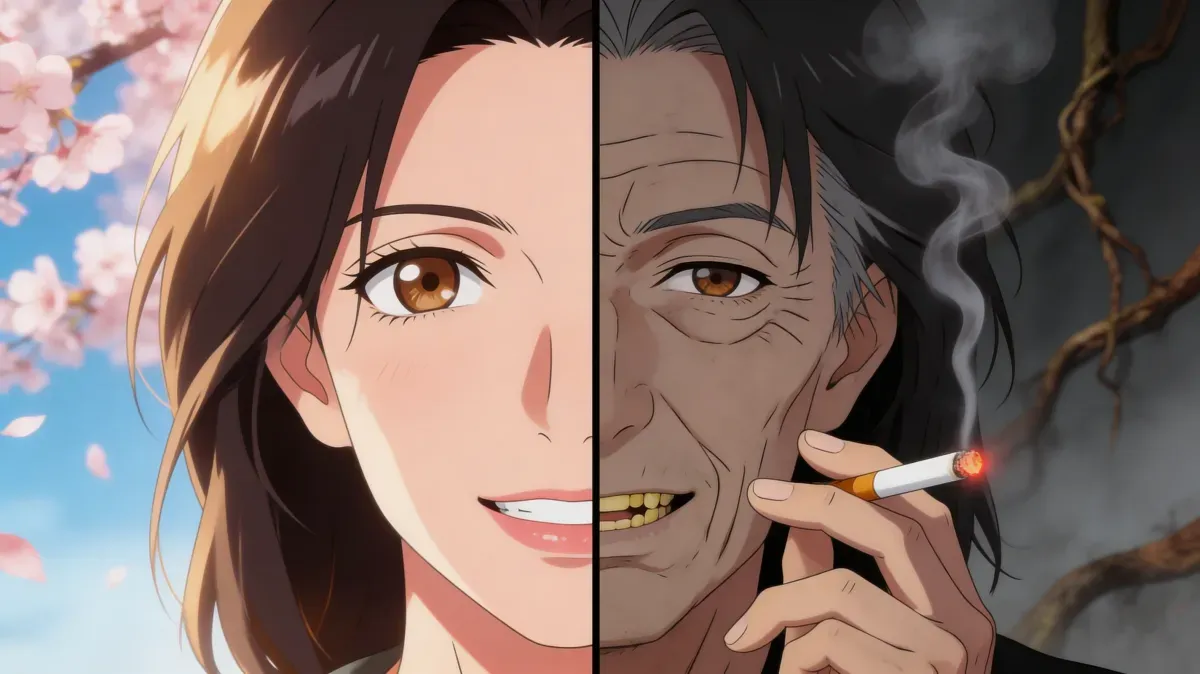
Smokers in midlife can show skin-aging patterns usually seen decades later in nonsmokers. But skin damage is only the surface. Beneath it, smoking is reshaping your biology at the cellular level, accelerating many of the mechanisms your body uses to age.
If you have ever wondered whether those cigarettes are truly costing you years of life — or just health warnings you can ignore — the science is unambiguous. Smoking does not just increase disease risk. It makes your entire body older, faster.
This article breaks down how tobacco damages your body at every level, what current evidence says about recovery after quitting, and how to track the impact smoking has on your health.
What you’ll learn:
- The 7 specific ways smoking accelerates aging across your organs
- What biological-age studies show about tobacco exposure
- Why quitting — even after decades — can reduce risk and support recovery
- How to measure and track smoking’s impact on your body
What is smoking-related aging?
Smoking-related aging refers to the accelerated deterioration of cells, tissues, and organs caused by the 7,000+ chemicals in cigarette smoke. Unlike chronological aging, which happens to everyone at the same rate, smoking-related aging is dose-dependent: the more you smoke, and the earlier you start, the faster your body breaks down.
Quick definition: Smoking-related aging is the measurable acceleration of biological deterioration caused by tobacco exposure, affecting everything from DNA integrity to organ function.
Why smoking-related aging matters for your health
Research in Mayo Clinic Proceedings (2025) found a clear age-of-initiation gradient: compared with never-smokers, people who began smoking at ages 5-12 had about 3.0 years higher Klemera-Doubal biological age, those who began at 13-17 had about 1.3 years higher biological age, and those who began at 18 or later had about 0.95 years higher biological age. Earlier exposure was also linked with shorter telomeres and other aging-related outcomes.
This is not just about looking older. Smoking-related aging drives the development of cardiovascular disease, cancer, COPD, dementia, osteoporosis, diabetes, and dozens of other conditions that rob you of healthy years. Notably, it is one of the few lifestyle factors whose all-cause mortality hazard ratio is directly comparable to chronic social isolation and loneliness — both operate through overlapping pathways of cortisol dysregulation, telomere shortening, and systemic inflammation, and both carry a comparable risk to the cardiovascular system.
The science behind how smoking ages you
Cigarette smoke delivers a cocktail of toxins that attack your body through three primary mechanisms.
Oxidative stress overload
Every puff of cigarette smoke floods your body with free radicals — unstable molecules that damage cell membranes, proteins, and DNA. Your body has natural antioxidant defenses, but smoking overwhelms them. The result is chronic oxidative stress, which accelerates tissue breakdown in every organ.
Chronic inflammation
Smoking triggers a persistent inflammatory response throughout your body. Your levels of hs-CRP — a key inflammation biomarker — rise significantly with tobacco use. This systemic inflammation does not just cause immediate damage; it creates a self-reinforcing cycle where damaged tissues release more inflammatory signals, causing more damage.
DNA and epigenetic damage
Perhaps most alarming: smoking physically alters your DNA. It shortens telomeres (the protective caps on your chromosomes), modifies DNA methylation patterns, and activates genes associated with aging while silencing protective ones. Large cohort studies in 2024 and 2025 found that in utero exposure and earlier smoking initiation are associated with higher biological-age measures in adulthood. Other methylation studies show that many smoking-related DNA marks attenuate after cessation, but some can persist for years, leaving a measurable biological footprint long after the last cigarette.
7 ways smoking ages your body
1. Skin: wrinkles, sagging, and discoloration
Smoking constricts blood vessels, reducing oxygen and nutrient delivery to your skin. It also breaks down collagen and elastin — the proteins responsible for skin firmness and elasticity — through oxidative stress and MMP upregulation, the same enzymatic pathway that UV radiation activates in photoaged skin. The result: premature wrinkles (especially around the mouth and eyes), sagging skin, and a dull, grayish complexion.
How severe is it? Dermatology studies consistently find more severe facial wrinkling in smokers, with a dose-response pattern: heavier and longer exposure usually means more visible damage. The damage is most visible on the face, neck, and hands. Beyond the skin, smoking also doubles the risk of age-related macular degeneration — the leading cause of irreversible vision loss in older adults.
2. Cardiovascular system: stiff arteries and high blood pressure
Smoking damages the endothelium (inner lining of blood vessels), promotes plaque buildup, and increases arterial stiffness. This forces your heart to work harder with every beat. Smokers have significantly higher coronary calcium scores, elevated blood pressure, and increased risk of heart attack and stroke.
The numbers: Smokers face 2-4 times the risk of coronary heart disease compared to non-smokers, and their blood vessels can show damage equivalent to someone 10-15 years older.
3. Lungs and respiratory function
Smoking destroys the tiny air sacs (alveoli) in your lungs and paralyzes the cilia that clear mucus and debris. This leads to reduced lung capacity, chronic cough, and eventually conditions like COPD and emphysema. Your respiratory rate increases as damaged lungs struggle to deliver enough oxygen.
Measurable impact: Lung function normally declines with age, but current smoking speeds the drop. In population cohorts, current smokers lose FEV1 faster than never-smokers; in people with COPD or high-risk airflow limitation, continued smoking can drive much steeper annual losses.
4. Brain: cognitive decline and shrinkage
Smoking accelerates brain aging by reducing blood flow, increasing oxidative damage, and promoting neuroinflammation. Research published in Molecular Psychiatry found that active regular smokers had a brain age gap of +1.19 years — their brains were physically older than their chronological age.
Long-term risk: Smokers have a higher risk of developing dementia, and the risk increases with pack-years of exposure. The good news is more recent: a 2025 study in The Lancet Healthy Longevity, which tracked 9,436 adults across 12 countries, found that people who quit smoking in middle or later life had more favorable memory and verbal-fluency trajectories over the next six years than matched continuing smokers.
5. Bones and muscles: silent deterioration
Tobacco directly interferes with calcium absorption and bone cell activity, leading to reduced bone mineral density. Smokers develop osteoporosis earlier and fracture more easily. Smoking also impairs muscle protein synthesis, contributing to accelerated muscle loss (sarcopenia) — a key predictor of frailty and mortality in older adults.
Critical threshold: Female smokers reach osteoporotic bone density levels 5-10 years earlier than non-smoking women.
6. Immune system: premature immunosenescence
Smoking accelerates the aging of your immune system in ways that mirror what typically happens decades later. It shortens telomeres in immune cells (lymphocytes), shifts the balance between immune cell types, and increases chronic low-grade inflammation.
This process — called immunosenescence — normally occurs gradually with age. Smoking fast-forwards it, leaving you more vulnerable to infections, slower to heal, and less responsive to vaccines.
7. DNA integrity: telomere shortening and epigenetic damage
This is the most fundamental level of smoking-related aging. Tobacco smoke directly shortens telomeres — the protective end-caps on your chromosomes that serve as a biological clock. Shorter telomeres mean cells can divide fewer times before dying, which translates to visible aging and organ deterioration.
Additionally, smoking modifies your epigenome — the chemical markers that control which genes are turned on or off. The GrimAge epigenetic clock, one of the most accurate biological age calculators, incorporates smoking pack-years because tobacco strongly alters DNA methylation patterns. Smokers can show accelerated epigenetic aging on GrimAge and related measurements. A 2025 multi-cohort analysis in eBioMedicine extended these findings to DunedinPACE — a newer “pace of aging” clock that measures the speed of biological deterioration in real time — finding that current or former smoking and higher pack-years were longitudinally associated with faster biological aging.
How to track and measure smoking’s impact
You cannot manage what you do not measure. If you smoke or have recently quit, these metrics reveal how much damage has been done — and how much recovery is happening.
Key metrics to monitor
| Metric | What It Shows | Smoker vs Non-Smoker |
|---|---|---|
| Resting heart rate | Cardiovascular strain | Smokers: 5-10 bpm higher |
| Blood oxygen (SpO2) | Lung function and oxygen delivery | Often normal at rest, but may be lower with lung disease or carbon monoxide exposure |
| HRV | Autonomic nervous system health | Smokers: significantly lower |
| hs-CRP | Systemic inflammation | Smokers: 2-3x higher |
| Blood pressure | Vascular stress | Acute nicotine-related spikes and higher arterial stiffness |
| Respiratory rate | Lung efficiency | Smokers: elevated baseline |
What these numbers mean
A combination of low HRV, elevated resting heart rate, reduced SpO2, and high hs-CRP paints a clear picture of accelerated aging. These are not just numbers — they are the quantified cost of every cigarette.
Smoking and biological age: what the research says
Every metric we have discussed feeds into a larger picture: your biological age. While your chronological age counts calendar years, biological age measures how old your body actually is based on physiological function.
Research consistently shows that smokers have significantly higher biological ages than non-smokers of the same chronological age. A 2022 study in Clinical Epigenetics found that lifetime smoking exposure was directly correlated with accelerated epigenetic aging — and that this acceleration predicted both disease risk and earlier mortality. Alcohol operates through many of the same pathways — oxidative stress, telomere shortening, and epigenetic clock advancement — making it the second most well-documented lifestyle accelerator of biological aging after tobacco; the evidence on alcohol and biological aging is increasingly difficult to ignore for anyone optimizing their longevity.
How much older does smoking make you? The data varies by measurement method:
- Epigenetic clocks (GrimAge): Up to 3+ years of biological age acceleration
- Composite biomarker assessments: Blood-chemistry models classify smokers as biologically older than nonsmokers, but these are exploratory estimates, not clinical age readings
- Brain age: +1.19 years for regular smokers
- Skin age: visibly older facial-skin patterns in dose-response studies
The good news? Quitting is one of the strongest measurable ways to stop adding tobacco-related biological stress. Small pilot studies suggest some methylation-age signals can improve quickly after successful cessation, while larger public-health evidence shows clear reductions in cardiovascular, cancer, and lung-disease risk over time.
Want to go deeper? Read our guide on how biological age is calculated to understand the full science behind these measurements.
How SuperAge helps you track smoking’s impact
Knowing that smoking ages you is one thing. Seeing it reflected in your personal health data is another — and that is where tracking becomes a powerful motivator.
Smoking status in your biological age profile
SuperAge includes smoking status as a core factor in its Fitness Age calculation. During onboarding, you report whether you currently smoke. This information directly influences your biological age estimate, reflecting the significant impact tobacco has on virtually every health metric the app tracks.
Real-time health metric monitoring
SuperAge continuously tracks the metrics most affected by smoking — resting heart rate, HRV, blood oxygen levels, respiratory rate, and activity patterns — using data from Apple Watch and HealthKit. If you quit smoking, you can literally watch these numbers improve week by week:
- Week 1-2: Resting heart rate begins to drop
- Month 1-3: HRV starts improving as your autonomic nervous system recovers
- Month 3-6: breathing efficiency and exercise tolerance may improve, depending on baseline lung damage
- Year 1: cardiovascular risk is already moving in the right direction
Your quit-smoking progress, visualized
For former smokers, updating your smoking status in SuperAge settings instantly recalculates your Fitness Age — showing the real impact of quitting. Combined with the daily tracking of cardiovascular, respiratory, and activity metrics, you get a complete picture of your body’s recovery journey.
Frequently asked questions
How quickly does smoking age your skin?
Visible skin aging from smoking can appear within 10 years of regular use. The damage is cumulative and dose-dependent — heavier smokers show more pronounced changes. Studies show that a pack-a-day smoker will typically look 1.4 years older than a non-smoker by middle age, with the gap widening over time.
Can you reverse smoking damage after quitting?
Yes, significantly, but the timeline depends on the type of damage. Some methylation changes can move in a healthier direction within weeks or months, while public-health data show that heart attack risk drops sharply within 1-2 years, excess stroke risk declines over the following years, and lung-cancer risk falls substantially after a decade of abstinence. Lung function decline usually slows after quitting, though established COPD damage is not fully reversible.
Does secondhand smoke also accelerate aging?
Yes. Research shows that secondhand smoke exposure causes measurable epigenetic changes and increases inflammation markers. Children exposed to parental smoking show accelerated biological aging into adulthood, even if they never smoke themselves. The 2024 Science Advances study found that in utero tobacco exposure alone was associated with biological age acceleration.
How many years of life does smoking cost?
On average, long-term smoking reduces life expectancy by at least 10 years. But it is not just lifespan — it is healthspan. Smoking increases the odds of living with cardiovascular disease, COPD, cancer, fractures, and disability before death. The combination of shortened life and reduced quality of life makes smoking one of the most aging behaviors a person can engage in.
Does vaping age you the same way as cigarettes?
Vaping is not as damaging as combustible tobacco, but it is far from neutral. A 2025 systematic review and network meta-analysis linked current e-cigarette use with higher odds of composite cardiovascular outcomes compared with non-use, while noting that much of the evidence was cross-sectional and that exclusive e-cigarette use was not clearly linked with myocardial infarction or stroke in the pooled analysis. Dual use — vaping while still smoking cigarettes — had the highest risk signal. Mechanistically, vaping can still contribute to oxidative stress, endothelial dysfunction, and arterial stiffness, though usually at a lower toxicant load than smoke from burned tobacco.
Key takeaways
- Smoking ages every organ: From your skin to your DNA, tobacco accelerates aging through oxidative stress, chronic inflammation, and epigenetic damage
- The damage is measurable: Lower HRV, higher resting heart rate, reduced SpO2, and elevated inflammation markers reveal smoking’s toll on your body
- Quitting reduces risk: Some molecular signals can improve quickly, and cardiovascular, cancer, and lung-disease risks fall over time after cessation
- Tracking makes it real: Monitoring your health metrics before and after quitting provides concrete motivation and proof of recovery
Take control of your health today
Every cigarette adds to the biological debt your body is carrying. But the science is clear: quitting at any age produces measurable improvements in virtually every health metric. The best time to quit was years ago. The second best time is today.
Ready to see where you stand? Download SuperAge and get a clear picture of your body’s true age — including how smoking status factors into your Fitness Age calculation.
References
- CDC (2026) — Health effects of cigarette smoking and benefits of quitting
- WHO (2026) — Tobacco fact sheet
- National Cancer Institute — Harms of cigarette smoking and health benefits of quitting
- Mayo Clinic Proceedings (2025) — Effect of earlier age of tobacco exposure on accelerated biological aging in adulthood
- Science Advances (2024) — Early-life exposure to tobacco, genetic susceptibility, and accelerated biological aging in adulthood
- Clinical Epigenetics (2022) — Lifetime exposure to smoking, epigenetic aging, and morbidity and mortality in older adults
- Circulation: Cardiovascular Genetics (2016) — Epigenetic signatures of cigarette smoking
- The Lancet Healthy Longevity (2025) — Cognitive decline before and after mid-to-late-life smoking cessation
- eBioMedicine (2025) — Mid- and late-life cardiovascular health indicators and changes in biological ageing markers
- Tobacco Induced Diseases (2025) — Electronic cigarettes and cardiovascular diseases: an updated systematic review and network meta-analysis
Last updated: 2026-06-29. This article is regularly reviewed to ensure accuracy.
Related Articles

Sleep apnea: The silent condition that can accelerate biological aging
Untreated sleep apnea is linked to higher mortality risk and faster biological-aging signals. Learn the warning signs, how it damages your body at the cellular level, and evidence-based treatment options.