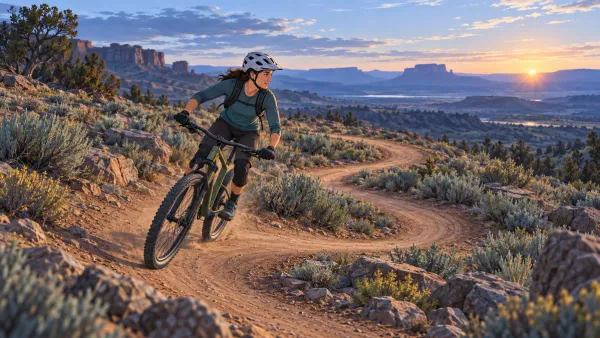
Cycling in wind: headwind pacing and crosswind safety
Learn how to cycle in wind with safer crosswind handling, steady headwind pacing, route choices, group skills, and clear signs to postpone a ride safely.
Quick answer
To cycle in wind safely, manage effort rather than chasing normal speed, keep a relaxed grip and stable upper body, leave extra lateral space, and treat gusts as a handling hazard rather than a fitness test. In a headwind, shift early and hold a sustainable power or perceived effort. In a crosswind, slow before exposed sections, keep both hands where the brakes are immediately available, and expect the bike to move when buildings, hedges, or vehicles suddenly stop shielding you.
There is no universal wind-speed cutoff that makes every ride safe or unsafe. Gust strength and direction, traffic, wheel and bike geometry, rider mass and skill, debris, rain, and the exposure of the route all matter. Postpone, shorten, reroute, or turn back whenever you cannot hold a predictable line or an official weather warning advises against unnecessary travel.
If your goal is a multi-day ride, our bike touring gear guide adds a practical method for balancing luggage, planning water, and rehearsing repairs.
Key facts
- Relative air speed determines aerodynamic demand because a headwind adds to the air moving past a cyclist even when ground speed falls.
- Crosswinds create lateral force and steering demand that can rise sharply with wind angle, bike shape, and gust intensity.
- Effort-based pacing prevents a headwind surge by replacing a speed target with power, breathing, or perceived exertion.
- A relaxed upper body improves bike control by allowing small steering corrections without turning every gust into an abrupt movement.
- A weather and route check reduces exposure by identifying warnings, bridges, open fields, coastlines, falling branches, and safer alternatives before departure.
Why wind changes cycling so much
A cyclist feels apparent wind: the combination of the air mass moving across the ground and the air flow created by the bicycle’s own motion. That is why a moderate headwind can make a familiar flat road feel like a climb. The rider may move more slowly over the ground while the air still reaches the body and bike at high relative speed.
Aerodynamic drag rises approximately with the square of relative air speed, while the power needed to overcome it rises approximately with the cube when other conditions are held constant. Real roads are more complicated because speed, yaw angle, rolling resistance, gradient, posture, and turbulence all change together. The practical conclusion is simpler: trying to preserve calm-day speed into a headwind can demand a disproportionate increase in power.
Wind direction also changes the problem:
| Wind condition | Main effect | Best first response |
|---|---|---|
| Headwind | Higher aerodynamic resistance and lower ground speed | Shift down and hold sustainable effort |
| Tailwind | Higher ground speed and less cooling | Keep speed appropriate for sight lines and braking distance |
| Steady crosswind | Continuous lateral force and steering correction | Create lateral room and keep the body relaxed |
| Gusting crosswind | Sudden changes in lateral force | Reduce speed, anticipate exposed gaps, and avoid rigid steering |
| Swirling urban wind | Direction changes around buildings and vehicles | Expect transitions and prioritize a predictable road position |
Full-scale wind-tunnel research found that crosswind-induced lateral loads can exceed the forward drag load and that the bicycle itself contributes substantially to side force at large yaw angles. A bicycle-dynamics model likewise found that crosswind increases the steering effort needed to maintain a straight path. These studies do not provide a personal ride/no-ride number, but they explain why crosswind safety depends on control, not merely on average wind speed.
Make the ride/no-ride decision before leaving
Check both sustained wind and gusts in a trusted local forecast. Averages can hide the brief peaks most likely to displace a cyclist. Also check the warning area and timing: conditions at a headland, bridge, ridge, or gap between buildings may differ from those at home.
Use this sequence:
- Read official warnings. Follow local weather and transport advice. Warning thresholds vary among services and regions, so do not treat one country’s number as a universal cycling limit.
- Inspect the route. Identify exposed bridges, open farmland, coastal roads, wooded sections, fast traffic, narrow lanes, construction barriers, and places where crosswind could push you toward a curb or vehicle.
- Assess the rider and bike. Experience, fatigue, illness, confidence, load, bike type, and wheel profile change how much control margin you have.
- Choose an exit plan. Know the shorter loop, sheltered return, train stop, or safe place to wait. Tell someone your route on longer rides.
- Reassess outside. Forecast wind is not the same as the gusts you actually feel. Cancel if trees, signs, bins, or road debris already show unstable conditions.
Clear reasons to postpone or stop
Do not let a planned workout overrule visible risk. End or avoid the ride when:
- an official warning advises staying indoors or avoiding unnecessary travel;
- gusts repeatedly move you outside the line you intend to hold;
- you cannot signal, look behind, or brake while maintaining control;
- debris, falling branches, dust, spray, or poor visibility add another hazard;
- crosswind combines with ice, standing water, loose gravel, or a narrow high-speed road;
- fatigue, cold hands, anxiety, or mechanical trouble reduces your control margin;
- riding companions cannot maintain predictable spacing and communication.
Walking a short exposed section, turning around, using an indoor trainer, or taking a rest day is sound risk management. Fitness is built through repeatable training, not by proving that every session can be completed.
Prepare the bicycle without turning safety into a shopping list
Start with basic function. Official road-safety guidance emphasizes effective brakes, sound tires, freely turning wheels, working gears, and correctly adjusted handlebars and saddle. Add secure bottles, bags, lights, and clothing; a loose strap or flapping layer can distract you exactly when steering needs attention.
Before a windy ride:
- set tire pressure for the tire, load, surface, and manufacturer limits rather than inflating reflexively to the maximum;
- confirm that both brakes engage predictably and the wheels are secure;
- remove or fasten loose accessories and clothing;
- use front and rear lights when visibility may deteriorate, even if local law does not require them in daylight;
- carry a charged phone and the minimum repair kit needed for the route;
- choose clothing that blocks wind but can vent as effort changes.
Deeper wheel sections and broad bike surfaces can change crosswind forces. The correct choice depends on the complete bike-rider system and conditions; a specific rim depth is not a universal safety threshold. If a setup feels difficult to control in gusts, use a more familiar, less wind-sensitive configuration or postpone the ride rather than trying to adapt on a hazardous road.
Headwind technique: protect effort, not speed
The most common headwind error is holding the speed seen on a calm day. That turns a planned endurance ride into an unplanned threshold session and can leave the rider depleted before the return.
1. Shift before cadence collapses
Select an easier gear as the resistance rises. Keep a smooth cadence you can sustain instead of grinding a large gear with increasing upper-body tension. Cadence preference is individual, but a sudden drop paired with straining is a useful signal to shift. Off-road riders can use our mountain bike gear-shifting guide to practise the same anticipation while managing chain load, traction, and rough terrain.
2. Use a sustainable compact position
Reducing frontal area can lower drag, and research consistently shows that posture changes aerodynamic demand. But the fastest laboratory position is not automatically the safest road position. Keep your head up, vision open, and hands close to the brakes. Lower the torso only as far as mobility, traffic, surface, and control allow.
Relax the shoulders, bend the elbows slightly, and keep the torso quiet. British Cycling coaching guidance similarly recommends a compact, stable upper body in headwinds. Do not force an extreme position that causes neck pain, numb hands, poor breathing, or delayed braking.
3. Hold effort through small changes
Choose one primary pacing signal:
- Power: keep watts near the planned zone and allow speed to vary.
- Perceived exertion: for an easy ride, maintain conversational breathing instead of fighting for the speed display.
- Heart rate: use it as a delayed confirmation, not an instant controller, because it responds gradually and also changes with temperature, hydration, fatigue, and stress.
Our functional threshold power guide explains how watts can anchor cycling intensity. Riders without power can use the talk test and sport-specific heart-rate zones together.
In a small simulated time-trial study, cyclists performed better with planned constant or modestly variable power than with their self-selected pacing, which began with a large surge. The study involved seven male cyclists and a specific 16.1 km protocol, so it should not be converted into a rule that everyone must ride exactly 5% harder into a headwind. For ordinary training, an even effort is the safer starting point.
Tailwind technique: speed can hide risk
A tailwind feels easy, but higher ground speed shortens the time available to see, decide, and brake. It can also reduce convective cooling, so the ride may feel less windy even while heat strain rises.
- Keep speed within your sight distance and handling skill.
- Brake before corners rather than abruptly while leaned over.
- Expect side force when the road changes direction and the tailwind becomes a crosswind.
- Leave more time for junctions, pedestrians, and surface hazards.
- Continue drinking according to conditions and thirst; easy airflow does not guarantee adequate cooling.
For warm rides, use the practical steps in our hydration and healthy aging guide. A tailwind out and headwind home can also make the return much longer than expected, so carry enough fluid, food, light, and clothing for the slower half.
Crosswind and gust technique: create control margin
Crosswind handling is a sequence of anticipation, space, and small corrections. Practice first in a low-traffic area with moderate steady wind, not during a storm warning.
Keep the controls available
Place both hands in a secure position with immediate brake access. Maintain a firm connection without clenching. Bent elbows and relaxed shoulders allow the bike to move slightly beneath you while the torso and gaze stay composed.
Look toward the path you want to follow, not at the road edge you fear. A rigid grip often amplifies every steering input. Make small, progressive corrections and avoid sudden braking or swerving.
Anticipate wind shadows
The strongest surprise often occurs at a transition:
- leaving the shelter of a hedge, wall, cutting, or building;
- passing a gateway or break in trees;
- entering or leaving the shadow of a bus or truck;
- moving onto a bridge, ridge, or open shoreline;
- changing road direction at a bend.
Slow before the transition, widen the safety margin, and avoid riding beside large vehicles. A temporary wind shadow can be followed by an abrupt lateral push as either you or the vehicle moves ahead.
Choose a road position with recovery space
Road rules differ, so use local guidance. The general aim is to remain visible and predictable while leaving enough space to absorb a gust without hitting the curb, shoulder edge, barrier, parked vehicle, or adjacent rider. The UK THINK! campaign advises cyclists to choose a suitable road position and generally leave at least 0.5 m (about 1.6 ft) from the curb on busy roads, moving farther out where safety requires. Treat that as jurisdiction-specific guidance, not a universal legal rule.
If traffic speed, lane width, or road design leaves no safe recovery space, choose another route. Wind-handling technique cannot fix an environment with no error margin.
Riding in a group when it is windy
Drafting reduces aerodynamic demand, and a recent meta-analysis found strong evidence of physiological and biomechanical benefits across sports, with particularly large effects in cycling. Yet close spacing also reduces reaction time. In gusts, the safety cost can outweigh the energy saving for an inexperienced group.
Use these rules:
- agree on simple calls for gusts, debris, slowing, and direction changes;
- keep movements smooth and avoid overlapping wheels;
- increase spacing when control becomes inconsistent;
- rotate only where visibility, traffic, and road width allow;
- never build an echelon across a live lane, center line, shoulder edge, or oncoming traffic;
- do not assume race tactics belong on public roads;
- split a large group when communication and legal road position deteriorate.
British Cycling’s group-riding guidance stresses observation, anticipation, hand signals, relaxed control, and avoiding sudden braking or movement. Newer riders may be safer in a small group with a qualified leader, or on a sheltered solo route where no one is depending on close wheel-following.
Plan training around wind rather than fighting it
Wind can support useful training when conditions remain controllable.
Browse the cycling training and technique archive when you want to place wind skills inside a broader riding plan.
Aerobic endurance ride
Set a power, heart-rate, or talk-test ceiling and accept slower headwind speed. Choose a loop with an early sheltered escape. If possible, begin into the wind so the later return is less demanding, but do not rely on the forecast direction remaining constant.
Technique session
On a quiet, familiar road in moderate wind, practice:
- relaxed hands and bent elbows;
- smooth gear changes before cadence falls;
- looking through the intended line;
- controlled transitions from sheltered to exposed sections;
- turning the bike so the same wind becomes headwind, crosswind, and tailwind.
Keep the session submaximal. Technique deteriorates under fatigue, so finish before control becomes sloppy.
Off-road gravity riding adds steep grades, roots, berms, and protective-equipment decisions that this road-focused drill does not cover. Our downhill mountain biking beginner guide gives those skills a controlled progression from flat-ground braking to easy trails.
Indoor alternative
Move intervals indoors when the goal is precise intensity and outdoor gusts would distort the session or create risk. The HIIT cycling workout guide helps match interval duration to the intended adaptation. If the goal is long-term durability, our cycling training guide after 50 combines endurance, intensity, strength, and recovery without requiring hazardous weather exposure.
Cycling also belongs inside a complete weekly movement plan. Our exercise and longevity guide explains how aerobic work, strength, balance, mobility, and recovery complement one another.
Recovery after a demanding windy ride
A windy session may produce more fatigue than distance or average speed suggests. Headwinds increase time and work; gusts increase concentration and upper-body tension; cold wind can mask sweat; repeated accelerations can turn a steady route into variable-intensity training.
After the ride, record conditions alongside duration, power, heart rate, and perceived effort. Rehydrate, eat a normal recovery meal, warm up gradually if chilled, and note hand, neck, shoulder, or low-back discomfort caused by holding a compact position. Persistent pain, numbness, dizziness, chest discomfort, fainting, or unusual breathlessness deserves appropriate medical assessment rather than a bike-fit guess.
Put wind exposure in context with SuperAge
Distance and average speed alone can misrepresent a windy ride. A slower route may contain higher power, more cardiovascular strain, and greater recovery cost than a faster calm-day session.
Compare the effort, not just the speed
SuperAge helps you view workouts alongside recovery and health trends available through Apple Health. Use that context to compare similar sessions, flag unusual strain, and decide whether tomorrow supports another hard ride or a lighter recovery day. It cannot judge road safety for you; the forecast, route, local warnings, and real-time bike control remain decisive.
Frequently asked questions
How windy is too windy for cycling?
There is no universal cutoff. Sustained wind, gusts, direction, traffic, route exposure, rider skill and mass, bike geometry, wheel profile, rain, debris, and official warnings all change risk. If gusts prevent a predictable line or local authorities advise avoiding travel, postpone or stop.
Should I ride faster or harder into a headwind?
Usually neither. Hold the planned effort and accept a lower ground speed. Competitive time trials may use a carefully modeled variable-power strategy, but recreational and endurance riders should avoid large surges that compromise the rest of the ride.
Is it better to start a loop into the wind?
Often, because the return may then have more assistance when you are tired. Wind direction can change, however, and a tailwind outward can hide how much work the return will require. Always keep an alternate route and enough supplies.
What should I do when a crosswind gust hits?
Keep looking along your intended path, maintain a secure but relaxed grip, bend the elbows, and make a small progressive steering correction. Avoid abrupt braking or swerving. If you cannot hold the line, reduce speed and stop somewhere protected.
Are deep wheels unsafe in crosswinds?
Wheel shape can change lateral force and steering response, but there is no single safe depth for every rider and condition. Experience, complete bike geometry, gusts, route exposure, and rider size matter. Use a familiar less wind-sensitive setup when control is uncertain.
Does drafting help in a headwind?
Yes, drafting can reduce aerodynamic demand, but close riding requires skill and clear communication. Increase spacing in gusts, avoid overlapping wheels, follow local traffic rules, and never form an echelon that occupies unsafe road space.
Why does heart rate stay low when a gust suddenly makes riding hard?
Heart rate responds more slowly than the immediate change in mechanical demand. Power and perceived effort register the surge sooner. Use heart rate for the broader trend and avoid chasing a delayed number with an unnecessary acceleration.
Should I train outdoors during a wind warning?
Follow the warning and local travel advice. A planned workout is not essential travel. An indoor ride, strength session, mobility work, or rest day preserves training continuity without adding avoidable exposure.
Key takeaways
- Judge a windy ride by gusts, route exposure, traffic, control, and official warnings—not average wind alone.
- Pace headwinds by power, breathing, or perceived exertion and allow ground speed to fall.
- Keep a relaxed upper body, both hands near the brakes, and extra lateral space in crosswinds.
- Anticipate abrupt changes after buildings, hedges, bridges, bends, and large vehicles.
- Use group shelter only with legal road position, smooth communication, and enough reaction space.
- Postpone or stop whenever you cannot hold a predictable line; consistency beats one risky workout.
References
- Atkinson G, Brunskill A. Pacing strategies during a cycling time trial with simulated headwinds and tailwinds. Ergonomics. 2000.
- Fintelman DM, Hemida H, Sterling M, Li FX. The effect of crosswinds on cyclists: an experimental study. Procedia Engineering. 2014.
- Schwab AL, Dialynas G, Happee R. Some effects of crosswind on the lateral dynamics of a bicycle. Proceedings. 2018.
- Polanco A, Holub J, Otáhal J. Aerodynamic benefits by optimizing cycling posture. Applied Sciences. 2022.
- Konings MJ, Windels M, de Waard D, Hettinga FJ. Be aware of the benefits of drafting in sports and take your advantage: a meta-analysis. Applied Bionics and Biomechanics. 2024.
- British Cycling. Riding rolling roads: wind, posture, and group skills.
- British Cycling. Guide to riding in a group.
- UK Department for Transport. The Highway Code: you and your bicycle. Updated 2025.
- THINK! road safety. Cycle safety advice.
- Met Office. Staying safe in strong wind.
This article is educational and does not replace local weather warnings, road laws, qualified cycle instruction, medical advice, or individualized coaching.
Related Articles

Running at night: visibility, routes, and a safer session
Plan running at night with practical lighting, reflective clothing, route choices, easy effort, and sleep timing. Build a safer routine that fits your evenings.