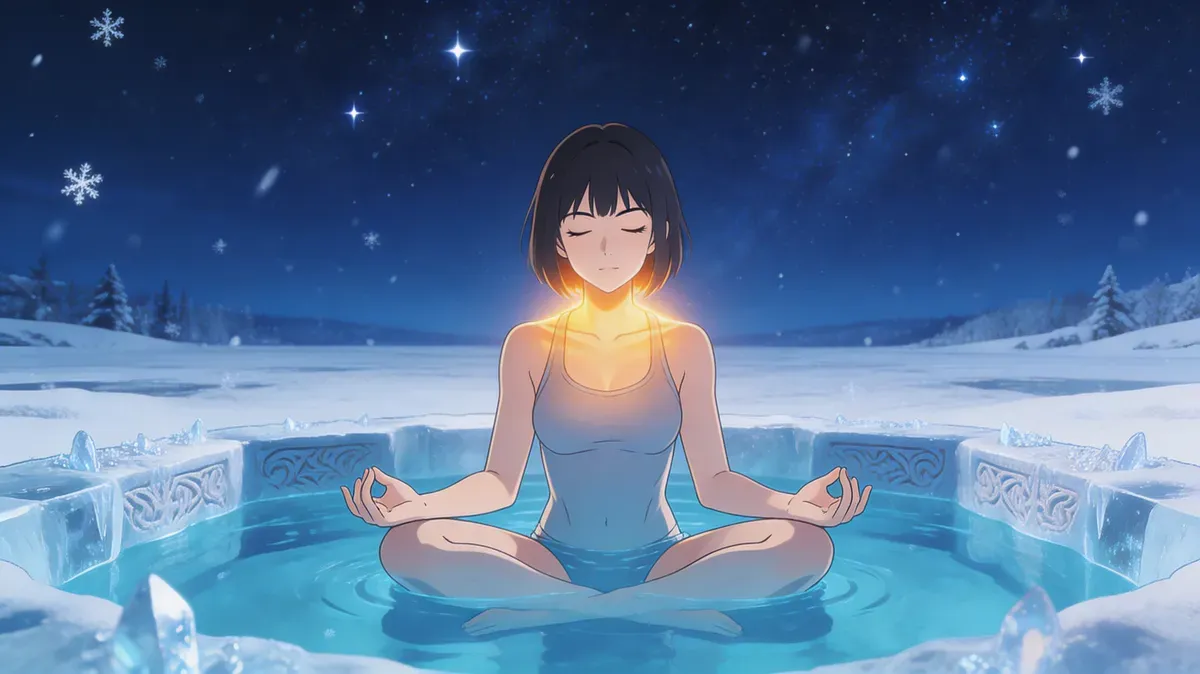
Cold exposure: how cold therapy activates brown fat and strengthens your body
Learn what cold exposure can and cannot do: brown fat activation, hormesis, safe cold shower and plunge protocols, recovery timing, and risks.
Step into a cold shower and your body does something remarkable: within seconds, brown fat activates, norepinephrine surges, blood vessels constrict, and an ancient stress-response cascade begins. Your heart rate spikes. Your breathing sharpens. Every cell in your body shifts into a heightened state of alert.
This is not magic, and it is not a longevity guarantee. Cold exposure is a hormetic stressor: small, controlled doses can train thermoregulation, autonomic control, mood arousal, and brown-fat activity, while excessive or poorly timed exposure can add risk or interfere with training adaptation.
But social media has turned cold plunging into a lifestyle brand, and the hype has outpaced the science in many areas. What does the research actually support? What are realistic expectations? And how do you practice cold exposure safely and effectively?
What you’ll learn:
- How cold exposure activates brown fat and boosts metabolism
- The hormesis principle and why controlled stress makes you stronger
- Evidence-based protocols for cold showers, cold plunges, and winter swimming
- What the science actually supports — and where the hype exceeds the evidence
Quick answer
Cold exposure is best supported for acute alertness, cold tolerance, brown-fat activation, and possibly short-term stress or sleep effects. It is not proven to extend human lifespan, and it will not create dramatic fat loss by itself.
The safest protocol is boring: start with 15 to 30 seconds of cool-to-cold shower water, progress slowly, keep breathing controlled, and avoid cold plunges if you have uncontrolled cardiovascular disease, Raynaud’s disease, cold urticaria, or a high hypothermia risk.
Key facts
- Cold exposure -> brown fat activation: cold reliably activates brown adipose tissue, but the calorie effect is usually modest.
- Cold plunge -> cardiovascular stress: cold shock raises heart rate, blood pressure, and breathing load, so safety screening matters.
- Recovery timing -> training goal: cold water immediately after lifting may blunt hypertrophy signals; separate it from strength sessions when muscle gain is the goal.
- 11 minutes/week -> reference dose: the popular number comes from winter-swimmer research and should not be treated as a universal minimum.
- Longevity claims -> not proven: cold activates aging-relevant pathways, but long-term human lifespan data are still missing.
Related guides: HRV guide, blood pressure by age, biological age.
What is cold exposure therapy?
Cold exposure therapy is the deliberate practice of subjecting your body to cold temperatures — through cold showers, ice baths, cold plunges, winter swimming, or cryotherapy chambers — to trigger beneficial physiological adaptations.
Quick definition: Cold exposure therapy uses controlled cold stress to activate brown fat thermogenesis, boost norepinephrine, reduce inflammation, and strengthen the body’s adaptive stress-response systems through a process called hormesis.
Why cold exposure matters for your health
Humans evolved in environments with significant temperature variation. Central heating and climate-controlled environments have largely eliminated cold stress from modern life. This environmental mismatch may contribute to metabolic dysfunction, weakened stress resilience, and reduced brown fat activity.
Cold exposure reintroduces a natural stressor that your biology is designed to handle — and benefit from. The key is finding the right dose: enough to trigger adaptation, not so much that it causes harm.
The science behind cold exposure
How cold affects your body
When skin temperature drops, thermoreceptors trigger a rapid cascade of physiological responses:
Immediate (0-30 seconds):
- Sympathetic nervous system activation (fight-or-flight)
- Norepinephrine release (200-300% increase with cold water immersion)
- Peripheral vasoconstriction (blood redirected to core organs)
- Gasp reflex and hyperventilation (cold shock response)
Short-term (1-10 minutes):
- Brown fat activation and non-shivering thermogenesis
- Increased metabolic rate (up to 350% during shivering)
- Endorphin and dopamine release (mood elevation)
- Anti-inflammatory cytokine shift
Adaptive (weeks-months of consistent practice):
- Brown fat volume increase
- Improved cold tolerance
- Enhanced norepinephrine baseline
- Better cardiovascular reactivity
- Improved HRV and autonomic flexibility
Brown fat: your metabolic furnace
Most body fat is white adipose tissue — energy storage. Brown adipose tissue (BAT) is fundamentally different. Packed with mitochondria (which give it its brown color), BAT generates heat by burning calories through a process called non-shivering thermogenesis via a protein called UCP1 (uncoupling protein 1).
Research published in Cell Metabolism found that two hours of daily cold exposure at 63°F (17°C) for six weeks significantly increased brown fat activity and improved insulin sensitivity. Brown fat:
- Burns glucose and fatty acids to generate heat
- Improves insulin sensitivity by acting as a glucose sink
- Secretes beneficial hormones (batokines) that affect whole-body metabolism
- Decreases with age — but can be reactivated through cold exposure
Infants have abundant brown fat (they can’t shiver). Adults retain smaller deposits, primarily around the neck, collarbones, and spine. Regular cold exposure can increase both the volume and activity of these deposits.
The hormesis principle
Hormesis is the biological concept that low-dose stressors trigger adaptive responses that leave the organism stronger than before. Cold exposure is a textbook example:
- Stress signal — cold activates cellular stress pathways
- Protective response — cells upregulate heat shock proteins, antioxidant defenses, and anti-inflammatory pathways
- Supercompensation — the protective response overshoots, leaving you with greater resilience than baseline
This is the same principle behind the benefits of exercise, heat exposure, fasting, and certain phytochemicals like sulforaphane. The stressor itself isn’t beneficial — the adaptive response is.
6 evidence-based benefits of cold exposure
1. Activates brown fat and boosts metabolism
Why it works: Cold is the most potent natural activator of brown adipose tissue. BAT activation increases energy expenditure through non-shivering thermogenesis and improves glucose disposal.
The evidence:
- A study in Cell Metabolism showed six weeks of mild cold exposure (63°F / 17°C) increased brown fat activity by 42% and improved insulin sensitivity
- PET-CT studies confirm that regular cold exposure increases both brown fat volume and metabolic activity
Reality check: While real, the metabolic boost from brown fat is modest — roughly 100-200 extra calories per day. Social media claims of dramatic fat loss from cold plunging alone are exaggerated. Cold exposure is a complement to, not a replacement for, exercise and dietary management.
Expected results: Increased cold tolerance within 2-3 weeks; measurable brown fat changes over 4-6 weeks of consistent exposure.
2. Elevates mood and mental clarity
Why it works: Cold water immersion triggers a massive release of norepinephrine (200-300% increase) and dopamine (lasting elevation for hours). These neurotransmitters regulate attention, focus, mood, and motivation.
The evidence:
- A study by Dr. Susanna Soberg demonstrated sustained dopamine elevation following cold water immersion
- Multiple studies report improved mood, alertness, and perceived energy after cold exposure
- Some research suggests potential benefits for depression symptoms, though large-scale trials are needed
How to do it: Even a 30-second cold shower at the end of your regular shower can trigger a norepinephrine response. The mood benefit is one of the most immediately noticeable effects.
3. Reduces inflammation and supports recovery
Why it works: Cold exposure shifts the immune system toward an anti-inflammatory profile, reducing pro-inflammatory cytokines and increasing anti-inflammatory mediators. It also reduces tissue temperature, slowing metabolic waste accumulation.
The evidence:
- Studies show reduced levels of inflammatory markers including IL-6 and TNF-alpha after regular cold exposure
- Athletes use cold water immersion for recovery, though the evidence for muscle repair specifically is mixed
- A 2025 study found cold exposure can help manage chronic inflammation
Important nuance: If your goal is muscle hypertrophy (growth), avoid cold immersion immediately after strength training. Cold can blunt the inflammatory signals needed for muscle adaptation. Wait at least 4 hours, or use cold on non-training days.
4. Strengthens cardiovascular function
Why it works: The repeated cycle of vasoconstriction (cold) and vasodilation (rewarming) acts as “exercise” for your blood vessels, improving their elasticity and reactivity over time.
The evidence:
- Winter swimmers show improved cardiovascular markers compared to non-swimmers
- Regular cold exposure is associated with improved blood pressure reactivity
- Dr. Soberg’s research on Scandinavian winter swimmers demonstrated enhanced cardiovascular adaptation
How to do it: Consistency matters more than intensity. Regular cold showers (2-3 minutes, 3-5 times per week) provide cardiovascular training benefits over time.
5. Improves stress resilience and mental toughness
Why it works: Cold exposure is an acute, controllable stressor. Practicing voluntary discomfort trains your nervous system to manage stress responses more effectively — a skill that transfers to other life stressors.
The evidence:
- Cold exposure improves autonomic flexibility, reflected in higher HRV
- Studies show improved stress coping and reduced anxiety in regular cold water practitioners
- The deliberate practice of controlling breathing and remaining calm during cold stress builds parasympathetic tone
Expected results: Improved stress response and sleep quality within 2-4 weeks of consistent practice. Many practitioners report this as the most valuable benefit.
6. Enhances immune function
Why it works: Regular cold exposure appears to modulate the immune system, increasing certain immune cell populations and improving immune surveillance.
The evidence:
- A large Dutch study (the “Iceman study”) found that participants who took cold showers had 29% fewer sick days than controls
- Cold exposure increases circulating immune cells, including natural killer cells and lymphocytes
- However, acute cold stress can temporarily suppress immunity — chronic, moderate practice is key
How to do it: Gradual adaptation is essential. Start with cold finishes to warm showers and build tolerance over weeks, not days.
Evidence-based cold exposure protocols
Beginner: cold shower finish
Temperature: As cold as your tap allows (typically 50-60°F / 10-15°C) Duration: 30 seconds, building to 2 minutes over 2-3 weeks Frequency: Daily or 5x per week Method: End your regular warm shower with cold water. Start with 15 seconds and add 15 seconds each week.
Intermediate: dedicated cold shower
Temperature: 50-59°F (10-15°C) Duration: 2-5 minutes Frequency: 3-5x per week Method: Enter the cold shower directly. Focus on controlled, slow breathing (4 counts in, 6 counts out). Allow yourself to adapt rather than fighting the sensation.
Advanced: cold water immersion (ice bath / cold plunge)
Temperature: 40-50°F (4-10°C) Duration: 2-5 minutes (rarely more than 10) Frequency: 2-4x per week Method: Full body immersion up to the neck. Keep hands out of the water initially if needed. Focus on breath control. Exit immediately if you feel numbness in extremities or confusion.
Ending on cold: useful, not mandatory
Søberg’s winter-swimmer work is often summarized as “end on cold,” but it was not a randomized trial proving that this step is required. Letting yourself rewarm naturally may increase thermogenic demand if you feel well. If you develop prolonged shivering, dizziness, numbness, confusion, or poor coordination, use active rewarming and stop the session.
Weekly dose: use 11 minutes as a reference, not a rule
The popular 11-minute target comes from observations of experienced winter swimmers who averaged roughly that much cold-water exposure per week, usually alongside sauna use. It is a useful reference point, not a universal minimum effective dose. Beginners can start with 30-second cold shower finishes and build toward 2 to 4 short sessions per week without chasing colder water or longer exposure.
How to track and measure your cold adaptation
Cold exposure benefits can be monitored through several measurable metrics:
Key metrics to monitor
| Metric | What It Shows | Expected Change |
|---|---|---|
| Resting heart rate | Cardiovascular efficiency | Gradual decrease |
| HRV | Autonomic flexibility | Gradual increase |
| Cold tolerance duration | Adaptation progress | Longer comfortable exposure |
| Morning body temperature | Metabolic rate | Slight increase possible |
| Sleep quality metrics | Recovery and restoration | Improvement over weeks |
| Mood and energy (subjective) | Neurotransmitter response | Noticeable within days |
Cold exposure and biological age: what the research says
Beyond its acute health benefits, cold exposure connects to several fundamental mechanisms of biological aging:
Hormesis and cellular resilience: Cold stress activates heat shock proteins (HSPs) and cold shock proteins (CSPs), which function as molecular chaperones — helping proteins fold correctly and preventing the accumulation of damaged proteins. This directly addresses proteostasis decline, one of the recognized hallmarks of aging.
Mitochondrial biogenesis: Cold exposure activates PGC-1alpha, the master regulator of mitochondrial biogenesis, triggering the creation of new mitochondria. This combats the mitochondrial dysfunction that accelerates biological aging. Nutritional compounds like PQQ activate the same PGC-1α pathway and may compound the biogenesis signal when combined with cold practice.
Inflammation reduction: By shifting the immune profile toward anti-inflammatory mediators, consistent cold practice may help counteract inflammaging — the chronic, low-grade inflammation that drives accelerated aging.
AMPK activation: Cold exposure activates AMPK (adenosine monophosphate-activated protein kinase), the same metabolic sensor triggered by exercise and caloric restriction — both well-established longevity interventions.
However, it’s important to note that while these mechanisms are well-characterized, long-term human studies directly measuring cold exposure’s effect on biological age or lifespan are still lacking. The current evidence is mechanistic and associative. We know cold activates longevity-relevant pathways; we don’t yet have definitive proof it extends human lifespan.
Want to go deeper? Read our guide on how biological age is calculated to understand the biomarkers that track your aging pace.
Safety: risks and contraindications
Cold exposure is powerful, and power demands respect. Key safety considerations:
Absolute contraindications
- Uncontrolled cardiovascular disease — cold shock can trigger arrhythmias or cardiac events
- Raynaud’s disease — cold can trigger dangerous vasospasm
- Cold urticaria — allergic reaction to cold temperatures
- Hypothermia risk — never practice alone in natural bodies of water
Important precautions
- Never start with extreme cold — gradual adaptation over weeks is essential
- Never combine alcohol with cold water immersion — impairs thermoregulation and judgment
- Avoid cold immersion immediately after strength training — wait 4+ hours to preserve muscle adaptation signals
- Exit immediately if you experience numbness, confusion, or loss of motor control
- Practice with a buddy when using open water or ice baths
- Treat outdoor swimming as a separate skill — our pool-to-open-water guide covers navigation, pacing, and venue safety
- Treat moving water as a separate hazard — our body rafting safety guide explains why current, obstacles, and limited exits require qualified supervision
- Consult your physician if you have any cardiovascular, respiratory, or autoimmune condition
The 2025 recovery-study caveat
A 2025 randomized trial in 30 healthy young women found that cold or hot water immersion after muscle-damaging exercise did not accelerate recovery compared with control. That does not refute brown-fat or mood effects, but it does limit recovery claims and reinforces the need for more sex-specific research.
How SuperAge helps you track your cold adaptation
Cold exposure benefits are real but gradual. SuperAge gives you the data to see your progress objectively:
HRV and recovery tracking
SuperAge monitors your heart rate variability through Apple Watch — one of the best proxy measures for autonomic adaptation to cold stress. As your cold practice builds autonomic flexibility, you should see a measurable upward trend in HRV over weeks.
Resting heart rate trends
Consistent cold exposure combined with exercise typically improves cardiovascular efficiency, reflected in a lower resting heart rate. SuperAge tracks this metric daily, showing your long-term trend.
Biological age monitoring
By tracking multiple biomarkers that cold exposure influences — HRV, resting heart rate, exercise capacity, and recovery — SuperAge calculates your biological age and shows whether your lifestyle interventions are translating into measurable aging pace improvements.
Frequently asked questions
How cold does the water need to be?
For meaningful physiological benefits, water should be uncomfortable but manageable — typically 50-59°F (10-15°C) for cold showers, or 40-50°F (4-10°C) for ice baths. You don’t need extreme temperatures. Research shows that even 59°F (15°C) water activates brown fat and triggers norepinephrine release. The key is that it feels genuinely cold to you, which varies by individual adaptation.
Can cold exposure help with weight loss?
Cold exposure activates brown fat and increases energy expenditure, but the effect is modest — roughly 100-200 extra calories per day with consistent practice. It won’t compensate for a poor diet or replace exercise. Think of it as a complement to a comprehensive metabolic health strategy, not a standalone weight-loss tool. Claims of dramatic fat loss from cold plunging alone are not supported by current evidence.
Is cold exposure safe for older adults?
It can be, but with important caveats. Older adults should start very gradually (cool rather than cold water), get medical clearance, and never practice alone. The cold shock response places significant demand on the cardiovascular system, and the risk of cardiac events increases with age. That said, many older winter swimmers in Scandinavia practice safely with appropriate adaptation and medical oversight.
Cold shower vs. ice bath: which is better?
Both work, but through slightly different mechanisms. Cold showers are more accessible, easier to control, and sufficient for most benefits (mood, norepinephrine, basic brown fat activation). Ice baths provide deeper tissue cooling and more intense hormesis but carry higher risk and require more equipment. For most people, consistent cold showers provide an excellent risk-to-benefit ratio. If you’re weighing cold against heat therapy, see our sauna vs cold plunge comparison.
Should I take a cold plunge every day?
Two to four short sessions per week are enough for most people to build cold tolerance. The often-cited 11-minute weekly target is a reference from winter-swimmer research, not a requirement. Daily cold showers can be fine for adapted people, but daily ice baths may be excessive. Use recovery days, especially if sleep, HRV, mood, or training performance worsens.
Key takeaways
- Cold exposure triggers hormesis: A controlled cold stressor activates brown fat, boosts norepinephrine and dopamine, reduces inflammation, and strengthens cardiovascular function
- Brown fat is your metabolic ally: Regular cold practice increases brown fat volume and activity, improving insulin sensitivity and energy expenditure — though the metabolic boost is modest, not dramatic
- Start gradually and be consistent: use the 11-minute weekly figure as a reference, not a rule; cold shower finishes can be enough for beginners, while longer or colder plunges increase risk.
- Emerging evidence connects cold to aging pathways: Cold activates AMPK, mitochondrial biogenesis, and heat/cold shock proteins — though direct human lifespan data is still lacking
- Safety first: Never skip gradual adaptation, and consult a physician if you have cardiovascular or autoimmune conditions
Start your cold exposure practice today
You don’t need an expensive ice bath to begin. Tomorrow morning, turn the shower to cold for the last 30 seconds. That’s it. Notice the gasp, the focus, the alertness that follows. Build from there — gradually, consistently, and safely.
Ready to track the results? Download SuperAge and monitor your HRV, resting heart rate, and biological age as your body adapts to cold stress.
References
- van der Lans AAJJ et al. - “Cold acclimation recruits human brown fat and increases nonshivering thermogenesis” - Journal of Clinical Investigation (2013) - PMC
- Lee P et al. - “Temperature-acclimated brown adipose tissue modulates insulin sensitivity in humans” - Diabetes (2014) - PMC
- Søberg S et al. - “Altered brown fat thermoregulation and enhanced cold-induced thermogenesis in young, healthy, winter-swimming men” - Cell Reports Medicine (2021) - PubMed
- Buijze GA et al. - “The Effect of Cold Showering on Health and Work” - PLOS ONE (2016) - PLOS
- Cain T et al. - “Effects of cold-water immersion on health and wellbeing” - PLOS ONE (2025) - PMC
- Petersen AC and Fyfe JJ - “Post-exercise Cold Water Immersion Effects on Physiological Adaptations to Resistance Training” - Frontiers in Sports and Active Living (2021) - PubMed
- Wellauer V et al. - “No acceleration of recovery from exercise-induced muscle damage after cold or hot water immersion in women” - PLOS ONE (2025) - PubMed
- Tipton MJ et al. - “Cold water immersion: kill or cure?” - Experimental Physiology (2017) - PubMed
- Cypess AM et al. - “Identification and importance of brown adipose tissue in adult humans” - New England Journal of Medicine (2009) - PubMed
Last updated: 2026-04-05. This article is regularly reviewed to ensure accuracy.
Related Articles

Insulin sensitivity: What it is and how to improve it naturally
Learn what insulin sensitivity is, why it matters for your health, and 10 proven strategies to improve it naturally — from diet and exercise to sleep and stress.