Natto and vitamin K2 MK-7: the Japanese longevity food science
Discover how natto's MK-7 content reduces arterial calcification 50%, protects bones, and contributes to Japanese longevity. Evidence-based guide to dosing and consumption.
Japan has the highest life expectancy in the world, and its population maintains remarkably low rates of cardiovascular disease and osteoporosis well into old age. While genetics and diet diversity contribute, researchers increasingly credit a single, sticky, pungent fermented food: natto.
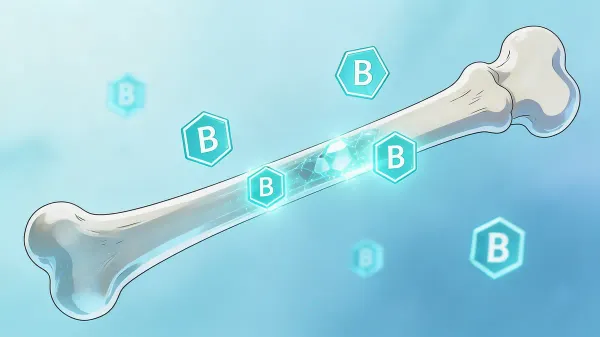
Natto is the richest natural source of menaquinone-7 (MK-7), the long-chain form of vitamin K2 that science now recognizes as the master regulator of where calcium goes in your body. When MK-7 is sufficient, calcium builds bones; when it’s deficient, calcium accumulates in arteries and soft tissue — accelerating every measurable aspect of biological aging.
A landmark 10-year population study showed that people consuming at least 32 mcg of vitamin K2 daily experienced 50% less arterial calcification, 50% lower cardiovascular risk, and 25% lower all-cause mortality. One tablespoon of natto delivers over 200 mcg — roughly seven times that threshold.
What you’ll learn:
- Why MK-7 is uniquely powerful among vitamin K forms
- How natto protects bones and arteries simultaneously
- The evidence linking natto consumption to Japanese longevity
- Practical protocols for incorporating natto (or MK-7) into your routine
What is natto and what makes it unique?
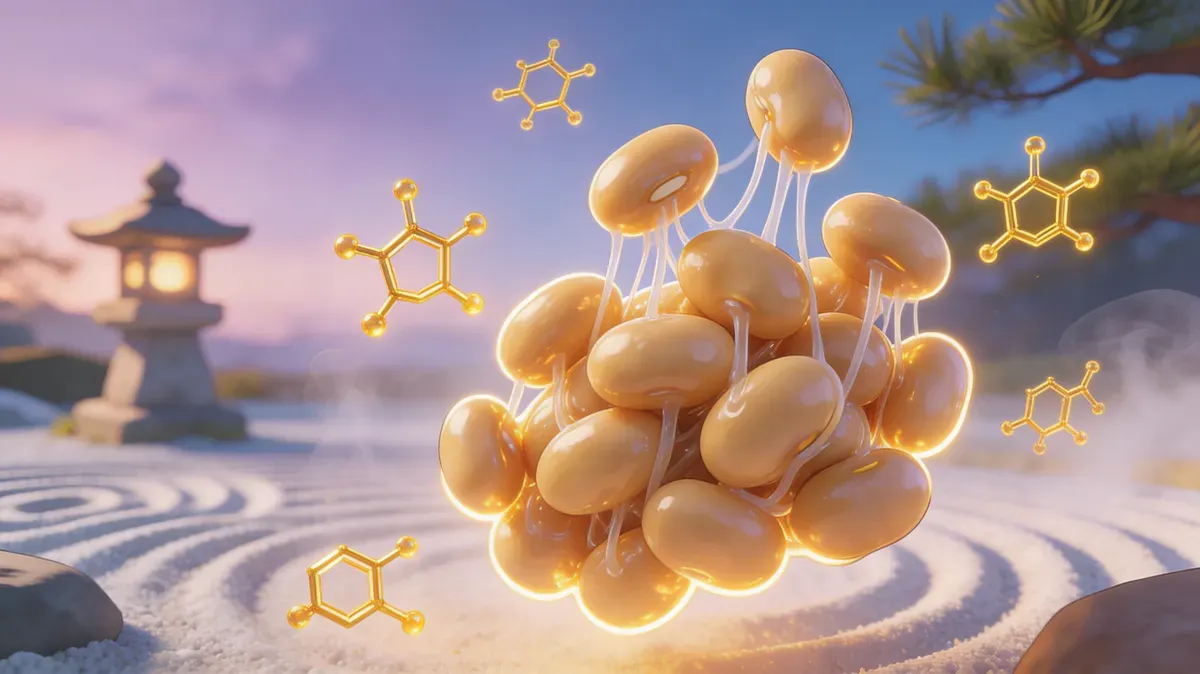
Natto is a traditional Japanese breakfast food made by fermenting soybeans with Bacillus subtilis var. natto. The fermentation produces a characteristic stringy texture, strong ammonia-like aroma, and two remarkable bioactive compounds: nattokinase (a fibrinolytic enzyme) and high concentrations of MK-7.
Quick definition: Natto is fermented soybeans that serve as the richest natural dietary source of vitamin K2 MK-7, providing 200-1,000 mcg per 3.5 oz (100 g) serving.
Why natto is nutritionally unique
While other fermented foods provide probiotics and some K2, natto stands alone in several ways:
- MK-7 concentration: 10-50 times higher than cheese, the next-best dietary source
- Bioavailability: MK-7 has a half-life of approximately 72 hours in circulation, compared to hours for MK-4
- Sustained activation: A single daily serving maintains therapeutic blood levels continuously
- Nattokinase: A unique enzyme with fibrinolytic (clot-dissolving) activity not found in any other fermented food
- Isoflavones: Soy-derived compounds with additional bone-protective and hormonal effects, related to the broader class of plant polyphenols that slow biological aging
MK-4 vs MK-7: why the form matters
Vitamin K2 exists in multiple forms called menaquinones, numbered by their side chain length (MK-4 through MK-13). The two most studied are:
| Feature | MK-4 | MK-7 |
|---|---|---|
| Primary sources | Animal products, fermentation | Natto, some cheeses |
| Half-life in blood | ~1-2 hours | ~72 hours |
| Bioavailability over 24h | Baseline | 2.5x greater |
| Bioavailability over 96h | Baseline | 6x greater |
| Effective daily dose | 45-90 mg | 90-180 mcg |
| Extrahepatic tissue reach | Limited | Extensive |
MK-7’s long half-life means it reaches bones, arteries, and other tissues where calcium management matters most — while MK-4 is largely cleared by the liver before it can work on these distant targets.
The science: how MK-7 protects the aging body
The calcium paradox of aging
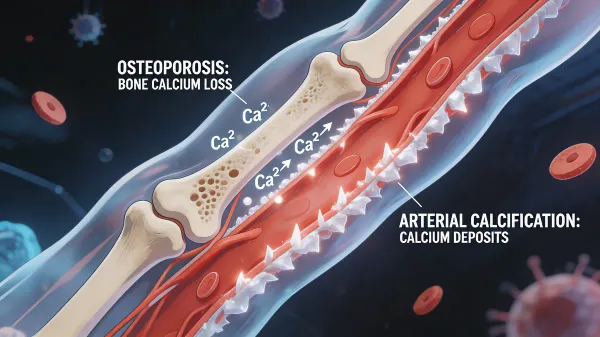
As we age, calcium tends to move from places it should be (bones) to places it shouldn’t (arterial walls, heart valves, kidneys, joints). This “calcium paradox” is a fundamental feature of aging, and it’s largely driven by insufficient vitamin K2 to activate the proteins that direct calcium traffic.
Two proteins are at the heart of this process:
1. Osteocalcin A bone protein that binds calcium and incorporates it into the bone matrix. It requires vitamin K2 to become carboxylated (activated). Without K2, osteocalcin floats in the blood in its inactive form, and bone mineralization suffers.
2. Matrix Gla Protein (MGP) The most potent natural inhibitor of vascular calcification. Like osteocalcin, MGP requires K2 to become active. Inactive MGP is a strong predictor of arterial stiffness, cardiovascular disease, and mortality.
Cardiovascular evidence
Clinical and epidemiological research consistently shows that MK-7 protects the cardiovascular system:
- Rotterdam Heart Study (10 years, 4,807 participants): People consuming 32+ mcg of vitamin K2 daily had a 50% reduction in arterial calcification, 50% reduction in cardiovascular death, and 25% reduction in all-cause mortality
- MK-7 arterial stiffness trial (243 subjects aged 40-70, 3 years): Daily MK-7 supplementation significantly reduced inactive MGP and improved arterial flexibility, while placebo participants became stiffer — consistent with how arterial wall thickness is measured directly
- MK-7 improves endothelial function in individuals with vascular risk factors, enhancing the arteries’ ability to dilate and respond to changes in blood flow
Bone health evidence
Multiple Japanese studies connect natto specifically to bone protection:
- Meta-analysis of Japanese evidence (2025): Habitual natto intake elevates serum MK-7, enhances osteocalcin carboxylation, and supports bone mineral density
- Postmenopausal women: Those consuming more natto had less bone loss at the femoral neck and wrist, independent of calcium intake or other lifestyle factors
- 1,662 elderly Japanese men: Daily natto consumption was associated with significantly better bone mineral density in the hip and femoral neck
- High-dose MK-7 trial: Women receiving MK-7 for 3 years maintained bone mineral density while placebo groups declined
Beyond bones and arteries
Emerging research suggests MK-7 influences several other aging pathways:
- Insulin sensitivity: MK-7 improves glucose tolerance and insulin sensitivity through osteocalcin signaling
- Mitochondrial function: Vitamin K2 serves as an electron carrier in mitochondrial membranes, potentially supporting cellular energy production
- Cognitive health: Emerging evidence links K2 status to reduced dementia risk, likely through cerebrovascular protection
- Inflammation: MK-7 supplementation reduces several inflammatory markers, including CRP — complementing interventions that target homocysteine and cardiovascular methylation pathways
Natto and Japanese longevity: the epidemiological case
Japan consistently ranks first globally for life expectancy, and the geographic pattern of natto consumption provides a natural experiment:
The east-west Japan divide
Natto is heavily consumed in eastern Japan (Tokyo, Tohoku, Mito area) but less so in western Japan (Osaka, Kyoto region). Research has found that:
- Eastern regions show lower rates of hip fracture despite similar dairy intake
- Eastern populations have higher serum MK-7 levels and lower inactive MGP
- Cardiovascular mortality patterns favor high-natto-consumption areas
This geographic correlation, combined with individual-level data showing that natto consumers have better bone and vascular health, creates a coherent case for MK-7 as a significant contributor to the Japanese longevity advantage.
Centenarian studies
Research on Japanese centenarians consistently finds that traditional fermented foods — including natto, miso, and fermented vegetables — form a larger share of their diet than in younger Japanese generations. The gut microbiome changes that drive aging are a key reason centenarians’ diverse fermented food intake confers longevity advantages. As Japan’s diet has westernized, concerns about future cardiovascular and bone health trajectories have led to renewed public health interest in natto consumption.
For deeper context on fermented foods and aging, see our analysis of kimchi’s role in probiotic aging and the Stanford study on fermented foods and biological age.
7 evidence-backed ways to benefit from natto
1. Start with a small daily serving
Why it works: Even modest natto intake (half a tablespoon, ~7.5 g) provides over 100 mcg of MK-7 — three times the Rotterdam study’s protective threshold. You don’t need large amounts for cardiovascular benefit.
How to apply:
- Begin with 1 teaspoon (5 g) mixed into rice or as a side dish
- Increase gradually to 1-2 tablespoons (15-30 g) daily
- Traditional Japanese serving: 40-50 g (about 1.5-2 tablespoons)
Expected results: Measurable increases in carboxylated osteocalcin and decreased inactive MGP within 4-8 weeks.
2. Consume natto in the evening
Why it works: Vitamin K2 activation works alongside the body’s natural overnight bone remodeling. MK-7’s 72-hour half-life means morning vs evening timing doesn’t dramatically affect blood levels, but evening consumption aligns with osteocalcin activity peaks.
How to apply:
- Eat natto with dinner or as an evening snack
- Traditional pairings: with rice, in miso soup, on toast, with soft-boiled egg
- Add soy sauce, mustard, or chopped scallions to improve palatability
Expected results: Optimal alignment with bone remodeling cycles.
3. Pair natto with dietary calcium and vitamin D
Why it works: MK-7 directs where calcium goes, but you need adequate calcium intake and vitamin D for the system to work. These three nutrients form a functional triad for bone and cardiovascular health.
How to apply:
- Ensure 1,000-1,200 mg daily calcium intake (dairy, leafy greens, sardines, fortified plant milks)
- Maintain vitamin D3 status at 30-50 ng/mL through sun exposure or supplementation
- Consume natto alongside calcium-rich foods
Expected results: Synergistic improvement in bone density over 6-12 months.
4. Choose appropriate natto preparation
Why it works: MK-7 is heat-stable up to 212 F (100 C), but extreme heat can degrade it. Nattokinase (the fibrinolytic enzyme) is more heat-sensitive.
How to apply:
- Eat natto cold or at room temperature for nattokinase preservation
- Brief warming (adding to warm rice) is acceptable for MK-7
- Avoid prolonged cooking or frying
- Purchase fresh refrigerated or frozen natto — shelf-stable products often have reduced bioactivity
Expected results: Maximum retention of both MK-7 and nattokinase.
5. Consider MK-7 supplementation if natto isn’t accessible
Why it works: For those who can’t tolerate natto’s strong flavor or texture, concentrated MK-7 supplements can provide equivalent benefits. Clinical trials have demonstrated efficacy at 90-180 mcg per day.
How to apply:
- Look for MK-7 derived from fermented soy (bacillus subtilis natto)
- Aim for 90-180 mcg daily dose in clinical studies
- Take with a fat-containing meal to enhance absorption
- Discuss with your healthcare provider if you take anticoagulants
The information provided does not replace professional medical advice. Consult your healthcare provider before starting any supplementation, especially if you take warfarin or other vitamin K-antagonist anticoagulants.
Expected results: Equivalent clinical outcomes to dietary natto consumption.
6. Monitor your cardiovascular and bone health over time
Why it works: MK-7 benefits accumulate over months and years. Tracking relevant biomarkers lets you see the downstream effects of dietary changes.
How to apply:
- Blood tests: inactive MGP (dp-ucMGP), carboxylated osteocalcin, CRP
- Bone density scans (DEXA) every 2-3 years if at risk
- Arterial stiffness measures (pulse wave velocity) if available
- Track resting heart rate, HRV trends, and blood pressure trends continuously
Expected results: Measurable improvements in biomarkers after 6-12 months.
7. Combine natto with other longevity-supporting fermented foods
Why it works: Natto provides MK-7 and nattokinase, but a diverse fermented food diet offers broader microbiome and polyphenol benefits. The synergistic effect of multiple fermented foods exceeds any single item — the complete science-based guide to gut health and longevity covers how these foods together optimize biological aging.
How to apply:
- Rotate natto with kefir’s 60+ probiotic strains
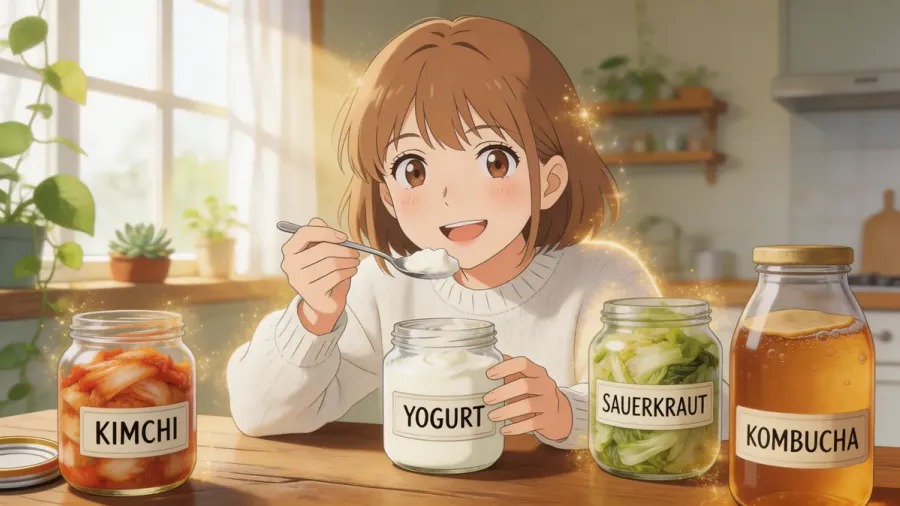
- Include kimchi or sauerkraut a few times per week
- Add miso soup as a daily complement — its ACE-inhibitory peptides and isoflavones complement natto’s K2 and nattokinase for cardiovascular protection
- Consider tempeh for additional soy isoflavones
Expected results: Compound benefits across bone, cardiovascular, and gut health.
How to track your MK-7 benefits
MK-7’s effects work quietly over time. These metrics help you see progress:
Key metrics to monitor
| Metric | Optimal Range | What It Indicates |
|---|---|---|
| Dp-ucMGP (inactive MGP) | Below 500 pmol/L | MK-7 sufficiency, vascular health |
| Carboxylated osteocalcin | High fraction of total | Bone mineralization capacity |
| CRP (high-sensitivity) | Below 1.0 mg/L | Systemic inflammation |
| Resting heart rate | 50-65 bpm | Cardiovascular efficiency |
| HRV | Above age median | Autonomic nervous system health |
| Arterial stiffness (PWV) | Age-appropriate | Vascular aging |
Why wearable data matters
Continuous tracking of resting heart rate, HRV trends, and blood pressure reveals cardiovascular improvements that snapshot blood tests might miss. Improvements in these metrics over months often precede and predict formal biomarker improvements.
How SuperAge helps you track longevity biomarkers
The downstream effects of MK-7 — improved arterial flexibility, better bone health, reduced inflammation — express themselves in measurable biomarkers that SuperAge tracks continuously.
Cardiovascular monitoring
SuperAge aggregates Apple Watch and HealthKit data to track HRV trends, resting heart rate, and cardiovascular fitness — the same metrics that respond to improved arterial flexibility from adequate MK-7. You see trends over weeks and months, not single-point snapshots.
Biological age trajectory
Your biological age reflects the combined effect of vascular health, bone density, inflammation, and metabolic function — all pathways influenced by MK-7. Epigenetic clocks like GrimAge and DunedinPACE capture exactly these downstream improvements at the cellular level. SuperAge calculates your biological age using validated algorithms that capture these improvements.
Personalized insights
If your cardiovascular metrics or HRV trends are underperforming for your age, SuperAge highlights these weak points. This targeted feedback helps you focus dietary interventions (like natto consumption) where they’ll have the most impact.
Frequently asked questions
How much natto should I eat daily for cardiovascular benefits?
Clinical and epidemiological data suggest that even modest natto intake provides substantial benefit. The Rotterdam study’s protective threshold was 32 mcg of K2 daily — well below what’s in half a tablespoon (7.5 g) of natto. Traditional Japanese intake is 40-50 g (1.5-2 tablespoons) daily, delivering 200-1,000 mcg of MK-7. Start with 1 teaspoon daily and build up as tolerated.
Is natto safe if I take blood thinners?
If you take warfarin (Coumadin) or other vitamin K-antagonist anticoagulants, natto can significantly interfere with your INR (blood clotting measure). Even small amounts can counteract your medication. If you take these drugs, consult your healthcare provider before consuming natto. However, natto is generally safe with newer direct oral anticoagulants (DOACs) like rivaroxaban or apixaban, which don’t rely on the vitamin K pathway — but always verify with your doctor.
Can I get enough K2 without eating natto?
Yes, but it requires awareness. Other sources include aged cheeses (gouda, brie, jarlsberg), egg yolks, grass-fed butter, and some fermented vegetables. However, these contain mostly MK-4 or lower concentrations of MK-7. Without natto, reaching optimal K2 intake through diet alone is challenging. Many people supplement with 90-180 mcg of MK-7 as a practical alternative.
Does natto really taste and smell as strange as reported?
Yes — natto has a strong ammonia-like aroma, sticky stringy texture, and pronounced umami-bitter flavor that can be challenging for first-time eaters. Most people develop tolerance or even enjoyment within 2-4 weeks of regular consumption. Starting with smaller amounts mixed with strong flavors (soy sauce, mustard, scallions, over hot rice) eases the adjustment. If the flavor is truly unbearable, MK-7 supplementation is a reasonable alternative.
Do the benefits of natto apply to non-Japanese populations?
Yes. While natto is traditionally Japanese, the biochemical mechanisms of MK-7 are universal. Clinical trials of MK-7 supplementation in European, American, and other populations have shown the same cardiovascular and bone benefits observed in Japanese natto consumers. The Japanese advantage likely reflects consistent long-term consumption rather than ethnic-specific responses.
Key takeaways
- Natto is the richest dietary source of MK-7: One tablespoon provides 200+ mcg, roughly seven times the threshold linked to 50% lower cardiovascular mortality in population studies
- MK-7 directs calcium metabolism: By activating osteocalcin and Matrix Gla Protein, MK-7 moves calcium into bones and out of arteries — addressing the central calcium paradox of aging
- The Japanese longevity connection is evidence-based: Geographic patterns of natto consumption correlate with reduced hip fracture rates and better cardiovascular outcomes within Japan
- Small amounts work: Even half a tablespoon daily delivers clinically meaningful MK-7, making natto accessible to anyone willing to adapt to its unique flavor
Start your natto journey today
Incorporating natto — or MK-7 supplementation when natto isn’t practical — is one of the highest-leverage dietary interventions for cardiovascular and bone aging. The evidence is strong, the mechanisms are well-understood, and the Japanese population provides a living demonstration of what sustained consumption can achieve.
Ready to see the impact? Download SuperAge and start tracking how dietary and lifestyle changes influence your cardiovascular health, biological age, and overall longevity trajectory.
References
- Geleijnse, J. M., et al. (2004). “Dietary intake of menaquinone is associated with a reduced risk of coronary heart disease: the Rotterdam Study.” Journal of Nutrition, 134(11), 3100-3105 — Landmark 10-year population study on K2 and mortality
- Knapen, M. H., et al. (2015). “Menaquinone-7 supplementation improves arterial stiffness in healthy postmenopausal women.” Thrombosis and Haemostasis, 113(5), 1135-1144 — 3-year MK-7 arterial stiffness trial
- Kaneki, M., et al. (2001). “Japanese fermented soybean food as the major determinant of the large geographic difference in circulating levels of vitamin K2.” Nutrition, 17(4), 315-321 — East-west Japan natto geographic study
- Sato, T., et al. (2025). “Habitual natto intake elevates serum MK-7 levels, enhances osteocalcin carboxylation, and supports bone density: a meta-analysis of Japanese evidence.” Frontiers in Nutrition — Recent meta-analysis
- Schurgers, L. J., et al. (2007). “Vitamin K-containing dietary supplements: comparison of synthetic vitamin K1 and natto-derived menaquinone-7.” Blood, 109(8), 3279-3283 — MK-7 vs K1 bioavailability
- Halder, M., et al. (2019). “Vitamin K: Double Bonds beyond Coagulation Insights into Differences between Vitamin K1 and K2 in Health and Disease.” International Journal of Molecular Sciences, 20(4), 896 — Comprehensive MK-4 vs MK-7 review
- Kojima, A., et al. (2020). “Natto Intake is Inversely Associated with Osteoporotic Fracture Risk in Postmenopausal Japanese Women.” Journal of Nutrition, 150(3), 599-605 — Postmenopausal fracture risk study
Last updated: 2026-04-14. This article is regularly reviewed to ensure accuracy.
Related Articles
Fermented foods and biological age: what the Stanford trial really showed
Fermented foods may support microbiome diversity and inflammatory balance. See what the Stanford Cell trial found, what it did not prove, and how to start.