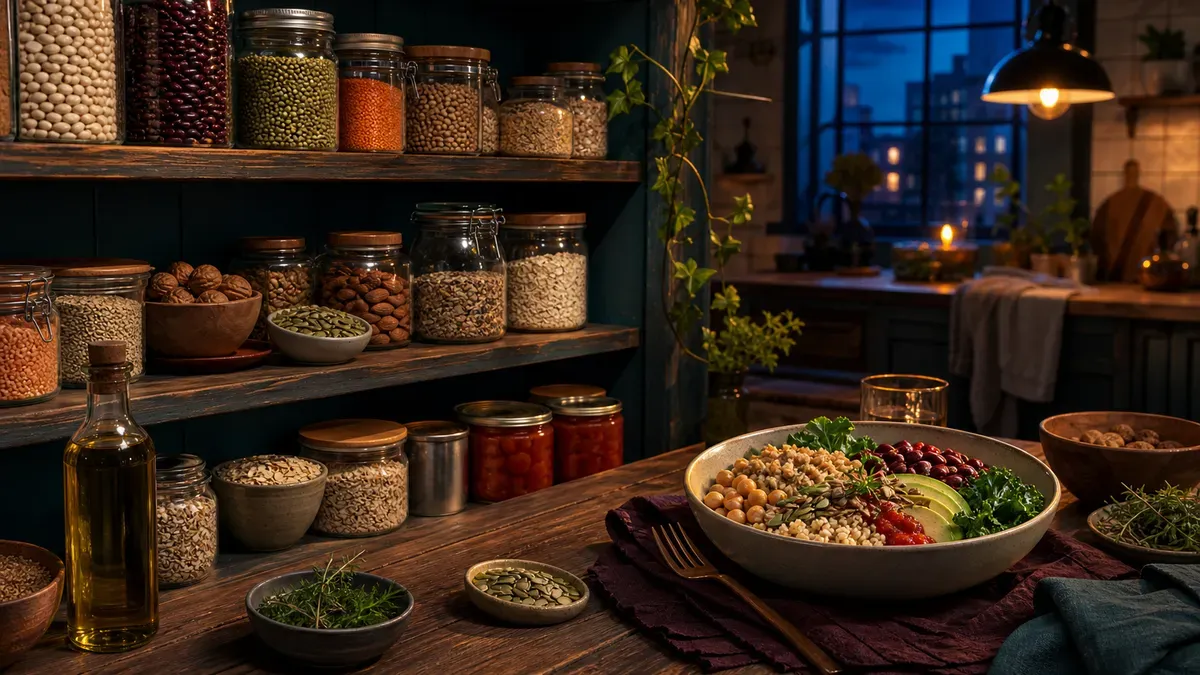
Healthy pantry staples for filling, balanced meals
Healthy pantry staples make balanced meals easier. Learn what to stock, pair protein and fiber, read labels, and safely support sustainable weight goals.
A useful pantry does not contain foods that magically burn fat. It contains flexible ingredients that make a satisfying meal easier to assemble when time, energy, or fresh groceries run low.
The best healthy pantry staples cover four jobs: a protein source, a fiber-rich carbohydrate or vegetable, a measured source of unsaturated fat, and enough flavor to make the combination worth repeating. That structure supports nutrition and appetite without turning one canned bean, grain, or spice into a weight-loss promise.
Quick answer
Stock foods you can combine, not a rigid list of “good” products. Start with pulses, intact or minimally processed whole grains, canned fish or another shelf-stable protein, canned vegetables and fruit without heavy syrup, nuts or seeds, unsaturated oils, and herbs or spices. At mealtime, pair one protein anchor with one or two fiber-rich plants, add a portion of carbohydrate that fits your activity and health goals, then add flavor and a modest amount of fat. Compare labels within the same food category for sodium, added sugar, fiber, and serving size.
Key facts
- A well-planned pantry reduces meal friction by keeping versatile ingredients available.
- Protein and fiber-rich foods increase meal structure but do not guarantee weight loss.
- Canned and frozen produce extend access to plants when fresh options are unavailable.
- Nutrition labels reveal meaningful differences in sodium, added sugar, fiber, and serving size.
- Repeated eating patterns determine weight trends more than any single “fat-burning” food.
There are no pantry foods that guarantee weight loss
Weight changes over time reflect total energy intake, expenditure, physiology, medication, sleep, stress, and the environment in which choices happen. A pantry can influence that environment, but it cannot bypass it.
That distinction protects you from two common mistakes. The first is buying a shelf full of foods marketed as “healthy” while ignoring portions and the rest of the diet. The second is making meals so sparse that hunger rebounds later. A practical pantry should help you build meals that are nutritionally adequate and satisfying—not chase the lowest possible calorie count.
In a tightly controlled NIH trial, 20 adults ate more energy and gained weight during two weeks on an ultra-processed diet than during two weeks on a minimally processed diet, even though the menus presented to them were matched for several nutrients. The experiment was small and short, but it showed that food form and the eating environment can change intake; it did not prove that every processed food causes weight gain or that all pantry foods are inferior. Read the NIH randomized trial and our broader guide to ultra-processed food and aging with that nuance in mind.
Use a four-part formula instead of a shopping checklist
The World Health Organization’s 2026 healthy-diet guidance emphasizes adequacy, balance, moderation, and diversity. It also notes that healthy diets vary with culture, locally available foods, activity, and individual needs. A portable pantry formula should therefore describe food roles rather than prescribe one cuisine.
1. Choose a protein anchor
Shelf-stable options can include dried or canned lentils, chickpeas, peas, and beans; canned fish or poultry; shelf-stable tofu where available; and powdered milk or unsweetened soy powder when they fit the person’s diet. Refrigerated or frozen eggs, yogurt, tofu, fish, or cooked meat can complete the same formula even though they are not pantry foods.
If your pantry is mostly plant-based, check which staples are true calcium-rich plant foods: fortification and the coagulant used for tofu can change the calcium per serving substantially.
Protein can improve short-term fullness, but the size and persistence of the effect vary. A systematic review and meta-analysis of randomized trials found lower hunger and higher fullness after higher-protein test meals, while long-term appetite results were mostly inconclusive. Treat protein as an essential meal component, not an appetite switch. If age, training, or muscle preservation changes your target, use our protein guide after 40 and individual clinical advice.
2. Add one or two fiber-rich plants
Useful options include beans and lentils, canned tomatoes, pumpkin or other plain vegetables, dried mushrooms, unsweetened canned fruit, and dried fruit in smaller portions. Frozen vegetables and fruit are natural pantry partners because they reduce spoilage and require little preparation.
Whole-food fiber supports bowel function and diet quality, but “high fiber” is not a universal satiety guarantee. A 2026 systematic review of cereal-fiber trials found favorable effects on appetite measures overall, especially for rye and oats, but limited effects on how much people ate afterward. Build variety across pulses, vegetables, fruit, grains, nuts, and seeds rather than expecting one fiber type to control hunger. Increase fiber gradually and use our fiber target guide after 40 if you need a structured progression.
3. Add an energy source that fits the meal
Oats, barley, brown rice, whole-grain pasta, whole-grain couscous, buckwheat, quinoa, corn, or locally common intact grains can make a meal more substantial. Potatoes, bread, and other fresh or frozen staples can fill the same role.
The portion should respond to the person and the day. A long endurance session, pregnancy, growth, or recovery from undernutrition is not the same context as a sedentary day during an intentional energy deficit. If weight loss is the goal, the evidence does not appoint either carbohydrate or fat as the universal lever; our comparison of low-carb and low-fat weight-loss diets explains the modest average differences and the larger role of adherence.
4. Make it satisfying with fat, acidity, herbs, and spices
Olive, canola, soybean, sunflower, or another unsaturated oil; nuts; seeds; and nut or seed pastes can add flavor and nutrients. They are energy-dense, so pour or spoon them rather than assuming that “healthy fat” means unlimited. Our guide to healthy dietary fats explains why replacement matters more than labeling one food as good or bad.
Vinegar, citrus juice, tomato paste, dried herbs, spices, garlic, chili, and lower-sodium condiments turn the same base ingredients into different meals. Flavor is not decoration: a theoretically perfect pantry is useless if its meals are repeatedly abandoned.
If you want to know when those additions change nutrient uptake rather than just flavor, see our evidence-based guide to food pairings for nutrient absorption.
A practical healthy-pantry map
Choose a few foods from each role that fit your budget, culture, allergies, cooking equipment, and storage space.
| Pantry role | Flexible examples | What to compare | Easy use |
|---|---|---|---|
| Protein plus fiber | Lentils, chickpeas, beans, split peas | Sodium in canned versions; intact food versus sweetened sauce | Soup, grain bowl, mash, salad |
| Other protein | Canned fish or poultry, shelf-stable tofu, plain powdered milk or soy | Sodium, added oil, allergens, serving size | Pasta, wraps, patties, savory oats |
| Whole-grain base | Oats, barley, brown rice, quinoa, buckwheat, whole-grain pasta | Fiber, cooking time, portion, added seasoning | Porridge, pilaf, soup, warm salad |
| Vegetables | No-salt-added tomatoes, pumpkin, corn, peas, mixed vegetables, dried mushrooms | Sodium, sauces, damaged containers | Stew, sauce, soup, grain bowl |
| Fruit | Fruit packed in water or juice, unsweetened dried fruit | Added sugar, portion, dental needs | Oats, yogurt, snack, savory salad |
| Unsaturated fat | Vegetable oils, nuts, seeds, nut or seed pastes | Salt, added sugar, portion, rancid odor | Dressing, topping, sauce |
| Flavor system | Herbs, spices, vinegar, tomato paste, garlic, chili | Sodium in blends and condiments | Change cuisine without changing the base |
This is a map, not a requirement to buy every item. A small pantry that produces six dependable meals is more useful than a crowded cupboard full of aspirational ingredients.
Read labels by comparing like with like
Do not compare canned lentils with crackers and declare the food with fewer calories “healthier.” Compare two versions of the same type of food and ask what changes the meal.
- Check the serving size first. Every other number depends on it.
- Look for fiber and protein in context. More is not always necessary, but a grain or pulse should contribute to the role you chose it for.
- Compare sodium. The FDA sodium guide defines 5% Daily Value or less per serving as low and 20% or more as high in the United States. Label systems differ by country, so compare equivalent products using the local reference.
- Separate added from naturally occurring sugars. The FDA added-sugars guide explains that total sugar includes sugars naturally present in fruit and milk, whereas added sugars are introduced during processing or packaged as sweeteners.
- Read the ingredient list for the actual job. A flavored grain pouch may be convenient, but its sauce may make it less flexible. A plain base lets you control the final meal.
Rinsing canned beans, tuna, or vegetables can reduce surface sodium. It does not make sodium disappear, so people following a medically prescribed limit should still use the label and their clinician’s plan.
Build a meal in ten minutes
These examples show the formula without prescribing exact calories. Adjust portions, textures, and ingredients to your needs.
| Meal | Protein anchor | Fiber-rich plants and base | Flavor and fat |
|---|---|---|---|
| Tomato-lentil bowl | Lentils | Canned tomatoes plus whole grain | Herbs, vinegar, measured olive oil |
| Chickpea couscous | Chickpeas | Whole-grain couscous plus frozen vegetables | Lemon, cumin, seeds |
| Fish and bean salad | Canned fish | White beans plus tomatoes or frozen greens | Mustard, vinegar, oil |
| Savory oats | Beans, egg, or tofu | Oats plus peas or mushrooms | Chili, herbs, seeds |
| Quick pantry soup | Split peas or beans | Barley plus mixed vegetables | Tomato paste, garlic, spices |
| Fruit-and-oat bowl | Plain yogurt or soy food | Oats plus fruit | Nuts, seeds, cinnamon |
For each meal, ask: Is there a real protein source? Are plants doing more than decorating the plate? Is the portion enough for the next few hours? Is the flavor strong enough that I would choose this again?
Reset the pantry around decisions, not perfection
Step 1: identify three difficult moments
Choose the situations that usually derail the plan: a late workday, an empty refrigerator, a rushed breakfast, a post-training meal, or a night when cooking feels impossible. Give each situation one default meal.
Step 2: stock two options for each meal role
You do not need ten grains and twelve beans. Two protein anchors, two fiber-rich bases, two vegetable options, and two flavor profiles already create many combinations. Buy more only after you know what you actually use.
Step 3: make the useful option visible
Place frequently used ingredients together. Keep a short list of default combinations on the cupboard door or in your phone. Choice architecture is part of the intervention: the easier meal is more likely to happen.
Step 4: use first-in, first-out rotation
Move older packages forward, mark the opening date when useful, and inspect containers before use. The USDA-developed FoodKeeper resource provides food-specific storage guidance. Discard leaking, bulging, badly dented, or otherwise compromised cans; never taste food to test whether a damaged container is safe.
Step 5: review waste and hunger after two weeks
Notice what expired, what meals still left you hungry, and what took too long. Adjust the pantry from those observations. Sustainable meal planning is an iterative system, not a one-day overhaul.
If the pantry reset follows travel, celebrations, or a stretch of irregular eating, skip the punishment phase. Our guide to whether detox diets work explains why regular meals, gradual fiber, appropriate hydration, movement, and sleep are more useful than a cleanse.
How a pantry can support weight goals
A pantry supports weight management indirectly. It reduces the chance that every tired evening becomes an unplanned takeaway, makes protein and plants easier to include, and creates repeatable portions. It can also save money and reduce food waste, which improve adherence even though they do not alter metabolism directly.
Avoid using fullness as the only outcome. Track a small group of signals for four to eight weeks: weekly weight trend if relevant, waist at consistent intervals, meal satisfaction, digestion, energy, strength, and how often the default meals actually happen. A meal that is filling but nutritionally narrow, unpleasant, or incompatible with training is not a long-term solution.
If bloating and fatigue repeatedly follow meals, separate pace, portion, sleep, bowel symptoms, and warning signs before removing several useful foods at once.
Use SuperAge to connect the pattern
Nutrition changes are easier to interpret when they are connected to the rest of life. Use SuperAge to compare a pantry reset with body-composition trends, activity, sleep, recovery, and relevant health markers. The goal is not to credit one food for every change. It is to see whether a repeatable eating environment supports the wider pattern you care about.
Who should individualize this advice?
Generic pantry lists need adjustment for:
- kidney disease or a prescribed potassium, phosphorus, sodium, protein, or fluid limit;
- diabetes treated with insulin or medicines that can cause low blood glucose;
- food allergies, celiac disease, or medically diagnosed intolerances;
- inflammatory bowel disease, gastroparesis, or severe digestive symptoms;
- pregnancy, frailty, undernutrition, or recovery from illness;
- a current or past eating disorder, where weight-focused rules may be harmful.
A registered dietitian or qualified clinician can adapt food choices and portions without discarding the core idea: keep safe, acceptable ingredients available for balanced meals.
Key takeaways
- Stock ingredients by meal role: protein, fiber-rich plants, a suitable energy source, and flavor.
- Use canned, frozen, dried, and fresh foods as complementary tools rather than a purity hierarchy.
- Compare similar products for serving size, sodium, added sugar, fiber, and ingredients.
- Protein and fiber may support fullness, but neither guarantees lower energy intake or weight loss.
- Design two or three default meals for the moments when cooking is hardest.
- Review hunger, waste, convenience, health markers, and weight trend before changing the system.
Make the useful pattern visible
Want to connect meals with the rest of your health data? Download SuperAge to track nutrition context alongside body composition, activity, sleep, recovery, and biological-age signals.
FAQ
What are the best pantry staples for weight loss?
No staple causes weight loss by itself. Useful choices include pulses, whole grains, canned vegetables, canned fish or another shelf-stable protein, nuts, seeds, and unsaturated oils because they can form balanced meals. Portions, the wider eating pattern, activity, sleep, medication, and adherence still determine the outcome.
Are canned beans and vegetables healthy?
They can be. WHO guidance recognizes canned and frozen produce as valid options when they do not contain excess sodium or added sugars. Compare labels, choose lower-sodium or no-salt-added versions when available, and rinse suitable canned foods if sodium is a concern.
Is brown rice always better than white rice?
Brown rice generally provides more fiber and retains more of the grain structure, but “always” is too strong. White rice may fit cultural preferences, digestive needs, sport fueling, or a meal that already contains beans and vegetables. Judge the whole meal and the person’s needs.
How much protein should a pantry meal contain?
There is no universal per-meal number. Needs vary with body size, age, activity, pregnancy, energy intake, health conditions, and the rest of the day. Include a recognizable protein anchor and use individualized guidance when muscle preservation or a medical condition changes the target.
Are nuts good for weight loss even though they are high in calories?
Nuts provide unsaturated fat, fiber, protein, and micronutrients, but they are energy-dense. They can fit a weight-management pattern when the portion replaces rather than simply adds to other energy-dense food. Measure a usual portion until you can judge it consistently.
Should I avoid all ultra-processed pantry foods?
No. Processing is not a complete measure of nutritional value or convenience. Fortified whole-grain foods, canned fish, and some simple prepared foods can be useful. Limit patterns dominated by products engineered for easy overconsumption, and assess the label, ingredients, portion, and role in the meal.
How often should I restock?
Use your actual consumption rate. Review the pantry every one or two weeks, rotate older foods forward, and keep a small reserve of the ingredients used in your default meals. Buying more than you can rotate safely wastes food and money.
Scientific references
- World Health Organization. Healthy diet. Updated January 26, 2026.
- Hall KD, et al. Ultra-processed diets cause excess calorie intake and weight gain: an inpatient randomized controlled trial. Cell Metabolism. 2019.
- Kohanmoo A, et al. Effect of short- and long-term protein consumption on appetite and appetite-regulating gastrointestinal hormones. Physiology & Behavior. 2020.
- Machalias A, et al. Cereal fibers and satiety: a systematic review. Nutrition Reviews. 2026.
- U.S. Food and Drug Administration. Interactive Nutrition Facts Label: sodium. 2021.
- U.S. Food and Drug Administration. Added sugars on the Nutrition Facts label. 2023.
- FoodSafety.gov. FoodKeeper app and storage resource.
Related Articles

How much protein do you need after 40? The science-based guide
Find out exactly how much protein you need after 40 to maintain muscle, boost metabolism, and stay strong. Science-backed recommendations by age and activity.