Shirataki noodles: health benefits, limits, and safety
Shirataki noodles are low in energy and carbohydrate, but evidence and tolerance matter. Learn their benefits, meal limits, and key safety precautions.
Shirataki noodles can lower the energy and digestible carbohydrate in a meal when they replace ordinary noodles, but they are not a complete meal or a proven shortcut to weight loss. They are mostly water held in a gel made from konjac glucomannan, a viscous soluble fiber. That unusual structure explains both their usefulness and their limitations.
The practical verdict is simple: use shirataki as a food swap if you enjoy the texture and tolerate it, then add vegetables, protein, and enough overall nutrition. Do not assume that a “zero calorie” label makes the sauce, portion, or rest of the meal irrelevant. People with swallowing problems, gastrointestinal narrowing, persistent digestive symptoms, or glucose-lowering treatment should be especially cautious.
Quick answer
Shirataki noodles are a reasonable low-energy, low-carbohydrate substitute for pasta or rice noodles. A small randomized crossover trial found that replacing pasta with konjac-gel noodles sharply reduced the energy in that test meal without causing people to compensate at the next eating opportunity. That does not prove long-term fat loss. Larger reviews of glucomannan supplements find inconsistent or little-to-no average weight-loss benefit. Evidence is more supportive for modest effects on LDL cholesterol and some glucose measures, but supplement doses cannot be assumed from a serving of noodles.
Key facts
- Shirataki noodles replace a starch-rich food with a hydrated konjac-fiber gel.
- Glucomannan forms a viscous soluble fiber that can change meal texture and digestive transit.
- Food substitution reduces meal energy only when toppings and later intake do not replace the difference.
- Product labels reveal large differences in fiber, sodium, added ingredients, and serving size.
- Swallowing difficulty or gastrointestinal narrowing increases the safety risk from expanding fiber products.
What are shirataki noodles?
Traditional shirataki are made from konjac, the tuber of Amorphophallus konjac. Its characteristic fiber is glucomannan, a long-chain carbohydrate that disperses in water and creates a highly viscous gel. European specifications describe konjac glucomannan as a water-soluble hydrocolloid, while the U.S. Food and Drug Administration recognizes evidence that glucomannan functions as dietary fiber and can help reduce blood cholesterol.
Packaged noodles are already hydrated, so a serving is largely water. This commonly means far less energy and available carbohydrate than an equal-looking bowl of wheat, rice, or legume noodles. Exact nutrition is not universal. Some versions include tofu, oat fiber, starch, or other ingredients; sodium can also vary. Read the label instead of treating “shirataki” as one fixed nutrient profile.
“Zero calorie” is also a labeling expression, not a statement that the meal has no metabolic or nutritional consequence. Rounding rules differ by market, and sauces, oils, cheese, meat, tofu, and vegetables still count. The useful comparison is the complete prepared meal and what the noodles replaced.
What benefits does the evidence support?
Lower meal energy through substitution
The clearest advantage is mechanical rather than magical. Replace a substantial portion of energy-dense noodles with a hydrated gel, and the plate can contain less energy.
In a randomized crossover trial of 16 healthy adults, preloads made entirely with konjac-gel noodles supplied 77 kcal, compared with 442 kcal for pasta. Total energy intake remained lower because participants did not eat enough extra dessert to erase the difference. However, hunger was higher with the all-konjac meal than with pasta, and the study measured one short laboratory session—not sustained weight change.
This distinction matters. Reviews of isolated glucomannan supplements have not shown a dependable slimming effect. A meta-analysis of eight randomized trials found no statistically significant difference in weight loss versus placebo. The current NIH Office of Dietary Supplements review likewise describes the weight-loss evidence as inconsistent.
Shirataki can therefore support an energy-reduction plan when it is an enjoyable replacement. It does not create a calorie deficit by itself, suppress appetite reliably for everyone, or compensate for an energy-dense sauce. For the broader context, see our guide to healthy weight beyond one food.
Lower carbohydrate exposure in that meal
Replacing wheat or rice noodles usually removes much of the meal’s available carbohydrate. That can reduce the glucose challenge compared with the original dish, but it is not proof that konjac “blocks sugar.” The sauce, vegetables, protein, beverages, dessert, portion size, medication, and individual response still shape post-meal glucose.
Trials of glucomannan supplementation suggest a possible glucose effect, especially in people with type 2 diabetes, but the evidence base is small and heterogeneous. A 2022 meta-analysis of six randomized trials and 124 adults found a modest average reduction in fasting glucose but no significant effect on post-meal glucose. A separate meta-analysis in type 2 diabetes pooled six trials with 440 participants and reported improvements in several glucose and lipid measures. Neither analysis establishes that one ordinary shirataki serving will reproduce a supplement protocol.
Use the label’s total carbohydrate and serving size, then judge the whole plate. Our guide to glycemic index, glycemic load, and carbohydrate quality explains why the amount and meal matrix matter more than a single “low carb” badge.
A plausible cholesterol benefit from viscous fiber
Viscous soluble fibers can interfere with bile-acid reabsorption, which prompts the liver to draw more cholesterol from circulation. That mechanism is consistent with the FDA’s decision to include glucomannan among fibers with a beneficial physiological effect.
A 2017 systematic review and meta-analysis of randomized trials reported reductions in LDL cholesterol, non-HDL cholesterol, and apolipoprotein B with konjac glucomannan. A newer GRADE-assessed review also found lower total and LDL cholesterol, although heterogeneity between trials was very high. In the European Union, authorized claims require specific daily intakes: 4 g of glucomannan for maintenance of normal cholesterol.
Many noodle servings may not supply that studied or regulated amount. Check grams of fiber on the package and do not convert an ingredient claim into a treatment promise. LDL management rests on the overall dietary pattern, activity, genetics, medications when prescribed, and appropriate testing—not one noodle substitute.
Fiber, fullness, and bowel response
Glucomannan’s viscosity can slow gastric emptying and alter fullness signals. In a small randomized crossover study, more viscous konjac test meals delayed simulated gastric emptying and increased subjective satiety, while producing only a small change in later food intake. The result supports a mechanism, not a guarantee that everyone will feel fuller.
The same fermentable, water-binding properties can produce gas, bloating, loose stools, constipation, or abdominal discomfort. The NIH safety summary describes these as the main short-term adverse effects reported with glucomannan. Increase the portion gradually if your diet is currently low in fiber, and pay attention to symptoms. Shirataki can contribute one type of fiber, but it does not replace the variety of legumes, whole grains, fruit, vegetables, nuts, and seeds discussed in our daily fiber target guide.
What shirataki noodles do not provide
A very low-energy base leaves nutritional work for the rest of the bowl. Most plain shirataki products are not meaningful sources of protein and may provide fewer vitamins and minerals than whole-grain or legume noodles. This is useful when you specifically want a lighter base; it is a problem if “lighter” turns into an under-fueled meal.
Build around the gap:
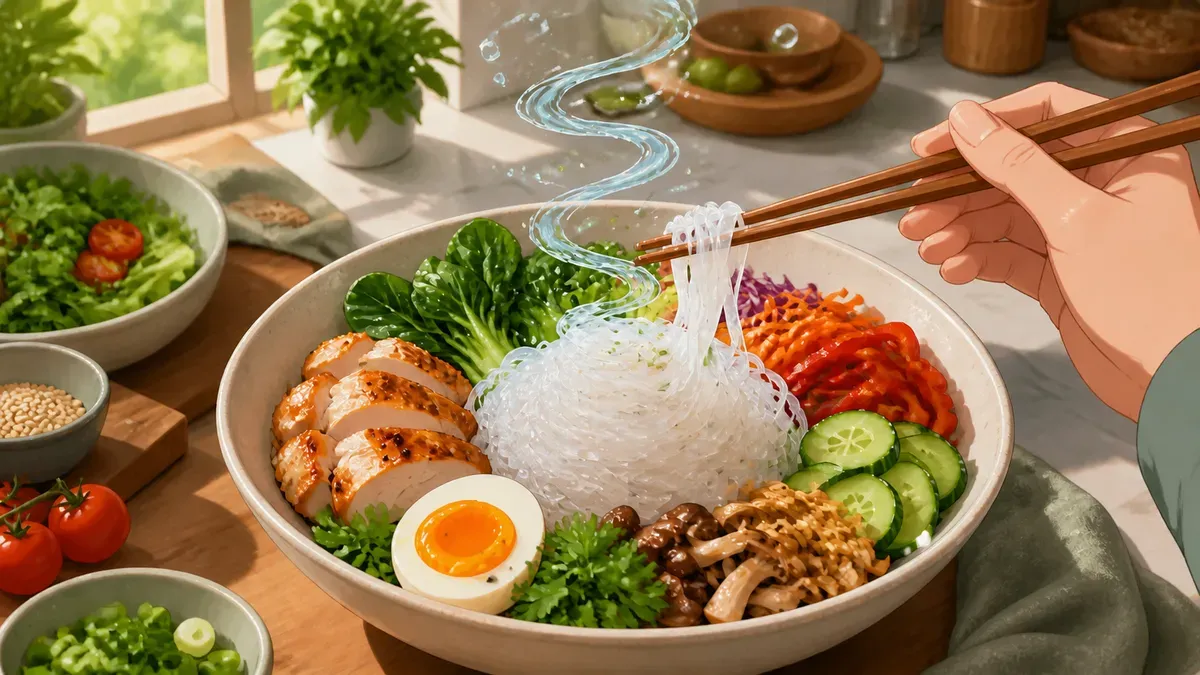
- Add a clear protein source, such as tofu, tempeh, eggs, fish, poultry, lean meat, edamame, or legumes.
- Add at least two vegetables for volume, micronutrients, and a broader range of fibers.
- Use unsaturated fat deliberately—nuts, seeds, tahini, avocado, or a measured cooking oil—rather than letting a rich sauce determine the meal by accident.
- Include a quality carbohydrate when your activity, appetite, recovery, or medical plan calls for it. Shirataki does not make carbohydrate nutritionally unnecessary.
- Check sodium in both the noodles and sauce, especially if blood pressure or fluid balance is a concern.
The American Diabetes Association plate method is a useful check even for people without diabetes: make non-starchy vegetables the largest section, include a protein source, and decide intentionally whether and how much quality carbohydrate belongs in the meal. Our protein guide after 40 explains why a bowl of fiber and sauce is not enough to support muscle maintenance.
Shirataki versus other noodle choices
No noodle wins every category. Choose according to the job the meal needs to do.
| Noodle base | Main strength | Main limitation | Useful context |
|---|---|---|---|
| Shirataki or konjac gel | Very low energy and available carbohydrate | Usually little protein and few micronutrients; texture and GI tolerance vary | Reducing the energy or carbohydrate of a mixed meal |
| Whole-grain wheat | More intact grain nutrition and familiar texture | Contains more available carbohydrate and gluten | Everyday balanced meals when gluten is tolerated |
| Legume noodles | More protein and fiber | Can cause gas; carbohydrate and energy are not negligible | Plant-forward meals that need a stronger protein base |
| Rice noodles | Gluten-free and widely tolerated | Often low in fiber and protein | Meals where gluten avoidance or soft texture is important |
| Ordinary wheat pasta | Familiar, inexpensive, versatile | Portion can dominate the plate; refined versions offer less fiber | Active-day meals and traditional dishes with deliberate portions |
You can also blend bases—half shirataki and half whole-grain or legume noodles—to preserve texture and nutritional density while lowering the meal’s energy. Similar substitution logic appears in our guide to resistant starch and blood sugar: preparation and the whole food matrix matter more than chasing a single ingredient.
How to prepare shirataki for a better meal
Follow the package’s storage and cooking directions because formulas differ. A practical sequence is:
- Drain and rinse the noodles thoroughly under cool running water.
- Heat them as directed; a brief dry-pan step can remove surface water and help sauce cling.
- Cut very long strands before serving, especially for anyone who eats quickly or has chewing difficulty.
- Add the noodles to a finished sauce rather than relying on them to absorb flavor like wheat pasta.
- Start with a moderate labeled serving and increase only if digestive tolerance is good.
Avoid turning a low-energy noodle into a high-sodium, low-protein meal. Strong flavor can come from garlic, ginger, citrus, vinegar, herbs, spices, mushrooms, tomato, or a modest amount of fermented seasoning. The goal is a satisfying bowl, not the lowest possible number on a label.
Who should be cautious or avoid glucomannan?
Swallowing problems and gastrointestinal narrowing
Dry glucomannan can swell dramatically when it meets water. European rules require a choking warning for products used in the authorized claims when people have swallowing difficulty or take the fiber with inadequate liquid. NIH also notes historical cases of esophageal obstruction involving glucomannan tablets.
Prepared shirataki noodles are already hydrated and are not the same dosage form as a dry tablet. Still, people with dysphagia, a history of food impaction, gastrointestinal strictures, impaired motility, or prior obstruction should ask a clinician whether these noodles are appropriate. Chew well, do not swallow long bundles of strands, and never improvise with dry konjac powder.
Diabetes medication or tightly managed glucose
Replacing a usual carbohydrate serving with shirataki can materially change the carbohydrate in the meal. If insulin or another medication is matched to carbohydrate intake, follow the dosing plan provided by your diabetes team. Do not reduce medication because a food or fiber study sounds promising. Monitor as advised and discuss recurrent lows or unexpected readings.
Sensitive digestion
Start small if you have irritable bowel symptoms, frequent bloating, constipation, diarrhea, or a recent major change in fiber intake. The National Institute of Diabetes and Digestive and Kidney Diseases advises increasing fiber gradually and using enough fluid for individual needs. Stop and seek medical advice if symptoms are persistent or severe.
Red flags that need urgent care
Seek urgent medical help for inability to swallow, drooling, choking, severe or worsening abdominal pain, repeated vomiting, a markedly swollen abdomen, inability to pass stool or gas, fainting, or signs of a serious allergic reaction. These are not ordinary “fiber adjustment” symptoms.
A one-week tolerance test
Use a simple experiment instead of declaring the food good or bad after one bowl:
| Step | What to do | What to observe |
|---|---|---|
| First meal | Use half to one labeled serving in a balanced bowl | Fullness, bloating, pain, stool urgency |
| Next 24 hours | Keep other unusual foods minimal | Whether symptoms plausibly follow the meal |
| Second meal | Repeat the same portion and preparation | Reproducibility rather than one-off noise |
| Optional blend | Mix shirataki with whole-grain or legume noodles | Texture, energy, appetite, and tolerance |
| Decision | Keep, reduce, or skip it | Sustainability and nutritional fit |
If you track glucose for a medical reason, compare equivalent meals rather than isolated readings. Sleep, exercise, stress, timing, and the rest of the plate can all change the result.
How SuperAge can add context
A food experiment is more useful when you place it inside a broader pattern. SuperAge can help you view Apple Health trends such as activity, sleep, resting heart rate, and other available metrics against your baseline while you test a sustainable eating habit.
The app cannot diagnose an intolerance, calculate medication, or prove that shirataki changed cholesterol or biological age. It can help you avoid tunnel vision: a lower-carbohydrate dinner is not automatically a win if it leaves you under-fueled, disrupts sleep, or makes training recovery worse.
Download SuperAge to follow your health trends while keeping food decisions in the context of your whole routine.
FAQ
Are shirataki noodles really zero calories?
They are usually very low in energy, but “zero” may reflect labeling and rounding rules. Check the specific package and count the entire prepared dish, including sauce, oil, protein, and toppings.
Do shirataki noodles help with weight loss?
They can lower meal energy when they replace a higher-energy noodle and the difference is not added back elsewhere. Trials do not show that glucomannan reliably causes meaningful weight loss on its own.
Do shirataki noodles lower blood sugar?
They usually contain much less available carbohydrate than wheat or rice noodles, so an equivalent replacement can reduce that meal’s carbohydrate load. Evidence from glucomannan supplements is not the same as proof for a normal noodle serving.
Are shirataki noodles good for cholesterol?
Glucomannan has evidence for modest LDL-lowering effects at studied intakes. Whether one noodle serving supplies an effective amount depends on its actual fiber content and the rest of the diet.
Can shirataki noodles cause constipation or diarrhea?
Yes. Gas, bloating, loose stools, constipation, and abdominal discomfort are reported effects of glucomannan. Start with a modest portion, increase fiber gradually, and maintain appropriate fluid intake.
Can I eat shirataki noodles every day?
Some people can, but daily use is unnecessary. Make sure they do not displace protein, micronutrient-rich foods, varied fiber sources, or needed carbohydrate. Stop if they repeatedly cause symptoms.
Are shirataki noodles safe for people with diabetes?
They can fit many diabetes meal plans, but replacing a normal carbohydrate serving can change medication or insulin needs. Use the product label, count the complete meal, and follow your diabetes team’s monitoring and dosing advice.
What is the healthiest way to eat shirataki?
Pair them with plenty of non-starchy vegetables, a meaningful protein source, and a measured unsaturated fat. Add quality carbohydrate if your activity, recovery, appetite, or clinical plan requires it.
Key takeaways
- Shirataki noodles are a hydrated konjac-fiber food, not a metabolism hack.
- Their clearest benefit is replacing some energy and carbohydrate in a meal.
- Weight-loss evidence for glucomannan alone is inconsistent; cholesterol evidence is more supportive but dose-dependent.
- A balanced bowl still needs protein, vegetables, and enough total nutrition.
- Bloating, gas, diarrhea, constipation, and abdominal discomfort can occur.
- Swallowing problems or gastrointestinal narrowing require extra caution and clinical guidance.
- The product label, whole meal, personal tolerance, and repeated pattern matter more than “zero calorie” marketing.
References
- U.S. Food and Drug Administration. FDA grants citizen petition on glucomannan as a dietary fiber. 2020.
- European Commission. Regulation (EU) No 432/2012: authorized health claims for glucomannan.
- Chearskul S, et al. Effects of gelled konjac glucomannan fiber on appetite and energy intake. British Journal of Nutrition. 2018.
- Onakpoya I, Posadzki P, Ernst E. Glucomannan supplementation in overweight and obesity. Journal of the American College of Nutrition. 2014.
- NIH Office of Dietary Supplements. Dietary supplements for weight loss: health professional fact sheet.
- Mazidi M, et al. Glucomannan and fasting and postprandial blood glucose. Journal of Diabetes & Metabolic Disorders. 2022.
- Zhu H, et al. Glucomannan supplementation in type 2 diabetes: meta-analysis. Nutrients. 2023.
- Ho HVT, et al. Konjac glucomannan and LDL, non-HDL cholesterol, and apolipoprotein B. American Journal of Clinical Nutrition. 2017.
- Hadi A, et al. Glucomannan supplementation and adult lipid profiles. Nutrition, Metabolism and Cardiovascular Diseases. 2024.
- Shang L, et al. Konjac glucomannan viscosity, gastric emptying, and appetite regulation. Food & Function. 2020.
- National Institute of Diabetes and Digestive and Kidney Diseases. Eating, diet, and nutrition for constipation.
- American Diabetes Association. Eating well and using the Diabetes Plate.
This article is for general education and does not replace individualized medical or nutrition advice. Ask a qualified clinician or registered dietitian about swallowing difficulty, gastrointestinal disease, diabetes medication, persistent digestive symptoms, or major dietary changes.
Related Articles

Healthy pantry staples for filling, balanced meals
Healthy pantry staples make balanced meals easier. Learn what to stock, pair protein and fiber, read labels, and safely support sustainable weight goals.