Food pairings for nutrient absorption: what actually helps
Food pairings can change nutrient absorption, but not every combination matters. Learn which pairings help, when timing matters, and which rules to skip.
Food pairings can change how much of a nutrient reaches your bloodstream, but the effect is specific—not a license to turn every meal into a chemistry project. Pairing plant iron with vitamin C and colorful vegetables with unsaturated fat has a useful evidence base. Other rules matter mainly when someone has a deficiency, malabsorption, kidney stones, or a medication interaction.
The practical goal is not to find combinations that “save” an organ or unlock hidden calories. It is to remove a few avoidable absorption barriers while keeping the meal varied, adequate, and enjoyable.
Quick answer
Use four simple food-pairing principles: add a vitamin-C-rich food to a plant-iron meal; include some unsaturated fat with carotenoid-rich vegetables; take vitamin D with a meal or snack containing fat when your clinician or local guidance recommends a supplement; and, if you form calcium oxalate kidney stones, discuss getting appropriate food calcium with meals rather than cutting calcium blindly. People at risk of iron deficiency may also benefit from moving tea away from their main iron-rich meal.
Do not assume that every nutrient needs a partner, that more fat always means more benefit, or that an “absorption hack” treats a diagnosed deficiency.
Key facts
- Vitamin C increases nonheme iron bioavailability in plant-based meals.
- Dietary fat improves carotenoid absorption from vegetables and helps absorb fat-soluble vitamins.
- Food calcium can bind oxalate in the gut in people managing calcium oxalate stones.
- Tea polyphenols can reduce nonheme iron absorption when tea is consumed with an iron-containing meal.
- Dietary adequacy and variety outweigh most pairing tricks for people without a specific deficiency or absorption problem.
Nutrient absorption is not the same as nutrient content
A label or food-composition table tells you how much nutrient is present. Bioavailability describes how much becomes available for absorption and use. The two numbers can differ because nutrients are trapped inside plant cells, bind to compounds in the meal, need fat or stomach acid, compete for transport, or are altered by cooking and digestion.
Your own biology matters too. Iron stores influence iron absorption. Bile and pancreatic enzymes help absorb fat-soluble compounds. Celiac disease, inflammatory bowel disease, bariatric surgery, low stomach acid, and some medicines can change the process. That is why the same meal does not deliver an identical absorbed dose to everyone.
The World Health Organization’s healthy-diet guidance puts adequacy, balance, moderation, and diversity ahead of single-food rules. Think of pairing as a small adjustment inside that pattern—not a substitute for it. If you first need a repeatable meal structure, start with our guide to healthy pantry staples and balanced meals.
The food-pairing evidence at a glance
| Pairing or timing choice | What it can do | Who should care most | Practical example |
|---|---|---|---|
| Plant iron + vitamin C | Improves nonheme iron bioavailability in the meal | People with low iron intake or higher iron needs | Lentils + peppers or citrus |
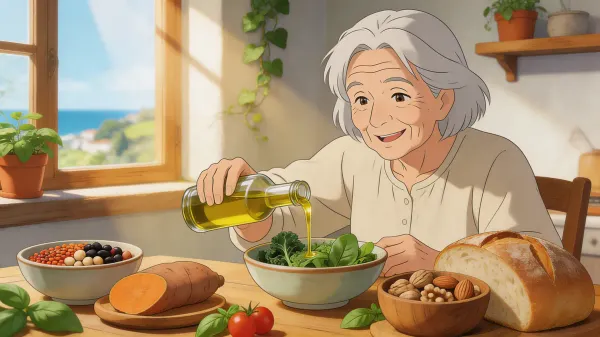
| Colorful vegetables + unsaturated fat | Improves absorption of carotenoids and supports fat-soluble vitamin absorption | Anyone eating very low-fat vegetable meals | Tomato or leafy salad + olive oil, nuts, or seeds |
| Vitamin D + a fat-containing meal | Supports absorption of this fat-soluble vitamin | People advised to use vitamin D supplements | Vitamin D taken with a regular mixed meal |
| Food calcium + oxalate-containing foods | Can bind oxalate in the gut | Some people with calcium oxalate kidney stones | Calcium-containing food included with the meal |
| Iron-rich meal away from tea | Reduces a short-term inhibitor of nonheme iron absorption | People with iron deficiency or high reliance on plant iron | Tea between meals rather than with lentils |
| Soaked, cooked, sprouted, or fermented pulses and grains | Can reduce some phytate and change mineral accessibility | Diets heavily reliant on high-phytate staples | Soaked beans, fermented batter, or leavened bread |
The table is a decision aid, not a universal prescription. A person with normal iron stores does not need to fear tea. A person taking warfarin should not suddenly vary vitamin K intake to chase absorption. A kidney-stone plan depends on stone type and clinical history.
Pair plant iron with vitamin C
Iron in meat, poultry, and seafood includes heme iron, which is generally more bioavailable. Beans, lentils, tofu, nuts, seeds, vegetables, and fortified grains provide nonheme iron, whose absorption changes more with the rest of the meal.
The NIH Office of Dietary Supplements iron review identifies vitamin C as an enhancer of nonheme iron bioavailability. Phytate in grains and legumes and some polyphenols can reduce it. The same review emphasizes that these meal-level effects have little impact on iron status for many people eating a varied diet, so the pairing deserves priority mainly when iron intake, iron stores, or absorption is already a concern.
Useful combinations include:
- lentils, chickpeas, or beans with peppers, tomatoes, broccoli, kiwi, berries, or citrus;
- tofu with cabbage, broccoli, or a citrus-based dressing;
- iron-fortified cereal with berries or another vitamin-C-rich fruit;
- pumpkin seeds or tahini added to a meal containing tomato, lemon, or peppers.
You do not need a large vitamin C supplement. Food can supply the cofactor, and the effect on a mixed meal is not the same as treating iron-deficiency anemia. In a randomized clinical trial of 440 adults, oral iron alone was equivalent to oral iron plus 200 mg vitamin C for hemoglobin and ferritin recovery. That trial does not erase the meal-level absorption mechanism; it shows why supplement routines should not be inferred from food-pairing slogans.
Persistent fatigue, breathlessness, pica, restless legs, heavy menstrual bleeding, gastrointestinal symptoms, or abnormal iron tests call for assessment of the cause. Our guide to oral iron absorption, fatigue, and treatment limits explains why bleeding, inflammation, low stomach acid, and malabsorption cannot be fixed by adding lemon to lunch.
Add some unsaturated fat to carotenoid-rich vegetables
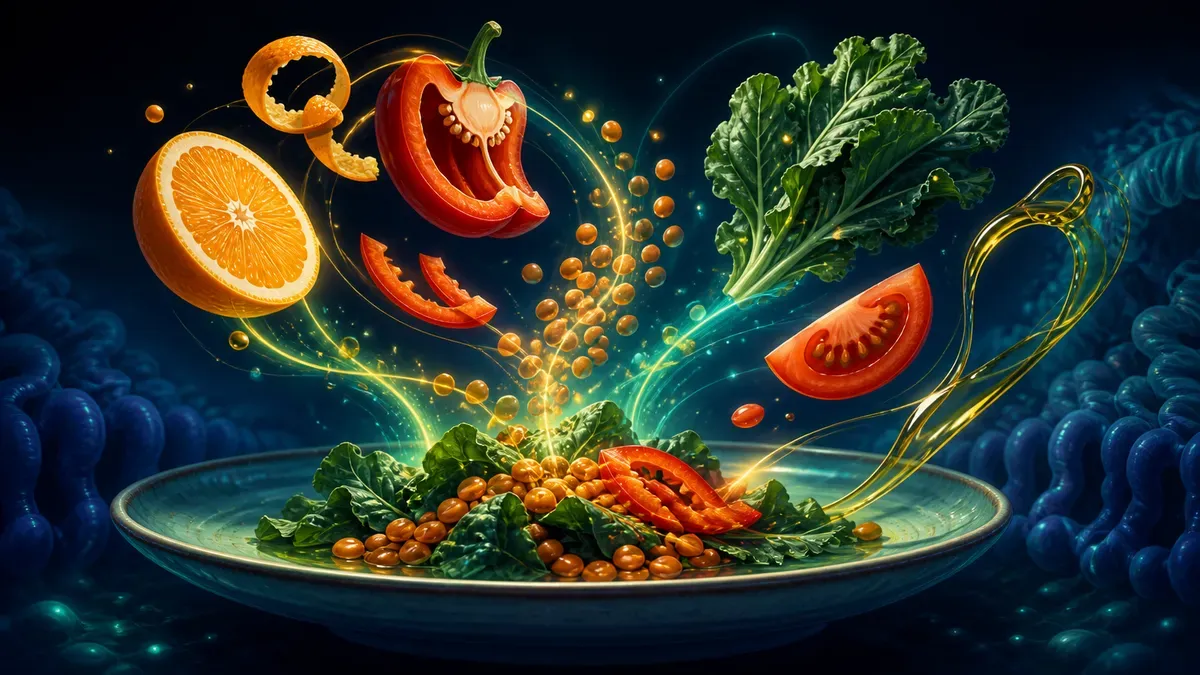
Carotenoids are pigments found in foods such as carrots, tomatoes, leafy greens, pumpkin, and red or orange peppers. Several are fat-soluble, so digestion absorbs them more effectively when the meal contains fat.
A 2023 randomized crossover trial gave 16 adults the same carotenoid-rich salad with different test fats. Carotenoid bioaccessibility and post-meal absorption differed by fat type and emulsification, with olive oil outperforming coconut oil in that experiment. A broader systematic review and meta-analysis of in-vitro studies and randomized trials also found higher carotenoid bioavailability when more dietary fat was co-consumed, with stronger effects from unsaturated than saturated fats.
The practical message is modest: do not make a vegetable meal deliberately fat-free. Use an amount that fits the whole diet, such as a measured dressing, nuts, seeds, avocado, or another locally available source of unsaturated fat. Our healthy-fats guide explains why replacing saturated fat matters more than celebrating one oil as a cure-all.
Food preparation can reinforce the effect. In a small human intervention, tomatoes cooked with olive oil increased plasma lycopene more than tomatoes cooked without it. Chopping and heating can open the food matrix while fat helps form the micelles used in absorption. That makes tomato sauce with olive oil a sensible culinary combination—but not proof that one sauce prevents cancer or cardiovascular disease.
The same meal logic applies to vitamin K in leafy greens. The NIH vitamin K fact sheet notes that eating vegetables with some fat improves phylloquinone absorption. People taking warfarin or a similar vitamin-K antagonist should keep intake consistent and follow clinical advice instead of abruptly adding or removing large amounts of leafy greens.
Take vitamin D with a meal containing fat—but do not megadose
Vitamin D is fat-soluble. The NIH vitamin D review explains that absorption depends on the gut’s ability to absorb dietary fat, which is why disorders that impair fat absorption raise deficiency risk. When a supplement is appropriate, taking it with a regular meal or snack containing some fat is a reasonable, low-friction choice.
This is not a reason to add a large amount of fat or to take high-dose vitamin D without a clinical indication. Vitamin D status reflects intake, sun exposure, skin synthesis, body composition, age, liver and kidney function, and absorption. Bone health also depends on calcium, protein, resistance and impact loading, hormones, and fall risk.
Use local guidance or a clinician to decide whether testing or supplementation is appropriate, especially after bariatric surgery or with celiac disease, Crohn’s disease, ulcerative colitis, liver disease, or another malabsorption condition. Our review of vitamin D and longevity evidence separates established bone biology from broader claims that remain uncertain.
Calcium has two different pairing stories
The phrase “pair calcium with vitamin D” is directionally useful because low vitamin D status reduces calcium absorption. But the partnership operates across physiology and dietary adequacy; calcium and vitamin D do not need to enter your mouth in the same bite for every meal to count.
Calcium bioavailability also varies by food. The NIH calcium fact sheet reports that oxalic and phytic acids can form salts with calcium and reduce absorption. Calcium absorption from spinach is therefore low despite its calcium content, while broccoli, kale, and cabbage have higher fractional bioavailability. A diverse diet usually softens the nutritional importance of these single-meal interactions.
If plant foods supply most of your calcium, use our calcium-rich plant foods and absorption guide to compare fortified drinks, calcium-set tofu, lower-oxalate greens, and realistic serving sizes.
Oxalate creates a different issue for people who form calcium oxalate kidney stones. Cutting food calcium can backfire: calcium in the digestive tract can bind substances that contribute to stones. The NIDDK kidney-stone guidance recommends discussing an appropriate food-calcium intake with a clinician or dietitian rather than assuming calcium is the enemy.
Do not generalize this advice to every stone or use it to self-prescribe calcium supplements. Stone type, urinary chemistry, sodium intake, fluid intake, medical history, and supplement timing all matter. The wider relationship between calcium, bones, and arteries is covered in our calcium paradox guide.
Move tea away from iron-rich meals only when it matters
Tea contains polyphenols that can inhibit nonheme iron absorption in the same meal. In a controlled stable-isotope study of 12 iron-replete women, drinking tea one hour after an iron-containing porridge meal attenuated the inhibitory effect compared with drinking it during the meal.
The study was small and measured an acute absorption response, not long-term anemia. The NIH also notes that absorption enhancers and inhibitors in a typical varied diet have little effect on the iron status of most people. Therefore:
- if your iron status is normal, you probably do not need to schedule every cup;
- if you have iron deficiency, heavy menstrual bleeding, pregnancy-related needs, or a mostly plant-based diet, tea between meals may be a useful adjustment;
- if you take prescribed iron, follow the product and clinician instructions because dose, tolerability, medicines, and the cause of deficiency matter more than a generic food rule.
Coffee can also reduce acute nonheme iron absorption, but precise timing evidence varies by beverage, meal, and study. Avoid turning a targeted adjustment into fear of polyphenol-rich drinks.
Preparation may help, but phytate is not a toxin
Phytate stores phosphorus in grains, legumes, nuts, and seeds. It can bind iron, zinc, and calcium during digestion. Traditional preparation methods—including soaking, sprouting, fermentation, leavening, and cooking—can reduce phytate or change the food matrix.
The mechanistic story is stronger than the long-term clinical evidence for many specific methods. A 2026 systematic review of bread fermentation found acute evidence that lower-phytate breads can improve iron bioavailability, but concluded that suitable human studies on long-term iron status were lacking. That is a reason for nuance, not for avoiding whole grains and legumes.
Use preparation for safety, digestibility, taste, convenience, and culinary tradition. Soak dried beans as appropriate, discard soaking water when the recipe and bean type call for it, cook pulses fully, and enjoy fermented or leavened foods if they fit. Do not treat phytate-containing foods as nutritionally empty; they also supply fiber, protein, minerals, and bioactive compounds.
Pairing rules that are usually overhyped
Every plant protein must be combined in the same meal
You do not need to pair beans and rice at every sitting to create an “instant complete protein.” A varied diet can provide complementary amino acids across the day. Combining them remains a practical and culturally familiar meal—not a biochemical deadline.
Calcium-rich foods must never share a meal with iron
Calcium can reduce acute iron absorption, and separate timing is often advised for individual calcium and iron supplements. The effect of ordinary mixed meals on long-term iron status is less decisive. People without iron deficiency do not need to dismantle balanced meals; people taking supplements should follow clinical or label instructions.
Black pepper turns turmeric into a treatment
Piperine can alter curcumin bioavailability, but supplement formulations and concentrated doses are not equivalent to seasoning food. Piperine can also affect drug metabolism. Use spices for flavor and dietary variety, not as a substitute for medical care.
One perfect combination protects the heart, brain, and bones
No meal pairing has that evidence. Cardiovascular, cognitive, and skeletal health reflect long-term dietary patterns plus activity, sleep, tobacco and alcohol exposure, blood pressure, metabolic health, medicines, genetics, and access to care. A pairing can change exposure to a nutrient; it does not prove a clinical outcome.
Build meals without micromanaging them
Use this five-step check when a meal feels nutritionally narrow:
- Choose a protein anchor. Beans, lentils, tofu, eggs, fish, dairy, poultry, meat, or a suitable alternative.
- Add at least one plant. Vegetables or fruit bring fiber and a broader micronutrient mix.
- Include an energy source that fits your day. Whole grains, potatoes, bread, rice, or another culturally familiar staple.
- Add unsaturated fat when the meal is otherwise fat-free. A measured amount of oil, nuts, seeds, or avocado is enough to change the context.
- Use a targeted pairing only when relevant. Add vitamin C to a plant-iron meal; adjust tea timing if iron is a concern; individualize calcium if you have kidney stones.
Three flexible examples:
- Lentil bowl: lentils, tomatoes, peppers, whole grain, herbs, and olive oil. This combines plant iron with vitamin C and carotenoids with fat.
- Leafy salad meal: greens, beans or fish, orange segments, seeds, bread, and an unsaturated-fat dressing. This supplies rather than “stacks” complementary foods.
- Tomato-bean stew: cooked tomatoes, beans, vegetables, and olive oil, served with a grain or bread. Cooking and fat alter carotenoid accessibility while the wider meal supplies protein and fiber.
Use SuperAge to track the pattern, not a single pairing
Absorption is mostly invisible at home. Avoid crediting one squeeze of lemon for every change in energy, weight, sleep, or recovery. Use SuperAge to compare the wider pattern—meal regularity, activity, body composition, sleep, recovery, and clinician-ordered biomarkers—over enough time to see a trend.
If a targeted change responds to a documented issue, define the marker before you start. For example, an iron plan should follow symptoms and appropriate laboratory results, not just a daily readiness score.
When to get individualized advice
Ask a clinician or registered dietitian for help when you have:
- diagnosed anemia, low ferritin, unexplained fatigue, or ongoing blood loss;
- celiac disease, inflammatory bowel disease, pancreatic disease, liver disease, or previous gastrointestinal surgery;
- recurrent kidney stones or a prescribed calcium, oxalate, sodium, potassium, phosphorus, or fluid plan;
- osteoporosis, a fragility fracture, or persistently low vitamin D;
- pregnancy, frailty, undernutrition, an eating disorder, or major food restrictions;
- warfarin, levothyroxine, levodopa, antibiotics, bile-acid sequestrants, or other medicines affected by food or supplements.
Bring your usual meals, supplements, medicines, and timing—not just a list of nutrients. The clinically important interaction may be between a supplement and a medicine rather than between two foods.
Key takeaways
- Pair plant iron with a vitamin-C-rich food when iron bioavailability matters.
- Include some unsaturated fat with colorful vegetables instead of making the meal fat-free.
- Take vitamin D with a mixed meal containing fat when supplementation is appropriate.
- Do not cut dietary calcium blindly after a calcium oxalate stone; get a stone-specific plan.
- Move tea away from iron-rich meals mainly when iron deficiency risk makes the adjustment worthwhile.
- Treat soaking, cooking, sprouting, and fermentation as useful preparation—not proof that untreated whole foods are harmful.
- Prioritize adequate, balanced, moderate, diverse eating over a growing list of pairing rules.
Make the pattern easier to see
Want to connect nutrition changes with the rest of your health data? Download SuperAge to follow activity, sleep, recovery, body composition, and biological-age signals alongside your meal pattern.
FAQ
What is the best food pairing for nutrient absorption?
There is no single best pairing. Plant iron with vitamin C and carotenoid-rich vegetables with unsaturated fat are two of the most practical evidence-based choices. The best priority depends on which nutrient, meal, and health context matter.
Does lemon increase iron absorption from beans?
Lemon supplies vitamin C, which improves nonheme iron bioavailability. Peppers, tomatoes, broccoli, kiwi, berries, and other vitamin-C-rich foods can do the same job. A pairing supports the meal but does not treat unexplained or severe iron deficiency.
Do vegetables need oil for nutrients to be absorbed?
Not every nutrient requires oil, but some fat improves absorption of carotenoids and fat-soluble vitamins. A measured amount of unsaturated fat is enough to avoid an intentionally fat-free context; more is not automatically better for the whole diet.
Should I avoid tea and coffee with meals?
Most people with normal iron status do not need strict timing rules. People with iron deficiency, high iron needs, or heavy reliance on plant iron may benefit from drinking tea between rather than during iron-rich meals. Follow individualized advice if you take iron supplements.
Should calcium and iron always be separated?
Individual calcium and iron supplements are often taken at different times because they may interact. Ordinary mixed meals are less clear, and most people should not remove calcium-rich foods from balanced meals. Ask for advice if you have iron deficiency, take both supplements, or use medicines affected by minerals.
Does food pairing improve longevity?
No specific pairing has been shown to extend human life. Pairings can improve the absorption of selected nutrients, while longevity depends on sustained dietary quality, movement, sleep, cardiovascular and metabolic health, tobacco and alcohol exposure, social conditions, genetics, and medical care.
Is a supplement stack better than food pairing?
Not by default. Supplements can correct a documented gap but can also create excessive doses or medicine interactions. Food supplies nutrients within a broader matrix. Use supplements for a defined need and review them with a clinician or pharmacist when medicines or chronic conditions are involved.
Scientific references
- World Health Organization. Healthy diet. Updated January 26, 2026.
- NIH Office of Dietary Supplements. Iron: fact sheet for health professionals.
- NIH Office of Dietary Supplements. Calcium: fact sheet for health professionals.
- NIH Office of Dietary Supplements. Vitamin D: fact sheet for health professionals.
- NIH Office of Dietary Supplements. Vitamin K: fact sheet for health professionals.
- Yao Y, et al. Effects of dietary fat type and emulsification on carotenoid absorption: a randomized crossover trial. American Journal of Clinical Nutrition. 2023.
- Yao Y, Tan P, Kim JE. Effects of dietary fats on carotenoid bioaccessibility and bioavailability: a systematic review and meta-analysis. Nutrition Reviews. 2022.
- Fielding JM, et al. Increases in plasma lycopene concentration after consumption of tomatoes cooked with olive oil. Asia Pacific Journal of Clinical Nutrition. 2005.
- Li N, et al. Vitamin C with oral iron supplementation in adults with iron-deficiency anemia: a randomized clinical trial. JAMA Network Open. 2020.
- Ahmad Fuzi SF, et al. A one-hour interval between an iron-containing meal and tea attenuates inhibition of iron absorption. American Journal of Clinical Nutrition. 2017.
- National Institute of Diabetes and Digestive and Kidney Diseases. Eating, diet, and nutrition for kidney stones.
- Korcari A, et al. Sourdough or regular-bread fermentation, phytate reduction, and iron bioavailability: a systematic review. Critical Reviews in Food Science and Nutrition. 2026.
Related Articles
Vitamin D3 vs D2: What's the difference and which should you take?
Vitamin D3 vs D2 explained: learn the key differences in absorption, effectiveness, and sources. Plus, what VITAL and DO-HEALTH really show about vitamin D3 and aging.