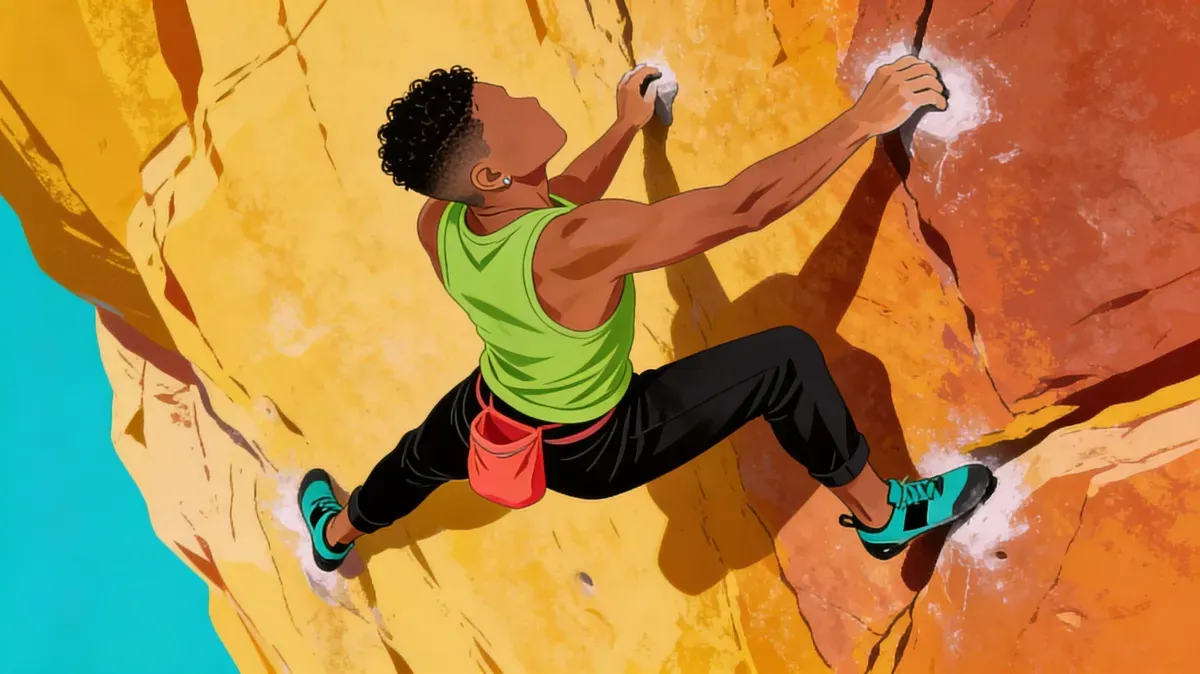
Why climbing is the most complete workout (and anti-aging)
Discover how climbing combines grip strength, cardio, mobility, and mental focus for healthy aging, plus how to start safely and track progress.
The grip strength of your hands can reveal more about your health than most people expect. This isn’t science fiction: studies published in The Lancet show that grip strength is a robust predictor of mortality and cardiovascular health. Climbing trains that system directly, but the real story is broader than stronger hands.
If you’re looking for a workout that engages your entire body, challenges cardiovascular fitness, and supports the physical traits linked with healthy aging, climbing might be exactly what you need. It’s not just a sport for adventurers: it’s a skill-based training system that combines strength, mobility, balance, problem solving, and community.
In this article you’ll discover:
- Why climbing is considered the most complete full-body workout
- The scientific connection between grip strength and longevity
- The 7 research-backed benefits of climbing
- How to get started even if you’ve never climbed a wall
- How to track climbing’s impact on your biological age
Quick answer
Climbing is a strong longevity workout because it trains grip strength, pulling strength, legs, core, balance, mobility, and cardiovascular fitness in one skill-based session. It is not magic anti-aging; the evidence is strongest for the components climbing develops: muscle strength, aerobic capacity, coordination, balance, and regular social activity.
The main caution is load management. Beginners should start indoors, progress volume slowly, warm up fingers and shoulders, and avoid painful crimping or too many high-intensity sessions early. Done progressively, climbing can be a practical way to build the strength and recovery signals that support healthy aging.
Key facts
- Climbing -> grip strength: hand and forearm loading trains a biomarker repeatedly linked with lower mortality risk.
- Climbing -> cardio plus resistance: longer routes and moderate bouldering can combine elevated heart rate with full-body strength work.
- Climbing -> mobility and balance: foot placement, hip opening, trunk rotation, and controlled reaches train useful movement skills for aging.
- Climbing -> mental focus: route solving can support concentration and mood, but depression studies treat climbing as an adjunct, not a replacement for care.
- Main risk -> overuse injuries: fingers, elbows, and shoulders need gradual loading, rest days, and technique coaching.
Related guides: grip strength, VO2 max, biological age.
What is Sport Climbing?
Sport climbing is a discipline that involves ascending natural or artificial rock walls using your body’s strength, technique, and route-reading skill. In recent years, it has exploded in popularity: introduced at the Tokyo 2020 Olympics, expanded at Paris 2024 with two separate medal events, and set to feature separate Boulder, Lead, and Speed medal events at LA 2028, with a total athlete quota of 76 climbers (38 women and 38 men).
Quick Definition: Sport climbing is a skill-based sport that uses isometric strength and coordination to scale vertical surfaces, simultaneously engaging all major muscle groups.
Indoor vs Outdoor
Indoor Climbing (climbing gyms):
- Artificial walls with colored holds
- Controlled and safe environment
- Ideal for beginners
- Available year-round
Outdoor Climbing (cliffs and rock):
- Natural rock
- Requires more experience
- Direct contact with nature
- More variable challenges
Bouldering vs Lead Climbing
Bouldering:
- Low walls (10-15 feet)
- No rope, with crash pads below
- Focus on technical movements and power
- Short, intense sessions
Lead Climbing (with rope):
- High walls (50-100+ feet)
- With rope and harness
- Focus on resistance and endurance
- Requires a belaying partner
Accessibility for All Ages
One of the most interesting features of climbing is that you can start at any age. In climbing gyms, you’ll find 5-year-old children and adults over 60. Progression is personal: each wall offers routes of varying difficulty, allowing anyone to find their own challenge.
The Science Behind Climbing as a Complete Sport
What makes climbing so special compared to other sports? The answer lies in the unique combination of stimuli it offers the body.
Muscles Engaged: A True Total Body Workout
Climbing is unusual because it loads many muscle groups in one coordinated movement pattern:
| Muscle Group | Function in Climbing | Intensity |
|---|---|---|
| Forearms | Grip and hold | Very high |
| Biceps and triceps | Pulling and pushing | High |
| Lats (back) | Pulling yourself up | Very high |
| Deltoids | Shoulder stabilization | High |
| Core (abs/obliques) | Balance and control | Very high |
| Quadriceps | Pushing upward | High |
| Glutes | Power and stabilization | High |
| Calves | Support on tiptoes | Medium |
Unlike traditional gym training, where muscles are isolated, climbing requires all these groups to work in synergy. This develops what experts call functional strength: the ability to move your body through space in a coordinated way.
Calorie Comparison: Climbing vs Other Sports
Energy burn depends heavily on route difficulty, body weight, rest time, and whether you are bouldering, top-roping, lead climbing, or using a treadwall. The 2024 Adult Compendium of Physical Activities lists rock climbing activities from 5.8 to 10.5 METs, which makes climbing a moderate-to-vigorous activity when you are actually on the wall.
For a 154 lb (70 kg) adult, that translates roughly to:
| Climbing activity | MET value | Approx. calories/hour while active |
|---|---|---|
| Low-to-moderate climbing | 5.8 | ~405 |
| High-difficulty ascending | 7.3 | ~510 |
| General rock or mountain climbing | 8.0 | ~560 |
| Free bouldering | 8.8 | ~615 |
| Speed climbing or treadwall | 10.5 | ~735 |
Real gym sessions often include substantial rest, especially in bouldering. So the useful takeaway is not a single calorie number; it is that climbing can deliver vigorous energy expenditure while also training pulling strength, grip, trunk control, and lower-body pushing.
VO2 Max and Cardiovascular Benefits
Climbing isn’t just about strength. Physiological studies show that heart rate and oxygen use rise with route difficulty, and trained climbers often show strong sport-specific aerobic capacity. But climbing heart rate can run higher than oxygen uptake because sustained gripping and isometric arm contractions add cardiovascular strain.
That means climbing can support VO2 max and aerobic fitness, but it should not be treated as automatically equivalent to steady running or cycling. If your goal is zone 2 work, use easy continuous routes, traversing, or ARC-style climbing and confirm intensity with heart rate plus perceived effort:
- Improving metabolic efficiency
- Developing aerobic base
- Avoiding excessive finger and shoulder fatigue
- Supporting cardiovascular longevity
Grip Strength: The Longevity Predictor
Here’s the data that should convince you: grip strength is one of the most consistently studied field markers of mortality risk. The PURE study in The Lancet analyzed 139,691 adults across 17 countries and found lower grip strength associated with higher all-cause mortality and cardiovascular outcomes.
The results are impressive:
- Every 5 kg reduction in grip strength = 16% increase in all-cause mortality risk in the PURE cohort; large meta-analyses also show a dose-response relationship across millions of participants
- Grip strength predicts mortality better than systolic blood pressure
- It correlates with cognitive health and fall prevention in the elderly
- A February 2026 JAMA Network Open cohort study followed 5,472 women aged 63-99 for a mean 8.4 years and found that the strongest grip-strength quartile had substantially lower all-cause mortality than the weakest quartile, even after adjusting for physical activity, sedentary time, walking speed, and clinical factors
- Clinical cutoffs are not diagnostic by themselves, but low grip strength is a useful flag for strength, frailty, and health-risk assessment
Climbing is one of the most direct ways to train grip strength in context. Every hold, every movement, and every second on the wall challenges hands, forearms, shoulders, and the neuromuscular control that links them. For a deeper look at the science connecting climbing specifically to this longevity biomarker, see our article on climbing and grip strength as a longevity biomarker.
7 Scientific Benefits of Climbing
1. Balanced Full-Body Workout
Unlike many sports that emphasize one movement pattern, climbing can develop the body more evenly. The very nature of the movement requires arms, legs, core, and back to work together.
Why it works: Isometric force transfers engage all musculature simultaneously, creating a functionally strong and proportioned body.
2. Cardio Without Running
If you hate running but want cardiovascular benefits, climbing can help. It is not a perfect replacement for continuous endurance training because climbing is intermittent, but longer easy routes, traversing, and moderate lead sessions can keep the cardiovascular system working while adding strength and coordination.
How to maximize it:
- Use easy continuous movement blocks of 20-40 minutes when the goal is aerobic base
- Alternate harder routes with true recovery when the goal is skill and strength
- Monitor heart rate and perceived effort instead of assuming every climb is zone 2
3. Functional Strength (Not Just Aesthetic)
The strength developed through climbing is transferable to daily life. Lifting groceries, playing with kids, doing home repairs: everything becomes easier when your body knows how to move as a coordinated unit.
Key difference: In the gym, you develop isolated strength. With climbing, you develop integrated strength that your nervous system knows how to use in real situations.
4. Grip Strength (and Longevity)
As we’ve seen, grip strength correlates with longevity. But it’s not just about living longer: a strong grip is associated with:
- Better cognitive health
- Lower risk of falls
- Greater independence in old age
- Better quality of life
Tip: Two well-managed sessions per week can be enough for beginners to build grip endurance and technique, but tendons adapt more slowly than muscles. Progress volume gradually, and use the rock climbing techniques guide to practice foot placement, balance, and hip movement on easier routes.
5. Flexibility and Joint Mobility
Climbing requires movements we often don’t do in daily life: opening the hips, extending the shoulders, rotating the torso. This naturally develops functional flexibility and joint mobility.
Hidden benefit: Many climbers report improvements in chronic back pain, thanks to core strengthening and posterior chain stretching.
6. Mental Benefits: Problem Solving and Stress Relief
Climbing has been called “vertical chess.” Each route is a problem to solve: which hold to use, where to place your feet, how to distribute weight. This requires total concentration, which has powerful effects on mental health:
- Stress reduction: The mind clears from daily problems
- Increased self-esteem: Each completed route is a small victory
- Improved concentration: Trains prolonged focus
- Adjunctive antidepressant effect: controlled trials suggest therapeutic bouldering can reduce depression symptoms when used alongside appropriate support
Interesting study: A 2025 systematic review of 7 studies (471 participants) found high-certainty evidence that indoor bouldering combined with mindfulness reduced symptoms of moderate depression compared with no intervention, with longer interventions showing sustained effects at 6-12 months. The authors still describe climbing as an adjunctive intervention and note that more trials are needed to separate the effects of climbing, mindfulness, and group support.
7. Social Aspect and Community
Unlike solitary running or gym sessions with headphones, climbing is often social. In the gym, people share advice, cheer for those climbing, and form friendships. That social layer may matter because connection and regular group activity are associated with better mental health and healthy aging.
Climbing and Longevity: The Deep Connection
Studies on Grip Strength and Mortality
The research is consistent: grip strength is a practical biomarker of aging-related risk. The PURE study (Prospective Urban Rural Epidemiology), published in The Lancet, followed 139,691 participants for 4 years and concluded that:
- Grip strength is a stronger predictor of death than systolic blood pressure
- It’s inversely correlated with heart attack, stroke, and all-cause mortality
- Even after adjusting for age, sex, and other factors, the correlation remains significant
A 2025 study further linked lower grip strength to elevated inflammatory markers (higher neutrophil counts, higher neutrophil-to-lymphocyte ratio), suggesting that grip strength reflects not just muscle health but also the body’s level of chronic inflammation — a key driver of aging. A separate 2025 study in BMC Geriatrics found that lower grip strength correlates with faster DNA methylation age acceleration, meaning grip weakness is associated with cells aging faster at the epigenetic level — independent of chronological age.
Functional Fitness and Aging
The concept of functional fitness is central to healthy aging. It’s not enough to have muscles: you need to know how to use them in a coordinated way. Climbing develops exactly this:
- Dynamic balance: Essential for preventing falls
- Hand-eye coordination: Important for daily independence
- Relative strength: Ability to move your body weight
- Joint mobility: Maintaining range of motion
Exercise and Epigenetic Aging
A 2025 review in Aging (Aging-US) and a 2025 eBioMedicine multi-cohort analysis support a broader point: structured exercise, physical activity, and better cardiometabolic health are associated with slower DNA-methylation-based aging. That does not prove climbing reverses biological age. It does make climbing interesting because it can combine resistance, aerobic work, coordination, and adherence-friendly play in one habit.
Zone 2 Cardio and Longevity
Longevity experts often emphasize zone 2: that intensity range where you can still talk but breathe more heavily than normal. Climbing can enter this range during long, easy routes or continuous traversing, but hard bouldering often behaves more like intervals. Treat zone 2 climbing as a specific session design, not an automatic property of every gym visit.
How to Get Started: Practical Guide for Beginners
What You Need to Begin
To start at a gym:
- Comfortable clothing (stretchy pants, t-shirt)
- Climbing shoes (gyms rent them)
- Chalk for hands (often included in rental)
Average cost (US, 2026 prices):
- Day pass: $20-32 (large metros at the high end)
- Shoe rental: $5-8
- Monthly membership: $75-180 depending on city and amenities
- Annual membership: $500-800, typically including guest passes and gear discounts
Indoor vs Outdoor: Where to Start
Recommendation: Always start at an indoor gym. The advantages are huge:
- Safe and controlled environment
- Instructors available for advice
- Routes graded by difficulty (from 5.0 to 5.15)
- No equipment to purchase immediately
- Welcoming community for beginners
After several months of indoor practice, you can evaluate exploring outdoor climbing with experienced guides. Winter objectives add a separate skill set; our beginner ice-climbing guide explains the supervised progression, technical equipment, cold, and avalanche hazards.
Recommended Frequency
For beginners:
- 1-2 sessions per week for the first month
- 45-90 minutes per session, including warm-up and rests
- At least 1-2 rest days between workouts
To progress:
- Hands and forearms need time to adapt
- Don’t force it if you feel finger pain
- Progression is fastest in the first 6 months
How to Track Progress with SuperAge
Tracking climbing’s impact on your health can be complex. SuperAge simplifies this process by integrating Apple Watch and HealthKit data to help you follow trends over time.
Tracking Climbing Sessions
When you log a climbing session (as “Climbing” or “Functional Training” on Apple Watch), SuperAge automatically captures:
- Workout duration
- Calories burned
- Average and maximum heart rate
- Time in different heart rate zones
Impact on Your Biological Age
SuperAge calculates your biological age based on various health parameters. Regular climbing may influence:
- VO2 max: aerobic climbing blocks and complementary cardio can improve aerobic capacity
- Resting heart rate: may decrease with consistent training and adequate recovery
- HRV (heart rate variability): may improve when training stress, sleep, and recovery are well balanced
Visualizing Improvements Over Time
With SuperAge, you can see how your climbing sessions influence health trends over time. This allows you to:
- Correlate training with improvements in health parameters
- Identify optimal training volume for you
- Maintain motivation by seeing concrete progress
Frequently Asked Questions About Climbing
Is Climbing Suitable for Everyone?
Yes, with appropriate precautions. Climbing is accessible to many ages and fitness levels because gyms offer routes of graduated difficulty. If you have serious hand, shoulder, back, balance, bone-density, or cardiovascular concerns, ask a clinician or qualified coach before starting and begin with supervised indoor sessions.
How Many Calories Do You Burn Climbing?
For a 154 lb (70 kg) adult, the 2024 Adult Compendium suggests roughly 405-735 calories per hour while actively climbing, depending on intensity. A full gym session may average less because rest time is part of climbing, especially in bouldering. Use calorie estimates as rough context, not as the main reason to climb.
Is Climbing Dangerous?
Indoor climbing has a low acute-injury rate when safety systems are followed: a prospective analysis of 515,337 climbing-wall visits (Schöffl et al., Wilderness & Environmental Medicine) found very few acute injuries. The bigger beginner risk is usually overuse. A 2025 systematic review found that climbing injury studies consistently point to fingers and shoulders as common overuse sites, while evidence for exact risk factors remains mixed. The practical prevention message is simple: progress slowly, warm up fingers and shoulders, use rest days, learn footwork, and avoid repeated hard crimping in the first months. Outdoor and trad climbing carry higher acute risk and require proper training and supervision.
Better Bouldering or Rope Climbing?
It depends on your goals:
- Bouldering: Ideal for those seeking short, intense sessions, focus on power and technique, more social
- Lead climbing: Better for those wanting endurance, preferring greater heights, seeking meditation through prolonged movement
Many practice both disciplines for a complete workout.
Can I Start Even If I’m Not in Shape?
Yes, if you start with easy routes and appropriate supervision. Climbing does not require you to already be strong; technique, foot placement, and pacing matter as much as pulling power. Choose beginner routes, stop before finger pain, and let the first few months build skill rather than ego.
Key Takeaways
- Complete full-body: Climbing simultaneously activates all major muscle groups, developing functional strength and coordination
- Grip strength = longevity signal: Grip strength is repeatedly linked with health and mortality risk, and climbing trains it directly
- Cardio + strength: A session can combine cardiovascular work with strength, especially when programmed intentionally
- Mental benefits: Stress reduction, improved concentration, and evidence for adjunctive depression support
- Accessible to all: You can start at any age, in safe gyms with welcoming communities
Start Your Climbing Journey Today
Climbing isn’t just a sport: it’s a complete training system that can support physical fitness, confidence, and mental focus. Whether you’re 25 or 65, whether you’re an athlete or complete beginner, there’s likely a wall that fits your starting point.
The beautiful thing about climbing is that progress is visible: first you learn how to use your feet, then you trust your balance, then your grip and endurance start to catch up. The best gains come from consistency, not from rushing grades.
And with the right tools to monitor your progress, you can see how climbing fits into your broader health trends.
Ready to climb toward a better version of yourself? Download SuperAge and start tracking how climbing fits with your recovery, fitness, and biological-age trends.
References
- Leong DP et al. - “Prognostic value of grip strength: findings from the Prospective Urban Rural Epidemiology (PURE) study” - The Lancet (2015) - PubMed
- Sheel AW. - “Physiology of sport rock climbing” - British Journal of Sports Medicine (2004) - BJSM
- Mermier CM et al. - “Physiological and anthropometric determinants of sport climbing performance” - British Journal of Sports Medicine (2000) - DOI
- Herrmann SD et al. - “2024 Adult Compendium of Physical Activities: A third update of the energy costs of human activities” - Journal of Sport and Health Science (2024) - DOI
- Larsson R et al. - “Effectiveness of indoor rock climbing and bouldering as treatment for depression: a systematic review” - BMC Psychiatry (2025) - Springer
- LaMonte MJ et al. - “Muscular Strength and Mortality in Women Aged 63 to 99 Years” - JAMA Network Open (2026) - JAMA Network
- Lopez-Bueno R et al. - “Thresholds of handgrip strength for all-cause, cancer, and cardiovascular mortality: a systematic review with dose-response meta-analysis” - Ageing Research Reviews (2022) - ScienceDirect
- Schöffl VR et al. - “Acute Injury Risk and Severity in Indoor Climbing: A Prospective Analysis of 515,337 Indoor Climbing Wall Visits in 5 Years” - Wilderness & Environmental Medicine (2013) - SAGE
- Zieliński J et al. - “Epidemiology of Musculoskeletal Injuries Among Climbers: A Systematic Review” - Current Reviews in Musculoskeletal Medicine (2025) - PMC
- “Scaling new heights: a prospective survey of rock climbing’s impact on mental health” - PMC (2025) - PMC
- “Handgrip strength as a potential indicator of aging: insights from aging-related laboratory parameters” - PMC (2025) - PMC
- “Exercise as a geroprotector: focusing on epigenetic aging” - Aging (Aging-US) (2025) - PMC
- “Mid- and late-life cardiovascular health indicators and changes in biological ageing markers: a multi-cohort study” - eBioMedicine (2025) - ScienceDirect
- IFSC. - “Sport climbing’s three disciplines get standalone medals for LA28” - World Climbing (2025) - IFSC
Last updated: July 7, 2026. This article is regularly reviewed for accuracy.
Related Articles
Walking vs running: Which burns more fat? Science has the answer
Should you walk or run to lose weight? Discover what science says about the fat-burning zone, calories burned, and which activity to choose for your goals.