Blog


Mobility screen after 50: what to test at home
Mobility screen after 50 checklist: use simple home tests for gait speed, chair stands, balance, ankle mobility, shoulders, and floor transfers.

Muscle quality vs muscle size: what matters more with age?
Compare muscle quality vs muscle size in aging: why strength, power, and function can decline faster than lean mass, and what to test after 40.
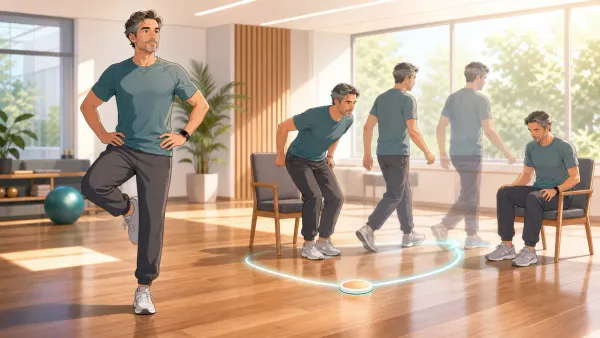
Single-leg balance vs timed up and go: which test should you track?
Single-leg balance vs timed up and go tests measure different fall-risk signals. Learn which to use, how to interpret results, and when to track both.

Stair ascent speed vs walking speed: which decline shows first?
Stair ascent speed vs walking speed reveals different aging signals. Learn which usually declines first, what each metric means, and how to track both.

VO2 max and menopause: why cardio fitness changes in midlife
VO2 max and menopause often shift together: estrogen changes, sleep, body composition, and training load can lower cardio fitness. Learn what to track.

Functional fitness tests to repeat every 6 months after 40
A practical 6-month checklist for functional fitness tests after 40: what to measure, how to standardize conditions, and when to retest sooner.

Muscle mass vs body weight: which predicts healthy aging better?
Compare muscle mass vs body weight for healthy aging. Learn why strength, lean mass, waist size, and body-composition trends beat scale weight after 40.

Sit-to-stand test vs gait speed: which predicts healthy aging better?
Compare sit-to-stand test vs gait speed for healthy aging, longevity risk, fall screening, and what each result tells you to test, track, and train next.

Strength age vs biological age: what declining muscle tells you
Strength age vs biological age compares muscle function with systemic aging. Learn what declining strength means, where it misleads, and what to track.