What to eat before bed: small snacks and the sleep evidence
What to eat before bed when you are hungry: practical snack ideas, timing, reflux precautions, and the evidence on kiwi and cherry juice. Find your best routine.
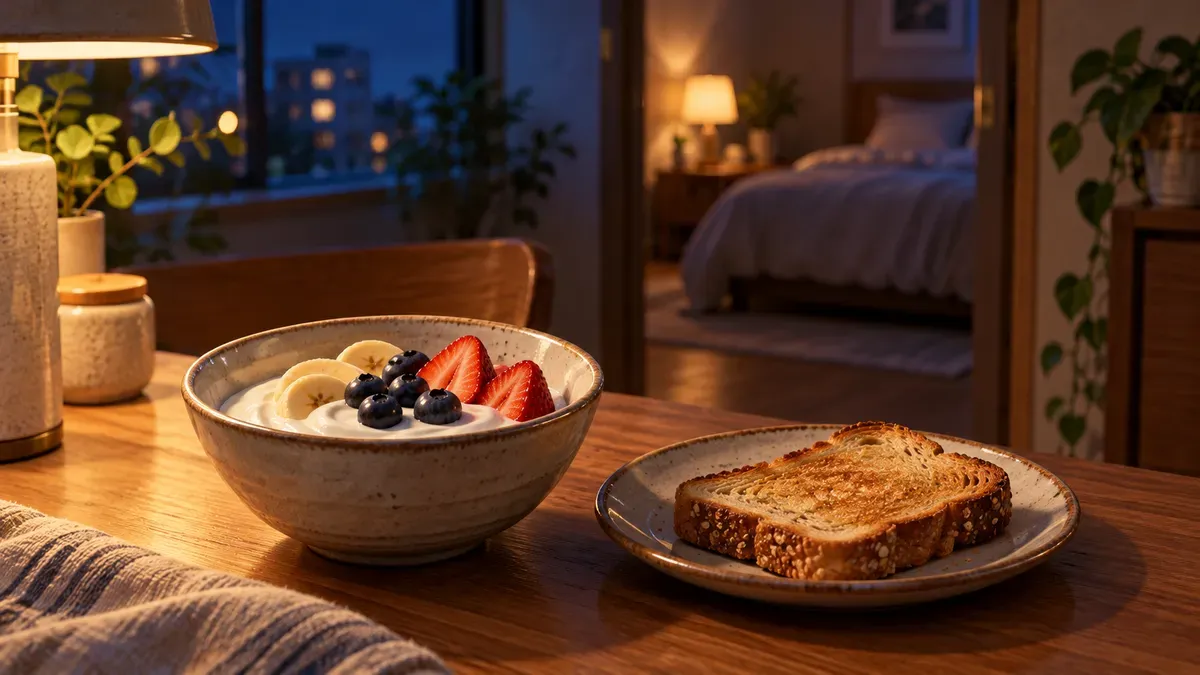
If you are hungry before bed, choose a small, familiar snack that settles your appetite without leaving you uncomfortably full. Plain yogurt with fruit, a little oatmeal, or toast with a modest topping can work. If you are comfortably satisfied after dinner, you do not need to add food to improve sleep.
The useful question is whether eating solves hunger, supports recovery, or creates digestive discomfort. A food containing tryptophan or melatonin is not automatically a treatment for insomnia.
Quick answer
Eat only if there is a reason to eat. Choose one small serving of food you tolerate, finish it before lying down, and notice comfort rather than chasing a sleep score. Keep large meals earlier when possible. If nighttime reflux is a problem, leave at least three hours between a meal and bed and discuss persistent symptoms with a clinician. Kiwi and tart cherry juice have preliminary sleep research, but neither has a proven universal bedtime dose or guaranteed benefit.
Key facts
- A light snack addresses hunger without requiring a second dinner.
- Meal size and lying down influence reflux risk, especially in people with nighttime symptoms.
- Caffeine can disrupt sleep even when consumed several hours before bed.
- Small food trials provide preliminary evidence, rather than reliable insomnia treatments.
- Repeated hunger invites a daytime food review, rather than an automatic nightly restriction.
First decide whether hunger is the problem
Pause before opening the kitchen. Are you physically hungry, finishing a late workout, or simply following a familiar television-and-snack routine? These situations deserve different responses.
If dinner was early or small, hunger at bedtime can be unsurprising. Eat a deliberate snack at the table instead of repeatedly returning to the packet. If dinner was adequate and you feel satisfied, food is optional. There is no nutritional requirement to eat again immediately before sleep.
If you regularly arrive at bedtime ravenous, look back at breakfast, lunch, afternoon food, and training. A snack may help tonight, while a more adequate daytime pattern may make tomorrow easier. Avoid using an evening cutoff to compensate for a day of underfueling. People recovering from an eating disorder should make changes with their care team rather than add rigid rules.
The sleep and longevity guide provides the broader sleep context. This article focuses on food selection when hunger and bedtime meet.
Small snack ideas that are easy to adapt
The following are practical starting portions, not clinical sleep prescriptions. Choose one option, adapt it to appetite, allergies, and your usual diet, and stop when comfortably satisfied.
| Option | Example starting portion | What to consider |
|---|---|---|
| Plain yogurt and fruit | About 5 oz (150 g) yogurt with a little fruit | Use a tolerated lactose-free or suitable plant alternative if needed |
| Cooked oatmeal | About half a cup (120 mL) prepared oats | Keep the serving modest rather than making a large second meal |
| Toast with a topping | One small slice with a little nut butter or hummus | Check allergies and whether fatty toppings worsen your reflux |
| Fruit and a few nuts | One small fruit with a small handful of nuts | Choose another option if acidity, fiber, or nuts bother your digestion |
| A small recovery snack | A familiar carbohydrate food with a protein food | Match the need created by training rather than adding food automatically |
No option wins for everyone. A dairy-free eater need not start drinking milk, and someone who dislikes kiwi need not force it into a routine. Price, availability, enjoyment, and tolerance matter more than a social-media ranking of sleep foods.
Prepare the portion before eating. A bowl makes the amount visible and creates a natural endpoint; an open bag makes it easier to keep eating without noticing satisfaction. If a snack reliably leaves you bloated or thirsty, change the food or portion instead of assuming you need a supplement.
Timing depends on the meal and your symptoms
There is a meaningful difference between a light snack and a heavy dinner. NHLBI sleep guidance allows a light snack while advising against large meals close to bed. It does not establish an ideal snack time for every adult.
For nighttime reflux, NIDDK guidance suggests eating meals at least three hours before lying down. Personal triggers can include high-fat or spicy food, acidic foods, alcohol, chocolate, or caffeine. Restrict foods that actually provoke your symptoms rather than eliminating an entire list without a reason.
If your schedule forces a late dinner, consider distributing more food earlier and keeping the final meal manageable. A practical example is an afternoon meal before an evening commitment and a smaller meal afterward. This is an organizational choice, not proof that eating after a particular clock time is harmful.
For the separate question of weight and evening carbohydrate, see carbohydrates at night. For repeated glucose concerns, late eating versus poor sleep addresses a different outcome. A comfortable snack is not a glucose treatment.
Do kiwi, cherries, or milk actually improve sleep?
Food chemistry can make a plausible story, but a plausible story is only a starting point. A useful study needs an appropriate comparison, enough participants, relevant sleep outcomes, and results that apply beyond its particular group.
| Food or strategy | What research has tested | What the finding does not establish |
|---|---|---|
| Kiwi | A self-controlled study of 24 adults used two kiwi one hour before bed for four weeks; some sleep measures improved | Without a parallel control group, improvements cannot confidently be attributed to kiwi alone |
| Kiwi with dinner | A later randomized crossover study in 24 men examined fresh kiwi, dried kiwi, and water; some outcomes differed | Findings do not mean every sleep measure improved or that kiwi treats chronic insomnia |
| Tart cherry juice | A small crossover pilot reported longer sleep in eight completers with insomnia | A tiny pilot cannot establish a dependable effect or a standard recommendation for everyone |
| Protein before sleep | A study in 16 young men tested 40 g of casein after evening resistance exercise | Overnight protein metabolism is a different outcome from falling asleep faster |
The 2011 kiwi study is often presented as a simple food cure. Its design makes that conclusion too strong. The 2023 crossover trial adds useful research, but remains a small, specific experiment.
The tart cherry pilot used 8 fl oz (240 mL) twice daily for two weeks in each intervention period. That is a study protocol, not advice to drink that amount. Juice adds fluid and carbohydrate, and may be unsuitable for a person’s reflux or glucose plan. Ordinary cherries and a concentrated juice are also different exposures.
Milk or yogurt can be convenient foods if you tolerate them. Their protein content does not make them sedatives. Similarly, finding tryptophan in a food does not tell you how much reaches the brain or whether your sleep will change. Do not replace prescribed care with a food experiment.
After evening exercise, distinguish recovery from sleep treatment
If you finish training late and have not eaten enough, a manageable recovery meal or snack can meet a real nutritional need. Plan around the whole day’s intake, the session, and when you next train. Going to bed hungry is not a required recovery strategy.
In the pre-sleep protein experiment, researchers measured digestion and protein metabolism after resistance exercise. The result supports a specific recovery mechanism; it does not prove that everyone needs 40 g of protein at bedtime or that such a dose improves sleep.
For daily protein planning, use how much protein you need after 40. For a late training schedule, exercise at night and sleep quality helps you consider the workout as well as the food. Avoid importing an athletic feeding protocol into an ordinary rest-day evening without a need.
Check caffeine and alcohol before adding a sleep food
A snack will not reliably cancel a stimulant. In a randomized caffeine study, 400 mg disturbed sleep when taken at bedtime and at three or six hours beforehand. That was a substantial fixed dose, not proof that every cup has the same effect. Individual sensitivity and dose matter.
Review coffee, tea, energy drinks, pre-workout drinks, and chocolate across the afternoon and evening. Our caffeine timing guide can help you make that review more precise. Alcohol is also a poor sleep strategy: feeling drowsy is not the same as sleeping well. Prefer a drink because you enjoy and tolerate it, rather than expecting it to act as medicine.
Run a simple comfort experiment
For one week, keep a brief note of dinner time, whether you were hungry, what you ate afterward, reflux or bloating, and how rested you felt the next morning. Keep the exercise practical; a few words are enough.
Change one thing that matches your problem. If hunger is the issue, try one planned snack. If fullness is the issue, move some food earlier. If reflux is the issue, prioritize your symptom plan. Keep bedtime and caffeine reasonably consistent so several simultaneous changes do not hide the result.
Sleep opportunity and a repeatable routine matter for long-term health. A better-tolerated evening can support those habits, but one snack cannot demonstrate a change in biological age. Even a consistent improvement in a personal diary is an observation, not a controlled clinical trial.
Put the pattern in context with SuperAge
If you use SuperAge, review available sleep and recovery trends alongside your own meal notes. The app does not establish which food caused a better night or diagnose reflux or insomnia. Your comfort, daytime function, and a pattern across several nights are more useful than declaring success from one high score.
When food changes are not enough
Seek medical advice for persistent reflux, difficulty swallowing, unexplained weight loss, recurrent nighttime eating with distress, or sleep problems that affect daytime life. Loud snoring, witnessed breathing pauses, and marked daytime sleepiness deserve assessment rather than another bedtime-food experiment.
If you have diabetes or take medicines that can cause low blood glucose, follow your individualized food and medication plan. A generic recommendation to eat or skip a bedtime snack can be inappropriate. Kidney disease, pregnancy, and other conditions may also change nutritional needs.
For chronic insomnia, the American Academy of Sleep Medicine guideline strongly recommends multicomponent cognitive behavioral therapy for insomnia. Food routines may support comfort, but they are not a substitute for that treatment.
Review your routine with SuperAge
Explore SuperAge on the App Store if you want to put sleep and recovery trends beside a simple evening routine. Use the information to ask a clearer question, not to impose a perfect-food rule.
Frequently asked questions
What is the best food to eat before bed?
There is no universal best food. If hungry, choose a small serving you tolerate, such as plain yogurt with fruit, oatmeal, or toast. If satisfied, no extra food is necessary.
Is it better to go to bed hungry?
Not as a general rule. A small planned snack can be reasonable when genuine hunger is distracting. Repeated strong hunger is a reason to review daytime intake and training demands.
How long before sleep should I stop eating?
There is no single cutoff for everyone. Keep heavy meals away from bedtime when practical. If nighttime reflux occurs, guidance suggests at least three hours between meals and lying down.
Do two kiwi before bed cure insomnia?
No. Small studies are promising, but they do not establish a cure or a guaranteed dose. You can enjoy kiwi as food without expecting a treatment effect.
Should I drink tart cherry juice every night?
It is optional food, not a required sleep treatment. Consider carbohydrate, fluid, tolerance, cost, and your medical plan. Preliminary pilot results do not justify a universal nightly prescription.
Does warm milk make you sleep?
Some people find the routine pleasant, but milk is not a proven universal sedative. Choose a tolerated alternative if dairy causes symptoms, and keep persistent insomnia separate from food preference.
Should I eat protein after a late workout?
A protein-containing meal or snack can help meet recovery needs when daily intake is inadequate. The exact need depends on your full diet and training; a bedtime supplement is not automatically necessary.
Can a snack prevent low blood sugar overnight?
Sometimes a clinician may include one in an individualized diabetes plan. Do not assume you need it or change medication based on a general article. Recurrent suspected nighttime hypoglycemia needs medical review.
Key takeaways
- Use a small snack to solve actual hunger, rather than adding a compulsory sleep food.
- Choose familiar foods and portions that leave you comfortable.
- Treat reflux, caffeine, and heavy late meals as separate, actionable issues.
- Keep kiwi and cherry research in proportion to its small studies and limited outcomes.
- Seek appropriate care when digestive or sleep symptoms persist.
References
- NHLBI. Healthy sleep habits.
- NIDDK. Eating, diet, and nutrition for GER and GERD.
- Lin HH, et al. Effect of kiwifruit consumption on sleep quality in adults with sleep problems. 2011.
- Kanon AP, et al. Acute effects of fresh versus dried green kiwifruit on sleep quality and related outcomes. 2023.
- Losso JN, et al. Pilot study of tart cherry juice for insomnia. 2018.
- Res PT, et al. Protein ingestion before sleep improves postexercise overnight recovery. 2012.
- Drake C, et al. Caffeine effects on sleep taken 0, 3, or 6 hours before bed. 2013.
- Edinger JD, et al. Behavioral and psychological treatments for chronic insomnia disorder in adults. AASM clinical practice guideline, 2021.
Educational information, not individualized medical or nutritional advice.
Related Articles

Relaxation techniques for stress: how to choose and practise them
Compare relaxation techniques for stress, anxiety, and sleep, with practical breathing, muscle relaxation, imagery, and clear safety guidance for daily use.