Presbyopia: why your near vision changes after 40 and how to fix it
Presbyopia is the age-related loss of near vision starting around 40. Learn why it happens, what works, what doesn't, and what your eyes reveal about aging.
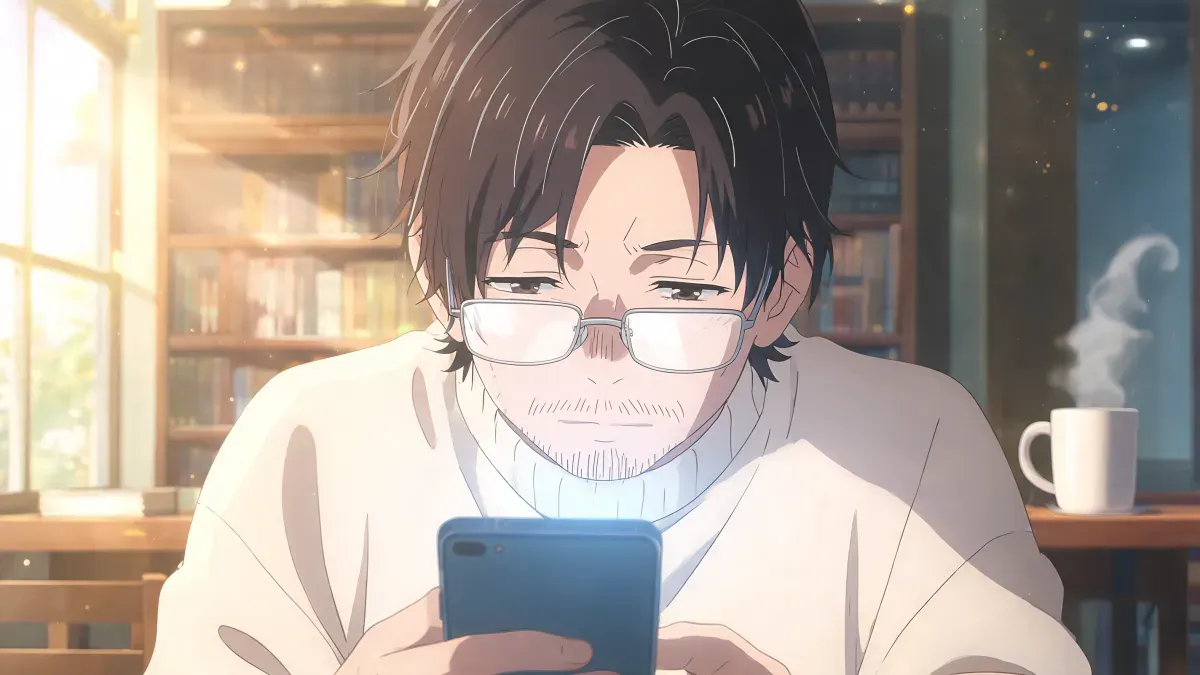
You’re holding the menu farther away. The phone screen feels blurry until you tilt your head back. You squint to read labels in dim restaurants and joke that your arms aren’t long enough anymore. If you’re 40 or older, this isn’t your imagination — and it isn’t your eyes failing. It’s presbyopia, and it happens to virtually everyone.
Presbyopia affects roughly 1.8 billion people worldwide and somewhere between 83% and 89% of adults over 45. It’s the most common, most universal age-related vision change there is. The frustrating part isn’t the condition itself — it’s the avalanche of bad advice that follows it: eye exercises that don’t work, “cures” that don’t exist, and the constant pressure to feel like getting reading glasses means giving up.
This guide separates what actually works from what wastes your time, and explains what your near vision can quietly tell you about how your body is aging overall.
What you’ll learn:
- Why near vision changes around 40 — the real biological mechanism
- Which presbyopia treatments work (and which are marketing)
- How to choose reading glasses, contacts, drops, or surgery
- What presbyopia onset reveals about your broader health
What is presbyopia?
Quick definition: Presbyopia is the age-related loss of the eye’s ability to focus on near objects, caused by the lens losing flexibility starting around age 40.
The word comes from Greek — presbys (old) + opia (eye). Despite the name, presbyopia isn’t a disease. It’s a structural change that happens to every human eye as it ages, the same way every joint stiffens and every artery loses some elasticity.
Here’s what you’ll typically notice first:
- Holding your phone or menu farther away to read it
- Needing brighter light for close-up tasks
- Eye strain, sore eyes, or headaches after reading
- Slower refocusing when looking from far to near
- Letters that look fuzzy at the distance they used to be sharp
Presbyopia typically starts being noticeable around age 40, progresses through your 50s, and stabilizes in your mid-60s. It doesn’t cause blindness, it doesn’t damage your eyes, and it doesn’t mean anything is wrong with you.
How presbyopia differs from other vision problems
| Condition | What it is | When it starts |
|---|---|---|
| Presbyopia | Loss of near focus, age-related | ~40 onward |
| Myopia (nearsightedness) | Far objects blurry, lens-focus mismatch | Usually childhood |
| Hyperopia (farsightedness) | Near objects harder to focus | Often birth/childhood |
| Astigmatism | Distorted vision from irregular cornea | Any age |
| Cataracts | Lens becomes cloudy | Usually after 60 |
You can have presbyopia on top of any of these — which is why your existing glasses prescription stops being enough after 40, even if your distance vision hasn’t changed.
The science behind presbyopia
To understand presbyopia, you need to know how your eye focuses in the first place. Inside each eye, behind the iris, sits a clear, flexible lens about the size of an aspirin. When you look at something close, a ring of muscle around the lens (the ciliary muscle) contracts and lets the lens become more rounded. When you look at something far, the muscle relaxes and the lens flattens.
This shape-shifting process is called accommodation, and it’s how your eyes shift focus thousands of times a day without you noticing.
Why the lens stiffens
Your lens isn’t replaced over your lifetime — it’s one of the few tissues in your body that just keeps growing, adding new layers of cells on the outside while the inner cells stay put forever. By age 40, the central part of your lens is made of cells that were laid down before you were born.
Those ancient cells are packed with proteins called crystallins. Crystallins are remarkable — some variants (like gamma-D crystallin) stay folded and functional for 50 to 60 years, longer than almost any other protein in the human body. But they don’t last forever.
Over decades, several things happen:
- Crystallin proteins accumulate damage from oxidative stress and ultraviolet light
- Damaged proteins clump together into high-molecular-weight aggregates
- Alpha-crystallin (which normally chaperones other proteins) gets used up
- The lens thickens, hardens, and loses elasticity
The ciliary muscle is still working fine. The signal from your brain is still working fine. The lens just can’t deform enough anymore to focus on something six inches from your face.
Why it always starts around 40
The timing isn’t random. Lens flexibility declines steadily from childhood — but you have so much accommodation reserve that you don’t notice until you’ve burned through most of it. A typical 20-year-old can focus on objects about 10 cm (4 inches) away. By 40, the closest focus point has moved out to about 25 cm (10 inches). By 50, it’s around 40 cm (16 inches) — beyond comfortable reading distance.
That’s the moment most people first hold a menu at arm’s length and realize something has shifted.
6 proven ways to manage presbyopia
There’s no way to reverse lens stiffening — but there are several effective ways to give your eyes the help they need.
1. Reading glasses (the simplest fix)
For most people, this is where the journey begins. Reading glasses are convex lenses that do the focusing work your stiff lens can no longer do.
Why they work: They compensate for the loss of accommodation by pre-focusing close-up light before it enters your eye.
How to do it:
- If you don’t have other vision problems, over-the-counter readers work fine for most people
- See an eye doctor at least once to get a baseline prescription
- Strength is measured in diopters: +1.00 for early presbyopia, +2.50+ as it progresses
- Get a few pairs at different strengths if you do varied close work
Expected results: Immediate. Sharp text the moment you put them on.
Common myth: Reading glasses do not weaken your eyes or speed up presbyopia. Your eyes get worse on their own schedule regardless.
2. Progressive or bifocal lenses
If you also need correction for distance, progressives (or old-style bifocals) put both prescriptions in one pair of glasses.
Why they work: Multiple focal zones let you look through the top for distance and the bottom for near work.
How to do it:
- Get a comprehensive eye exam to nail the dual prescription
- Allow 1-2 weeks to adapt to head positioning
- Choose larger frames if you’ll spend hours at a computer
Expected results: Once you adapt, you stop juggling two pairs of glasses.
3. Multifocal contact lenses
If you don’t want glasses, multifocal contacts work for many presbyopes — though they require some adaptation.
Why they work: They use concentric zones of different powers so your brain learns to prioritize the in-focus image at any distance.
How to do it:
- Get fitted by an optometrist — not all eyes adapt well to multifocals
- Try monovision contacts as an alternative (one eye for distance, one for near)
- Expect a 1-2 week adjustment period for the brain to adapt
Expected results: Lens-free distance vision plus functional near vision. Some users report slight loss of contrast at night.
4. Prescription eye drops (newest option)
In recent years, the FDA has approved prescription eye drops for presbyopia. The most established uses pilocarpine; newer drops use aceclidine.
Why they work: They constrict the pupil, creating a “pinhole effect” that increases depth of focus — the same trick of physics behind small-aperture cameras.
How to do it:
- Available only by prescription — talk to an eye doctor
- Effects typically last 6-10 hours
- Best for mild to moderate presbyopia and occasional use (dinners, meetings)
Expected results: Sharper near vision for several hours. Common side effects: dim vision in low light, headaches, brow ache.
The information provided does not replace professional medical advice. Consult your healthcare provider or eye care specialist before starting any prescription treatment.
5. Refractive surgery (LASIK monovision, PresbyLASIK)
If you want a more permanent solution, several surgical approaches exist.
Why they work: They reshape your cornea so one eye is optimized for distance and the other (or zones within one) for near.
How to do it:
- Consult a refractive surgeon — not everyone is a candidate
- Try monovision contacts first to confirm your brain tolerates it
- Understand that presbyopia continues to progress, so results may evolve
Expected results: Glasses-free vision for many tasks, though some readers still need light readers for very small print.
6. Lens replacement surgery (IOL)
For people with both presbyopia and developing cataracts, lens replacement is increasingly common.
Why it works: Your aged biological lens is removed and replaced with a multifocal or accommodating intraocular lens.
How to do it:
- Discuss with an ophthalmologist if cataracts are present
- Choose between monofocal, multifocal, accommodating, or extended depth-of-focus IOLs
- Understand trade-offs: multifocal IOLs can produce halos at night
Expected results: Potentially decades of presbyopia and cataract correction in one procedure.
What doesn’t work for presbyopia
The presbyopia market is full of products that promise to “fix” or “reverse” age-related vision loss. The honest summary: nothing reverses lens stiffening. No eye exercise, no supplement, no app, no vision-training program rebuilds the flexibility of your crystallin proteins.
What you’ll see marketed:
- Eye exercises and “vision training” apps — Can reduce eye strain and improve focus comfort, but cannot restore accommodation. The lens does not strengthen like a muscle.
- Pinhole glasses — Use the pinhole effect (same as the prescription drops), but extremely limiting and not practical for daily use.
- “Natural cures” — There is no peer-reviewed evidence that any supplement, diet, or herbal remedy reverses presbyopia.
- 20-20-20 rule for prevention — Helpful for digital eye strain (every 20 minutes, look 20 feet away for 20 seconds), but it doesn’t prevent or treat presbyopia itself. If symptoms blur together, use this digital eye strain vs presbyopia comparison to separate screen load from near-focus loss.
The 20-20-20 rule is still worth doing — just for the right reason. It eases the muscle fatigue your eyes accumulate from sustained close focus, which makes presbyopia symptoms feel worse.
How to choose the right approach
Think of presbyopia treatments as a ladder, from least to most invasive:
| Option | Cost | Reversibility | Best for |
|---|---|---|---|
| OTC reading glasses | $ | Fully reversible | Mild presbyopia, no other vision issues |
| Custom progressives | $$ | Fully reversible | Existing prescription glasses wearer |
| Multifocal contacts | $$ | Fully reversible | Active lifestyle, glasses-averse |
| Prescription drops | $$ | Fully reversible | Occasional sharp near vision needed |
| Refractive surgery | $$$ | Permanent | Tolerates monovision, healthy cornea |
| Lens replacement (IOL) | $$$$ | Permanent | Cataracts also developing |
Most people start with reading glasses, move to progressives or multifocal contacts as presbyopia advances, and only consider surgery if they have a strong preference for being glasses-free or have cataracts forming.
Presbyopia and biological age: what your eyes reveal
Here’s where presbyopia becomes more interesting than just “I need reading glasses.”
Your lens is one of the few tissues in your body whose central cells stay with you from birth to death. Every other tissue gets turned over — but the proteins at the center of your lens are the same proteins you were born with, accumulating decades of damage. That makes your lens an unusual biological clock.
Research on lens aging has uncovered some intriguing patterns:
- Oxidative stress is a major driver of crystallin damage — the same stressor that accelerates aging in arteries, brain tissue, and skin
- People with metabolic dysfunction (diabetes, insulin resistance) often develop presbyopia and cataracts earlier
- UV exposure speeds lens protein damage, just as it speeds skin aging
- Smoking and chronic inflammation accelerate every age-related eye change measured
So while presbyopia itself happens to everyone, when it happens and how fast it progresses both vary — and the same lifestyle factors that influence biological age (metabolic health, UV exposure, oxidative stress, inflammation) influence eye aging too.
Want to go deeper? Read our guides on how biological age is calculated and eye aging and vision loss prevention for the broader longevity science behind what’s happening inside your body — and your eyes.
The takeaway: needing reading glasses at 45 is normal. Needing them at 35, or seeing presbyopia race forward in a few years, is worth paying attention to. It’s not a problem in itself — but it’s a signal worth folding into the rest of your healthspan picture.
How SuperAge helps you track aging signals
You can’t measure lens flexibility with a smartphone — but you can track the underlying biology that drives how fast every tissue in your body, including your eyes, ages.
SuperAge uses Apple Health and Apple Watch data to estimate your biological age from the metrics that matter: cardiovascular fitness, recovery, sleep quality, and the daily inputs that shape long-term health.
Track what drives aging
SuperAge pulls VO2 max, resting heart rate, heart rate variability, sleep, and activity data automatically — no manual logging needed.
See your biological age trend
Instead of a single snapshot, SuperAge shows whether your body is aging faster or slower than your chronological age over time.
Connect lifestyle to outcomes
Sleep poorly for a week? Skip workouts? Travel and eat badly? SuperAge shows you how your daily choices ripple into your aging trajectory — so the same habits that help your eyes also show up in your overall score.
Frequently asked questions
At what age does presbyopia start?
Presbyopia usually becomes noticeable between ages 40 and 45, though the underlying lens stiffening begins much earlier. By age 50, nearly everyone has some degree of presbyopia. It stabilizes in the mid-60s once accommodation is essentially gone.
Can you prevent presbyopia?
No — there’s no proven way to prevent presbyopia. It results from physical changes to lens proteins that everyone experiences with age. You can slow related eye aging by protecting your eyes from UV exposure, not smoking, managing metabolic health, and reducing oxidative stress.
Do reading glasses make your eyes weaker?
No. This is one of the most persistent myths about presbyopia. Reading glasses do not strengthen or weaken your eyes — they simply provide the focusing power your aging lens can no longer supply on its own. Going without them when you need them just causes eye strain and headaches.
Do eye exercises work for presbyopia?
No, eye exercises cannot reverse or prevent presbyopia. The lens stiffening that causes presbyopia is structural — your lens proteins literally cannot deform the way they used to. Exercises can reduce eye fatigue and discomfort, but they don’t restore accommodation.
Are presbyopia eye drops worth trying?
Prescription eye drops (pilocarpine, aceclidine) can sharpen near vision for 6-10 hours by constricting the pupil. They’re best for mild to moderate presbyopia and people who want occasional sharp reading without glasses. Side effects include dim vision in low light and headaches. Talk to an eye doctor about whether they’re right for you.
Does presbyopia mean my eyes are aging unhealthily?
Not necessarily. Presbyopia happens to everyone — even people in excellent health. But the speed of presbyopia progression is partly influenced by oxidative stress, metabolic health, and UV exposure. Early or fast-progressing presbyopia can be a small signal worth folding into your broader healthspan picture.
Key takeaways
- Presbyopia is universal: Lens stiffening from accumulated crystallin damage causes near vision to blur in nearly everyone after 40 — it’s not a disease and not your fault.
- What works: Reading glasses, progressives, multifocal contacts, prescription drops, and surgical options all genuinely correct presbyopia. The choice depends on lifestyle, budget, and severity.
- What doesn’t: Eye exercises, supplements, “natural cures,” and vision-training apps cannot reverse lens stiffening. Don’t waste money on them.
- Your eyes are a biological signal: While everyone gets presbyopia, when and how fast it progresses connects to broader aging factors like oxidative stress and metabolic health.
- Next step: Get a baseline eye exam if you haven’t in 2+ years, and start tracking the lifestyle inputs that drive aging across every tissue in your body.
Take control of how you age
Presbyopia is one of the most visible reminders that your body is changing — but it’s far from the only one. The same biological processes that stiffen your lens are also at work in your arteries, your muscles, and your brain. The difference is that those changes are silent until much later.
You can’t see your biological age in the mirror. You can measure it.
Ready to see the full picture? Download SuperAge and start tracking the metrics that actually predict how well you’re aging — from your eyes to your heart to everything in between.
References
- Cleveland Clinic — Presbyopia: Symptoms, Causes & Treatment
- American Academy of Ophthalmology — What Is Presbyopia?
- Mayo Clinic — Presbyopia: Symptoms and Causes
- Heys et al. (2007) — Aging Cell: Presbyopia and heat — α-crystallin and lens flexibility
- Royal Society B (2011) — The ageing lens and cataract: a model of normal and pathological ageing
- Aging and Age-Related Diseases of the Ocular Lens and Vitreous Body (PMC3864378)
- Lens Aging: Effects of Crystallins (PMC2743770)
Last updated: 2026-05-25. This article is regularly reviewed to ensure accuracy.
Related Articles

Eye aging: how to protect your vision and prevent macular degeneration
Learn how eye aging affects vision, what raises macular degeneration risk, and which AREDS2, diet, exam, UV, and smoking habits protect sight.