CrossFit after 40: when high intensity ages you faster
CrossFit after 40 can build strength, VO2 max, and community, but only when intensity matches recovery, joints, HRV, and sleep. Learn how to dose it.
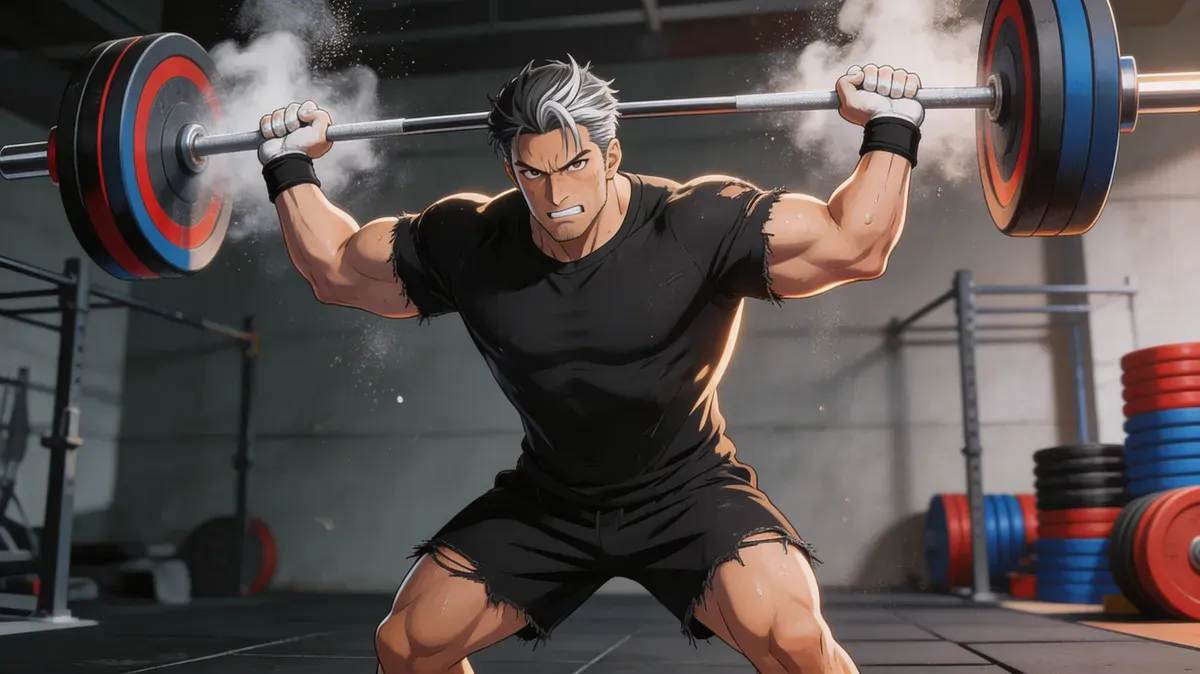
You finished a brutal WOD — 20 minutes of thrusters, box jumps, and burpees at maximum effort. Your heart rate peaked at 185. You collapsed on the floor drenched in sweat, convinced you just turned back the clock. But what if, at 45, that exact workout is quietly accelerating your biological aging?
This is not an anti-CrossFit article. CrossFit has done remarkable things: it pulled millions of adults off the couch, introduced them to barbells, and built one of the most powerful fitness communities in history. But the conversation about CrossFit after 40 needs more nuance than “just scale it” or “listen to your body.” The physiology of a 45-year-old is fundamentally different from that of a 25-year-old, and the dose-response curve for high-intensity exercise shifts dramatically with age.
The uncomfortable truth is that the same intensity that builds resilience in your 20s can erode it in your 40s and beyond — if the recovery side of the equation is ignored. And in CrossFit culture, recovery is often the part that gets ignored.
Quick answer
CrossFit after 40 is not automatically anti-aging or pro-aging. CrossFit supports longevity when it preserves muscle, raises cardiovascular fitness, and keeps you consistent; it becomes a problem when high-intensity sessions outpace recovery, sleep, HRV, joints, or connective tissue. The practical target is 3-4 well-recovered sessions per week, scaled movements, and low-intensity or rest days when readiness data is trending down.
Key facts
- CrossFit after 40 works best when intensity matches recovery capacity.
- HRV, resting heart rate, sleep, soreness, and performance trends reveal whether training stress is accumulating.
- Scaled CrossFit sessions preserve strength and community without forcing every workout into a max-effort test.
In this article:
- The dose-response problem after 40
- Cortisol: the hidden cost of daily redlining
- Rhabdomyolysis: rare but real
- Joint wear and connective tissue aging
- HRV suppression and the overtraining spiral
- The real benefits of CrossFit for aging adults
- How SuperAge helps you find the sweet spot
- The smart CrossFit protocol after 40
- References
The dose-response problem after 40
Exercise follows an inverted U-shaped dose-response curve. Too little provides minimal benefit. The right amount triggers powerful adaptations: improved cardiovascular function, better insulin sensitivity, increased muscle protein synthesis, and reduced inflammation. Too much — and this is where things get controversial — can flip the script entirely.
The strongest public-health evidence still favors exercise: adults should get regular aerobic activity plus at least two days of muscle-strengthening work each week, and higher cardiorespiratory fitness is strongly associated with lower mortality. The nuance is that “more intensity” and “better longevity” are not the same instruction. In masters athletes, some extreme-volume endurance studies show more coronary plaque or calcification in a subset of lifelong high-volume exercisers, while broader fitness studies still show large survival benefits from being fit.
For CrossFit after 40, the practical conclusion is simple: intensity is useful when you can recover from it. If five or six hard WODs per week push sleep, HRV, joints, or mood in the wrong direction, the dose is no longer a longevity stimulus — it is an accumulating stress load.
Why does this matter more after 40? Three reasons:
Recovery capacity declines. Growth hormone output drops approximately 14% per decade after age 30. Testosterone — a key driver of tissue repair — decreases by 1-2% per year after 40. The machinery that rebuilds you after a hard workout simply runs slower.
Inflammatory regulation changes. The aging immune system becomes more pro-inflammatory (a state scientists call “inflammaging”). Each bout of intense exercise triggers an acute inflammatory response that, in a young body, resolves quickly. In an older body, this resolution takes longer, and repeated bouts before full resolution can lead to chronic low-grade inflammation — exactly the type measured by hsCRP that accelerates biological aging.
Connective tissue loses elasticity. Tendons, ligaments, and cartilage become less hydrated and more brittle with age. Collagen turnover slows. The explosive, high-repetition movements that define CrossFit — kipping pull-ups, box jumps, Olympic lifts under fatigue — place enormous demands on tissues that are increasingly vulnerable.
None of this means high-intensity training is off the table. It means the margin between “enough” and “too much” narrows significantly. The best sports for longevity share a common thread: they combine physical challenge with social connection and, critically, allow adequate recovery.
Cortisol: the hidden cost of daily redlining
Cortisol is not inherently bad. It’s an essential hormone that mobilizes energy, regulates inflammation, and helps you rise to physical challenges. The problem begins when cortisol is chronically elevated — when the acute spikes from training never fully return to baseline before the next spike arrives.
A typical CrossFit class pushes exercisers into heart rate zones 4 and 5 for sustained periods. This triggers a robust cortisol response — often 2-3x baseline levels. In a well-recovered athlete, cortisol returns to normal within 60-90 minutes post-exercise. But if you’re training at this intensity 5-6 days per week and sleeping 6 hours a night (common among driven, time-pressed adults over 40), the cortisol curve never fully resets.
The downstream effects of chronic cortisol elevation are devastating for longevity:
- Accelerated muscle breakdown. Cortisol is catabolic — it breaks down muscle tissue to liberate amino acids for gluconeogenesis. This directly opposes the muscle-building stimulus you’re chasing. The result is a frustrating paradox: you train harder but lose muscle, the very definition of diminishing returns.
- Impaired immune function. Chronically elevated cortisol suppresses lymphocyte activity and reduces immunoglobulin production, leaving you more susceptible to upper respiratory infections. If you’ve noticed you catch every cold that circulates through the gym, this is likely why.
- Disrupted sleep architecture. Elevated evening cortisol interferes with melatonin release and suppresses slow-wave (deep) sleep — the phase where most tissue repair, growth hormone secretion, and memory consolidation occur. You can learn more about how to improve deep sleep, but no sleep hygiene protocol can fully compensate for hormonal disruption.
- Visceral fat accumulation. Cortisol preferentially drives fat storage around the abdominal organs, even in people who exercise frequently. This visceral fat is metabolically active tissue that secretes its own pro-inflammatory cytokines, creating a vicious feedback loop.
- Cellular-aging pressure. Chronic stress biology is linked with inflammation, mitochondrial strain, and shorter telomere length in several stress-related conditions. That does not prove one hard WOD shortens telomeres; it means chronically poor recovery is the wrong environment for healthy aging.
The insidious part is that cortisol-driven overtraining doesn’t feel like “being lazy.” It feels like plateauing, struggling, and needing more coffee to function. The cultural response in many CrossFit boxes is to push through. After 40, pushing through is often pushing yourself deeper into a cortisol hole.
Rhabdomyolysis: rare but real
CrossFit has a complicated relationship with rhabdomyolysis — the condition where skeletal muscle breaks down so severely that myoglobin floods the bloodstream and can damage the kidneys. The community has historically treated “Uncle Rhabdo” with dark humor, even featuring a cartoon mascot of a clown connected to a dialysis machine. But there is nothing funny about rhabdomyolysis, and the risk profile changes significantly with age.
Exertional rhabdomyolysis occurs when eccentric muscle damage overwhelms the body’s clearance capacity. Several factors that increase risk are more prevalent in adults over 40:
- Dehydration. Thirst sensation declines with age. Many older adults begin workouts already mildly dehydrated, impairing the kidneys’ ability to clear myoglobin.
- Medication use. Statins — prescribed to roughly 25% of adults over 45 — increase the vulnerability of muscle cells to exercise-induced damage. Certain antihypertensives and diuretics compound the risk.
- Reduced heat tolerance. Thermoregulation efficiency decreases with age. Hot, poorly ventilated gym environments during high-volume eccentric work create a perfect storm.
- Returning after breaks. The “surge and retreat” pattern common among busy professionals — training intensely for 3 weeks, taking a week off for travel, then jumping back into a prescribed WOD at full intensity — is a classic rhabdomyolysis trigger at any age, but especially dangerous after 40.
A 2017 analysis published in the Journal of Clinical Medicine found that CrossFit-related rhabdomyolysis cases disproportionately involved high-repetition eccentric exercises (pull-ups, GHD sit-ups) performed by individuals who were either new to the modality or returning after a layoff. The authors recommended specific volume limits for eccentric movements — recommendations that most standard CrossFit programming does not implement.
This is not meant to alarm you out of the gym. Rhabdomyolysis is statistically uncommon. But “statistically uncommon” is cold comfort when you’re the one in the emergency room, and the risk factors are amplified by age in ways that a 28-year-old coach may not fully appreciate.
Joint wear and connective tissue aging
The human body was not designed for 150 kipping pull-ups under a clock. That statement will anger some people, but the biomechanics are clear.
After 40, articular cartilage thins. Synovial fluid production decreases. The water content of intervertebral discs drops, reducing shock absorption. Tendons become stiffer and less capable of absorbing rapid load changes. These are normal aging processes — they happen to everyone, elite athletes included.
CrossFit’s movement vocabulary includes several patterns that place disproportionate stress on aging connective tissue:
Kipping pull-ups. The ballistic shoulder movement generates enormous shear forces on the labrum and rotator cuff. In a young, well-conditioned shoulder, this is manageable. In a 45-year-old shoulder with subclinical rotator cuff fraying (present in up to 30% of asymptomatic adults over 40), each rep is a gamble.
Olympic lifts under fatigue. Snatches and clean-and-jerks are among the most technically demanding movements in sport. Performing them in a metabolically fatigued state — the norm in CrossFit — degrades form precisely when joint protection matters most. A 2019 study in Sports Medicine found that movement quality in complex lifts deteriorated by 18-24% in the final third of high-intensity workouts, significantly increasing injury risk.
High-repetition box jumps. The landing impact from box jumps generates forces of 4-6x body weight through the ankles, knees, and hips. Performing 50+ reps under time pressure, when fatigue compromises landing mechanics, is a recipe for Achilles tendon injuries and patellar tendinopathy.
Repeated spinal loading. Deadlifts and wall balls performed at high speed and high volume create cumulative compressive forces on lumbar discs that are already losing hydration and height.
The solution is not to avoid these movements entirely but to be ruthlessly honest about volume, speed, and fatigue state. Strict pull-ups build the same muscles as kipping pull-ups — they just don’t let you move as fast on the leaderboard. Step-ups build the same leg strength as box jumps without the impact. These substitutions are not weaknesses; they’re intelligent adaptations that protect the hardware you need to last another 40+ years.
HRV suppression and the overtraining spiral
Heart rate variability is one of the most reliable real-time indicators of autonomic nervous system balance. High HRV indicates a parasympathetic-dominant state — your body is recovered, adaptable, and resilient. Low HRV indicates sympathetic dominance — stress, incomplete recovery, or accumulated fatigue.
For CrossFitters over 40, daily HRV tracking reveals a pattern that “how do you feel?” never can: the overtraining spiral.
Here’s how it typically unfolds:
- Week 1-2: You start a new CrossFit program or increase frequency. HRV dips slightly after hard sessions but recovers within 24-48 hours. This is normal, healthy stress adaptation.
- Week 3-4: Recovery windows lengthen. HRV doesn’t fully return to baseline before the next intense session. You feel “fine” because adrenaline and caffeine mask the deficit. Your resting heart rate begins creeping up by 3-5 bpm.
- Week 5-8: HRV baseline drops measurably. Sleep quality deteriorates. Performance plateaus or declines. Motivation wanes. You interpret this as “needing to train harder” and increase intensity or volume.
- Week 8+: Full sympathetic overdrive. HRV crashes to persistently low levels. Injuries appear. Mood disturbances, irritability, and poor concentration become constant. Recovery now requires weeks or months of deloading, not days.
The tragic irony is that athletes who are most committed — who never miss a day, who always choose the prescribed weight, who view rest days as weakness — are the ones most vulnerable to this spiral.
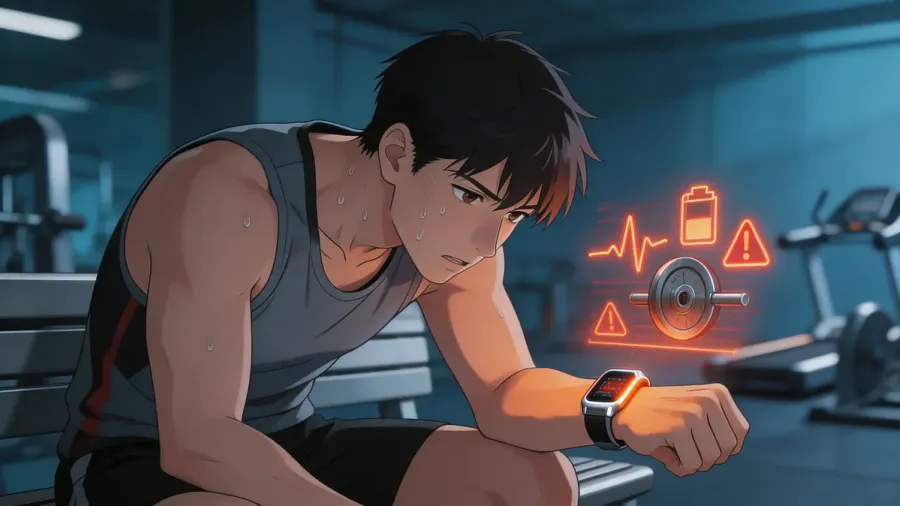
The data from your training readiness score tells a clear story: when your readiness is low, training hard doesn’t build fitness — it digs a deeper recovery debt. Learning to recognize the signs of overtraining through wearable data rather than subjective feel is perhaps the single most important skill a CrossFitter over 40 can develop.
A 2020 study in the British Journal of Sports Medicine tracked HRV in masters athletes (ages 40-65) across different training modalities. Those who combined high-intensity training with regular low-intensity sessions and at least 2 full rest days per week maintained stable or improving HRV trends over 12 months. Those who performed high-intensity work more than 4 days per week showed progressive HRV decline — even when total training volume was similar.
The real benefits of CrossFit for aging adults
After five sections detailing the risks, it would be dishonest not to acknowledge what CrossFit does remarkably well — and why, when properly dosed, it can be one of the best training modalities for adults over 40.
Muscle preservation and sarcopenia prevention
Sarcopenia — the age-related loss of muscle mass and function — begins as early as age 30 and accelerates after 50. It’s a primary driver of frailty, falls, metabolic dysfunction, and loss of independence. The single most effective intervention is resistance training, and CrossFit delivers resistance training in doses that most people would never achieve on their own.
The varied, functional movements in CrossFit — squats, deadlifts, presses, pulls — target the large muscle groups that matter most for maintaining physical independence. And because CrossFit includes progressive overload as a core principle, participants naturally increase the stimulus over time, which is essential for countering sarcopenia.
Cardiovascular fitness and VO2 max
CrossFit’s combination of weightlifting and metabolic conditioning can improve VO2 max — one of the strongest predictors of all-cause mortality. The evidence base for high-intensity functional training is still smaller than the evidence base for traditional endurance and resistance training, but reviews consistently describe meaningful cardiovascular and metabolic stress from HIFT-style sessions. That makes recovery management essential, especially when you also use dedicated VO2 max training protocols.
For adults over 40, VO2 max declines by approximately 10% per decade. Slowing or reversing this decline is one of the highest-leverage interventions for longevity, and few training modalities combine the strength and conditioning elements as effectively as CrossFit when the intensity is appropriately managed.
Community and adherence
Here’s an underappreciated longevity factor: consistency. The most scientifically perfect training program is worthless if you abandon it after 3 months. CrossFit’s community model — the shared suffering, the encouragement, the accountability of showing up to a scheduled class — produces adherence rates that solo gym training cannot match.
Research on the best sports for longevity consistently highlights social sports as superior to solitary exercise for lifespan extension. The Copenhagen City Heart Study found that social racquet sports added 9.7 years of life versus only 3.4 years for solo gym activities. CrossFit, with its inherently social structure, may tap into the same mechanism: exercise that maintains social connections confers benefits beyond the physical.
Bone density
High-impact, load-bearing exercise stimulates osteoblast activity and increases bone mineral density. CrossFit, with its jumping, lifting, and multi-directional loading patterns, provides exactly the type of mechanical stimulus that aging bones need to resist osteoporosis. This is particularly valuable for women approaching or past menopause, when estrogen-driven bone loss accelerates.
Functional capacity
The movements in CrossFit — picking things up off the ground, pushing objects overhead, squatting below parallel, carrying loads — mirror the physical tasks that predict independence in later life. Training these patterns under load builds a “functional reserve” that pays dividends for decades.
How SuperAge helps you find the sweet spot
The central challenge for CrossFitters over 40 isn’t whether to do CrossFit — it’s how much, how often, and how hard. This is where objective data becomes essential, because subjective feel is systematically unreliable in motivated athletes.
SuperAge transforms your Apple Watch into a longevity dashboard that answers these questions daily:
Training readiness score. Before you even leave the house, your training readiness score synthesizes your overnight HRV, sleep quality, accumulated training load, and recovery trends into a single actionable number. A high score means your body can handle a hard WOD. A low score means today is a skill day, a mobility session, or a rest day — not a max-effort AMRAP.
HRV trend analysis. A single HRV reading tells you about today. The trend over weeks and months tells you whether your training program is building or eroding your resilience. SuperAge tracks your HRV baseline over time, alerting you when the trend shifts downward — often weeks before you’d notice any subjective symptoms.
Recovery tracking. SuperAge monitors the balance between training stress and recovery. When that balance tips too far toward stress — the classic pattern in CrossFit overtraining — the app makes it visible before the damage accumulates.
Biological age monitoring. Perhaps the most powerful feedback loop: watching your biological age respond to training decisions. If 5 days per week of high-intensity CrossFit is pushing your biological age upward, that’s information you need. If scaling to 3 intense sessions with 2 low-intensity days moves your biological age downward, that’s your answer — regardless of what the whiteboard at your box says.
The athletes who age best are not the ones who train hardest. They’re the ones who train the hardest they can recover from. SuperAge gives you the data to find that line and stay on the right side of it. For the full science on rest and adaptation cycles, see our guide on recovery between workouts.
If you are choosing between heat and light devices for recovery, compare Sauna vs red light therapy: which recovery tool has better evidence? to match the tool to soreness, sleep, HRV, and training load before adding another protocol.
The smart CrossFit protocol after 40
Based on the research and the physiological realities discussed above, here’s a framework for getting the benefits of CrossFit while minimizing the age-accelerating risks:
Frequency: 3-4 days per week, not 5-6
Three to four CrossFit sessions per week, with at least one rest day between intense sessions, allows adequate recovery for the aging hormonal and musculoskeletal systems. Use the remaining days for zone 2 cardio, mobility work, walking, or social sports. This isn’t less training — it’s smarter training.
Intensity: earn the right to go hard
Use your training readiness score to decide intensity before the workout begins. On high-readiness days, go prescribed. On moderate days, scale by 20-30%. Understanding heart rate zones by sport helps you gauge whether a WOD is pushing into the productive high-intensity zone or simply accumulating fatigue. On low-readiness days, treat the session as a movement practice at 60-70% effort, or substitute an entirely different modality.
Movement selection: protect your joints
Replace kipping pull-ups with strict pull-ups or ring rows. Substitute step-ups for box jumps when volume exceeds 20 reps. Limit Olympic lifts under fatigue — keep snatches and clean-and-jerks for dedicated skill sessions at moderate loads, not for high-rep conditioning pieces. These substitutions preserve the training stimulus while dramatically reducing injury risk.
Recovery: treat it as training
Sleep 7-9 hours. Period. Track your resting heart rate and HRV every morning. If HRV is trending down over a week, take an extra rest day regardless of the program. Consider cold water immersion, sauna, and other recovery modalities as part of your training prescription, not optional extras.
Nutrition: fuel the recovery
Protein requirements increase with age due to anabolic resistance — the reduced sensitivity of muscle to protein’s building signal. Aim for 1.6-2.0 g/kg/day, distributed across 4-5 meals. Prioritize anti-inflammatory foods rich in omega-3 fatty acids, polyphenols, and fiber. Ensure adequate magnesium and vitamin D — two nutrients commonly deficient in active adults over 40 that directly affect recovery and hormonal function.
Ego management: the hardest part
The whiteboard doesn’t know your age, your sleep quality, or your cortisol levels. Competing against the 28-year-old who slept 9 hours and has no professional stress is not bravery — it’s foolishness with a biological price tag. The real competition after 40 is against time itself, and you win that competition by being strategic, not by being reckless.
The bottom line
CrossFit is a tool. Like all tools, its value depends entirely on how it’s used. A hammer builds houses and breaks thumbs — the difference lies in the skill, awareness, and restraint of the person wielding it.
For adults over 40, CrossFit can be a powerful longevity intervention: preserving muscle mass, improving cardiovascular fitness, building bone density, and providing the social connection that adds years to life. But only when the intensity is calibrated to recovery capacity, when the ego is managed, and when objective data — not gym culture — drives training decisions.
The athletes who will still be performing at 60, 70, and beyond are not the ones posting the fastest Fran time today. They’re the ones who understood that intensity without recovery is just damage, that rest is not weakness, and that the goal was never to survive the workout — it was to thrive for decades after it.
Train hard enough to adapt. Recover enough to last. Let the data guide you.
FAQ
Is CrossFit safe after 40?
CrossFit can be safe after 40 when movements are scaled, technique stays clean under fatigue, and weekly intensity leaves room for sleep, HRV, joints, and soreness to recover.
How many days a week should you do CrossFit after 40?
Most adults over 40 should start with 3-4 CrossFit sessions per week, then add low-intensity cardio, mobility, walking, or full rest days based on recovery data.
Should low HRV change a CrossFit workout?
Low HRV should not automatically cancel training, but a falling HRV trend plus poor sleep, higher resting heart rate, soreness, or flat performance is a strong reason to scale intensity.
Track the dose you can recover from
Want to see whether CrossFit is building resilience or draining it? Download SuperAge to connect Apple Watch recovery signals, HRV trends, training readiness, and biological-age context.
References
-
CDC. (2025). Adding Physical Activity as an Adult. https://www.cdc.gov/physical-activity-basics/adding-adults/index.html
-
Mandsager, K., et al. (2018). Association of cardiorespiratory fitness with long-term mortality among adults undergoing exercise treadmill testing. JAMA Network Open, 1(6), e183605. https://pmc.ncbi.nlm.nih.gov/articles/PMC6324439/
-
Schnohr, P., et al. (2018). Various leisure-time physical activities associated with widely differing life expectancies: The Copenhagen City Heart Study. Mayo Clinic Proceedings, 93(12), 1775–1785. https://pubmed.ncbi.nlm.nih.gov/30193744/
-
Merghani, A., et al. (2017). Prevalence of subclinical coronary artery disease in masters endurance athletes with a low atherosclerotic risk profile. Circulation, 136(2), 126–137. https://doi.org/10.1161/CIRCULATIONAHA.116.026964
-
McDougle, J.M., Mangine, G.T., et al. (2023). Acute physiological outcomes of high-intensity functional training: a scoping review. PeerJ, 11, e14493. https://pmc.ncbi.nlm.nih.gov/articles/PMC9817969/
-
Cadegiani, F.A., & Kater, C.E. (2019). Novel insights of overtraining syndrome discovered from the EROS study. BMJ Open Sport & Exercise Medicine, 5(1), e000542. https://pubmed.ncbi.nlm.nih.gov/31297238/
-
Tibana, R.A., et al. (2018). Exertional rhabdomyolysis after an extreme conditioning competition: a case report. Sports, 6(2), 40. https://pmc.ncbi.nlm.nih.gov/articles/PMC6026788/
-
Daniels, T.E., Olsen, E.M., & Tyrka, A.R. (2020). Stress and psychiatric disorders: the role of mitochondria. Annual Review of Clinical Psychology, 16, 165–186. https://pmc.ncbi.nlm.nih.gov/articles/PMC8007172/
Related Articles
How to know if you're overtraining: 7 signs from your body
Discover the 7 warning signs of overtraining backed by wearable data — from HRV drops to sleep disruption. Learn how to catch it early and recover faster.