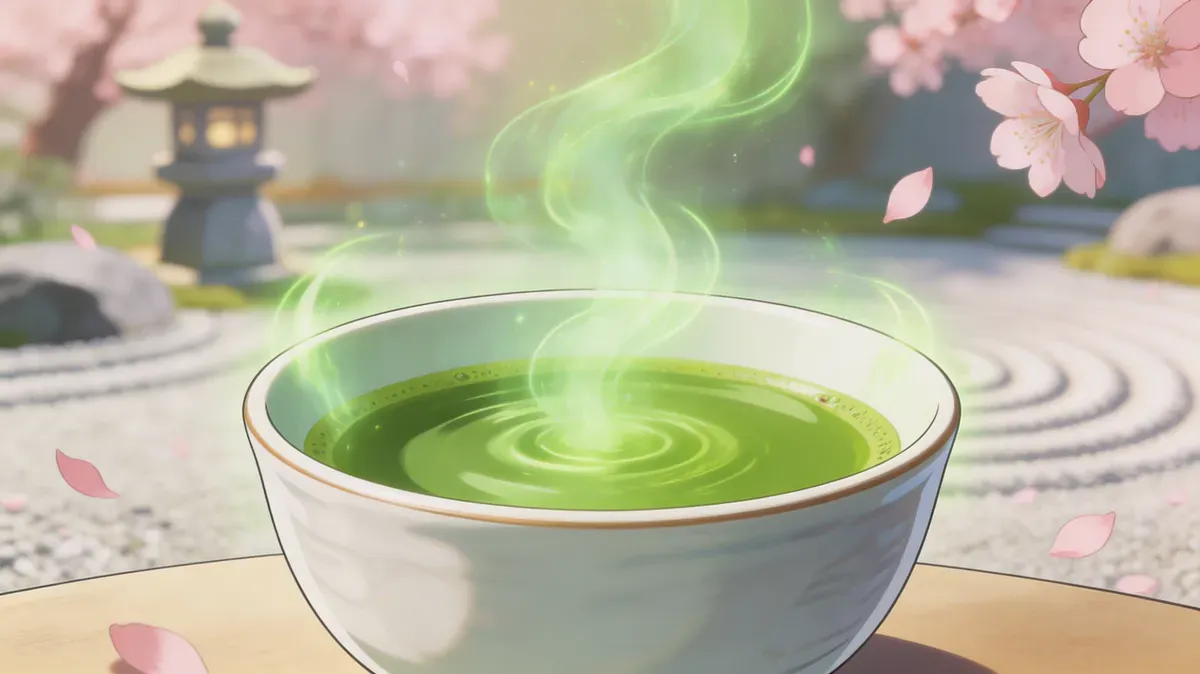
Matcha green tea: EGCG, L-theanine and longevity
Matcha delivers a unique combination of EGCG, L-theanine, and caffeine. Discover the science of green tea longevity and how matcha fits into your daily ritual.
In Japan, green tea has been brewed, whisked, and sipped for a thousand years. In the rest of the world, it has mostly been an afterthought behind coffee and black tea — until matcha, the powdered ceremonial form of green tea, became a global phenomenon roughly a decade ago. Today matcha is everywhere, from specialty cafés to grocery store aisles, often with an air of New Age marketing that obscures a much more interesting scientific story.
That story starts with the Okinawa Centenarian Study and the Ohsaki Study: large Japanese cohorts showing that daily green tea consumption is associated with substantially lower all-cause and cardiovascular mortality. In the Ohsaki Study of 40,530 Japanese adults, drinking 5 or more cups per day was associated with a 16% reduction in all-cause mortality compared to less than 1 cup. This is a real finding from a robust cohort — not a wellness headline.
Matcha is green tea in its most concentrated form. Because the whole leaf is powdered and consumed rather than steeped and discarded, matcha delivers significantly more of every bioactive compound: epigallocatechin gallate (EGCG), L-theanine, caffeine, and chlorophyll. This article is a grounded look at what matcha actually contains, how those compounds affect aging biology, and how to make it part of a longevity-oriented daily routine.
What you’ll learn:
- What matcha is and how it differs from regular green tea
- EGCG: the polyphenol at the center of green tea research
- L-theanine: calm focus from a unique amino acid
- The clinical evidence for longevity
- Caffeine and the matcha alertness profile
- Practical dosing and quality
- Matcha and biological aging
- How SuperAge tracks polyphenol-rich eating
- FAQ
What is matcha, and how is it different?
Matcha is green tea made from specially grown and processed leaves. The plants are shade-grown for several weeks before harvest — a practice that boosts chlorophyll, L-theanine, and EGCG content. After harvest, the leaves are steamed (not fired like Chinese green tea), dried, and stone-ground into a fine bright-green powder.
Quick definition: Matcha is powdered green tea made from shade-grown leaves. Because the whole leaf is consumed (whisked into water), matcha delivers 3–10× more catechins and L-theanine per serving than steeped green tea.
Matcha vs. steeped green tea
- Catechin content: 1 cup of matcha delivers roughly 130 mg of EGCG, vs. 25–50 mg in a typical cup of steeped green tea. That’s 3–5× more.
- L-theanine: matcha has 4–5× more L-theanine than most green teas, partly because of shade growing, partly because you consume the whole leaf.
- Caffeine: a typical 1 g serving of matcha contains ~35 mg of caffeine (vs. ~25 mg for steeped green tea), about a third of an espresso.
- Fiber and minerals: because you eat the whole leaf, you also get small amounts of fiber, vitamin K, and minerals that brewed tea leaves leave behind.
The tradeoff is that you are consuming the whole leaf — which means matcha can also carry higher amounts of contaminants (lead, fluoride, caffeine) than simply steeping a cup. Quality sourcing matters, as discussed later.
EGCG: the polyphenol at the center of green tea research
Epigallocatechin gallate (EGCG) is the most abundant and most studied catechin in green tea. Catechins are a family of flavan-3-ol polyphenols found in many plant foods, but green tea — and especially matcha — is by far the most concentrated dietary source.
What EGCG does
The research on EGCG’s molecular effects is vast. Highlights:
- Antioxidant activity. EGCG directly scavenges reactive oxygen species (ROS) and chelates redox-active metals, reducing oxidative damage to DNA, proteins, and lipids.
- Anti-inflammatory signaling. EGCG inhibits NF-κB activation and reduces the expression of pro-inflammatory cytokines like TNF-α and IL-6. Chronic elevation of these markers is central to inflammaging.
- Cardiovascular effects. EGCG improves endothelial function, reduces LDL oxidation, and modestly improves blood lipids in clinical trials.
- Metabolic effects. EGCG modestly increases fat oxidation during exercise and has been studied extensively for weight management, though the clinical effects are smaller than marketing claims.
- Neuroprotection. EGCG crosses the blood-brain barrier and has been shown to modulate amyloid-beta aggregation in preclinical models of Alzheimer’s disease — though translation to clinical benefit in humans is not established. For a full picture of modifiable factors in cognitive decline, see the Alzheimer’s prevention evidence.
The hormetic angle
EGCG appears to activate Nrf2, a master regulator of the cellular antioxidant response. This is a classical hormetic effect — the body responds to a mild stressor (EGCG binding and triggering cellular defense pathways) by up-regulating its own protective machinery. Hormesis is one of the mechanisms linking EGCG to healthy aging, and it overlaps with the effects of other polyphenols like sulforaphane and resveratrol.
The bioavailability footnote
EGCG has a problem: it is not particularly well absorbed when consumed orally. Plasma levels peak at around 0.5–1 μM after a typical cup of green tea, which is much lower than the concentrations used in most in vitro studies (often 10–100 μM). This is why some skeptics argue that the mechanistic effects shown in the lab may not translate well to the drinking-green-tea reality.
The epidemiological data, however, is consistent and positive even at these lower plasma concentrations. Whether the effect is mediated by EGCG directly, by metabolites produced in the gut, or by the combination of EGCG with other matcha compounds, is still debated. The benefit is real even if the mechanism is complex.
L-theanine: calm focus from a unique amino acid
L-theanine is an amino acid found almost exclusively in the tea plant (Camellia sinensis). It is not a proteinogenic amino acid — your body doesn’t incorporate it into proteins — but it has clear effects on the brain.
What L-theanine does
- Increases alpha wave activity in the brain, associated with relaxed wakefulness. EEG studies consistently show this effect within 30–40 minutes of ingestion.
- Modulates neurotransmitter balance, particularly by raising GABA, serotonin, and dopamine levels modestly.
- Reduces perceived stress in short-term trials at doses of 200–400 mg.
- Synergizes with caffeine — the combination of L-theanine and caffeine is consistently better tolerated than caffeine alone, producing “alert calm” rather than jitters. A typical matcha delivers ~40–70 mg L-theanine alongside ~35 mg caffeine, putting it in the sweet spot for this effect.
Why this matters for daily life
The subjective experience of matcha — “calm alert focus without the coffee crash” — is not a marketing myth. It is a real and consistently documented effect of the L-theanine/caffeine combination. For people who want the productivity benefits of caffeine without the anxiety, crash, or disrupted sleep, matcha is a rational choice.
L-theanine alone vs. in matcha
Isolated L-theanine supplements are sold at doses of 100–200 mg. A cup of matcha delivers only a fraction of that — but combined with caffeine, the effect is stronger than L-theanine alone. For a deeper look at this amino acid’s independent effects on stress and biological aging, see our article on L-theanine for calm focus. The whole plant matrix matters more than isolated compounds, a pattern repeated throughout polyphenol research.
The clinical evidence for longevity
The strongest evidence for green tea and matcha comes from large Japanese prospective cohorts.
Ohsaki Study
Kuriyama et al., JAMA (2006) — Prospective cohort of 40,530 Japanese adults followed for 11 years. Green tea consumption was associated with lower all-cause mortality in a dose-dependent manner:
- 5+ cups/day: 16% reduction in all-cause mortality
- 5+ cups/day: 26% reduction in cardiovascular mortality in women
- Effects were stronger in women than men and in younger participants
The association was independent of other dietary and lifestyle factors and persisted after extensive adjustment.
Japan Public Health Center Study
Saito et al., Annals of Epidemiology (2015) — Larger cohort of 90,914 Japanese adults followed for up to 19 years. Green tea consumption (5+ cups/day) was associated with lower mortality from cardiovascular disease, stroke, and respiratory disease. Total mortality was reduced by 13% in men and 17% in women.
Meta-analyses
Tang et al., Medicine (2015) — Meta-analysis of 18 prospective cohort studies found that each 1 cup/day increase in green tea was associated with a 5% reduction in cardiovascular mortality, with no clear upper limit to the benefit.
Hayakawa et al., Molecules (2020) — Review of cancer-related green tea studies. Results were mixed — some showing reduced risk of breast, prostate, and gastric cancers, others showing no association. The cancer data is much less consistent than the cardiovascular data.
Interpretation
The longevity evidence for green tea, primarily from Japanese cohorts, is robust for all-cause and cardiovascular mortality. The mechanism is likely a combination of cardiometabolic benefits (improved endothelial function, reduced oxidative stress, modest blood pressure lowering), anti-inflammatory effects, and possibly the ritualistic consumption pattern that also supports mental calm.
Whether matcha specifically (as opposed to regular steeped green tea) produces larger benefits is not directly tested in most large cohorts — the Japanese studies capture total green tea intake, not matcha specifically. But given that matcha delivers significantly more EGCG per serving, the mechanistic case for stronger effects is reasonable.
Caffeine and the matcha alertness profile
A typical 1 g serving of matcha (a standard ceremonial grade preparation) contains about 35 mg of caffeine — roughly a third of an espresso shot. This is enough to produce measurable alertness and mood effects in most people, but low enough that sleep disruption is minimal when consumed before early afternoon.
Caffeine + L-theanine = smoother alertness
Multiple trials have documented that L-theanine smooths the acute effects of caffeine. People report less jitteriness, less anxiety, and fewer sudden drops in energy. The combination increases accuracy in cognitive tasks without the over-arousal that pure caffeine can cause.
Caffeine sensitivity
- High caffeine sensitivity: 1 g of matcha in the morning is usually well tolerated. Avoid after 2 PM for optimal sleep.
- Standard tolerance: 2–3 servings per day, spaced out, is reasonable.
- Very low sensitivity: matcha is weaker than coffee. Don’t expect a big alertness kick.
Matcha vs coffee
Both have their place. Coffee delivers more caffeine per serving and is more convenient. Matcha delivers a different caffeine profile combined with L-theanine and polyphenols, producing a calmer, more sustained alertness. For morning productivity, either works; for focused afternoon work without sleep disruption, matcha is often the better choice.
See also: does coffee slow or accelerate aging?
Practical dosing and quality
How much matcha per day?
The Japanese cohort data suggests that 3–5 servings per day of green tea is the upper threshold of benefit in epidemiological studies. For matcha specifically, 1–3 servings (1–3 g of powder) per day delivers a reasonable polyphenol dose without excessive caffeine.
Quality grades
- Ceremonial grade: top-quality, whisked and drunk as tea. Bright green color, fine texture, smooth flavor. Typically $30–$100+ per 30 g.
- Premium/Classic grade: good quality for daily drinking. Still bright green and fresh.
- Culinary grade: less expensive, coarser, slightly bitter or astringent. Used in baking, smoothies, and lattes. Still contains EGCG and L-theanine, though often somewhat less than ceremonial grade.
- Low-quality/“matcha-flavored”: avoid. Often heavily adulterated with other ingredients or oxidized powders that have lost most bioactive content.
Color as a quality marker
Fresh, high-quality matcha is a vibrant, almost neon green. If it looks brown, yellow, or dull olive, it has oxidized and lost most of its polyphenol content and aroma. Buy small quantities frequently, store in the refrigerator in an airtight container, and use within 4–6 weeks of opening.
The contamination question
Because matcha involves consuming whole ground leaves, contaminants that might otherwise stay in the leaf (lead, fluoride, pesticide residues) end up in your cup. High-quality Japanese matcha is routinely tested for these and typically shows very low levels. Lower-grade or non-tested matcha — particularly from unreliable Chinese sources — can contain higher levels. Quality sourcing matters more for matcha than for steeped tea.
The information provided does not replace professional medical advice. Consult your healthcare provider before making major dietary changes.
Matcha and biological aging
Matcha intersects with biological aging through several pathways beyond the cardiovascular headline.
Inflammaging reduction
EGCG directly inhibits NF-κB-mediated inflammation and is associated with lower levels of inflammatory biomarkers in long-term green tea drinkers. Since inflammaging drives many of the hallmarks of biological aging, reducing it is a legitimate anti-aging strategy.
Metabolic health
EGCG modestly improves fat oxidation, glucose tolerance, and insulin sensitivity in short-term trials. These effects are small but cumulative and add to the overall Mediterranean/Japanese dietary pattern benefits. See our guide on CGM monitoring for non-diabetics for context on why blood glucose variability matters for longevity.
Neuroprotection and cognitive aging
Regular green tea consumption is associated with reduced risk of cognitive decline in older adults in multiple Japanese and European cohorts. The effect is modest but consistent. Mechanistically, EGCG’s ability to cross the blood-brain barrier and modulate amyloid-beta aggregation provides a plausible pathway, along with the mood benefits of L-theanine.
Ritual and stress reduction
This is the soft-science part, but it matters. The matcha ritual — the deliberate whisking, the pause, the warm cup held in both hands — has measurable stress-reducing effects that add to the chemical benefits of the tea itself. Stress reduction is a legitimate longevity intervention; research on meditation and biological age confirms that sustained mindfulness practices directly slow epigenetic clocks — and the matcha ritual pairs naturally with that kind of deliberate pause.
Synergy with Mediterranean eating
Matcha is often discussed as an “Asian longevity” food, but it fits equally well alongside Mediterranean patterns. The underlying principle — a whole-food diet rich in polyphenols, low in processed food, and anchored by daily rituals around real ingredients — is the same.
How SuperAge integrates polyphenol-rich eating
Polyphenols are a quiet backbone of longevity nutrition. SuperAge helps you turn daily choices into a trajectory.
Food pattern tracking
SuperAge’s dietary focus supports polyphenol-rich patterns — including green tea, extra virgin olive oil, berries, dark chocolate, colorful vegetables, and spices. These foods show up repeatedly in longevity literature for a reason.
Biomarker integration
Inflammatory markers, cardiovascular biomarkers, and glucose data all respond to polyphenol intake over time. SuperAge puts them in one place so you can see effects.
Longitudinal view
Daily matcha (or green tea) compounds over years, not days. SuperAge helps you track the right timescale rather than chasing short-term effects.
Frequently asked questions
Is matcha better than regular green tea?
Per cup, yes — it delivers 3–5× more EGCG and more L-theanine because you consume the whole leaf. Per gram of tea used, the differences are smaller. For people focused on maximizing polyphenol intake efficiently, matcha is the concentrated option. For people who enjoy the ritual of steeped tea, regular sencha or gyokuro is also excellent.
Can I drink matcha every day?
Yes, for most people. 1–3 servings per day is well tolerated and is within the epidemiological benefit range. Be mindful of caffeine timing — avoid matcha after 2 PM if you are caffeine-sensitive or want to protect deep sleep.
Does matcha help with weight loss?
Modestly. EGCG and caffeine together produce a small increase in resting metabolic rate and fat oxidation, particularly during exercise. Clinical trials show weight loss effects on the order of 1–2 kg over 12 weeks — real but not dramatic. Matcha is not a weight loss miracle.
Is matcha safe in pregnancy?
Matcha contains caffeine, and pregnant women are generally advised to limit caffeine to 200 mg/day. One serving of matcha (~35 mg caffeine) is well within that limit but counts toward your total. EGCG may also interact with folate metabolism in high doses — consult your physician if you drink multiple servings daily during pregnancy.
Can matcha replace coffee?
It can, if you want a calmer caffeine profile with L-theanine synergy. Many people find that matcha suits focused work and afternoon productivity better than coffee. That said, coffee has its own longevity evidence and is not inferior — they are different tools with different profiles.
Will matcha cause kidney stones?
Green tea is not generally a major risk factor for kidney stones in people without a history. Oxalate content is moderate, and typical matcha consumption is well below risk levels. People with a history of oxalate kidney stones should speak with their physician about their specific situation.
Key takeaways
- Matcha delivers a unique combination of EGCG, L-theanine, caffeine, and chlorophyll — all in higher concentration than regular green tea because you consume the whole leaf.
- The longevity evidence is strong for all-cause and cardiovascular mortality in large Japanese cohorts: 5+ cups/day of green tea is associated with 13–17% lower mortality risk.
- L-theanine + caffeine synergy produces “calm alertness” — a subjectively distinct experience from coffee, with less jitter and more focused energy.
- Quality matters. Fresh, bright-green, ceremonial or premium grade matcha delivers the full polyphenol load. Dull, oxidized, low-grade powders lose most of the bioactive content.
- Matcha is a ritual as much as a nutrient. The daily preparation and pause contribute to its longevity profile beyond the chemistry.
Start your matcha ritual today
Matcha is one of the rare longevity foods that is delicious, culturally rich, and backed by robust cohort evidence. A morning or early afternoon cup, prepared with care from high-quality powder, is a small daily investment with cumulative returns over years.
Ready to take control? Download SuperAge and track how daily rituals shape your biological age.
References
- Kuriyama, S., et al. (2006). Green tea consumption and mortality due to cardiovascular disease, cancer, and all causes in Japan: The Ohsaki Study. JAMA, 296(10), 1255–1265.
- Saito, E., et al. (2015). Association of green tea consumption with mortality due to all causes and major causes of death in a Japanese population: The Japan Public Health Center-based Prospective Study. Annals of Epidemiology, 25(7), 512–518.
- Tang, J., et al. (2015). Tea consumption and risk of all-cause, cardiovascular, and cancer mortality: A systematic review and meta-analysis of prospective cohort studies. Medicine, 94(31), e1247.
- Nathan, P. J., et al. (2006). The neuropharmacology of L-theanine: A possible nutraceutical treatment for anxiety and stress-induced behavior. Journal of Herbal Pharmacotherapy, 6(2), 21–30.
- Mancini, E., et al. (2017). Green tea effects on cognition, mood and brain function: A systematic review. Phytomedicine, 34, 26–37.
Last updated: April 2026. This article is regularly reviewed to ensure accuracy.
Related Articles

Dark chocolate and cocoa flavanols for vascular aging
Dark chocolate can support vascular health when it delivers cocoa flavanols without excess sugar. Learn dosing, COSMOS evidence, and label traps.