Blog
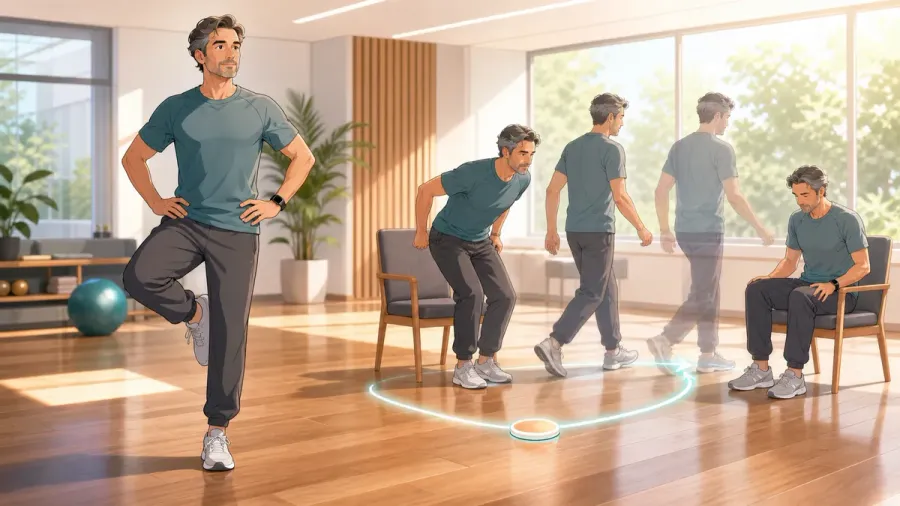

Stair ascent speed vs walking speed: which decline shows first?
Stair ascent speed vs walking speed reveals different aging signals. Learn which usually declines first, what each metric means, and how to track both.

Functional fitness tests to repeat every 6 months after 40
A practical 6-month checklist for functional fitness tests after 40: what to measure, how to standardize conditions, and when to retest sooner.

Sit-to-stand test vs gait speed: which predicts healthy aging better?
Compare sit-to-stand test vs gait speed for healthy aging, longevity risk, fall screening, and what each result tells you to test, track, and train next.

Balance decline after 50: why the vestibular system predicts how fast you'll age
A failed 10-second one-leg stand is linked to higher mortality risk after 50. Learn what balance tests show, when to seek care, and how to train safely.

Timed Up and Go test: Norms by age, protocol, and what your score reveals about aging
The TUG test measures mobility, balance, and fall risk in under 30 seconds. Learn the protocol, age-based norms, cut-off scores, and how to improve your time.

Apple Health mobility metrics: complete guide to walking data
Apple Health mobility metrics explained: walking speed, step length, asymmetry, double support time, steadiness, stair speed, and trend changes.

Apple Watch gait metrics explained: walking asymmetry, steadiness, and double support time
Understand every Apple Watch and iPhone gait metric including walking asymmetry, steadiness, double support time, and step length. Learn what normal values mean.

Double support time by age: normal ranges chart and what high values mean
See double support time by age with practical normal ranges, Apple Health context, trend interpretation and signs worth discussing with a clinician.

Walking asymmetry: what's normal, values by age, and when to worry
Check your walking asymmetry percentage against normal values by age. Complete chart with healthy ranges, Apple Health interpretation, and red flags to watch.