Blog


Retinoids for skin aging: how tretinoin, retinol, and retinaldehyde actually work
Tretinoin, retinol, and retinaldehyde are the only topical class proven to reverse photoaging. Here's the evidence, the conversion ladder, and how to start without wrecking your skin.

Prostate health and biological age: the gland that ages the fastest after 50
The prostate ages faster than most organs. Here is how PSA, inflammation, and lifestyle connect prostate health to biological age in men over 50.

Creatinine high but eGFR normal: what does it really mean?
High creatinine with normal eGFR is often benign, but context matters. Learn common causes, cystatin C, UACR, trends, and when to ask a clinician.
Cystatin C normal range by age: how to interpret your result
Use cystatin C age ranges as context, not a universal diagnosis. Learn how to compare your lab range, eGFR-cys, creatinine, UACR, and trends.

BUN vs creatinine: Which kidney marker matters more for longevity?
BUN vs creatinine compared: what each measures, why the BUN/creatinine ratio matters, and which marker is more useful for tracking kidney aging and longevity.

Oral health and biological age: why gum disease ages the body
How gum disease accelerates biological aging through systemic inflammation, the biomarkers it affects, and evidence-based strategies to protect longevity.
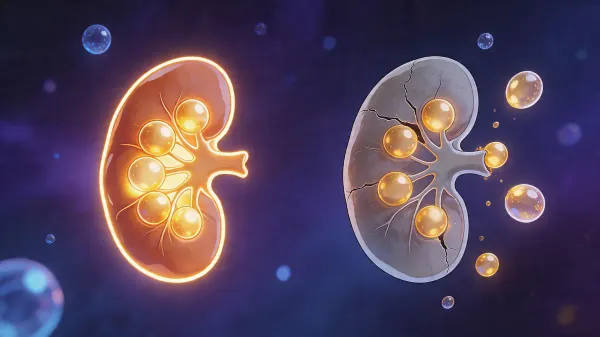
Albuminuria vs proteinuria: what is the difference and which test matters for kidney aging?
Albuminuria vs proteinuria: understand the difference, which urine test tracks kidney aging, and why UACR is preferred over dipstick screening.
Cystatin C vs creatinine: Which better reflects kidney aging?
Cystatin C vs creatinine compared: what each measures, why muscle mass biases creatinine, and which kidney marker is more reliable for longevity tracking.

eGFR by age: What is normal and when should you worry?
eGFR by age explained: what is normal at 30, 40, 50, 60, and 70+, how fast eGFR declines normally, and when a low eGFR should worry you.