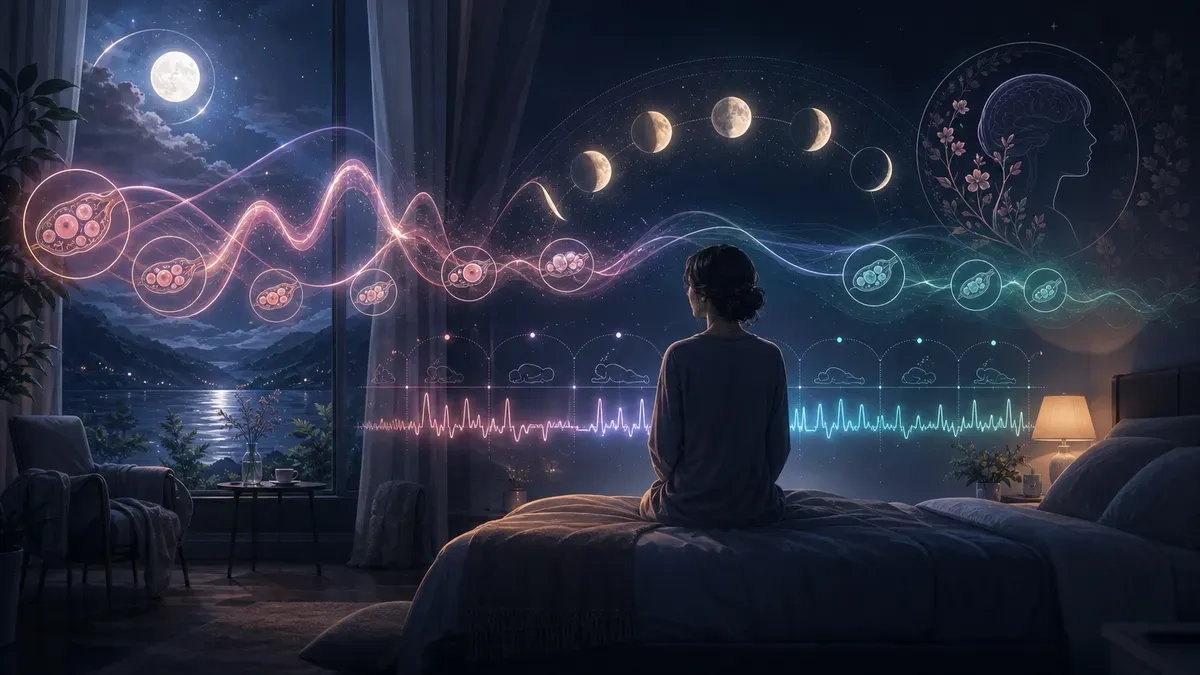
Perimenopause में नींद: menopause से पहले रातें क्यों बदलती हैं
Perimenopause में नींद क्यों बदलती है, recovery metrics क्या बताते हैं और कब symptoms पर guessing के बजाय medical support लेना चाहिए।
Perimenopause में नींद तब बदल सकती है जब आपको लगता भी नहीं कि आप “menopause में” हैं। Periods अभी आ सकते हैं। Lab tests ordinary दिख सकते हैं। Classic hot flashes भी न हों। फिर भी आप 3 a.m. पर जागने लगती हैं, रात में ज्यादा warm feel करती हैं, same workouts के बाद less recovered महसूस करती हैं, या बिना obvious reason HRV drop देखती हैं।
यह pattern common है क्योंकि perimenopause clean estrogen decline नहीं है। यह hormone variability, more anovulatory cycles, changing thermoregulation और nervous system के easier-to-wake होने वाली transition है। Result अक्सर सिर्फ “bad sleep hygiene” नहीं। यह measurable recovery shift है।
यह guide early transition पर focus करता है: menopause से पहले nights क्यों बदलती हैं, कौन से recovery signals track करने लायक हैं, और symptoms कब medical support deserve करते हैं। Broader longevity picture के लिए sleep and longevity guide देखें।
Key takeaways
- Sleep problems early perimenopause में शुरू हो सकते हैं। Final menstrual period से कई साल पहले दिख सकते हैं।
- Problem अक्सर sleep maintenance होती है। कई महिलाएँ सो सकती हैं पर बार-बार जागती हैं या बहुत जल्दी उठ जाती हैं।
- Hormone fluctuation एक lab value से ज्यादा matter करता है। Progesterone earlier decline कर सकता है, estrogen swing कर सकता है, और vasomotor symptoms sleep fragment कर सकते हैं।
- Recovery metrics pattern visible बना सकते हैं। HRV, resting heart rate, sleep timing, wake after sleep onset, temperature और cycle notes one nightly sleep score से ज्यादा useful हैं।
- हर night sweat “just hormones” नहीं। Snoring, gasping, severe fatigue, heavy bleeding, mood changes और persistent insomnia clinician review deserve करते हैं।
- Treatment individualized है। Hormone therapy और nonhormone options कुछ symptoms में मदद कर सकते हैं, पर decisions risk factors पर depend करते हैं और qualified clinician के साथ होने चाहिए।
Menopause से पहले क्या बदलता है?
Menopause retrospectively defined है: लगातार 12 months बिना period। Perimenopause उस point तक की transition है। यह कई साल चल सकती है और अक्सर cycle changes से शुरू होती है: shorter cycles, longer cycles, skipped cycles, heavier bleeding, lighter bleeding या new premenstrual symptoms।
Sleep इस window में shift हो सकती है क्योंकि endocrine system कम predictable हो रहा है। Estrogen अभी भी हो सकता है। वास्तव में estrogen कुछ days high और कुछ days low हो सकता है। Issue simply “low hormones” नहीं। Issue variability है, खासकर जब ovulation inconsistent हो जाए।
हमारी perimenopause and biological age guide broader biomarker cascade cover करती है। Sleep के लिए early changes अक्सर चार patterns में cluster करते हैं:
| Sleep pattern | Common early-transition driver | क्या track करें |
|---|---|---|
| सोना कठिन | Higher evening arousal, anxiety, lower progesterone tone | Sleep latency, bedtime HR, cycle day |
| 2-4 a.m. जागना | Temperature shifts, stress hormones, alcohol sensitivity, night sweats | Wake after sleep onset, room temp, alcohol, symptoms |
| More light sleep, less deep sleep | Fragmentation और reduced sleep continuity | Deep sleep trend, awakenings, next-day recovery |
| Enough hours के बावजूद unrefreshed | Sleep apnea, periodic limb movement, mood symptoms, inflammation, under-recovery | Snoring, SpO2 trend, HRV, fatigue severity |
Perimenopause sleep क्यों disrupt करती है
Progesterone changes calming signal हटा सकते हैं
Progesterone सिर्फ reproductive hormone नहीं। इसका metabolite allopregnanolone GABA-A receptors के साथ interact करता है, जो brain के calming system का हिस्सा हैं। Early perimenopause में ovulation less consistent हो सकती है। Ovulation weaker या absent हो तो periods जारी रहते हुए भी progesterone output गिर सकता है।
यह ऐसा लग सकता है जैसे nervous system रात में downshift नहीं कर रहा: racing thoughts, lighter sleep और अधिक awakenings। Hormone-specific explainer के लिए progesterone, sleep, and aging देखें।
इसका मतलब यह नहीं कि हर woman progesterone ले। इसका मतलब है कि early transition में sleep changes का real biological driver हो सकता है और उन्हें generic advice से ज्यादा deserve है।
एस्ट्रोजेन तापमान बदलता है और वासोमोटर लक्षण प्रभावित करता है
Hot flashes और night sweats vasomotor symptoms हैं। वे menopausal transition से closely tied हैं और direct wake कर सकते हैं। लेकिन temperature instability dramatic sweat से subtle भी हो सकती है। कुछ women जागकर hot, फिर chilled, फिर alert feel करती हैं। कुछ wearable temperature shift देखती हैं, hot flash याद न हो।
Estrogen serotonin, norepinephrine और thermoregulatory pathways से भी interact करता है। Levels swing करें तो temperature “neutral zone” narrow हो सकता है, यानी room temperature, bedding, alcohol या stress में small changes awakening trigger कर सकते हैं।
कुल नींद के समय का पतन से पहले नींद का रखरखाव जारी रहता है
कई perimenopausal women initially fewer hours नहीं सोतीं। Instead, sleep less continuous होती है। आप bed में 7.5 hours रह सकती हैं पर wake time, light sleep और deep sleep के लंबे blocks कम हो सकते हैं।
यह distinction important है। अगर केवल bedtime और wake time track करें, problem invisible लगती है। Awakenings, wake after sleep onset, resting heart rate और HRV track करें तो transition visible होती है।
स्टेज-स्तरीय संदर्भ के लिए उम्र के अनुसार नींद के चरण और गहरी नींद कैसे सुधारें देखें।
Recovery demand बढ़ती है
Perimenopause same lifestyle की cost भी बदल सकती है। Hard workout, late dinner, दो glasses wine, hot bedroom या stressful workday 35 पर tolerable था। 45 पर same inputs lower HRV night, higher resting heart rate या more wakeups produce कर सकते हैं।
इसका मतलब आप fragile नहीं। इसका मतलब recovery margin narrower हो सकता है, खासकर late luteal phase, skipped cycles या vasomotor symptoms वाले weeks में।
अनुमान लगाने के बजाय क्या मापें
Consumer wearables diagnostic sleep studies नहीं हैं और sleep stages misclassify कर सकते हैं। उनकी value trend detection है। Same metrics consistently track करें तो आप देख सकती हैं कि nights ज्यादा fragmented हो रही हैं या कौन से behaviors/cycle phases worse recovery से correlate करते हैं।
| Metric | क्यों मदद करता है | क्या देखें |
|---|---|---|
| Sleep latency | Nervous system कितनी जल्दी downshift करता है | Certain cycle phases या stress blocks में longer latency |
| Wake after sleep onset | Total hours से बेहतर fragmentation capture करता है | Same time in bed के बावजूद rising wake time |
| Sleep midpoint | Circadian drift reveal करता है | Weekends या poor nights के बाद later midpoint |
| Resting heart rate | Stress, alcohol, illness, heat और under-recovery reflect करता है | Several nights तक baseline से 3-5 bpm ऊपर |
| HRV | Autonomic recovery reflect करता है | Personal baseline से drop, others से comparison नहीं |
| Overnight temperature | Vasomotor या illness patterns flag करता है | Awakenings से पहले repeated warm spikes |
| Respiratory rate and SpO2 | Breathing-pattern concerns screen करता है | Snoring, oxygen dips, morning headaches, severe fatigue |
| Cycle and symptom notes | Physiology को transition stage से connect करता है | Bleeding से पहले, skipped cycles या night sweats में worse sleep |
HRV basics के लिए HRV guide use करें। अगर आप train करती हैं, training readiness score उन days में hard push avoid करने में मदद कर सकता है जब sleep और autonomic recovery clearly down हों।
दो-चक्र ट्रैकिंग योजना
एक साथ दस चीजें बदलने से पहले दो cycles या cycles irregular हों तो roughly eight weeks clean baseline collect करें।
Track करें:
- Bedtime and wake time
- Sleep latency
- Number of awakenings
- Wake after sleep onset
- Night sweats या temperature episodes
- Resting heart rate
- HRV
- Alcohol timing
- Caffeine cutoff
- Late meals
- Training intensity
- Bleeding days और cycle symptoms
फिर patterns देखें:
- क्या bleeding से 3-7 days पहले sleep worse होती है?
- क्या alcohol के बाद wakeups worse होते हैं, even one drink?
- क्या hot bedroom resting heart rate ऊपर push करता है?
- क्या intense evening exercise HRV lower करता है?
- क्या skipped cycles worse sleep से coincide करते हैं?
- Recorded sleep amount के मुकाबले fatigue disproportionate है?
यह one night “good” या “bad” पूछने से ज्यादा useful है। Perimenopause sleep noisy है। Patterns signal हैं।
पैटर्न से मिलान करने वाले लक्षित सुधार
यह generic sleep hygiene checklist नहीं। Symptom pattern से highest-yield lever चुनें।
| Pattern | पहले test करने वाला lever | क्यों |
|---|---|---|
| Hot या sweaty जागना | Bedroom 18-20°C (65-68°F), lighter bedding, bedtime के पास alcohol avoid | Temperature instability common trigger है |
| 3 a.m. alert wakeups | Earlier alcohol cutoff, earlier dinner, bed से पहले stress downshift | Late metabolic और sympathetic activation sleep fragment कर सकते हैं |
| Hard sessions के बाद lower HRV | Intense training earlier करें या premenstrually intensity घटाएँ | Recovery capacity cycle phase से vary कर सकती है |
| Long sleep latency | Consistent wake time, morning outdoor light, evening light reduction | Circadian timing anchor और arousal lower करता है |
| Snoring या oxygen dips | Sleep apnea screening के बारे में पूछें | Breathing disorders treatable हैं और women में often missed |
| Heavy bleeding with fatigue | Iron status और gynecologic evaluation discuss करें | Iron deficiency sleep और recovery worsen कर सकती है |
Small experiments best हैं जब measured हों। 10-14 nights के लिए one variable बदलें, फिर trends compare करें। Example: caffeine, training या supplements बदले बिना room cooler रखें। Wake after sleep onset गिरता है और resting heart rate improve होता है तो useful lever मिला।
चिकित्सा सहायता कबाब है
Perimenopause normal है। Severe sleep disruption ऐसी चीज नहीं जिसे बस endure करना पड़े।
Medical support consider करें अगर:
- Insomnia कई महीनों तक सप्ताह में कम से कम तीन nights persist करे।
- Night sweats frequent, drenching हों या unexplained weight loss/fever के साथ हों।
- आप snore करें, gasp करें, headaches के साथ जागें, या driving में sleepy feel करें।
- Bleeding बहुत heavy, close together या newly abnormal हो।
- Mood symptoms, anxiety या depression escalate हो रहे हों।
- Sleep disruption work, relationships या safety impair कर रही हो।
- Menopause-like symptoms age 45 से पहले शुरू हों, या periods 40 से पहले stop हों।
Clinicians person के आधार पर कई paths consider कर सकते हैं: sleep apnea, iron deficiency, thyroid disease, medication effects, anxiety/depression, abnormal uterine bleeding, vasomotor symptoms या menopausal hormone therapy eligibility की evaluation। Menopause Society कहती है कि appropriate candidates के लिए hormone therapy vasomotor symptoms का most effective treatment रहती है, जबकि 2023 nonhormone statement उन लोगों के लिए evidence-based nonhormonal options review करता है जो hormones use नहीं कर सकते या नहीं करना चाहते।
Key individualized care है। Hormone therapy sleep supplement नहीं, और nonhormone medications casual wellness tools नहीं। दोनों को risk review, medication review और clear treatment goal चाहिए।
सुपरएज स्लीप को रिकवरी से कैसे कनेक्ट करें
जब तक sleep broken feel होती है, recovery metrics महीनों से बदल रही हो सकती हैं। SuperAge Apple Watch sleep, HRV, resting heart rate, training readiness और biological-age trends को एक जगह connect करके यह visible बनाता है।
Perimenopause में question rarely “क्या मैंने exactly eight hours सोया?” है। Better question है, “क्या मेरे body ने last night recover किया?”
SuperAge help कर सकता है देखने में:
- क्या HRV certain cycle phases से पहले drop होता है
- क्या resting heart rate temperature spikes वाली nights में rise करता है
- क्या room cooling के बाद deep sleep trend improve करता है
- क्या fragmented sleep के बाद training readiness गिरती है
- क्या recovery changes time over biological-age inputs से align करते हैं
App perimenopause, sleep apnea या hormone status diagnose नहीं करता। यह clinician discussion के लिए cleaner record और आपके recovery को वास्तव में improve करने वाली चीजों को test करने का practical way देता है।
Sleep को longevity lever के रूप में broader science के लिए sleep longevity guide use करें। Later transition और long-term aging frame के लिए menopause and biological age acceleration देखें।
FAQ
मासिक धर्म अनियमित होने से लेकर पहले नींद की समस्या क्यों शुरू हो सकती है?
हाँ। कुछ women cycles clearly irregular होने से पहले sleep, anxiety, temperature या recovery changes notice करती हैं। Perimenopause variable है, और one normal hormone test transition-related symptoms rule out नहीं करता।
क्या 3 a.m. पर जागना perimenopause symptom है?
हो सकता है, especially अगर night warmth, cycle changes, lower HRV या new premenstrual symptoms के साथ आए। लेकिन 3 a.m. waking stress, alcohol, sleep apnea, depression, medications, thyroid disease या other causes से भी हो सकता है। Pattern tracking मदद करता है, पर persistent symptoms medical review deserve करते हैं।
क्या hormone testing चाहिए?
अक्सर perimenopause एक single FSH या estradiol value से नहीं, बल्कि age, cycle pattern और symptoms से clinically identify होती है। Transition में hormones widely fluctuate करते हैं। Testing specific situations में useful हो सकती है, जैसे early symptoms, unusual bleeding, fertility questions, या other condition rule out करनी हो।
क्या progesterone perimenopause में sleep help करता है?
कुछ women clinician-prescribed progesterone से sleep improvement experience करती हैं, individualized hormone plan के हिस्से के रूप में, especially जब vasomotor symptoms या progesterone-related sleep disruption suspect हो। यह सभी के लिए appropriate नहीं और qualified clinician से discuss होना चाहिए।
कौन सा रिकवरी मेट्रिक सबसे ज्यादा भरोसा करूँ?
Single metric से ज्यादा trends trust करें। HRV, resting heart rate, wake after sleep onset और subjective next-day energy together one sleep-stage estimate से ज्यादा useful हैं। Wearable sleep stages imperfect हैं, पर same direction में repeated changes attention लायक हैं।
Sleep apnea के बारे में कब पूछना चाहिए?
अगर आप snore करती हैं, gasp करती हैं, headaches के साथ जागती हैं, high blood pressure है, oxygen dips दिखते हैं, या enough time in bed के बावजूद unrefreshed हैं, तो sooner पूछें। Women में sleep apnea insomnia, fatigue, mood symptoms या morning headaches की तरह present हो सकता है, obvious loud snoring नहीं। Warning signs के लिए sleep apnea guide देखें।
अधिक विशिष्ट निर्णय मार्गदर्शिका के लिए देखें पेरीमेनोपॉज़ लक्षण बनाम जैविक उम्र: सबसे पहले क्या परिवर्तन होता है?.
References
- NICHD. Menopause fact sheet
- ACOG. The Menopause Years
- ACOG. Sleep Health and Disorders
- SWAN. Sleep during the perimenopause: a SWAN story
- Kravitz et al. Sleep disturbance during the menopausal transition in a multi-ethnic community sample of women
- Baker et al. Sleep and sleep disorders in the menopausal transition
- The Menopause Society. 2022 hormone therapy position statement
- The Menopause Society. 2023 nonhormone therapy position statement
संबंधित लेख

ट्रेनिंग रेडीनेस स्कोर: जानें कि आपका शरीर ट्रेनिंग के लिए तैयार है या नहीं
जानें कि ट्रेनिंग रेडीनेस स्कोर क्या होता है, इसे HRV, नींद और रिकवरी डेटा से कैसे कैलकुलेट किया जाता है, और इसे हर दिन स्मार्ट ट्रेनिंग के लिए कैसे उपयोग करें।