एयर प्यूरीफायर बनाम वेंटिलेशन: घर की हवा किससे बेहतर होती है?
एयर प्यूरीफायर बनाम वेंटिलेशन: PM2.5, CO2, cooking emissions और indoor air quality के लिए filtration, outdoor air या दोनों कब बेहतर हैं।
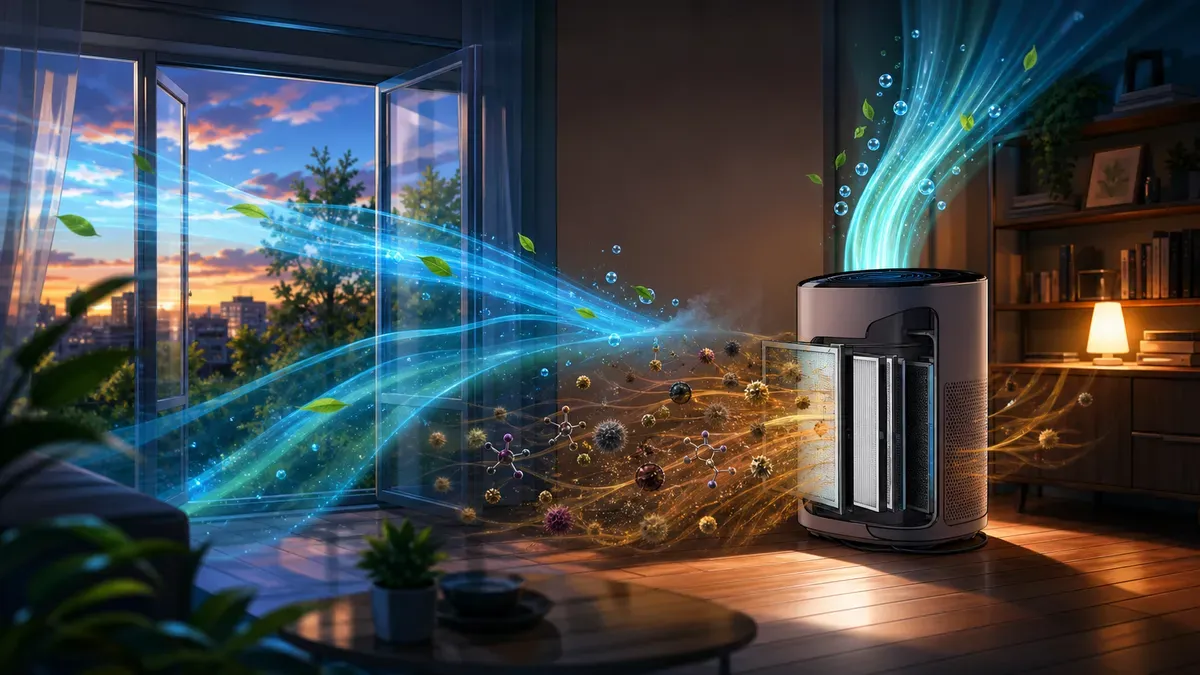
एयर प्यूरीफायर बनाम वेंटिलेशन की बहस अक्सर ऐसे पेश की जाती है जैसे एक विकल्प modern और साफ है, दूसरा पुराना। यह गलत comparison है। Air purifier recirculated indoor air को साफ करता है। Ventilation indoor air को outdoor air से replace या dilute करता है। दोनों overlapping लेकिन अलग problems solve करते हैं, और गलत scenario में कोई भी fail हो सकता है।
अगर आपकी main problem wildfire smoke के घर में घुसने से indoor PM2.5, cooking particles, dust, pollen या traffic pollution है, तो सही size का air purifier तेज और measurable फर्क ला सकता है। अगर problem stale air, high CO2, odors, moisture, gas combustion byproducts, या crowded room में viral aerosol dilution है, तो ventilation ज्यादा मायने रखता है। Outdoor air polluted हो तो windows खोलना indoor air worse कर सकता है। Indoor sources strong हों तो corner में रखा छोटा purifier overwhelm हो सकता है।
यह लेख generic clean-air advice नहीं, intervention tradeoffs पर केंद्रित है। Particulate exposure और biological aging के broader case के लिए air pollution, PM2.5, and accelerated aging देखें।
त्वरित उत्तर
Air purifier तब उपयोग करें जब समस्या PM2.5, smoke, dust या pollen जैसे particles हों; ventilation तब उपयोग करें जब समस्या CO2, moisture, odors, gases या crowded-room dilution हो। कई घरों में सबसे अच्छा उत्तर दोनों है: पहले source control, फिर जब बाहर की हवा साफ हो तब clean outdoor air, और particles के लिए पर्याप्त filtration। HEPA vs carbon filters और PM2.5 और accelerated aging देखें।
मुख्य बातें
- Air purifiers particles के लिए सबसे मजबूत हैं। HEPA या high-efficiency filtration PM2.5, smoke particles, pollen, dust और कुछ mold fragments घटाता है, बशर्ते unit में room size के लिए पर्याप्त clean air delivery rate हो।
- Ventilation dilution और replacement के लिए सबसे मजबूत है। यह outdoor air लाकर या indoor air exhaust कर CO2, odors, humidity, कुछ gases और occupant-generated aerosols घटाता है।
- Outdoor air quality तय करती है कि ventilation मदद करेगा या नहीं। Wildfire smoke, high traffic pollution, extreme pollen या outdoor odor events में unfiltered window ventilation indoor exposure बढ़ा सकता है।
- Filtration source control की जगह नहीं लेता। EPA पहले pollutant sources हटाने या घटाने, फिर clean outdoor air और filtration को complementary strategies की तरह इस्तेमाल करने पर जोर देता है।
- CADR vague marketing से बेहतर है। Purifier के लिए practical सवाल है कि unit room size के लिए कितने cubic feet per minute (cfm) clean air देता है, box पर dramatic भाषा नहीं।
- सबसे अच्छा जवाब अक्सर दोनों होता है। Outdoor air clean हो और dilution चाहिए तो ventilation; particles dominant हों या outdoor air clean न हो तो continuous filtration।
हर intervention वास्तव में क्या करता है
| Intervention | क्या जोड़ता या हटाता है | सबसे अच्छा किसके लिए | कमजोरी |
|---|---|---|---|
| Portable air purifier | Recirculated indoor air से particles हटाता है; कुछ models carbon से gases adsorb करते हैं | PM2.5, indoors आया wildfire smoke, cooking particles, pollen, dust, pet dander | Oxygen नहीं जोड़ता या CO2 reliably कम नहीं करता; gases के लिए weak जब तक पर्याप्त sorbent न हो |
| HVAC filter upgrade | Central system से गुजरती air filter करता है | System अक्सर चले तो whole-home particle reduction | Fan runtime, duct design, filter fit और HVAC compatibility पर निर्भर |
| Window ventilation | Outdoor air अंदर और indoor air बाहर करता है | CO2, odors, heat, moisture, short-term pollutant dilution जब outdoor air clean हो | PM2.5, pollen, smoke, humidity, noise और outdoor gases अंदर ला सकता है |
| Exhaust ventilation | Source पर air हटाता है | Cooking, bathroom moisture, cleaning fumes, combustion byproducts | Make-up air चाहिए; poor fans या recirculating hoods बहुत कम करते हैं |
| Balanced mechanical ventilation या ERV/HRV | Controlled outdoor air exchange, अक्सर heat/energy recovery के साथ | Better comfort और energy control के साथ continuous dilution | Installation cost; filter quality और maintenance मायने रखते हैं |
Core tradeoff simple है: filtration indoor air में suspended चीजें घटाता है; ventilation हवा खुद बदलता है। Particle counts lower चाहिए तो filtration अक्सर fastest जीतता है। CO2, humidity, odors या occupant-generated aerosols lower चाहिए तो ventilation primary tool होता है।
Decision table: indoor air quality ज्यादा किससे सुधरती है?
| Situation | Better first move | क्यों |
|---|---|---|
| Wildfire smoke outside | Air purifier, windows closed | Outdoor ventilation smoke particles अंदर लाता है; filtration indoor PM2.5 घटाता है |
| Stove पर cooking | Exhaust ventilation first, purifier second | Emissions को source के पास capture करें, फिर बचे particles filter करें |
| Bedroom या office में high indoor CO2 | Ventilation | Purifiers CO2 meaningful तरीके से नहीं हटाते |
| Outdoor allergies वाला pollen season | Air purifier, selective ventilation | Outdoor air allergens अंदर ला सकती है |
| Outdoor air good हो और crowded gathering | Ventilation plus filtration | Dilution और equivalent clean air दोनों aerosol concentration घटाते हैं |
| Musty smell या visible mold | Source control और moisture repair | Purifiers particles घटा सकते हैं पर moisture fix नहीं करते; mold exposure and aging देखें |
| Road के पास traffic pollution | Filtration; traffic peaks से दूर समय पर ventilation | Outdoor air indoor PM2.5 और nitrogen dioxide बढ़ा सकती है |
| Cleaning, painting या solvent use | Source control और ventilation | कई gases को removal और outdoor dilution चाहिए; particle-only filtration काफी नहीं |
“कौन बेहतर है?” से ज्यादा उपयोगी सवाल है “मैं कौन सा pollutant घटाना चाहता हूँ?” Indoor air quality एक number नहीं है। PM2.5, CO2, volatile organic compounds, humidity, nitrogen dioxide, ozone, biological particles और infectious aerosols अलग behave करते हैं।
Air purifier कब जीतता है
Air purifier तब जीतता है जब pollutant particulate हो और source moment में पूरी तरह control न हो सके।
PM2.5 और smoke
PM2.5 particles इतने छोटे होते हैं कि lungs में deep पहुँचते हैं और cardiovascular, respiratory, inflammatory और biological aging pathways से जुड़े हैं। Wildfire smoke या traffic pollution events में सबसे clean strategy अक्सर windows बंद करना, indoor particle generation घटाना, और high-efficiency filtration continuous चलाना है।
Highways, ports, industrial zones या wildfire regions के पास homes में bedroom purifier 7 से 9 घंटे के exposure को घटा सकता है, जब recovery होनी चाहिए। यह मायने रखता है क्योंकि environmental stressors sleep और autonomic recovery के साथ interact करते हैं, जिन्हें SuperAge users अक्सर heart rate variability, resting heart rate और sleep regularity से track करते हैं।
Cooking particles
High-heat cooking sharp indoor particle spikes बना सकती है। Outdoor exhaust करने वाला vented range hood first line होना चाहिए क्योंकि वह pollutants source के पास capture करता है। लेकिन कई hoods weak, noisy, poorly used या recirculating होते हैं। Kitchen या dining area के पास portable purifier cooking के बाद exposure tail घटा सकता है, खासकर open-plan homes में।
Allergens और dust
Pollen, dust, pet dander और कई airborne mold fragments के लिए filtration usually ventilation से ज्यादा direct है। High pollen periods में windows खोलना कुछ indoor pollutants dilute कर सकता है, पर वही trigger अंदर ला सकता है जिसे आप avoid करना चाहते थे।
Brand hype के बिना purifier size कैसे चुनें
Useful number CADR, यानी clean air delivery rate है। EPA बताता है कि higher CADR का मतलब purifier ज्यादा particles हटाता है और larger area serve कर सकता है। Bedroom या office के लिए purifier का smoke CADR actual room volume से compare करें।
एक rough formula:
| Room | Example size | करीब 5 equivalent ACH के लिए target clean air |
|---|---|---|
| Small bedroom | 11 m2 (120 sq ft), 2.4 m (8 ft) ceiling | करीब 136 m3/h (80 cfm) |
| Large bedroom | 19 m2 (200 sq ft), 2.4 m (8 ft) ceiling | करीब 226 m3/h (133 cfm) |
| Living room | 37 m2 (400 sq ft), 2.7 m (9 ft) ceiling | करीब 510 m3/h (300 cfm) |
Formula है room volume multiplied by target air changes per hour, divided by 60. Desk पर strong दिखने वाला purifier open living area के लिए छोटा हो सकता है। Multiple smaller units काम कर सकते हैं अगर combined CADR पर्याप्त हो और air circulate कर सके।
Ventilation कब जीतता है
Ventilation तब जीतता है जब problem stale air, gas, moisture, heat या occupant-generated buildup हो।
CO2 और stale air
CO2 normal HEPA purifier से नहीं हटता। अगर closed bedroom overnight 1,200 से 2,000 ppm तक पहुँचता है, particle filter air cleaner बना सकता है पर stale ही रहेगी। Fix है outdoor air exchange through windows, mechanical ventilation, या ERV/HRV जैसा balanced system।
CO2 यह भी बताता है कि people वाले space में rebreathed air कितना जमा हो रहा है। यह हर pollutant capture नहीं करता, पर अक्सर dilution inadequate होने पर signal देता है।
Moisture और mold prevention
Bathrooms, laundry rooms, basements और kitchens को exhaust या dehumidification चाहिए। Purifier कुछ airborne fragments capture कर सकता है, पर wall cavity से water नहीं हटाता या microbial growth नहीं रोकता। Moisture control intervention है; filtration support है।
Gases, odors और VOCs
कुछ purifiers activated carbon या other sorbents include करते हैं, पर sorbent amount मायने रखता है। Thin carbon sheets जल्दी saturate होती हैं। Painting, solvents, strong cleaning products, combustion fumes या new-building odors के लिए source control और ventilation usually particle filtration से ज्यादा important हैं। Low-emission products use करें, source पर exhaust करें और outdoor air acceptable हो तो ventilate करें।
Infectious aerosol dilution
Shared indoor spaces में respiratory aerosols के लिए ventilation और filtration को “clean air” strategies के रूप में जोड़ा जा सकता है। CDC workplace guidance में possible हो तो 5 या अधिक air changes per hour का practical target है, noting कि filtration और air cleaning equivalent air changes provide कर सकते हैं। ASHRAE Standard 241 भी equivalent clean airflow पर protection frame करता है, यानी properly designed filtered recirculated air और outdoor ventilation दोनों contribute कर सकते हैं।
Outdoor-air trap
Ventilation केवल उतनी अच्छी है जितनी air आप अंदर ला रहे हैं। Outdoor PM2.5, pollen, ozone, humidity और odor levels कम हों तो windows खोलना indoor air improve कर सकता है। High हों तो backfire कर सकता है।
Simple rule use करें:
| Outdoor condition | Window ventilation? | Filtration? |
|---|---|---|
| Good AQI, comfortable humidity, low pollen | हाँ, खासकर CO2 और odors के लिए | Optional या supportive |
| Moderate PM2.5 या traffic peak | Limited और timed | हाँ |
| Wildfire smoke या high PM2.5 | Unfiltered ventilation avoid करें | हाँ, continuous |
| High pollen | Allergic हों तो limited | हाँ |
| High humidity | Caution; moisture control करें | Particles के लिए हाँ, पर dehumidification ज्यादा मायने रख सकती है |
| Strong outdoor odor या nearby combustion | संभव हो तो avoid | Filtration particles में मदद कर सकती है; gases को proper sorbent या source avoidance चाहिए |
यह tradeoff उन लोगों के लिए खास important है जो environmental aging and the biological clock के बारे में सोचते हैं। Built environment physiological load घटा भी सकता है और बढ़ा भी सकता है। सही intervention hour, season और source के हिसाब से बदलता है।
Practical hierarchy जो काम करती है
अधिकांश homes के लिए order of operations:
- Source control: pollutant हटाएँ, घटाएँ या isolate करें। “Clean air” के लिए candles न जलाएँ। Low-emission products use करें। Leaks fix करें। Indoor smoking avoid करें। Possible हो तो lids और lower-heat cooking use करें।
- Local exhaust: cooking के दौरान vented range hood और showers के दौरान/बाद bathroom fan चलाएँ। Source localized हो तो exhaust whole-room cleanup से बेहतर है।
- Clean ventilation: Outdoor air clean enough हो और pollutant को dilution चाहिए तो outdoor air अंदर लाएँ।
- Particle filtration: PM2.5, smoke, pollen, dust और aerosols के लिए सही size के portable purifiers या HVAC filtration चलाएँ।
- Monitoring: PM2.5 और CO2 readings से देखें actual problem क्या है।
Mistake है एक device खरीदकर हर pollutant solve होने की उम्मीद करना। Purifier ventilate नहीं कर सकता। Open window filter नहीं कर सकती। Grease filter से recirculate करने वाला range hood outdoors exhaust करने जैसा नहीं। High-MERV HVAC filter fan off होने पर बहुत कम करता है।
पैसे खर्च करने से पहले क्या measure करें
दो sensors अधिकांश air purifier vs ventilation decisions स्पष्ट कर सकते हैं।
PM2.5 sensor
इसे smoke, cooking particles, traffic pollution और filtration performance के लिए use करें। अगर cooking के दौरान PM2.5 rise होकर hours तक elevated रहता है, तो filtration और बेहतर exhaust priority हैं। अगर windows खोलते ही PM2.5 rise करता है, उस moment outdoor air clean enough नहीं।
CO2 sensor
इसे ventilation के लिए use करें। अगर CO2 overnight या meetings के दौरान climb करता है, purifier primary issue fix नहीं करेगा। आपको अधिक outdoor air, better mixing या space में fewer occupants चाहिए।
VOC और humidity sensors optional मदद कर सकते हैं, पर consumer VOC readings noisy और non-specific हो सकती हैं। Humidity straightforward है: indoor relative humidity generally comfortable middle range में रखें और sustained dampness avoid करें जो mold growth support करती है।
Indoor air decisions में SuperAge कैसे फिट होता है
Indoor air quality abstract लगती है जब तक वह physiology में न दिखे। SuperAge PM2.5, CO2, mold, VOCs या ventilation rates directly measure नहीं करता। यह body-side signals track करने में मदद करता है जो environmental load बदलने पर respond करते हैं: sleep quality, resting heart rate, HRV, respiratory patterns, recovery, activity और biological age।
इससे experiments useful बनते हैं। अगर आप smoke season में bedroom filtration add करते हैं, exhaust के बिना cooking बंद करते हैं, या outdoor air clean होने पर night ventilation improve करते हैं, तो आप weeks में देख सकते हैं कि recovery metrics improve हो रहे हैं या नहीं। Better indoor air को सिर्फ “room fresh smell कर रहा है” से judge नहीं करना चाहिए। उसे sleep, autonomic balance और cardiovascular recovery पर stress load घटाना चाहिए।
यह खास relevant है क्योंकि PM2.5 exposure mitochondria, oxidative stress और inflammation pathways को affect कर सकता है जो mitochondrial dysfunction and accelerated aging से overlap करते हैं। Point perfect air chase करना नहीं। Point obvious exposure spikes हटाना और देखना है कि body respond करती है या नहीं।
Common rooms के लिए best setup
| Room | Main risk | Best setup |
|---|---|---|
| Bedroom | Overnight CO2, outdoor PM2.5, allergens | Room-size quiet purifier; outdoor air good हो तो window या mechanical ventilation; airflow के हिसाब से door position |
| Kitchen | Cooking particles, nitrogen dioxide, odors, moisture | Cooking के दौरान vented range hood high पर; cooking के बाद nearby purifier; window केवल outdoor air clean हो तो |
| Home office | CO2 buildup, traffic infiltration, cognitive fatigue | CO2 monitor; timed ventilation; PM2.5 rise हो या windows traffic की ओर हों तो purifier |
| Living room | Multiple occupants, pets, dust, open-plan cooking | Higher total CADR; periodic ventilation; candles/incense के लिए source control |
| Bathroom/laundry | Moisture and mold risk | Exhaust fan और humidity control; purifier secondary |
Small 11 m2 (120 sq ft) bedroom के लिए modest purifier particles के लिए enough हो सकता है। 46 m2 (500 sq ft) open living area के लिए एक small unit अक्सर symbolic है। CO2 के लिए बड़ा purifier भी wrong tool है, जब तक वह outdoor air लाने वाले system का हिस्सा न हो।
Frequently asked questions
क्या air purifier windows खोलने से बेहतर है?
PM2.5, wildfire smoke, pollen, dust और कई allergens जैसे particles के लिए properly sized purifier अक्सर बेहतर है, खासकर outdoor air polluted हो। CO2, humidity, odors और stale air के लिए windows खोलना या mechanical ventilation बेहतर है जब outdoor air clean enough हो। सही choice pollutant पर निर्भर है।
क्या मैं केवल air purifier use करके कभी ventilate न करूँ?
आमतौर पर नहीं। Purifier particles घटा सकता है, पर outdoor air नहीं जोड़ता या CO2 meaningful तरीके से नहीं घटाता। Closed rooms stale, humid या occupant-generated gases में high हो सकते हैं। Outdoor air unsafe हो तो filtration temporary best strategy हो सकती है, पर long-term indoor air quality usually controlled ventilation चाहती है।
क्या ventilation indoor air quality खराब कर सकता है?
हाँ। अगर outdoor air में wildfire smoke, high PM2.5, heavy traffic pollution, strong odors, high pollen या high humidity है, ventilation problem import कर सकता है। ऐसी conditions में windows बंद करें, indoor sources घटाएँ और outdoor conditions improve होने तक filtration use करें।
क्या HEPA filters VOCs या gases हटाते हैं?
HEPA filters particles हटाते हैं। वे अधिकांश gases या VOCs meaningful तरीके से नहीं हटाते। कुछ purifiers activated carbon या other sorbent media include करते हैं, पर effectiveness sorbent amount और design पर निर्भर है। Strong VOC sources के लिए source control और ventilation usually ज्यादा important हैं।
HEPA ज्यादा important है या CADR?
दोनों मायने रखते हैं, लेकिन CADR room sizing के लिए practical number है। Highly efficient filter with weak airflow बहुत धीरे साफ कर सकता है। Room के लिए adequate CADR और real high-efficiency particle filter वाला unit undersized machine में premium-sounding filter से ज्यादा useful है।
क्या air purifier पूरे दिन चलाना चाहिए?
Chronic particle sources, allergies, smoke season या traffic के पास homes में continuous low या medium operation अक्सर short bursts से बेहतर काम करता है। Cleaner जितनी देर चलता है, उतनी air filter करता है। Cooking, cleaning, smoke events या high occupancy के दौरान speed बढ़ाएँ।
SuperAge आज़माएं
यह देखने के लिए कि indoor-air changes sleep, HRV, resting heart rate, recovery और biological age में दिखते हैं या नहीं, SuperAge डाउनलोड करें.
References
संबंधित लेख
खर्राटे लेने वाले के पास सोना: स्वास्थ्य पर असर और वास्तव में क्या मदद करता है
खर्राटे लेने वाले के पास सोने से नींद टूट सकती है, लेकिन मस्तिष्क की उम्र बढ़ने के दावे अतिरंजित हैं। जानें प्रमाण क्या कहते हैं, आज रात क्या मदद करेगा और कब इलाज लें।